Anne Boleyn's name was painted along the gilt edges of an English New Testament. The translation was William Tyndale's. Her copy was printed in 1534. Eight years earlier, copies of its first complete edition had gone into the fire.
On 27 October 1526, by the date usually given, Cuthbert Tunstall, Bishop of London, presided over the burning of prohibited religious books at St Paul's, Tyndale's New Testament among them. The translation had been printed in Germany and smuggled into England. For its supporters, it offered scripture in a language they could understand. For the bishop, it carried religious errors into the households for which he was responsible. Either way, a small book could travel a long way.
Tyndale had begun by asking that same bishop for help. An English priest and scholar, he came to London in 1523 hoping for a place in Tunstall's household where he could pursue his translation. There was some sense in the choice. Tunstall was a learned man with a reputation in Greek, the language from which Tyndale intended to translate the New Testament. Tyndale brought an English version of a speech by the Greek orator Isocrates to show what he could do. Scholarship, however, did not oblige a bishop to welcome every use another scholar proposed to make of it.
Tunstall replied that his house was full.
A London merchant, Humphrey Monmouth, gave Tyndale board and lodging instead. For six months the priest studied in a merchant's house, supported by a man whose trade connected England with the world beyond it. Monmouth and other sympathetic merchants later helped finance his departure. The network that sustained the translation was already taking shape outside the bishop's household. Years later, Tyndale wrote that he had come to understand "not only that there was no room in my lord of London's palace to translate the New Testament, but also that there was no place to do it in all England." In 1524, he left.
An English Bible already existed in manuscript, associated with John Wycliffe and his followers. Those translations had acquired the suspicion attached to religious dissent, and making a new one required ecclesiastical permission. Tyndale was proposing to translate from the Greek and put the result through a printing press. Each additional manuscript had to be copied by hand. Type could produce the same English words over and over, ready to be sent wherever a buyer or a carrier could be found.
By 1525 he was in Cologne, supervising the printing. The work had reached part of St Matthew's Gospel when the authorities intervened and stopped it. Tyndale took the sheets already printed and fled to Worms. He had sheets, not a book.
He found another printer.
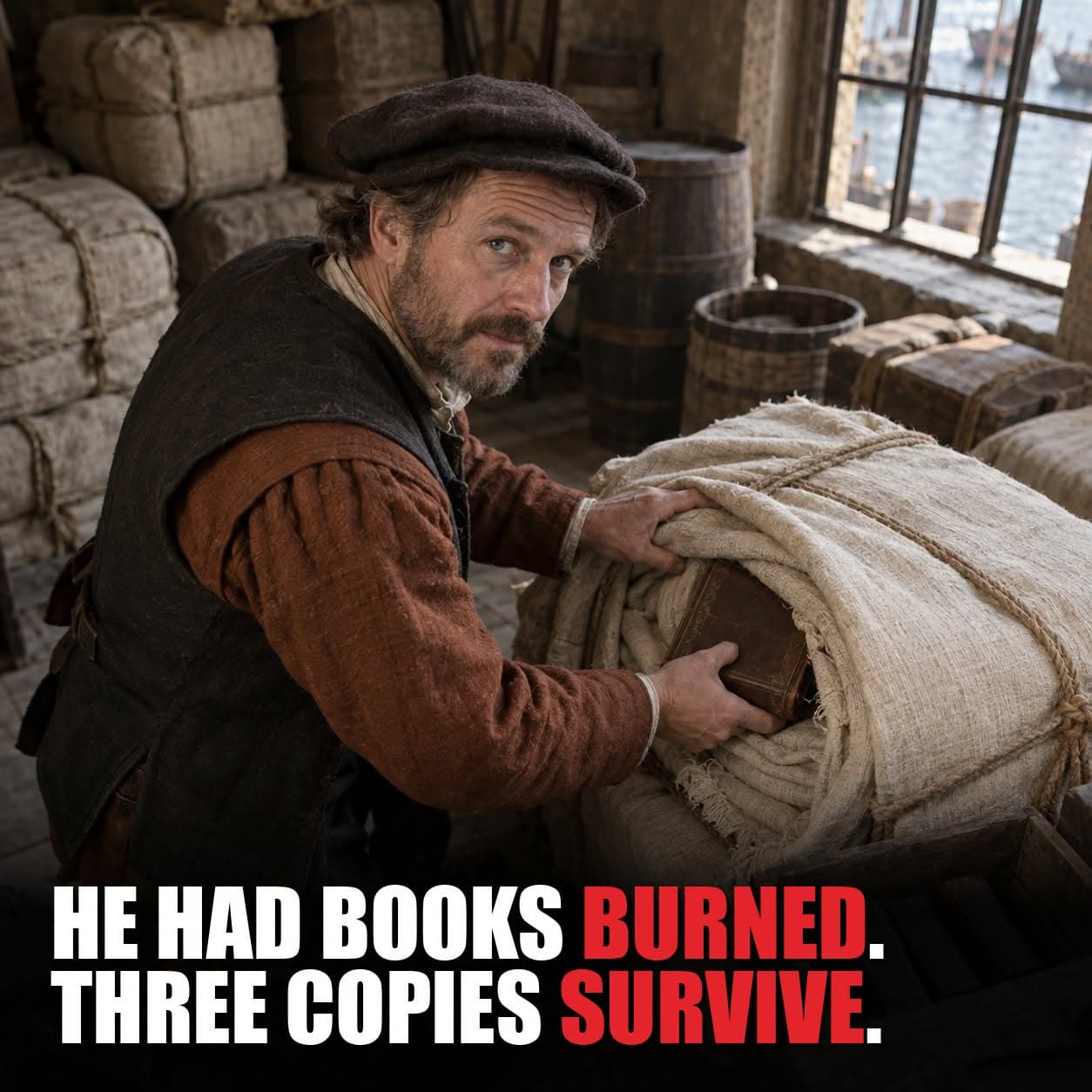
At Worms in 1526, the complete New Testament appeared in English for the first time in print. It was a small volume, suitable for carrying and concealing. Copies crossed into England hidden among merchandise, including bales of cloth. The ordinary business of moving goods now carried something that the authorities wanted stopped. Getting a book printed had required working beyond their reach. Getting it read required bringing it back within it.
The language mattered as much as the passage across the sea. Tyndale used "congregation" where readers accustomed to the established vocabulary expected "church", and "love" where they expected "charity". These were words about the Christian community and its obligations, and his opponents objected to what the substitutions meant. An English reader was being offered a text whose language could challenge the teaching through which scripture had been explained. Tunstall's charge was that the translation spread heresy. For him, collecting the books was part of protecting souls.
In October 1526, he ordered copies surrendered within thirty days, under threat of excommunication. The demand reached beyond printers and merchants to anyone who possessed the translation. A book brought into a house could now require its owner to make a choice about handing it over. The public burning at St Paul's made a visible spectacle of the process of finding and collecting copies. The work that had survived the interruption in Germany could be destroyed a volume at a time in London.
But Tyndale was still abroad, and the translation continued to circulate. Stopping one press had sent him to another. Burning copies left the work of finding the next consignment still to be done.
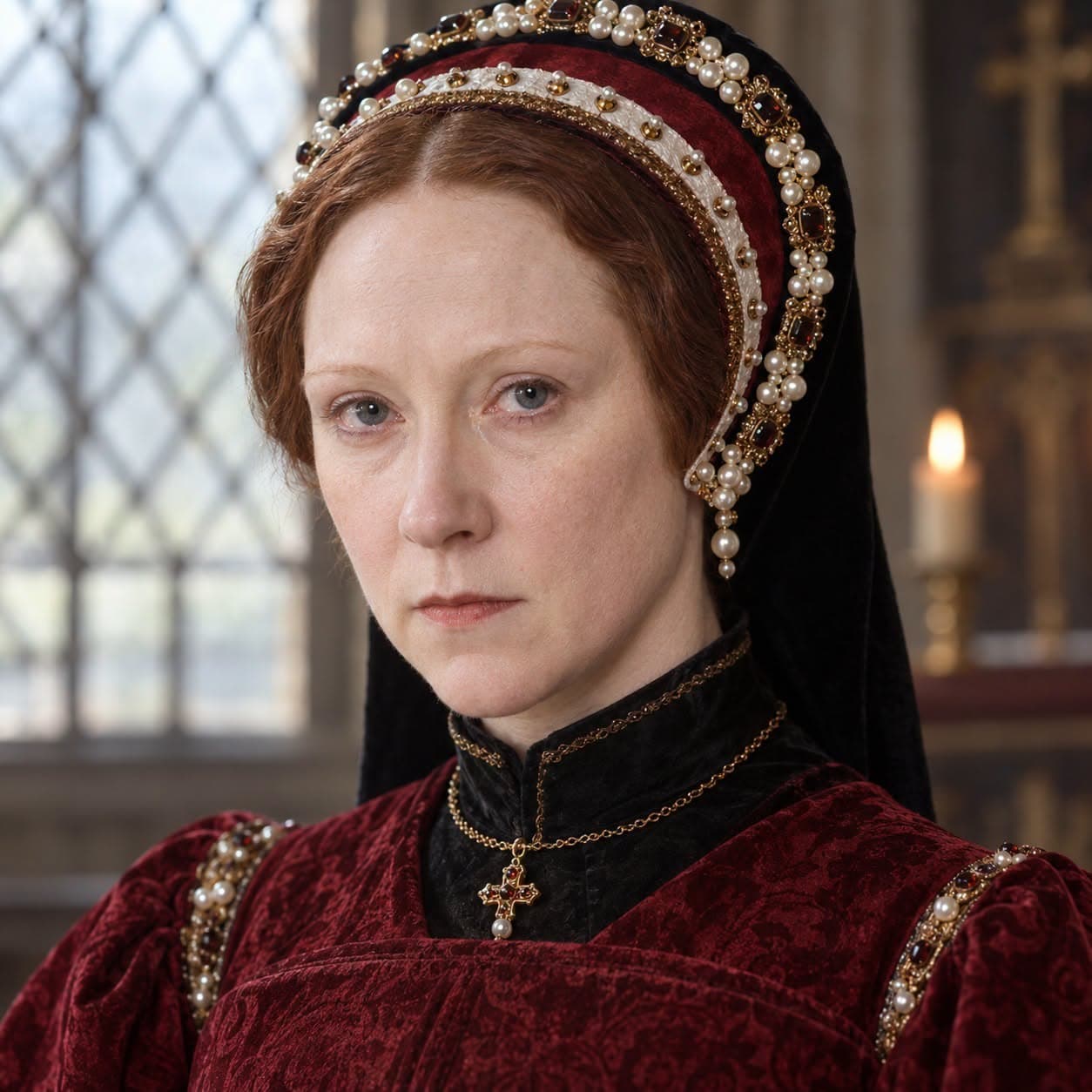
Eight years later, he published a revised New Testament. Anne Boleyn, by then Henry VIII's queen, owned a copy of this 1534 edition. It was printed on vellum, with her arms on its second title page and the words "Anna Regina Angliae", Anne, Queen of England, painted on the gilt edges. The translation condemned in London had reached the royal household in a volume made for a queen. Royal ownership and safety for its translator were very different things.
Tyndale was arrested in 1535 and imprisoned at Vilvoorde, near Brussels. In 1536 he was executed for heresy, strangled before his body was burned. The books had been burned ten years before him. Anne had been executed in May of that same year. Her copy survived them both.
It is now in the British Library, still bearing the name painted along its edges. Of the edition burned in 1526, only three copies are known to survive, in the British Library, in Stuttgart and at St Paul's Cathedral. The cathedral where Tunstall had the translation burned now keeps one of the hunted little books in its library, and nobody has asked for it to be handed in within thirty days.