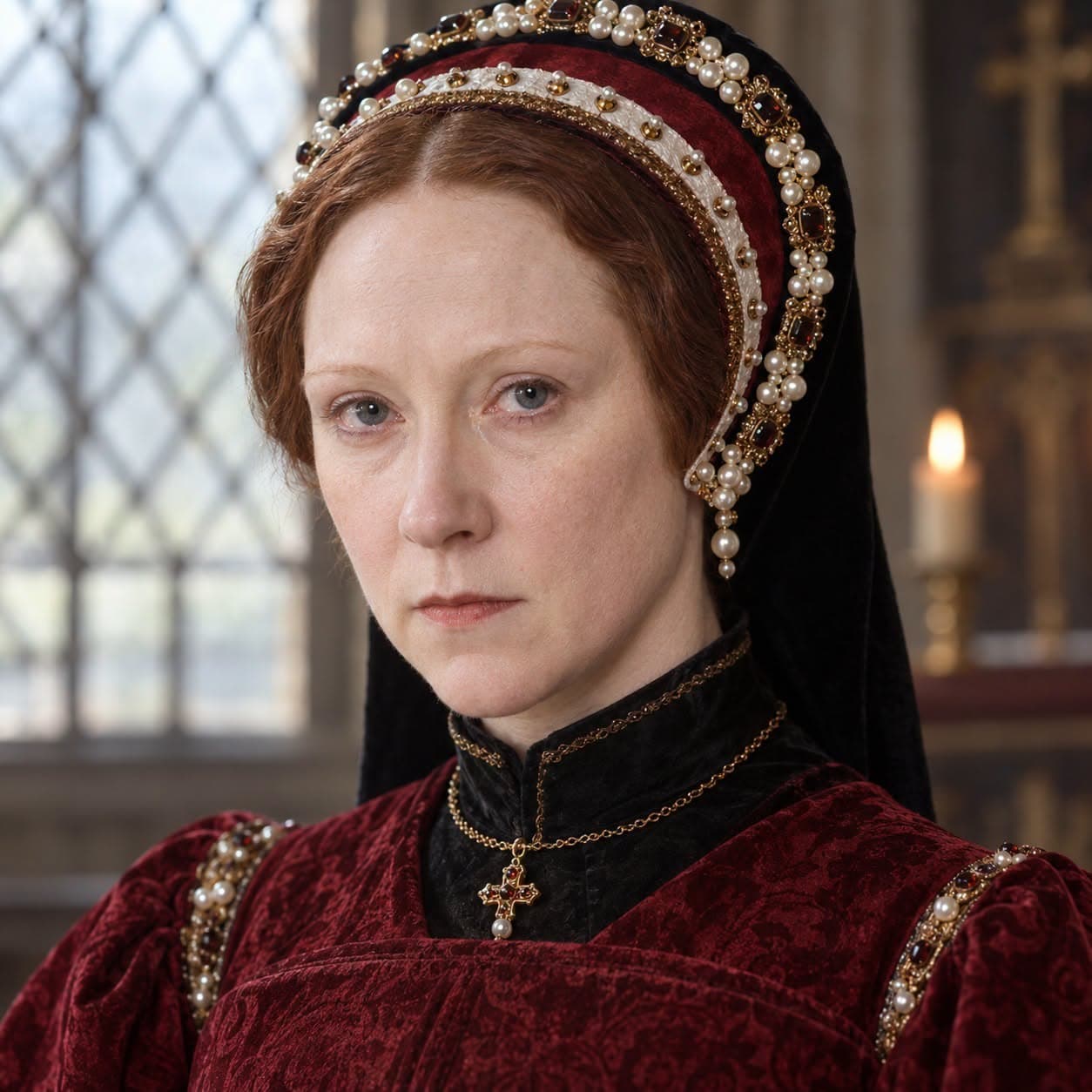
Mary received her brother's letter on her knees. She would honour his signature. She would not accept his instructions about her religion.
On 1 November 1552, Edward VI's second Book of Common Prayer came into compulsory use in England. Mary, his elder half-sister, was thirty-six, a Catholic princess living under a Protestant king. The new book prescribed the worship his subjects were to use. Fourteen months earlier, Mary had already shown what happened when that demand reached her own household.
The first English Prayer Book had been introduced in 1549. This second book carried the changes further. At Communion the minister now gave the bread with the words, "Take and eat this, in remembrance that Christ died for thee, and feed on him in thy heart by faith, with thanksgiving." The service expressed a Protestant understanding of what was taking place, far removed from the Mass Mary believed in.
The words had been changed by royal command. Mary had already told the king's own councillors that a royal command could not reach that far. The law took a different view. The new Act required everyone to attend their parish church, and anyone caught at any other form of service faced prison, for longer each time. A private house was not beyond its reach. Mary's had already been tested.
On 28 August 1551, three councillors arrived at Mary's house at Copthall in Essex. They were the Lord Chancellor, Richard Rich, the king's secretary, William Petre, and Sir Anthony Wingfield, who was to take over the running of her household. They had come to end the Mass there.
Rich delivered Edward's letter. Mary received it kneeling, explaining that she would kiss it in honour of the king's signature, not its contents. Those, she said, came from his Council. She read the letter privately, then asked Rich to keep his explanation short. She was not well at ease, she said, and she had already written her answer to her brother herself.
The councillors explained that the king had tried persuasion and would tolerate her refusal no longer. They offered to name everyone on the Council who had agreed to the decision. Mary did not want the list. "I know you be all of one sort therein," she told them.
Her answer allowed Edward every expression of loyalty except the obedience they had come to obtain. She was his subject and his sister. She would obey him with her conscience preserved. Rather than use any service other than the one used when their father died, she would lay her head on a block.
Edward was thirteen. Mary allowed that he knew more than others of his years, but not that he could be a judge in these things. They would not leave it to him to decide whether ships should be sent to sea, she pointed out. They could hardly expect her to leave him the ordering of her faith.
She would honour the signature. She would not surrender the Mass.
Yet the government had other people it could reach. Robert Rochester, her comptroller, had been ordered with two of her other officers to carry the Council's instructions to his mistress and see that Mass ceased in her household. He refused, declaring himself ready for prison instead. Four days before the councillors reached Copthall, he was sent to the Fleet. A week later he was in the Tower.
Mary could refuse an instruction in person. Her officers had to decide whether to enforce it against her. Her priests had to decide whether to continue the service she wanted to hear. Royal rank gave her room to resist that the people around her did not possess.
After leaving her, the councillors summoned her chaplains and servants. They forbade the priests to say Mass and the household to hear it, and required them to report any future breach to a member of the Council. The command reached past Mary's answer into the daily life of her house. The chaplains promised to obey.
As the men were leaving, Mary called them back to speak to her at a window. They offered to come up to her chamber, but she spoke from where she was. She wanted her comptroller returned.
Without Rochester, she explained, she had been taking her own accounts, and had learned "how many loaves of bread be made of a bushel of wheat." Her father and mother had "never brought me up with baking and brewing," and she was, she said, weary of the office. The king's sister was doing her own bread accounts.
She asked for him back, but she did not offer the obedience that might have secured his return. If they chose to send him to prison, she told them, "I beshrew him if he go not to it merrily, and with a good will."
Rochester was allowed home to the country in March 1552 because of his weak health, and in April, at Mary's request, he was back at work as her comptroller. By the November when the second Prayer Book became compulsory, his imprisonment belonged to the earlier struggle. The demand for conformity did not.
Within a year Edward was dead and Mary was queen. Her first Parliament repealed his religious laws and ordered a return to the services used in the last year of Henry VIII's reign. It was another compulsory settlement, now enforced in the opposite direction.
From 20 December 1553, the old services were the law of England again. Mary had received her brother's letter on her knees, honouring the hand and refusing the contents. Now his Prayer Book was prohibited, and the Mass she had been ordered to abandon was restored by law.