He went straight to the baker's house among the ruins of London and described it as it had stood. He said he had set it alight. Knowing where it was helped send him to the gallows.
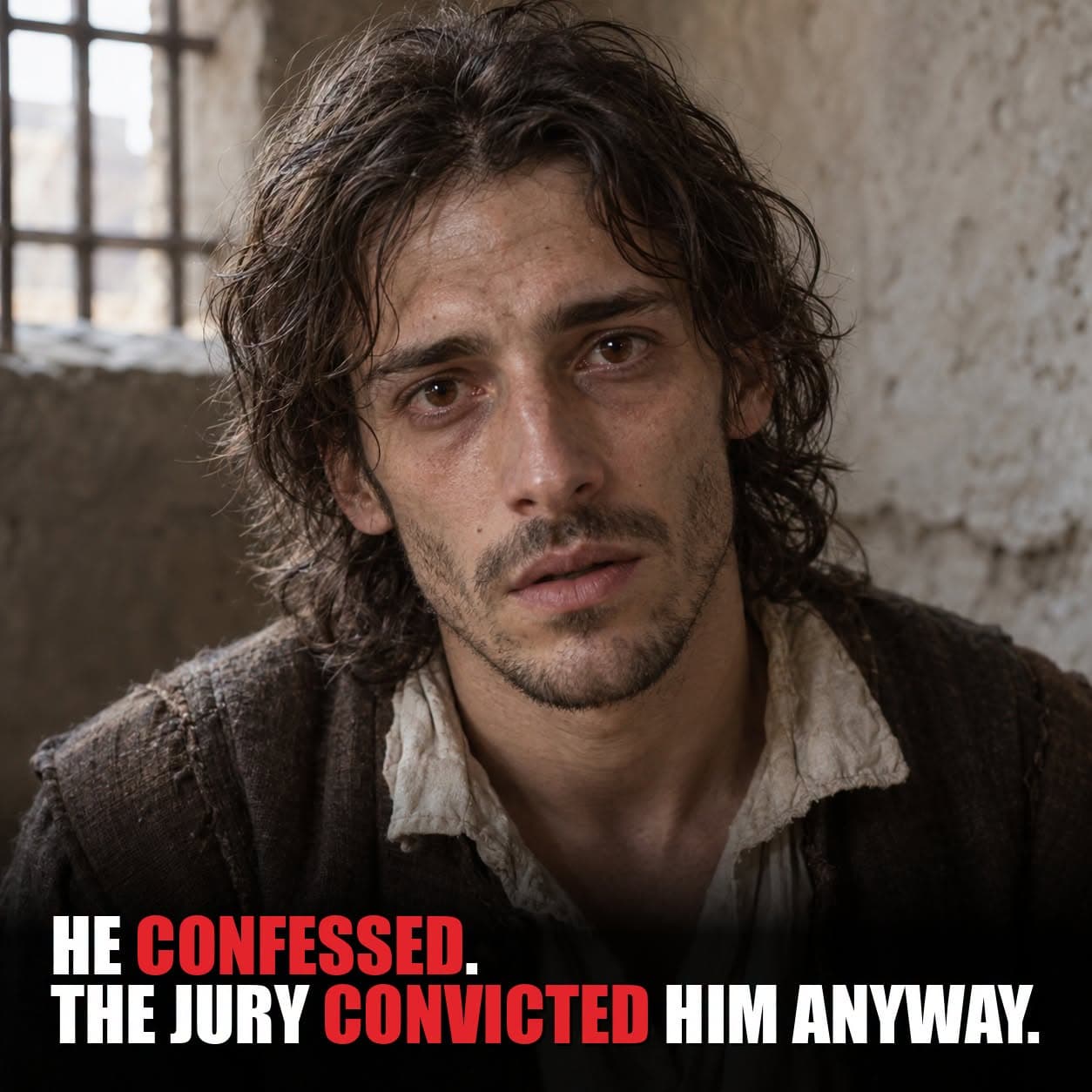
On 27 October 1666, Robert Hubert was hanged at Tyburn for starting the Great Fire of London. He was a Frenchman, the son of a watchmaker from Rouen, and he had worked at the trade himself, in Rouen and in London. His confession had survived doubts that should have stopped it. The judges who heard it did not believe him guilty. The jury convicted him anyway.
The fire had begun nearly eight weeks earlier, in the early hours of 2 September, at Thomas Farriner's bakery in Pudding Lane. From there it spread through streets of houses and workshops, destroying homes, churches and the places where people earned their living. The damage reached beyond the people whose roofs had burned. A household could save every one of its members and still lose almost everything that kept them fed.
People escaped with what they could carry or load into boats. Goods crowded the river as families moved their possessions out of the path of the flames, and what was safe at one hour might have to be moved again the next. On 5 September Charles II ordered markets to be set up in the fields beyond the city, at Islington, Mile End and elsewhere, with great quantities of bread brought in daily for the homeless. There were arrangements for storing rescued belongings and permission for people to practise their trades in other towns. Food, somewhere to put what remained, permission to work. Those were the immediate business of survival.
Alongside the relief came the accusations. England was at war with France and the Netherlands. Foreigners were suspected of spreading the fire, and Catholics of plotting to destroy a Protestant city. Some people were arrested or attacked. An ordinary stranger could become an enemy without having done anything more than come from the wrong country.
Hubert and his family were known to be Protestants, an awkward detail for a story about Catholic incendiaries. He was arrested at Romford in the days after the fire, confessed to starting it, and was imprisoned at the White Lion in Southwark. His account changed, but its eventual centre was the bakery in Pudding Lane. He claimed that he and a companion, Stephen Peidloe, had gone there with a fireball of gunpowder, brimstone and other combustible material fixed to the end of a pole, and that he had pushed it, burning, through a window.
It was a story with a method, a place and an accomplice. It also had a difficulty that could be checked against the people who lived there. Farriner and his children said there was no window where Hubert described one. They also said the fire had not begun in that part of the building. The people whose home he claimed to have burned were contradicting the way he said he had burned it.
He could still find the house.
Taken to the ruins, Hubert went to the site of the bakery and described the building as it had been. Against the shifting details of his accounts, there was now a piece of ground, a house that had existed, and a prisoner who recognised it. It gave his confession something its words had failed to supply.
But by then the whole city knew the fire had started at the baker's in Pudding Lane, and Hubert had lived and worked in London. Finding the place was not knowledge reserved for the man who had set it alight. Nor did describing the building explain the window that its own occupants said was not there. Recognition made his confession more persuasive without making its contradictions disappear.
The formal accusation put the destruction into a different kind of order. It named Hubert, the baker and Pudding Lane, and laid the burning of the house, and of everything that burned after it, at his door. Farriner, his son and his daughter signed it. The family who disputed important parts of his story also supported the prosecution against him.
For the ruined households, there was now a named man to blame. That did not make the case against him sound. The Lord Chief Justice told the king that Hubert's account was so disjointed that he did not believe him guilty. Doubt had reached the Lord Chief Justice and the king himself. It did not prevent a conviction, and on 27 October Hubert was taken to Tyburn and hanged. His confession had been enough to condemn him, with the reasons for distrusting it already before the court.
There was another part of his journey that London would only hear about afterwards. He had come to England from Sweden by ship. The captain later stated that Hubert had been aboard when the fire began and had not gone ashore until two days after it started. By that account, the man who could find the ruined bakery had not been in London to set it alight. By the time Robert Hubert stepped onto land, the house he would be hanged for burning was already gone.