Pauline Bonaparte was twenty-two when she brought her husband's body home from Saint-Domingue. Her little son came back alive. Within two years, she would lose him too.
Pauline Bonaparte was born at Ajaccio in Corsica on 20 October 1780, the daughter of Carlo Bonaparte and Letizia Ramolino. The princess, the Roman palaces and the famous marble portrait all belonged to a future the family had yet to acquire. Before Napoleon could give his sister a place among the great families of Europe, the Bonapartes had to leave their own home.
In 1793 they fled Corsica for mainland France, eventually settling in Marseille. Their quarrel with the Corsican leader Pasquale Paoli had made staying on the island impossible. Napoleon's military success would lift them out of their difficulties, and his success came with opinions about how his family should live. He put an end to Pauline's romance with the politician Stanislas Fréron and found her a husband among the officers he trusted.
She married General Charles Leclerc at Mombello, near Milan, on 14 June 1797. She was sixteen. The following April, in Milan, she gave birth to their son Dermide. Leclerc's connection to Napoleon brought advancement, and eventually an appointment that would take all three of them across the Atlantic.
Saint-Domingue, the French colony that is now Haiti, had been transformed by the uprising of enslaved people that began in 1791. Slavery had been abolished there, and Toussaint Louverture, who had been born into slavery himself, now governed the colony in all but name. Napoleon sent Leclerc to take it back. Pauline and Dermide sailed with him when the expedition left Brest in December 1801.
The fighting was followed by yellow fever, which devastated the French army. Louverture was captured and shipped to France. News that slavery had been restored in other French colonies renewed the resistance, and the war grew more savage while disease emptied the ranks of the army sent to win it.
In November 1802, yellow fever killed Leclerc too.
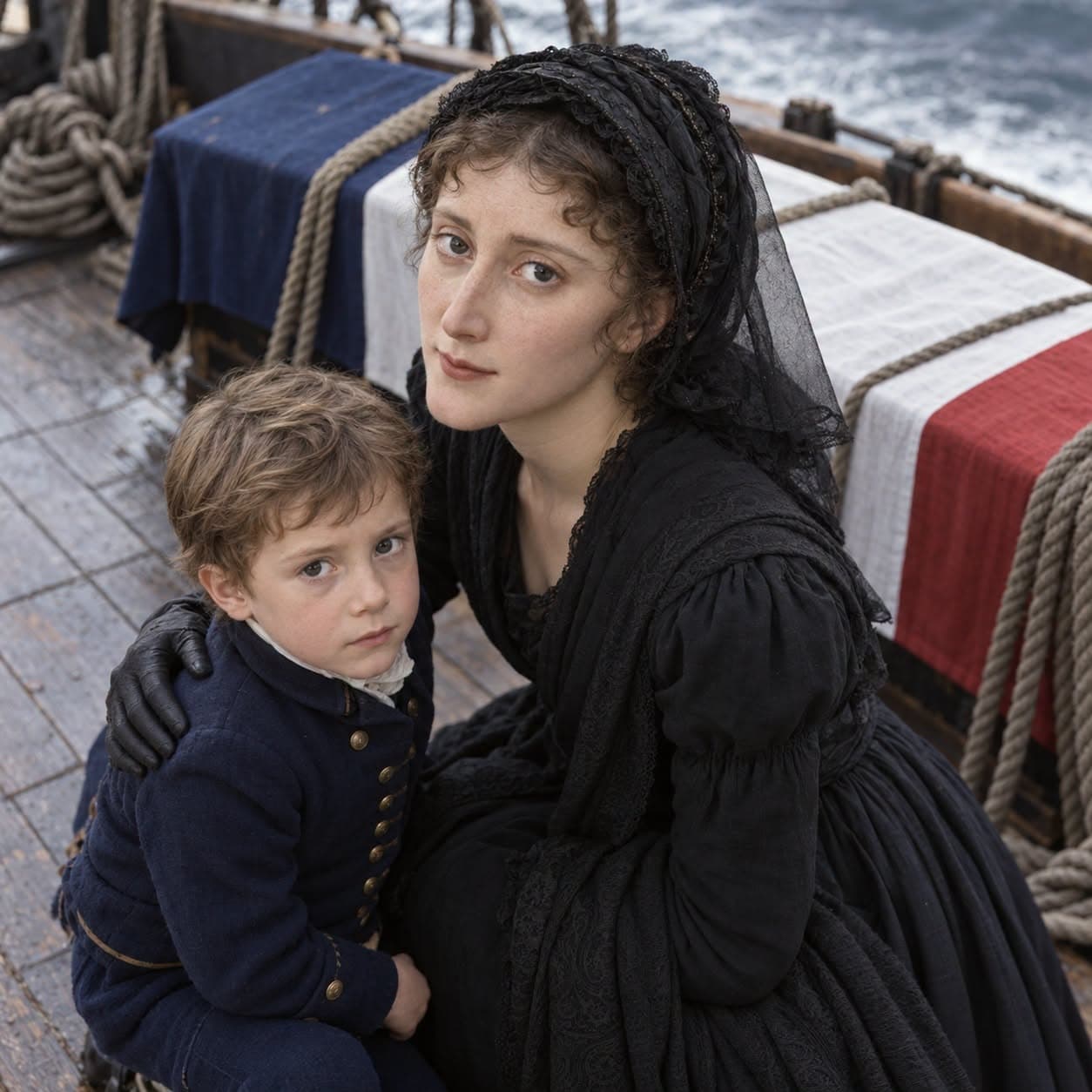
Pauline returned to France with Dermide and her husband's body. Leclerc was buried at Montgobert in March 1803. The expedition had taken a general, his wife and their child overseas; the return brought a young widow, a little boy and a coffin. Dermide was four. He had survived the voyage and the colony, and went with his mother into the next arrangement made for her future.
Her second husband was Prince Camillo Borghese, a wealthy Roman aristocrat. Napoleon approved the match. A connection with an old Italian noble family suited the rising Bonapartes very well, although Pauline managed to annoy her brother even while marrying the man he approved of. The religious ceremony took place secretly at Mortefontaine in August 1803, less than a year after Leclerc's death, and without Napoleon's knowledge. He stayed away from the civil ceremony that November. There were limits to his willingness to have family affairs conducted without him.
Pauline went to Rome with her new husband and her son. In 1804, near Rome, Dermide died. He was six. The Borghese marriage brought no children. She never had another child.
That same year, Camillo commissioned Antonio Canova to make the portrait that would preserve her as Venus Victorious. Completed in 1808, it showed her reclining, holding the apple awarded to the most beautiful of the goddesses. Rome gossiped that she had posed for it nude. The face was idealised, the composure belonged to the marble, and it could tell the viewer nothing about the small family she had taken across the Atlantic, or what remained of it.
The second marriage did not hold together. Pauline spent much of her life apart from Camillo, moving between France and Italy and between the spa towns where she sought treatment for her health. Critics of the regime said she was exceptionally free with her favours, and the list of names has followed her ever since. Her brother could approve a husband and confer a title. He could not make the household last. Their quarrels, and her resistance to his instructions, did not end the attachment between them.
When his empire fell in April 1814, she was waiting for him at Le Luc in Provence. He stopped to see her there on his way to the coast and into exile.
Pauline went to Elba.
She arrived on 1 June. That first visit was brief. She left again, then returned later that year to join Napoleon and their mother Letizia. She had followed a general overseas as his wife. Now she crossed to an island to join a brother who had lost his throne.
Napoleon had prepared an apartment for his wife Marie-Louise and their son. Neither came to Elba. There was a place for them in his island household, but the family that gathered around him there was his mother and his sister, women who had known him in Ajaccio before there was an empire to lose.
Pauline had returned from Saint-Domingue with a dead husband and a living child. By the time she joined her brother on Elba, she had lost them both. In the household of the fallen emperor, she took the apartment prepared for his wife and son.