She was about twelve when she was crowned queen of Denmark, Norway and Sweden. Her husband was roughly twice her age. Years later, she would govern in his absence.
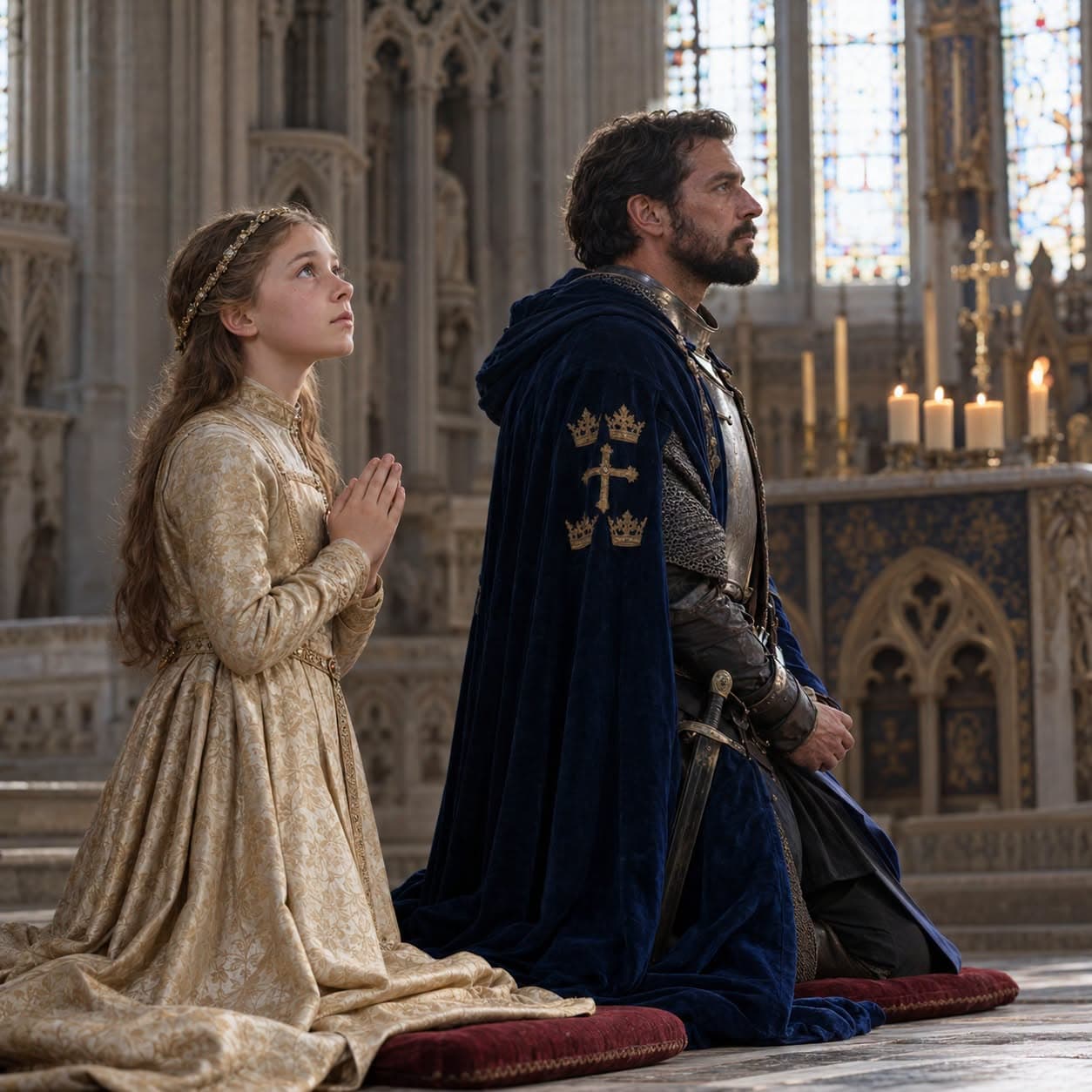
On 26 October 1406, Philippa of England married Eric of Pomerania at Lund and was crowned queen of the three northern kingdoms. Margaret, Eric's adoptive mother and the woman who had brought those kingdoms together, was there. The bride had arrived from England only the previous month. Her new position had been settled long before she reached it.
Philippa was the youngest daughter of Henry IV and Mary de Bohun, and a sister of the future Henry V. Her mother had died in 1394, the year Philippa was born. Five years later, her father displaced Richard II and took the English throne. The daughter of a great nobleman became the daughter of a king, and a much more useful marriage prospect.
Henry's crown was new enough for recognition abroad to matter. Across the sea, Margaret's union needed a secure dynastic future. An English princess offered royal blood and a connection to another reigning house. A child could be very valuable to people arranging the future of kingdoms.
The negotiations began when Philippa was about eight. At first, the plan involved two marriages: her brother Henry would marry Eric's sister Catherine, and Philippa would marry Eric. The first match fell away. Hers survived the bargaining.
In November 1405, when she was eleven, Philippa went through a wedding ceremony at Westminster. Eric was absent. A Swedish knight, Ture Bengtsson, stood in for him. In December she was proclaimed queen of Denmark, Norway and Sweden, while still in England. The title had crossed the sea before the child.
Her belongings were prepared on a scale to match it. There was a wedding gown trimmed with ermine and five more gowns, mostly of cloth from Cyprus. One was covered in pearls, 1,368 large ones and many smaller, and the accounts charged for them by weight. There were silver spoons and bowls, seven gilded dishes and a full set of altar silver for a private chapel. There were hangings of cloth of gold worked with golden falcons, a travelling carriage dressed in cloth of gold and red leather, and eight saddles. Alongside the magnificence were three pairs of boots and thirty pairs of shoes. A royal household could pack everything required for a queen's establishment, even when the queen was twelve.
She left England in August 1406 with a substantial company of attendants and reached Helsingborg about a month later. This was no solitary girl being put ashore with a marriage contract. People and possessions travelled with her. But her father's household was behind her, and the household being established around her belonged to her married life.
At Lund, the bridegroom was present this time. So was Margaret, who remained the effective ruler of the union. Philippa had the rank of a queen beside a woman already exercising the power of one. Her own household came under Katarina Knutsdotter, a granddaughter of Saint Bridget, who died the following year. The girl sent from England had entered a world in which women's authority was part of the daily business of court.
She had been given a crown. The work would come later.
By 1420, Philippa was in her mid-twenties, and she and Eric had no child to succeed them. Another dynastic arrangement was being made. This time, she appeared in it as the person who might have to hold the kingdoms together.
The settlement provided for what would happen if Eric died before her. Philippa was to have authority over the kingdoms, castles and lands on behalf of his designated successor, his cousin Bogislav, until he came of age. Her own provision as a widow included extensive Swedish lands. It was a complicated arrangement, hedged with conditions about succession and the return of property, but its central responsibility was plain. If the king died, the queen would have to govern.
When Eric travelled abroad in 1423, Philippa did govern. He would be away until 1425, his journey taking him to the Holy Land. She acted as regent during his absence, dealing with the affairs of the three kingdoms. Among her achievements was an agreement with the Hanseatic towns that brought order back to the Danish coinage. There was no coronation ceremony to make that work magnificent. It required negotiation with people whose interests did not conveniently become the crown's interests because a queen asked them.
She was still doing the work when he returned. In 1426 she went to Sweden to secure support for his war against the counts of Holstein. The connection made through her marriage now depended on her ability to raise resources and deal with the people who controlled them.
Vadstena became another enduring part of her life. The wedding at Lund had itself helped lead to the founding of Syon, the first Bridgettine house in England, and the queen kept close to the order's mother house. She was enrolled there as a lay sister, visited repeatedly and gave the community substantial gifts. In its church she endowed a chapel dedicated to Saint Anne. Here, too, the queen's presence took a lasting, practical form: land, gifts and a place within the church.
Philippa died at Vadstena in January 1430. She was thirty-five, and was buried in the chapel she had endowed. Eric arranged prayers for her and gave the convent two pearl-set gold crowns, his own and hers. Hers was the crown from the coronation at Lund, when she had been about twelve.