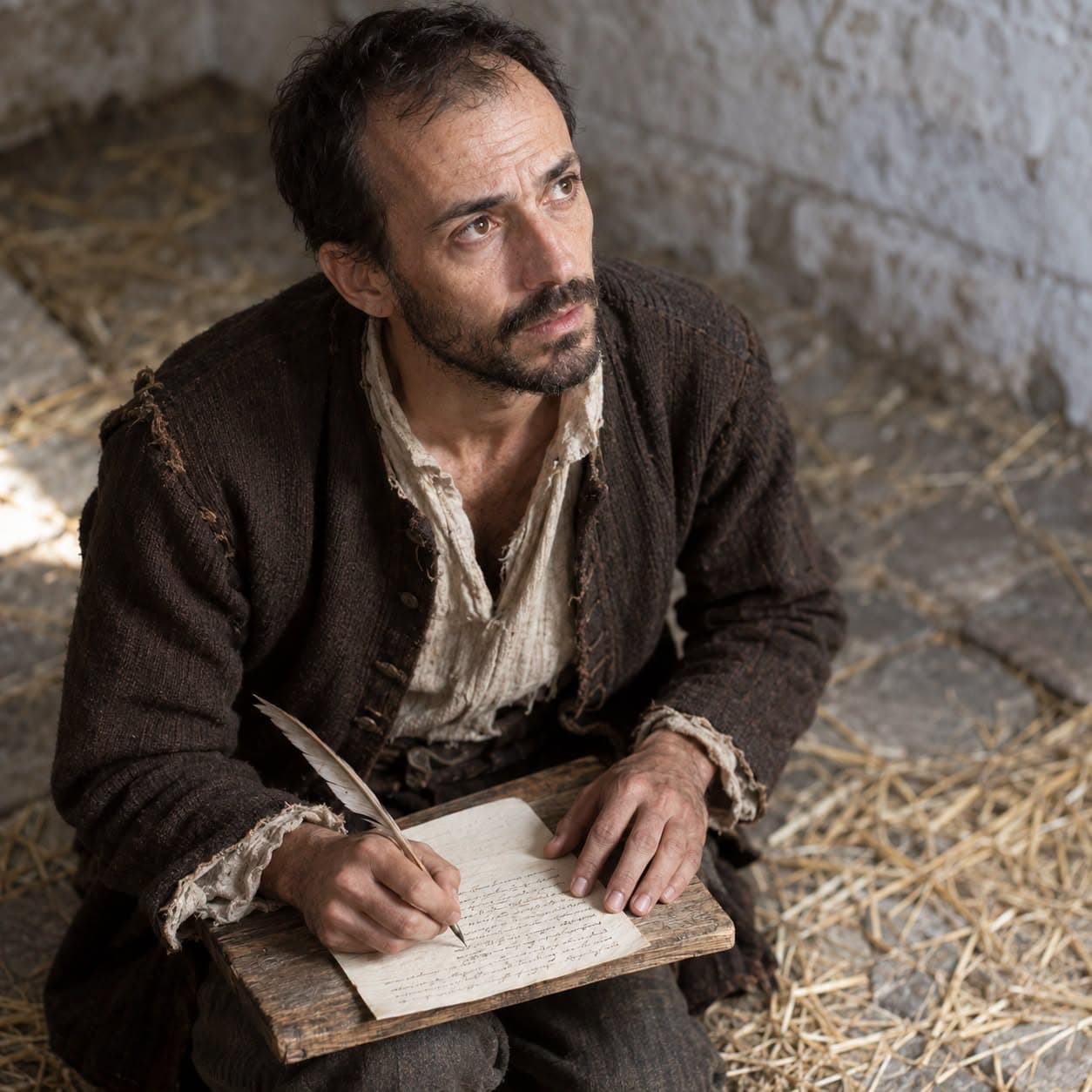
He had one poor shirt, torn breeches and, he wrote, lice that were eating him alive. He asked for a lawyer as well. The men reading his petitions would sentence him to burn.
Michael Servetus, a Spanish physician, set out those complaints to his judges from a Geneva prison on 15 September 1553, while his religious writings were being examined. On 26 October 1553, the city's council sentenced him to death by burning. The execution would follow the next day. By then, he had already escaped one prison and been condemned by another court. Catholic authorities had wanted him dead in France. Protestant authorities would carry out their own sentence in Geneva.
In France he had been known as Michel de Villeneuve. He had studied medicine in Paris and settled in Vienne, in the Dauphiné, where he practised as a physician and served as physician to the archbishop of Vienne. There was a professional life behind that name, years of medical work conducted while the name Servetus remained attached to dangerous religious books. He had published On the Errors of the Trinity in 1531. More than twenty years later, his objections had grown into a much larger work.
The Trinity, one God in three persons, Father, Son and Holy Spirit, was fundamental to both Catholic and Protestant Christianity. Servetus rejected the orthodox formulation. He also attacked infant baptism, insisting that baptism required a faith a baby could not yet possess. His arguments challenged teachings that the churches on either side of the Reformation held sacred. He wrote with the confidence of a man prepared to correct them both.
His new book was called Christianismi Restitutio, The Restoration of Christianity. Printed secretly in Vienne in 1553, it brought his religious arguments and his medical knowledge between the same covers. In a discussion of the soul and the vital spirit, he described blood passing from the right side of the heart through the lungs before reaching the left. The blood mixed with inhaled air along the way. Here was a physician tracing a bodily process inside a book about restoring the Christian faith. The work that exposed him to prosecution also preserved this account of how blood travelled through the lungs.
Servetus had sent his ideas to John Calvin, the leading reformer in Geneva, and their correspondence had become bitter. Calvin indirectly supplied documents that helped the authorities in France identify the physician Villeneuve as the author Servetus. Arrested in Vienne in April, Servetus escaped three days later, going over the prison wall before dawn. The French proceedings continued without him, and he was condemned in his absence. An effigy took his place at the burning. For the moment, the man himself was beyond their reach.
In August he was arrested in Geneva, on a denunciation Calvin set in motion.
There he had to defend the writings that had already brought him before Catholic judges. Calvin took an active part in the prosecution, but the power to sentence belonged to the city's magistrates. They also sought opinions from other Swiss Protestant churches. Servetus's beliefs were being examined across a network of ministers and councils while he remained in prison, trying to obtain someone who could help him argue his case.
In his September petition he explained that he was a foreigner, unfamiliar with the country's laws and customs. His accuser had received legal assistance; he had been refused it. He wanted his case referred to the larger Council of Two Hundred. Alongside these demands came the condition of his clothes: torn breeches, no change, a poor shirt. He was asking the same authorities for a means of defending his life and something fit to wear while doing it. Clothing was authorised at his own expense. A week later he went on the attack, demanding that Calvin be held prisoner as a false accuser and, if found guilty, suffer the punishment he was seeking for Servetus. Neither man was arguing for tolerance.
By 10 October he was writing again. The arrangements for keeping him clean had produced nothing, he said. Cold tormented him. He suffered from colic and a hernia, with other miseries he was ashamed to describe. He had been requesting an audience for about three weeks. He appealed to the councillors in the name of Jesus Christ, asking them to act from pity or from duty. The theological disputant who had filled a book with arguments now had to explain his bodily needs to the men holding him. This time the council ordered officials to visit him and arrange the necessary clothing.
His petitions could obtain an order for clothes. They could not secure his release.
On 26 October the council condemned him. A proposal to send his case to the Council of Two Hundred, the hearing he had asked for in September, was rejected. Calvin wrote to his fellow reformer Guillaume Farel that day. "He will be led forth to punishment tomorrow," he reported. "We endeavoured to alter the mode of his death, but in vain." Calvin favoured beheading over burning. The disagreement had narrowed to how the prisoner should die. The sentence remained, and it included the destruction of his writings.
On 27 October Servetus was told his fate. He was brought before the town hall to hear the sentence read aloud, then led out to Champel and executed. The petitions he had addressed to his judges survived: the legal demands, the lice, the illness he was ashamed to describe, the poor shirt. Among the papers of the proceedings that ended his life, he is still asking for a change of clothes.