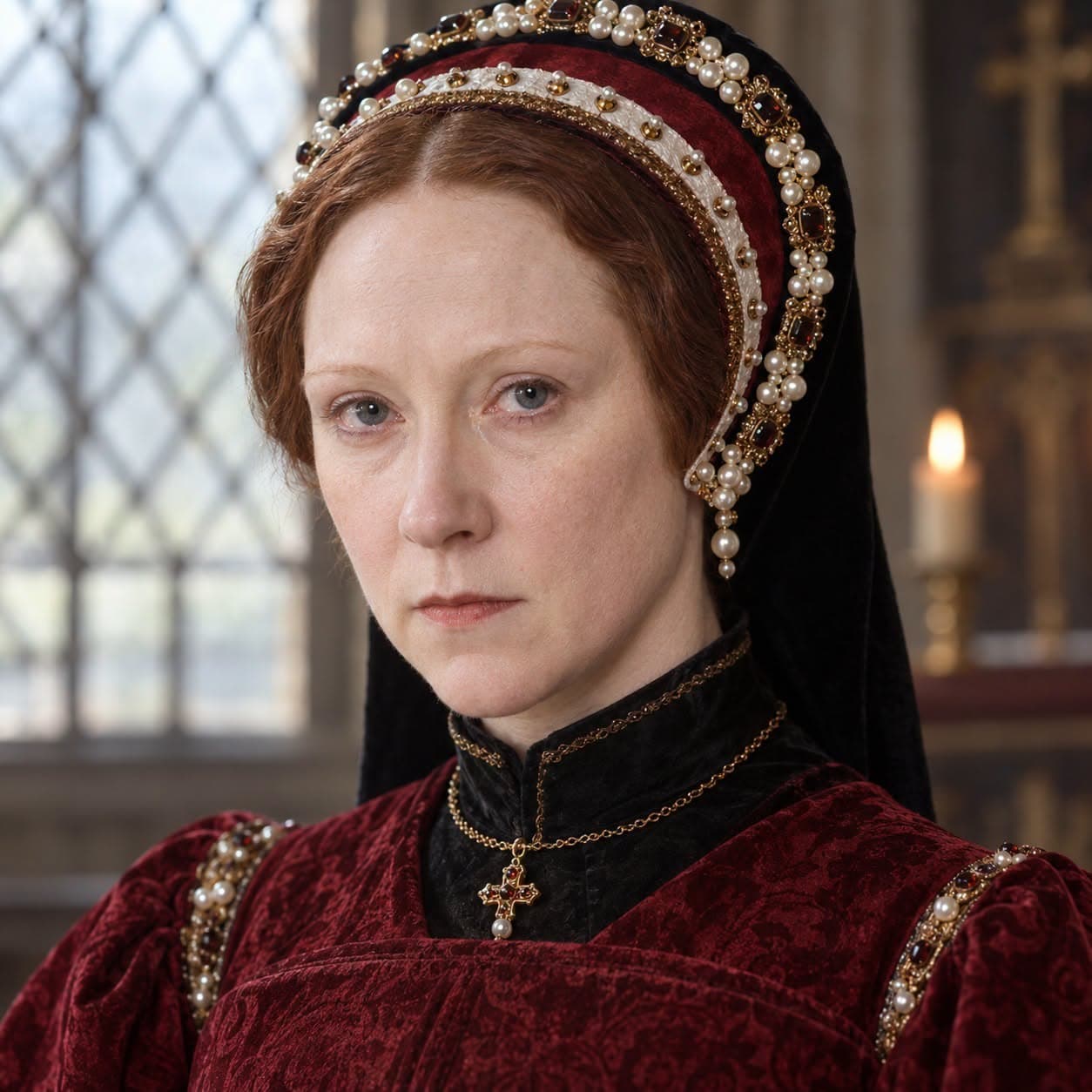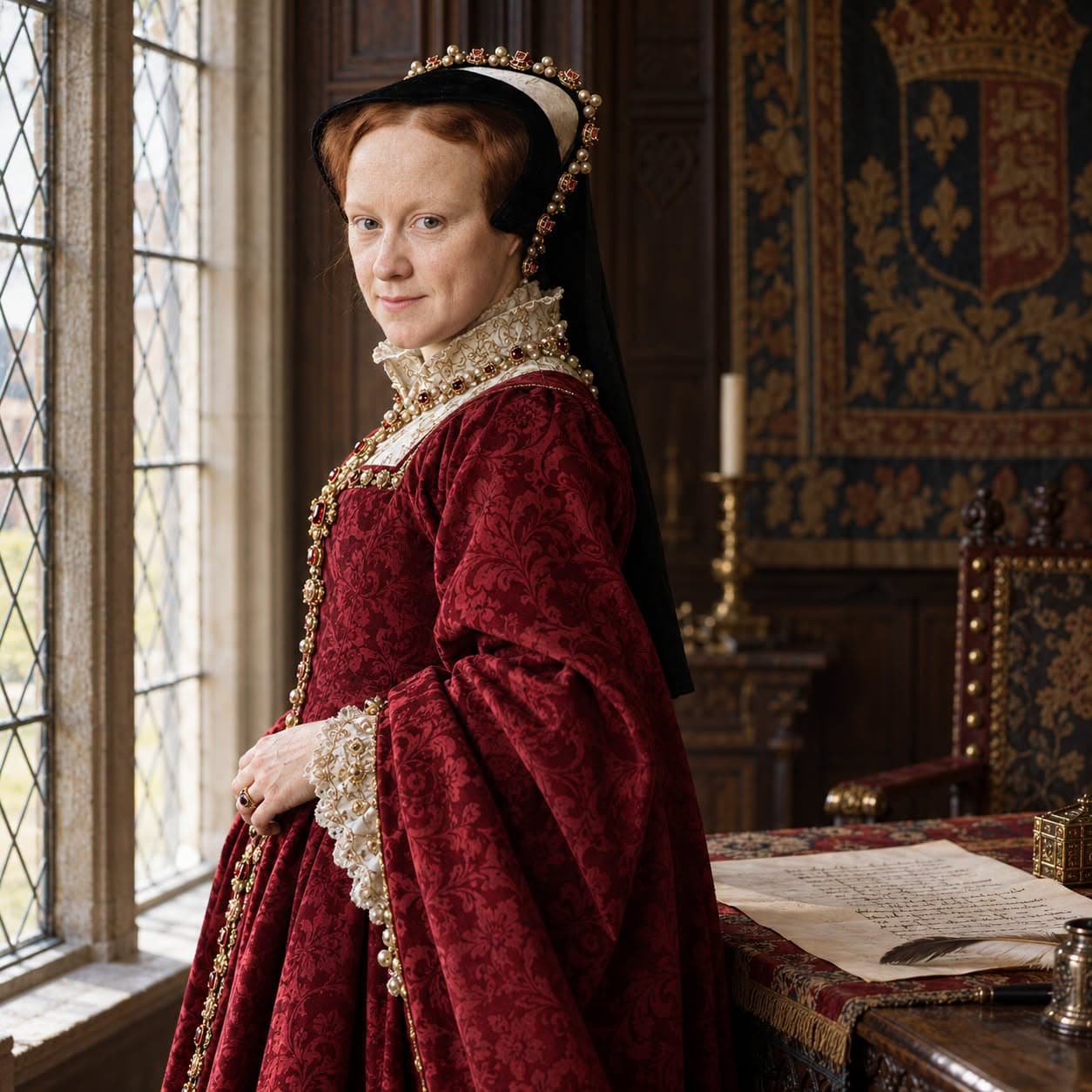
The queen was forty-two when she left her crowns and jewels to the child she believed she was carrying. No child came. Seven months later, she was asking someone else to honour her will.
On 28 October 1558, Mary I added a codicil, an amendment, to the will she had made that spring. She was ill, describing herself as "sicke and week in bodye", but insisting that her memory remained sound. The earlier document had arranged for a child to succeed her. This one arranged for the possibility that she would die without one.
In March, the danger she had been preparing for was childbirth. Her will began with her belief that she was pregnant and her recognition of the great danger women faced in labour. She described herself as otherwise "in good helthe". If she died and the baby survived, there would be a monarch too young to rule, and a country to be governed until that child could do so.
She had provided for that. Her husband, Philip, was recommended to govern during their child's minority. Six named men were to be of council with the expected heir. The crowns, ships, munitions, artillery and jewels were all to pass to the child. A whole government waited in those clauses for someone who had yet to be born.
There was room in the same document for her mother.
Catherine of Aragon lay buried at Peterborough. Mary directed that, as soon as conveniently possible after her own burial, Catherine's body should be brought to rest near hers. Her executors were to provide honourable tombs or monuments for them both. She left the choice of her own burial place to those executors, but she was quite specific about who should be brought there afterwards.
Mary was the daughter of Henry VIII's first marriage. Elizabeth was the daughter of his second, to Anne Boleyn, whose elevation had come with Catherine's displacement and Mary's declaration of illegitimacy. When Mary became queen, her first Parliament declared her parents' marriage valid. She could restore her mother's standing in law. In her will, she arranged a place for her beside her own grave.
The prayers she requested brought the family together in another way. Religious houses were to pray for Mary, for Philip, for Catherine and for all their ancestors. She provided money for communities she had restored after their dissolution under her father. Her Catholic faith ran through the arrangements for her soul, her family and her kingdom. The child expected in March could inherit the crown and carry that restoration into another reign.
By October, there was no child to inherit anything.
Mary did not declare that God could never send her one. She left that possibility to divine providence. But she now made provision for the death of a queen without an heir of her own body, and the person who would then have to fulfil her wishes was already entitled to succeed under the law.
Elizabeth's place in the succession had been restored by the Act of Succession of 1544, in their father's reign. Without a child of Mary's, the crown would pass to her younger half-sister. Mary did not name her in the codicil. She addressed her next heir and lawful successor, asking that the executors be allowed the money and assistance they needed, and that any defects in the arrangements for her religious and charitable foundations be put right.
In March she had charged her own child to uphold her will. In October she had to ask her successor.
There was a warning attached. Those who broke wills faced God's severe justice. Mary could appeal to conscience, duty and divine punishment, but the sovereign who followed her would have the authority to decide what happened next. Her religious legacy now depended on a sister whom England's Protestants already looked to as their own.
That legacy included more than restored monasteries and prayers. Under Mary, the heresy laws had been revived and hundreds of Protestants had been burned. The faith for which she endowed religious houses was also the faith her government had enforced through persecution. A change of sovereign could change the direction of the Church again.
Philip's future changed with the missing child, too. He was absent from England during her final illness. The codicil acknowledged that, without an heir of Mary's body, he would have no further government of the realm. She asked him instead to give his care, friendship and strength to her successor and her country. The husband who might have governed for their child was being asked to support someone else's reign.
In early November, pressed by her council, Mary acknowledged Elizabeth as her successor. She died at St James's Palace on 17 November 1558, twenty days after the codicil. She was still forty-two. Elizabeth became queen, and the Catholic settlement Mary had worked to restore was overturned in the new reign.
Mary was buried at Westminster Abbey on 14 December. Her funeral was Catholic, with the prayers and Masses of the Church she had restored. But Catherine remained at Peterborough. The instruction to bring her mother to her was never carried out.
The will that had provided for an unborn child had also provided for a mother and daughter to lie near one another. In 1606, under James I, another coffin was placed in Mary's vault at Westminster, above her own. It belonged to Elizabeth. The woman who eventually shared her grave was the sister she had not named in her codicil.