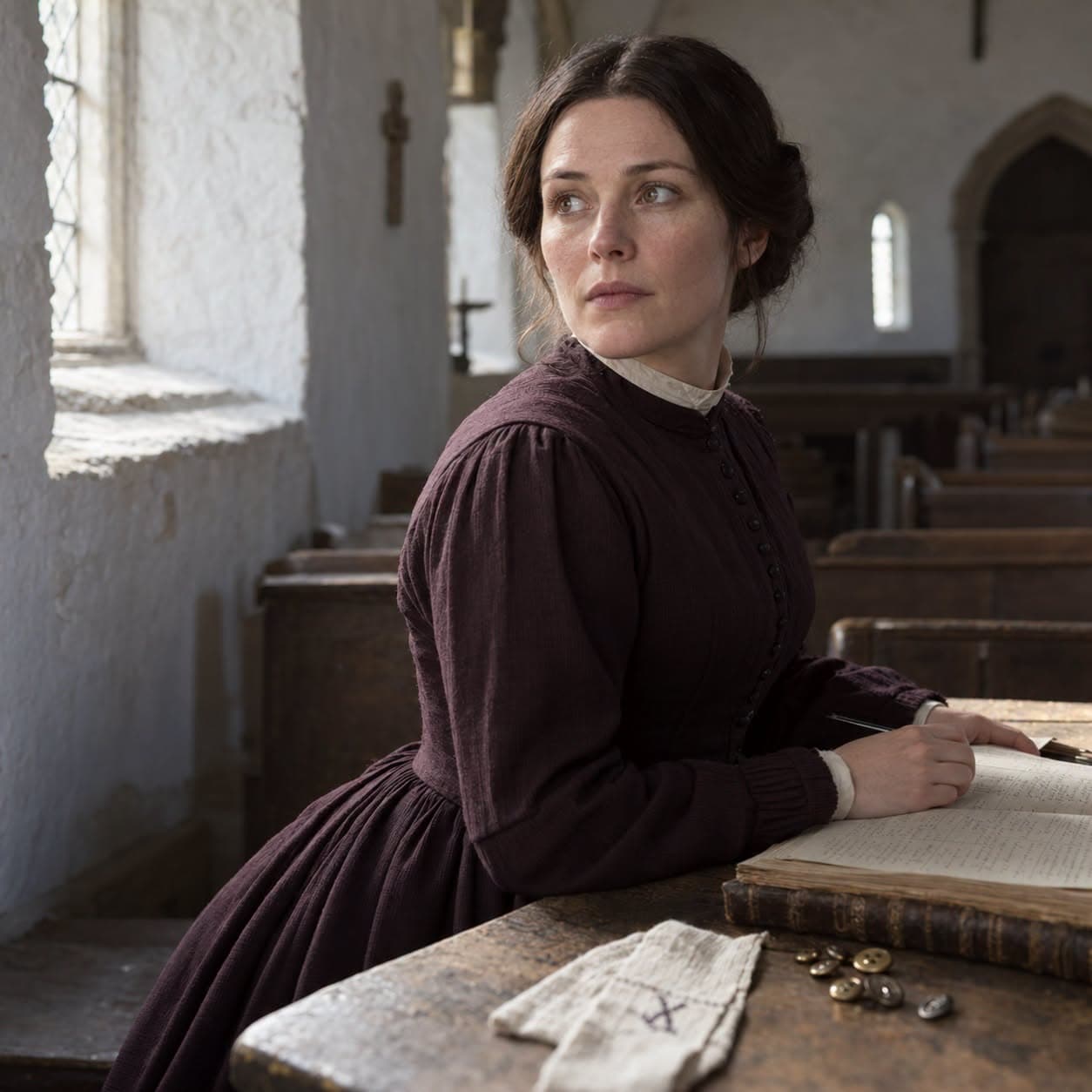
She was twenty-nine when she gave birth to the son who displaced her daughter. Her first child was only ten months old. Being older gave the little girl no precedence over a son.
On 19 October 1712, Maria Anna of Austria, queen of Portugal, gave birth to Pedro, her second child by King João V, at the Ribeira palace on the Lisbon waterfront. He became Prince of Brazil, the title of the Portuguese heir. His elder sister, Bárbara, had held first place until that day.
Maria Anna had come to Portugal four years earlier, an Austrian archduchess marrying into the House of Braganza. Her father was Emperor Leopold I. Her brother, the Emperor Joseph I, had stood in for the Portuguese king at their wedding in Vienna, and she had arrived in Lisbon in October 1708 aboard a large fleet. Even before there were children, the marriage had required an emperor, an ambassador and a considerable amount of shipping. What followed from it was never going to be a private family matter.
The first child came on 4 December 1711. She was named Maria Bárbara, and for a little over ten months she was the king's heir presumptive. A daughter could stand first in the succession. She could also be moved down it by a brother who had not yet been born. Bárbara's position carried that condition from the beginning, and before she reached her first birthday the condition was met. She remained a royal daughter with a claim to the crown, but she was now behind Pedro. She had done nothing to lose her place. He had done nothing to earn his beyond being a boy.
Lisbon announced his arrival with bells. There were three days of illuminations, and artillery fired from the towers and fortresses and from the ships anchored in the harbour. The next day João went to the chapel with the court dressed in gala clothes to give thanks. A sermon marked the birth of the prince on whom the succession now rested.
The city could celebrate a future king. Maria Anna had given birth to a baby.
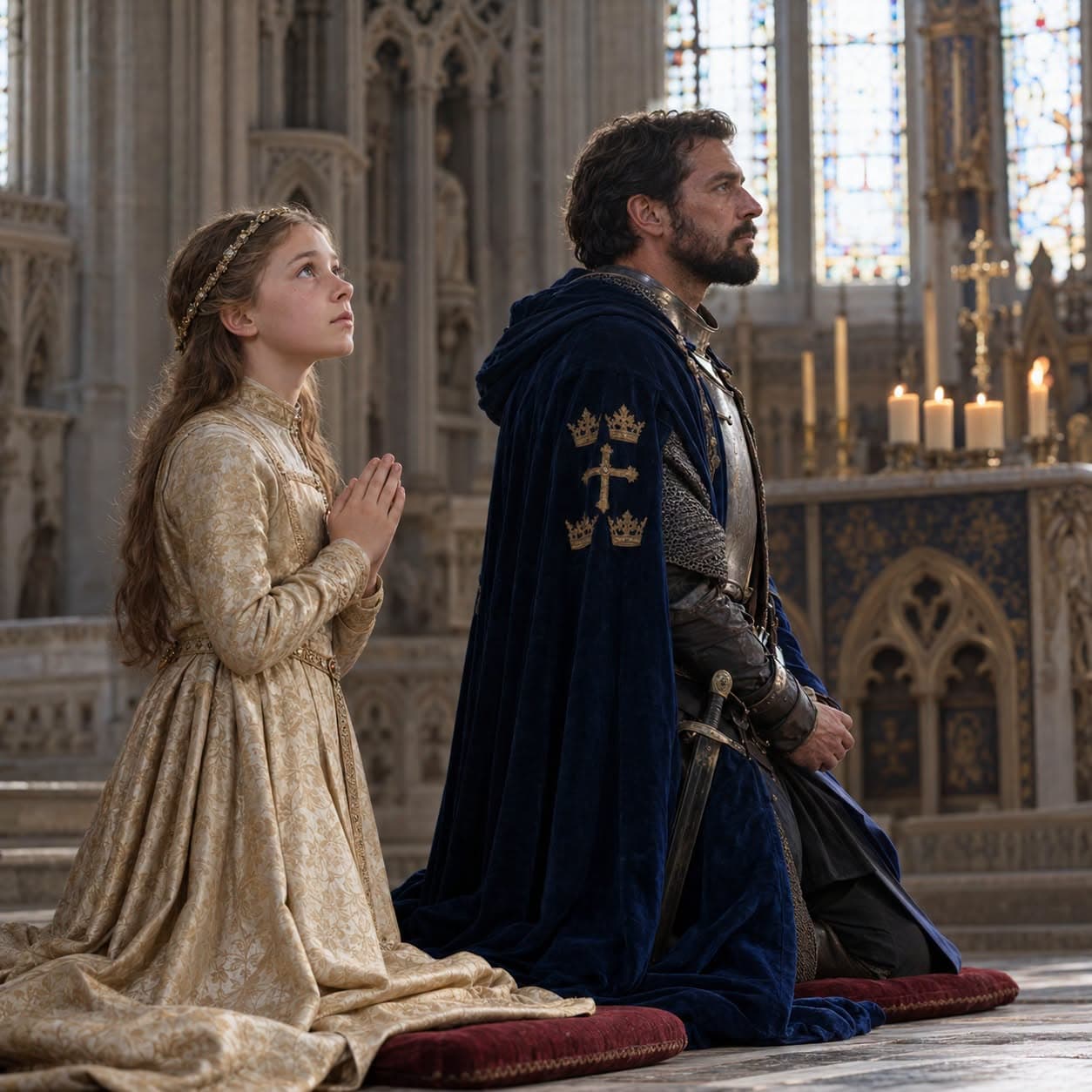
At Pedro's baptism on 21 November, the distance between those two things was filled with ceremony. Heralds in their coats of arms joined a procession of nobles, royal servants and grandees, each in the proper order. The Duke of Cadaval carried the child in his arms beneath a rich canopy. Six noblemen held its poles. Other great men carried the ceremonial objects, including the towel for the holy oils and the white baptismal garment. The smallest person in the procession required the largest arrangements.
His godfather was Maria Anna's other brother, Emperor Charles VI, represented at the font by the child's uncle Manuel. His godmother was his aunt Francisca. His sister was not yet a year old. He was a month old, and already the line through which the family expected the Portuguese crown to pass.
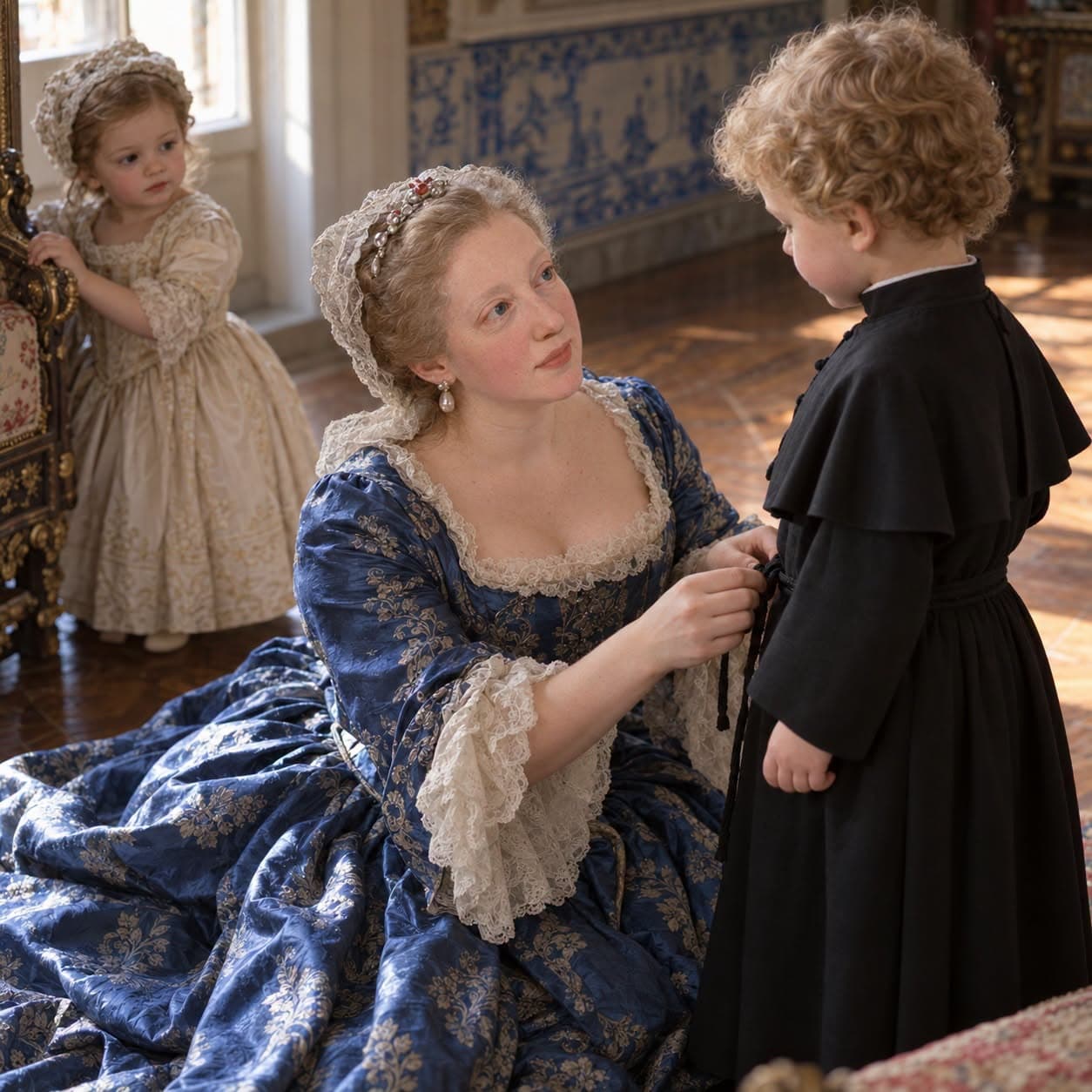
Maria Anna also had Pedro dressed in a small Jesuit garment, out of devotion to Saint Francis Xavier. The prince who had been carried beneath a canopy wore the clothing of a religious order. When she chose it for him, it was clothing for a living child.
On 6 June 1714 she gave birth again. This child was another boy, José. Pedro was still the heir, but Bárbara now had two younger brothers ahead of her. The same rule had operated twice. Birth order was the order in which Maria Anna's children arrived; it was not the order in which they would inherit.
That autumn Pedro reached his second birthday. Ten days later, on 29 October 1714, he died in Lisbon. He had lived for two years and ten days.
Maria Anna ordered that he be buried in the Jesuit garment she had had him wear. His body was taken with royal ceremony to the monastery of São Vicente de Fora. The Duke of Cadaval, who had carried him beneath the canopy at his baptism, was among the noblemen who held his coffin.
José became Prince of Brazil. He was less than five months old.
Two years earlier Maria Anna had been twenty-nine, giving birth to a son while her daughter was still a baby. Now that son was buried, and the younger child she had borne during his lifetime had taken his place. Bárbara was not yet three. The brother whose arrival had displaced her was gone, but she remained behind a brother all the same.