Louise was eighteen when she left London to marry a man she had never met. At her first wedding, her brother would stand in his place. The bride had to make the journey; the bridegroom could send his authority on paper.
On 19 October 1743, by the British calendar then in use, Princess Louise began the journey towards her marriage to Crown Prince Frederick of Denmark and Norway. She was the youngest surviving daughter of George II and Caroline of Ansbach, and the marriage had been settled between their governments before she set out.
The preparations included royal bedding, portmanteaus and a travelling tea equipage. A warrant issued the previous month ordered these provisions, along with items for the royal yacht Fubbs. The combined estimate was £503. Ministers had arranged the alliance. Someone in the royal household had to arrange the bedding. Even a princess being married into another dynasty would need somewhere to sleep and the means of making tea.
Britain wanted a closer relationship with Denmark. Frederick's father, Christian VI, had hoped a British marriage would help secure British support for his son's candidacy for the Swedish succession. That hope had failed, but the marriage went ahead. Louise was travelling into an agreement whose purposes extended well beyond the two people expected to live together.
There was a more domestic hope on the Danish side. Frederick drank heavily and lived dissolutely, and his father and the king's ministers thought marriage to a lively young princess might steady him. It was a considerable expectation to attach to a woman who had yet to meet him. A wife could be provided. An improved husband was less easily arranged.
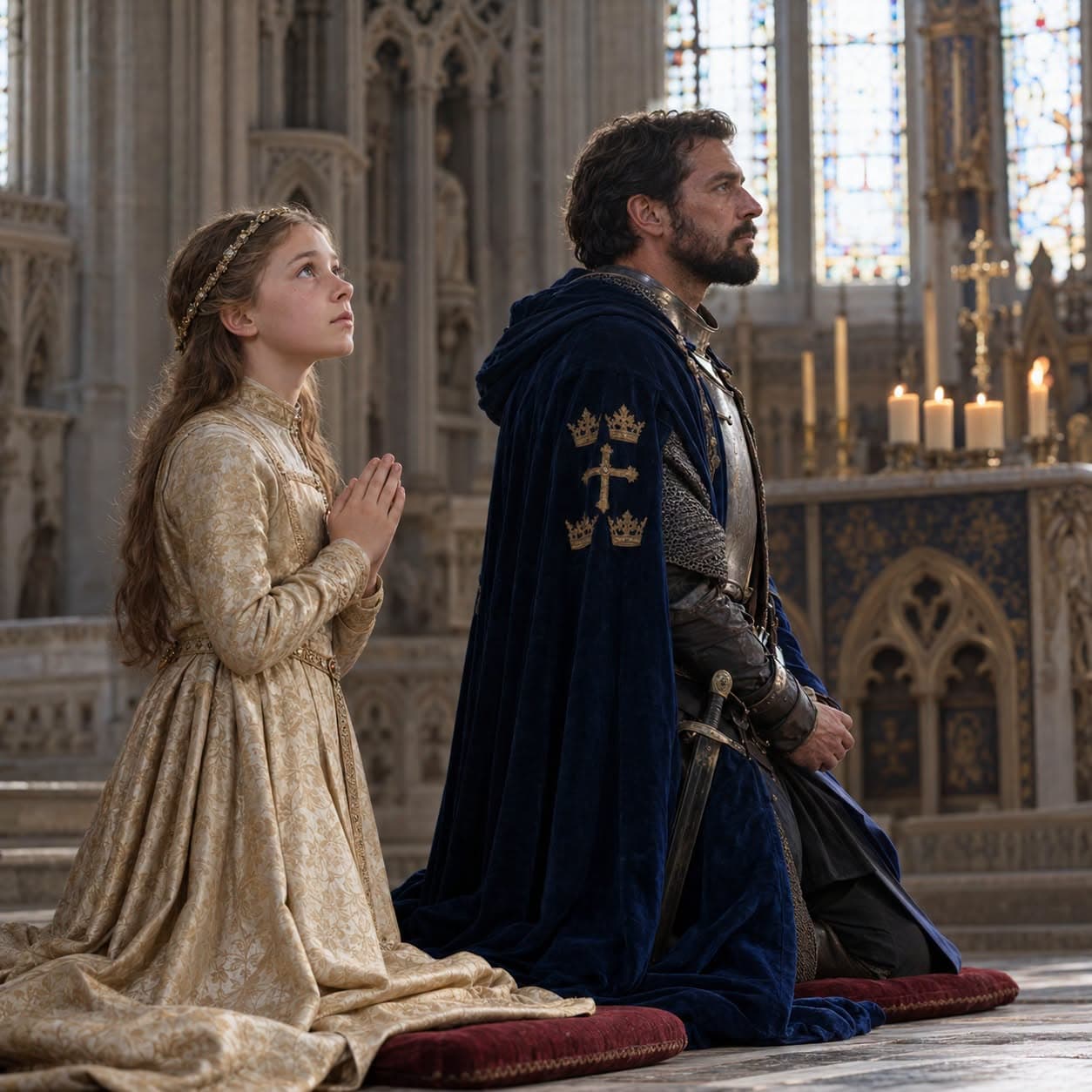
Her journey involved the royal yacht Fubbs and took her first to Hanover, her father's German electorate. There she went through her first wedding ceremony. The man representing Frederick was William Augustus, Duke of Cumberland, her own brother. Frederick had sent the legal authorisation that allowed him to take the groom's place.
The document gave William the authority to act for another man in a marriage that would be Louise's own. Her brother could stand in the groom's place for the length of a ceremony and remain her brother afterwards. She left it as Frederick's wife, with the journey to his country still ahead of her.
She was married before she met her husband.
About a week later, at Altona in Holstein, she met Frederick for the first time, and her English retinue was exchanged for a Danish household. Her new attendants included a chamberlain and a chief court mistress. The bedding and tea equipment had been provided for the journey. The people around her were being replaced.
Louise and Frederick continued together to Copenhagen. They entered the city on 11 December to public celebrations, and that day were married at Christiansborg Palace, this time with the bridegroom present. She was still eighteen. Within a week she would be nineteen.
Their first home was Charlottenborg. Louise became popular for a manner less constrained by ceremony than that of the older court, and when Frederick succeeded his father in 1746, the difference became more visible. She was now queen of Denmark and Norway. The iron chains restricting access to Christiansborg were removed, and its salons opened for assemblies and balls.
Louise enjoyed dancing, music and theatre. In 1747 she brought an Italian opera company to the court. Her marriage had not cured Frederick of his excesses, but her life in Denmark contained more than the task his family had hoped she would perform.
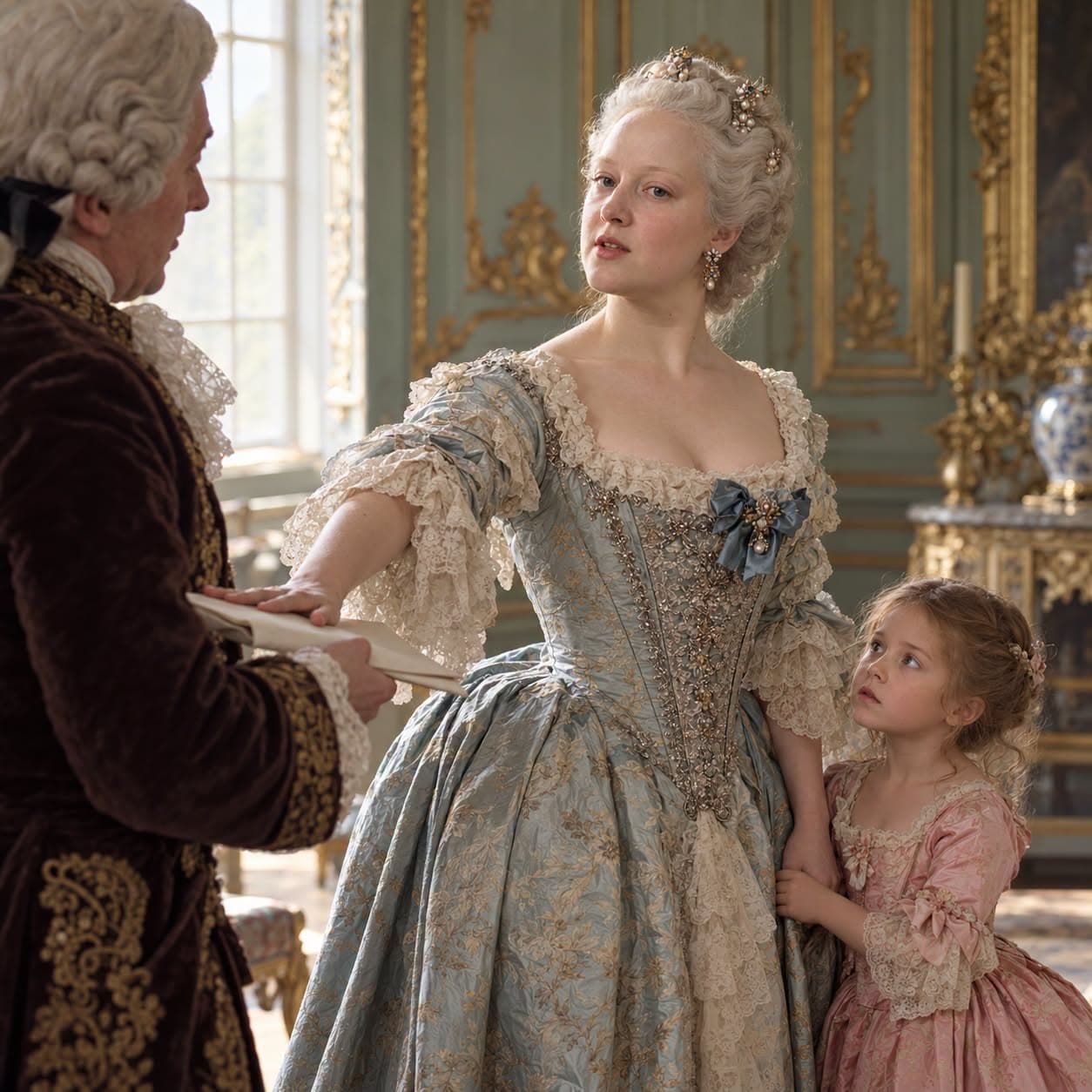
She also learned Danish and spoke it with her children. It was a small domestic act with a public audience: people took pleasure in hearing their country's language from a queen born in England. She concerned herself with her children's upbringing more closely than was usual in royal households. Among them was Sophie Magdalene, born in 1746, a daughter whose marriage began to interest governments while she was still a little girl.
In 1751 negotiations were under way to marry Sophie Magdalene to Gustav, the Swedish heir. The proposed match was intended to help reconcile the two kingdoms. Once again, relations between countries were to be improved through the marriage of a daughter. This daughter was five.
Louise objected. The Swedish royal couple opposed the match too, but the negotiations continued. The woman who had travelled from London into one political marriage could not stop the arrangements for another, even as queen and mother of the intended bride. Her objection was heard and did not prevail.
Louise died at Christiansborg on 19 December 1751, during another pregnancy. It was the day after her twenty-seventh birthday. Sophie Magdalene was still five, with the negotiations begun and her mother gone.
The match went ahead. On 1 October 1766, at Christiansborg, the palace where her mother had married Frederick, Sophie Magdalene was married to Gustav with her half-brother standing in the groom's place. She was twenty. She too was married before she met her husband.