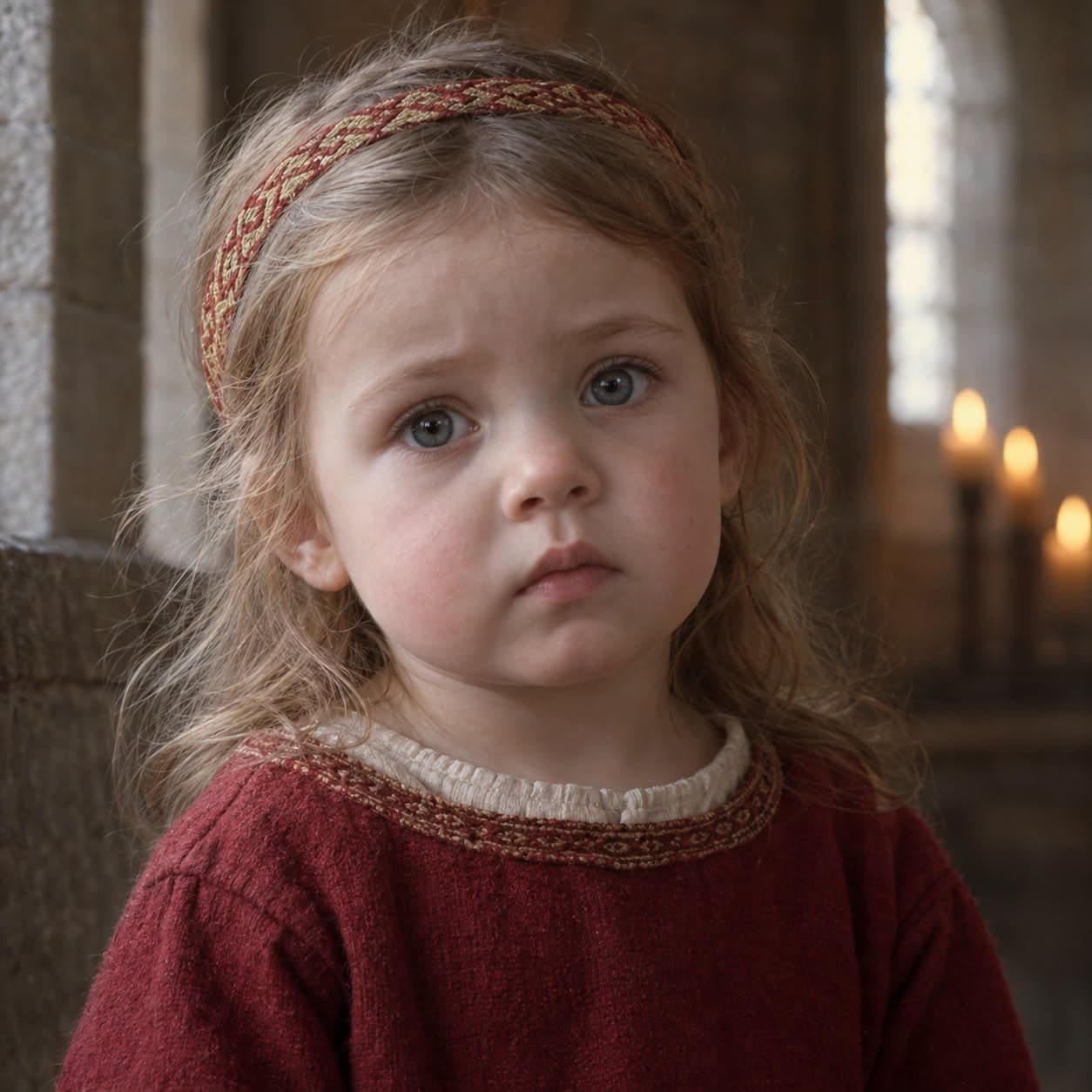
Conradin was sixteen, and the kingdom he had been born to inherit belonged to the man holding him prisoner. His mother, Elisabeth of Bavaria, had once shared the work of guarding that inheritance. She had last seen him fourteen months earlier, at a castle in the Bavarian Alps.
On 29 October 1268, Conradin was beheaded in the marketplace at Naples on the orders of Charles of Anjou. His friend Frederick of Baden died alongside him. The boy who had come south to recover his family's kingdom had been defeated, captured and delivered to the ruler he had tried to displace.
Elisabeth's husband, Conrad IV, left for Italy in October 1251, before their son was born. She remained in Bavaria with her family, and Conradin was born at Wolfstein, near Landshut, on 25 March 1252. His father died in Italy in 1254 without ever having seen him. Elisabeth was left with a two-year-old son and the responsibilities attached to his name. She shared his guardianship with her brother Ludwig, Duke of Bavaria.
The inheritance was considerable. Conradin belonged to the Hohenstaufen family, whose power had extended across Germany and Italy. He had rights to the duchy of Swabia and a claim to the kingdom of Sicily, which included much of southern mainland Italy as well as the island. These were places to govern, estates to administer and revenues to collect, provided somebody else had not taken possession first. A child could inherit a kingdom. Making it obey him was a separate business.
In Sicily, his uncle Manfred took the crown while Conradin was still a small boy. In Bavaria, Ludwig defended his nephew's rights and advanced his own family's interests alongside them. Attempts to secure Conradin's election as German king failed. He grew up with adults negotiating over the authority that his birth was supposed to have given him.
Elisabeth married again in 1259, when her son was seven. Her second husband was Meinhard, Count of Görz-Tirol, about ten years younger than she was, and Ludwig then exercised the guardianship alone. Conradin stayed among his Bavarian relatives, and meetings between mother and son became infrequent. Her new household lay across the Alpine approaches to Italy, the country where his father had died and where his own claim remained unsettled.
Then Manfred was killed in 1266, defeated by Charles of Anjou, who had papal backing for his own possession of the Sicilian crown. Supporters of the Hohenstaufen cause came to Conradin and urged him to recover his inheritance. He was fourteen. At an assembly in Augsburg that autumn, the expedition was agreed for the following year. Before he set out, he made arrangements for his German possessions to pass to his Bavarian uncles if he died without legitimate children.
There was paperwork for that possibility before there was a victory.
In August 1267 Elisabeth saw her son at Hohenschwangau. In early September he set out over the Alps, aged fifteen, with Ludwig, his stepfather Meinhard and his friend Frederick of Baden, a few years older, who had a lost inheritance of his own to recover in Austria. At Verona the expedition stalled and the money ran short. Some men sold their horses and weapons to pay for the journey home, and Ludwig and Meinhard went north as well. In December, Conradin pledged further property to Ludwig, Meinhard and Elisabeth to raise funds. His mother's name sat on the pledges that kept him moving south. The family inheritance was paying for the attempt to recover the family inheritance.
Conradin went on without the older relatives who had brought him that far. Italian supporters supplied money and men, and the excommunication pronounced against him by Pope Clement IV in November did not stop his advance. In April 1268 he reached Pisa by sea.
A document issued there on 14 June preserves his own signature, written in Latin. Somebody had taught him the language in which royal business was conducted, and he could write it in his own hand. Among all the grants, pledges and proclamations made in his name, this is a small piece of work that was actually his. Two short love songs in German also survive under his name, though some scholars give them to his father. He was sixteen by then, signing documents in an Italian city while an army gathered around his claim.
Rome received him triumphantly in July. The welcome was real, and so was the support behind it. Charles faced rebellions in his kingdom, and Conradin had allies who expected his arrival to help overturn the Angevin regime. This was an attempt with prospects, not simply a boy riding towards a foregone conclusion. But Charles still had an army, and on 23 August, at the battle known as Tagliacozzo, he defeated Conradin's forces.
Conradin escaped the battlefield and made for the coast, trying to reach Sicily by sea. Near Torre Astura, south of Rome, he was captured and handed over to Charles. The same descent that had made him useful to the men inviting him into Italy made him dangerous to the king who now held him. Defeat had broken his army. It had not removed his claim.
Charles had him put to death. Frederick and several other companions were executed with him. Conradin was the last legitimate male representative of the Hohenstaufen dynasty. Elisabeth was the mother who survived him.
She died on 9 October 1273, twenty days before the fifth anniversary of his death. When he was two, she had shared the guarding of his inheritance. When he was fifteen, her name was on the pledges that paid for its pursuit. The last time the record places them together was at Hohenschwangau, a few weeks before he crossed the Alps. She outlived the husband who never saw their son, and the son who never came back over them.