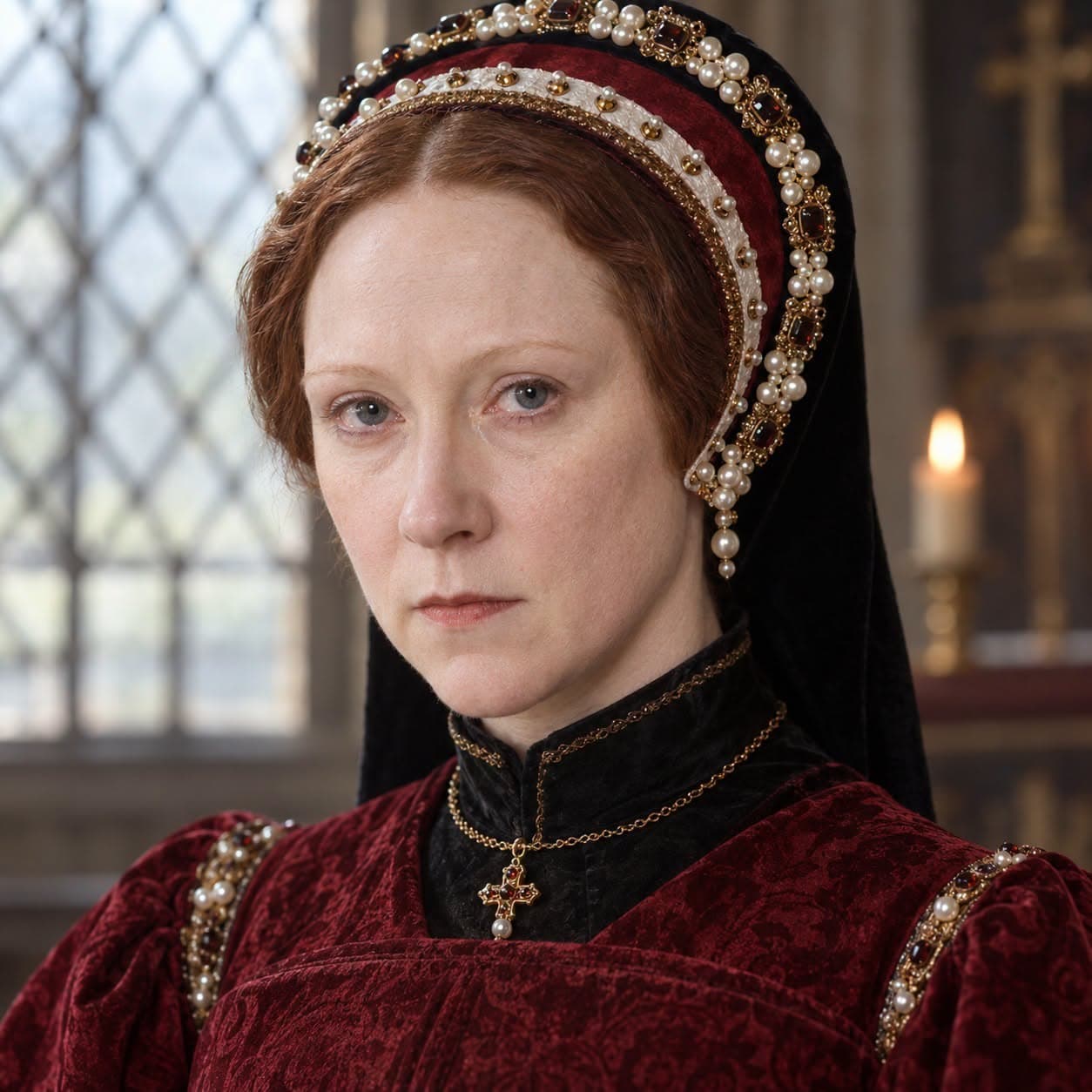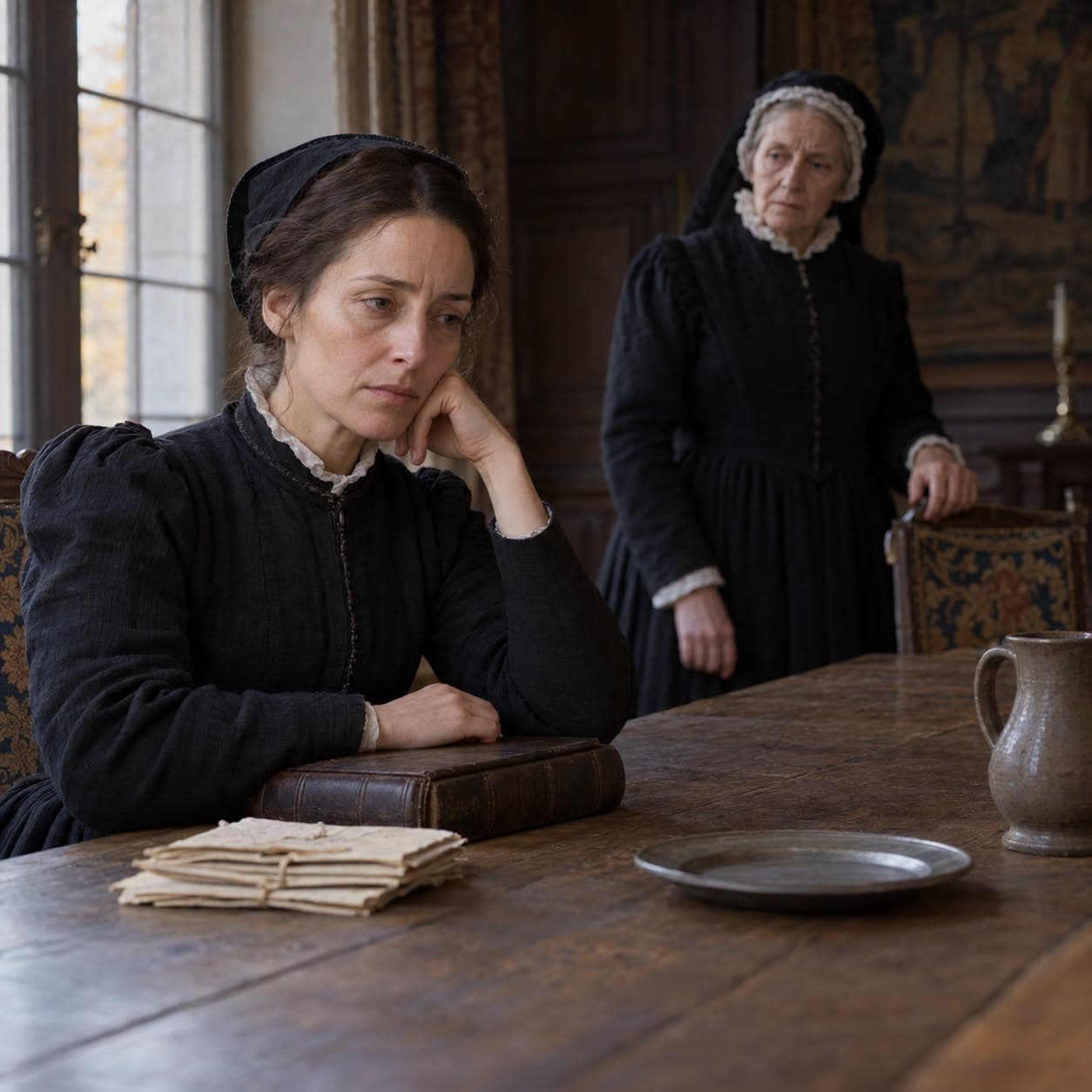
She was seventy-four when the starving city surrendered. Her daughter had endured the siege with her. Both survived. Both were taken prisoner.
On 28 October 1628, La Rochelle capitulated to the forces of Louis XIII and Cardinal Richelieu. Inside the city were Catherine de Parthenay and her daughter Anne de Rohan, two women whose family had helped sustain the Protestant resistance. The surrender ended the siege. It did not send them home.
They had been living at the Hôtel de Marsan since 1626, before the royal blockade closed around La Rochelle. Anne was in her forties, a poet in her own right. Her verses on the death of Henri IV had appeared in print in 1610; she had also written on the death of her sister. Grief already had a place in her work. Her mother wrote poetry and tragedies, and had been educated by the mathematician François Viète. This was a household accustomed to books, correspondence and religious argument. By the autumn of 1628, it was sharing the privations of a city cut off from its supplies.
The royal forces had closed the approaches by land and built a great dyke across the harbour's mouth. English attempts to relieve the city had failed. A port could have the sea in front of it and still be made to starve. Catherine rallied the defenders to hold out, but encouragement could not bring provisions through the blockade. The city's resistance was being exhausted by hunger.
She had been eighteen when religious violence first made her a widow. Her husband, Charles de Quelennec, was killed in the St Bartholomew's Day massacre in 1572. Fifty-six years separated that loss from the surrender of La Rochelle. Catherine had lived long enough to marry again, raise a family and become one of the older generation upon whom the Protestant cause still depended. The wars had followed her into old age.
Her second marriage, to René de Rohan, brought her into another great Protestant family. Widowed again in 1586 with five children, she took responsibility for their education and supported Protestant churches on the family's Breton estates. At Blain in Brittany and Parc Soubise in Poitou, literary life, family life and religious allegiance occupied the same household. There were poems and plays, but there were also churches to sustain and a cause to support. Catherine made room for all of them.
Her sons carried that allegiance into war. Henri de Rohan became the leader of the Huguenot party. Benjamin, known as Soubise, sought help from England. In July 1627, when an English fleet approached La Rochelle with Benjamin aboard, the city would not admit the English troops. Catherine nevertheless brought her son inside. She was already in her seventies. She was still taking a hand in the business herself.
By the following October, mother and daughter were among the people enduring the consequences. Their name connected them to the leadership of the resistance; their lodging placed them inside the blockade. Before the siege was over, Louis XIII had already given the house to the Capuchins to make a monastery of it. The crown was disposing of their lodging while they were still living in it. Anne shared the siege with a mother who had been widowed by the religious wars before Anne was born.
La Rochelle's struggle concerned the power to defend Protestant communities as well as the right to worship. Its fortifications and political independence made it a challenge to the crown. Richelieu's victory would break that independence. Protestant worship would remain permitted, but the city's privileges, municipal institutions and walls would be taken away. Royal pardon came with a considerable amount of dismantling.
For Catherine and Anne, the immediate aftermath was captivity. On 2 November, five days after the capitulation, they were taken to the castle at Niort. They had endured the siege together. They went into imprisonment together.
There were still ordinary necessities to arrange. Catherine's belongings were still in La Rochelle, and a prisoner at Niort could not simply send for them. On 13 November she wrote to Marshal de Bassompierre, one of the king's commanders, asking for the loan of one of his baggage wagons. She wrote with all the formal courtesy of her rank, as a woman who would impose on him only from necessity, and then she made the request plainly. The woman who had brought her son into La Rochelle now needed a royal commander's help to bring her belongings out.
She was seventy-four, still with the daughter who had shared the siege, and now a prisoner asking the other side for the loan of a cart. Mother and daughter stayed at Niort through the winter. They were not released until the summer of 1629, after the peace that ended the last of the Huguenot wars, and by then Catherine was seventy-five.