Bianca lay feverish at Poggio a Caiano. Her husband died first. His brother inherited Tuscany. He would refuse her a place among the Medici dead.
Bianca Cappello died on 20 October 1587 at the Medici villa of Poggio a Caiano, the day after her husband, Francesco I, Grand Duke of Tuscany. She had been his mistress before she became his wife, and the distinction had taken years to establish. By the time the two of them fell ill that October, she had been publicly recognised as grand duchess for eight years.
There had been a ceremony. There had been a crown.
Long before either, there had been a Venetian family with a daughter who ran away. Bianca belonged to the Cappello and Morosini families, old names in the city's aristocracy. In 1563, at about fifteen, she fled Venice with Pietro Bonaventuri, a young Florentine clerk at the Venetian branch of the Salviati bank. They married in Florence that December, and in Venice the Council of Ten brought proceedings against the pair. She had left a household with standing and connections, and arrived in another city carrying a scandal that her marriage could regularise without making her family forget it.
In Florence she became involved with Francesco de' Medici, son and heir of Cosimo I, who repeatedly urged prudence and discretion on him. Francesco married Giovanna of Austria in 1565, and continued his affair with Bianca. Giovanna was the prince's wife, with the place and duties that belonged to her. Bianca occupied a different position, dependent upon Francesco's willingness to sustain a relationship his family disliked.
He sustained it.
After Francesco succeeded his father in 1574, Bianca became increasingly prominent. From 1576 she held banquets and festivities in the Orti Oricellari gardens that rivalled the court's official celebrations. There was a practical substance to being the ruler's favourite: people attended her festivities, sought her favour and had reasons to keep her pleased. Hostility did not prevent influence. It made the distinction between influence and an accepted place in the family more necessary.
Bianca had been a widow since 1572, when Bonaventuri was killed. Giovanna died in April 1578, and on 5 June Francesco married Bianca in a ceremony intended to remain secret. Barely two months had passed since his first wife's death. The woman whose banquets had rivalled the court's own was now his wife.
The news reached Venice, where the official response was remarkably accommodating. The Council of Ten hurried to destroy the records of its proceedings against Bianca and Bonaventuri. The Senate declared her a true and particular daughter of the Republic. The runaway had acquired a grand duke for a husband, and her native government found a language in which to welcome her home without requiring her to return. A princely marriage made a considerable improvement to a family scandal.
On 12 October 1579 the marriage was celebrated publicly, accompanied by Bianca's coronation as grand duchess. What had begun as a private relationship now required public honours. Venice had acknowledged her. Florence had crowned her. The ceremony gave her a place that could be named and recognised beyond the favour of the man she had married.
It did not reconcile her to everyone in his family.
Francesco's brother Ferdinando was a cardinal in Rome, and his hostility towards Bianca survived her elevation. In September 1587 he came north to Florence, and in October he was staying with the couple at Poggio a Caiano. The visit brought the brothers together after years of difficult relations. It also placed Ferdinando at the villa during the illness that would leave him ruler of Tuscany.
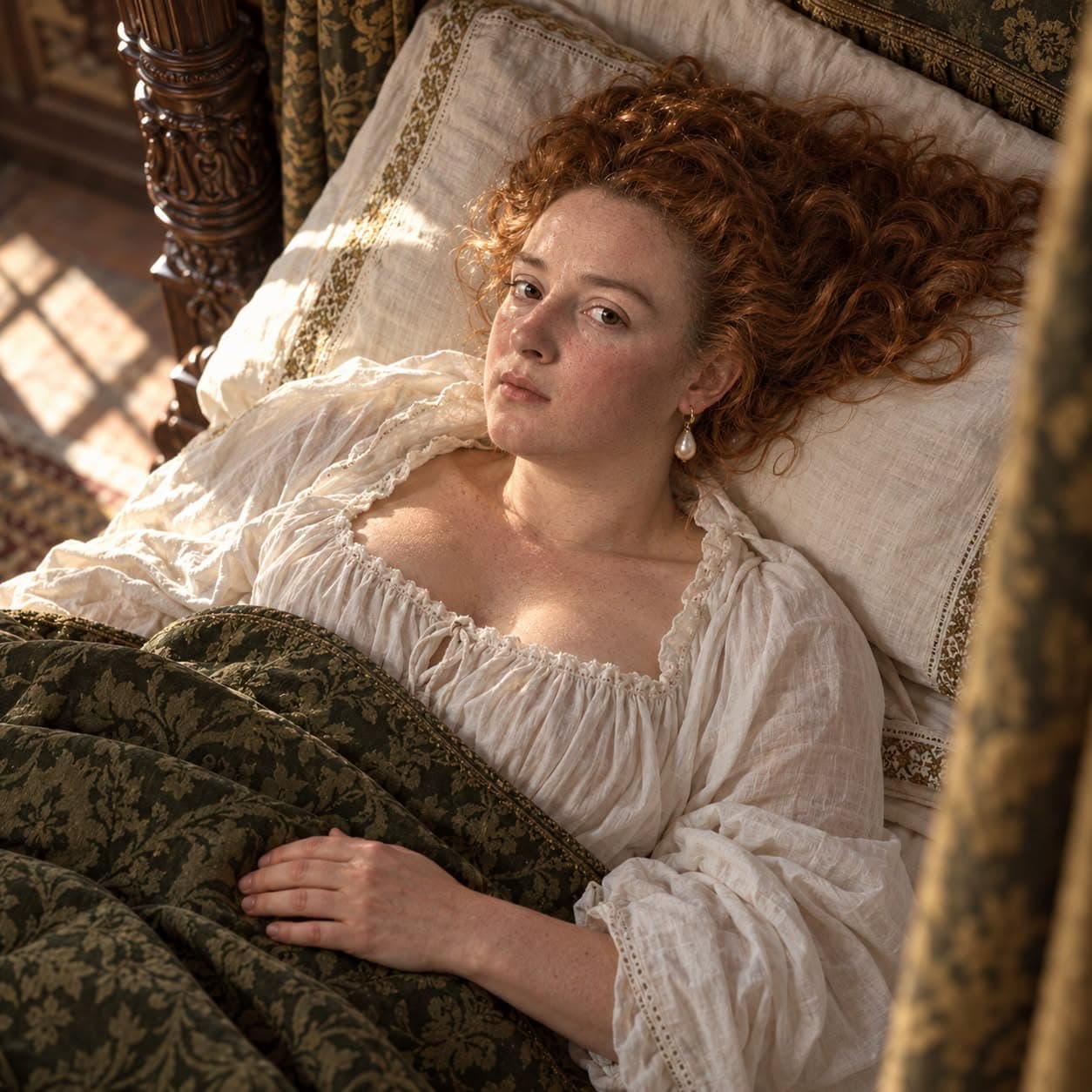
After a day's hunting Francesco took to his bed, and Bianca fell ill after him. The illness lasted days, not hours. The grand duke's fever came with such pain that his cries were heard through the rooms of the villa, while his wife lay sick under the same roof. Francesco died on 19 October, during the night. Bianca died a few hours later, on the twentieth.
Their fevers were consistent with malaria, a disease long present in Tuscany. Rumour nevertheless accused Ferdinando of poisoning them. Two deaths so close together, followed by the accession of a brother already hostile to the marriage, supplied the suspicion with a ready story. He ordered autopsies on both bodies, and the physicians reported no poison. The accusation outlived the autopsies; the succession was a fact.
Ferdinando now controlled the honours paid to both of them, and the story told about her. Rumours spread by the new grand duke blamed Bianca for her husband's death and called her own a suicide. Francesco would have his place at San Lorenzo in Florence, among the Medici dead. Bianca was buried at once and refused burial in the dynastic tombs. When the solemn funeral for Francesco was held on 15 December, she was excluded from its honours entirely.
The removal continued in the heraldry. Ferdinando ordered Bianca's arms erased wherever they appeared and those of Giovanna of Austria restored in their place. The first wife returned to the public record in the spaces occupied by the second. These were visible decisions, made in a world that had spent money and ceremony establishing exactly who Bianca was.
Eight years earlier, Florence had crowned her. In December the same court mourned Francesco with full honours and gave his wife no place in the ceremony. At Poggio a Caiano they had lain ill under the same roof and died a few hours apart. He went to the Medici dead at San Lorenzo, and she was not permitted to lie among them.