She married John Dudley at Sheen with the King of England among the wedding company. Their fathers were supposed to be making peace. Both would go to the scaffold.
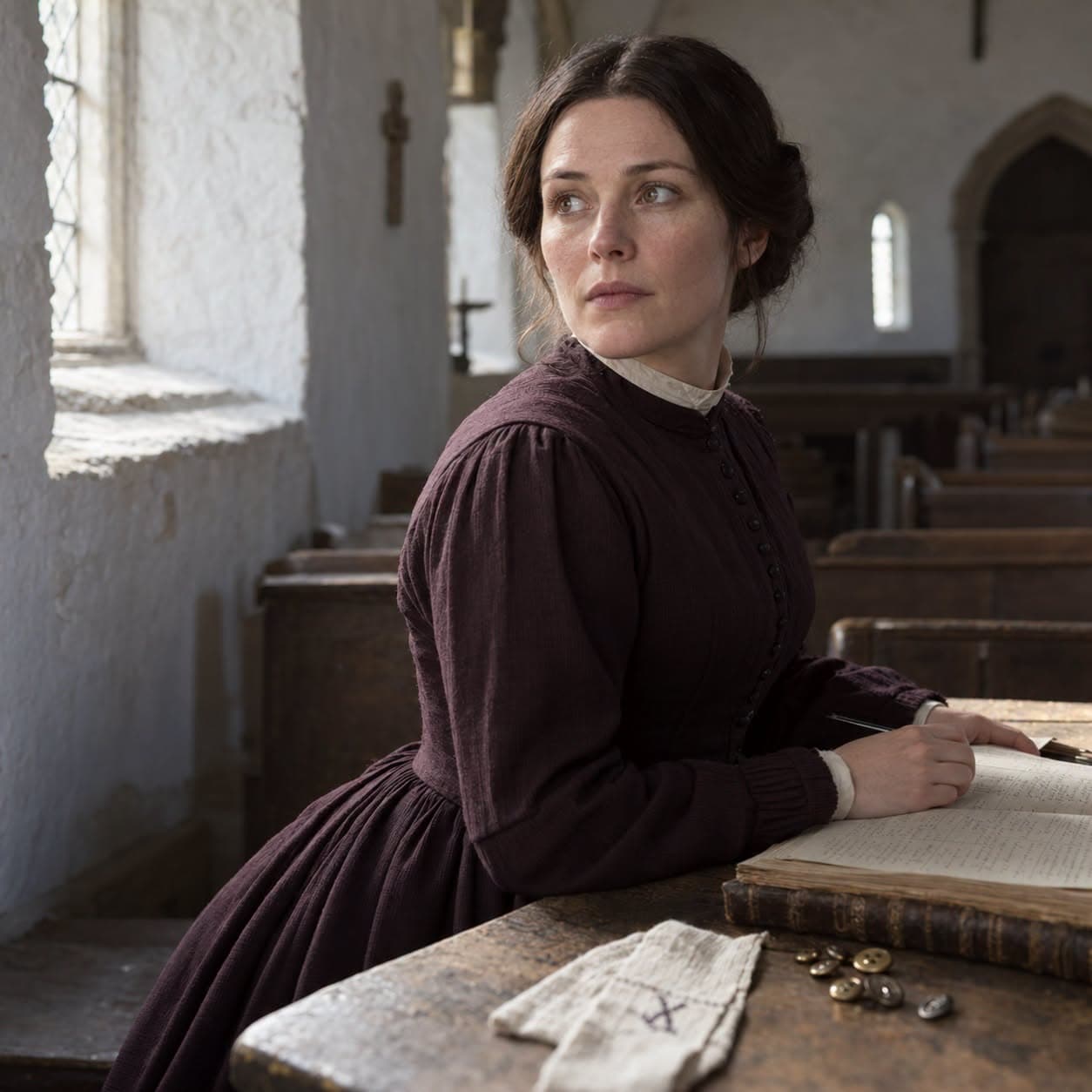
On 21 October 1554, Anne Seymour became a widow. Her husband John, Earl of Warwick, died at Penshurst in Kent shortly after his release from the Tower of London. He had survived a sentence of death and more than a year as a prisoner. His freedom lasted a matter of days.
Four years earlier, their wedding had been an occasion for dinner, dancing and tournament entertainment. Edward VI came to Sheen for it on 3 June 1550. After the dancing, the King and the ladies went into two chambers built of boughs to watch riders run against one another across the field, and a tourney followed. The celebrations continued through supper before Edward returned to Westminster. A royal wedding guest could give an alliance a very handsome beginning.
Anne was the daughter of Edward Seymour, Duke of Somerset, and his wife Anne Stanhope. The King was her cousin. His mother, Jane Seymour, had been her father's sister, and Somerset had governed England as Lord Protector during the early years of the boy's reign. Anne belonged to a family whose place beside the throne was written into its relationships. The difficulty was keeping it there.
By the time of her wedding, Somerset had lost the protectorship. The man who had emerged from his fall was the elder John Dudley, Earl of Warwick, father of Anne's bridegroom. The younger John was then known as Viscount Lisle. Joining their children in marriage offered the two fathers a public reconciliation, something more substantial than courteous words between political rivals. Somerset's daughter would become a Dudley. Whatever happened between the men afterwards, she would remain married to the son.
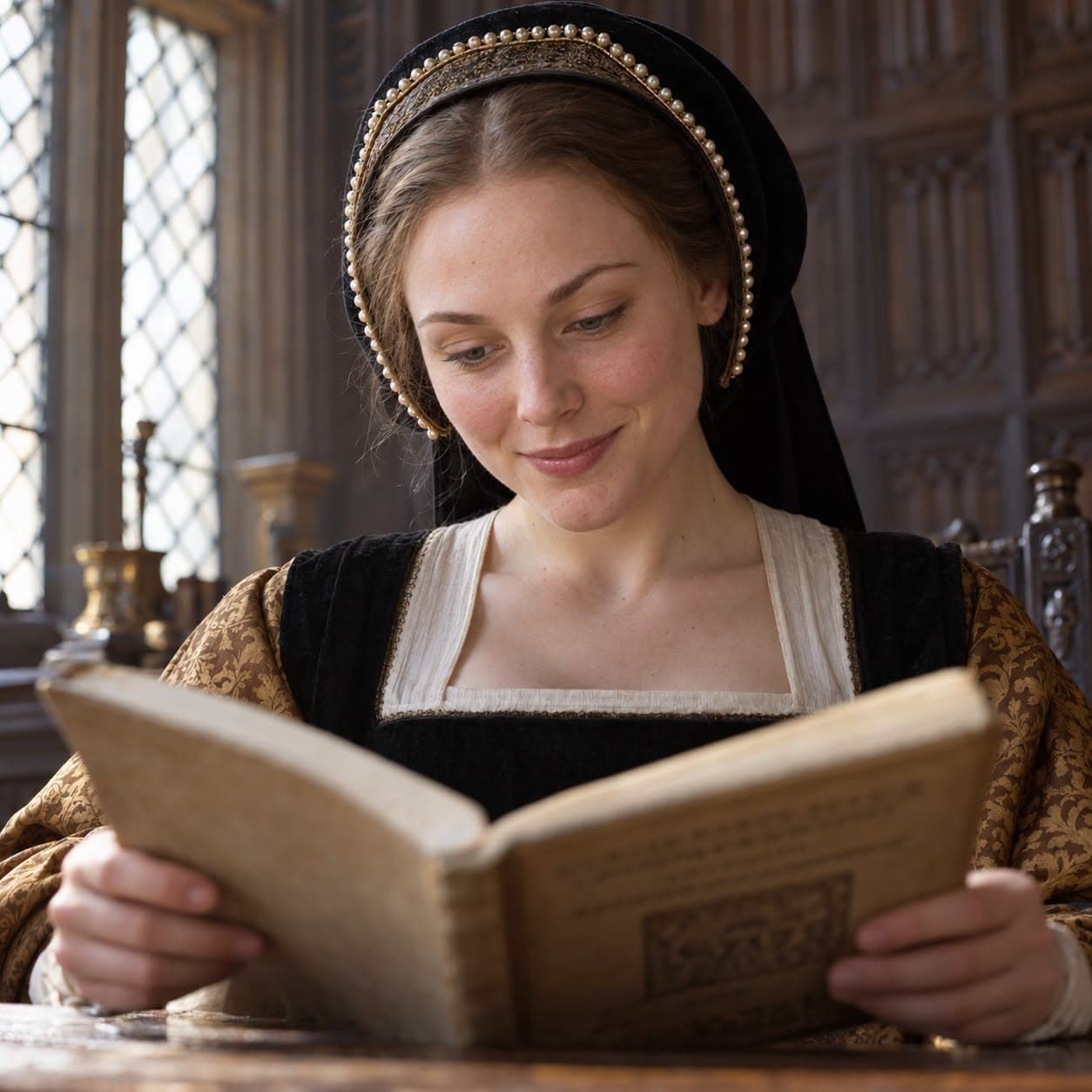
That same year, Anne's name appeared in very different company. In Paris, a volume of Latin memorial verse for Marguerite of Navarre, sister of the late King Francis I and a celebrated writer herself, was published under the names of Anne and her sisters Margaret and Jane. Their tutor, Nicolas Denisot, edited it. It was called the Hecatodistichon, a title promising a hundred couplets, and on its title page the three sisters stood together: Anna, Margarita, Jana. The following year the verses appeared again in a grander collection, set beside Greek, Italian and French versions by some of the finest poets in France. Whatever else 1550 made of Anne, it also put her name on a title page in Paris.
The marriage did not hold her father's position together. On 22 January 1552, Somerset was executed on Tower Hill, convicted of felony. His daughter's marriage had survived his renewed fall. It had not protected him from it. Her husband's father, meanwhile, had become Duke of Northumberland, and her husband had taken the title Earl of Warwick. Anne was now a countess, with a dead father and a father-in-law at the head of the government.
The family alliance had brought her closer to the men in power. It had given her no distance from their defeats.
When Edward VI died in July 1553, Northumberland supported the attempt to place Lady Jane Grey on the throne instead of Edward's half-sister Mary. Jane had married his younger son Guildford, making her Anne's sister-in-law. The Dudleys' marriages now connected them to a disputed crown as well as to the fallen Protector's family. Mary prevailed, and Anne's husband was imprisoned in the Tower with his father and brothers.
On 18 August, John was condemned for treason at Westminster Hall. His father was condemned too. Four days later, Northumberland was executed on Tower Hill, the same place where Anne's father had died the previous year. Her husband remained a prisoner under sentence of death. The two men whose reconciliation had been celebrated at Sheen were gone; their children were still living with the consequences.
In September, the Tower chronicle records, Lady Warwick was given licence to come to her husband. Anne was allowed access to John, as the wife of his brother Ambrose was allowed access to hers. For a countess whose wedding the King had attended, seeing her husband had become something the authorities could permit.
John remained inside as 1553 passed into 1554. In February, his brother Guildford and Jane Grey were executed. The family around Anne's marriage had lost a son and a young wife. John was still alive, and still in the Tower.
His release came in October. He went to Penshurst, the home of his sister Mary and her husband Henry Sidney, and he died there on 21 October. In June 1550 a king had watched from a chamber of boughs as the marriage meant to end two families' quarrel was celebrated. Both fathers had since gone to Tower Hill, and the son who carried the alliance had left the Tower with days to live. There were no children of the marriage. What remained of the peace made at Sheen was its bride, now a widow.