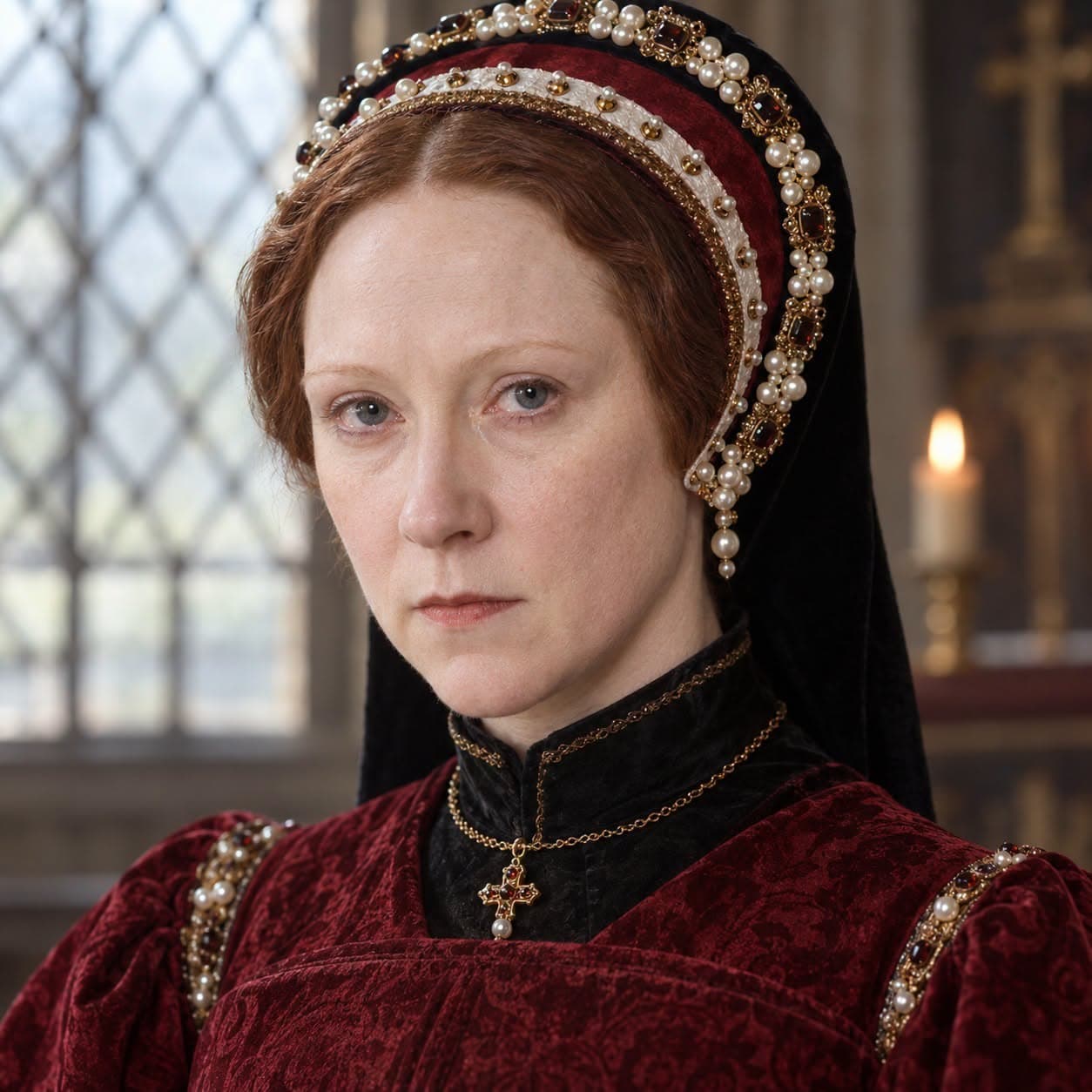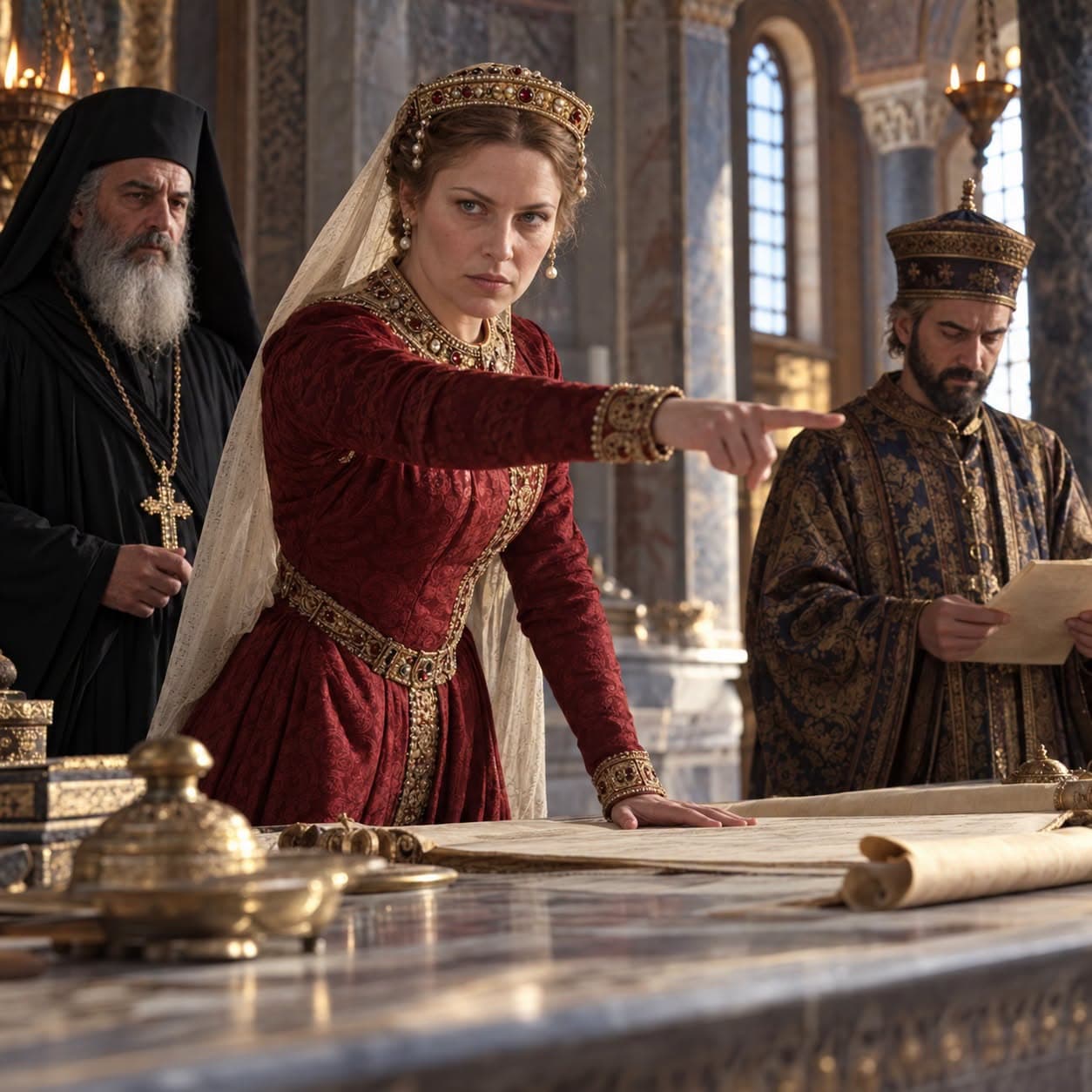
She was about thirty-five, a widow of four months, and governing for a nine-year-old boy. Her husband's closest adviser claimed the right to govern for the child. By autumn, he was claiming an emperor's title too.
On 26 October 1341, John Kantakouzenos was proclaimed emperor at Didymoteicho, in Thrace. In Constantinople, Anna of Savoy was governing in the name of her son, John V Palaiologos. Her husband, Emperor Andronikos III, had died that June. The struggle over who would protect his family had become a struggle over who would rule his empire.
Anna had come to Byzantium as Giovanna, a daughter of Count Amadeus V of Savoy. She married Andronikos in 1326, entered the Orthodox Church and became Anna. Savoyard courtiers came east with her, and her Italian household brought western customs into the Byzantine court. But by the time her husband died, she had spent fifteen years in the Byzantine imperial world. The woman defending the dynasty was foreign by birth, not newly arrived.
Kantakouzenos had his own claim to experience. He had been Andronikos's close friend and chief adviser, with command of the army and years of government behind him. He claimed the regency after the emperor's death. Anna was the child's mother and empress; he was the man accustomed to conducting the late emperor's business. Neither position settled the question of how much authority the other should possess.
In a treaty with Genoa that September, Anna appeared with the titles of empress and ruler, her son with that of emperor. His name was already on the documents. Hers carried authority beside it. Yet the arrangement around them was coming apart. Patriarch John Kalekas, the head of the Church in Constantinople, and the court official Alexios Apokaukos opposed Kantakouzenos, and Anna joined them.
While Kantakouzenos was away from the capital, this coalition moved against him. He was stripped of his offices and declared a public enemy. His relatives and supporters faced imprisonment, flight and confiscation. His mother was placed under house arrest. Anna's government was doing more than refusing to be governed by him. It was dismantling his position while he was absent.
He did not come back to submit.
At Didymoteicho, his supporters proclaimed him emperor. Anna's son still had his imperial title, but now an adult commander with an army possessed one as well. Kantakouzenos still presented himself as the boy's junior colleague. The distinction mattered rather more than the courtesies surrounding it. A man could acknowledge a boy's inheritance and still insist on deciding what happened to it.
Anna answered with a coronation. In November, the patriarch crowned John V in Hagia Sophia. The boy was nine. Within weeks of the rival proclamation, her government had given his claim the public ceremony of a crowned emperor. She could secure that much for him. She could not make Kantakouzenos put down his own claim, and the quarrel continued as civil war.
By 1343, the defence of her son's position required money the imperial government could not readily find. Anna pledged gems from the imperial crown to Venice for a loan of 30,000 ducats. These were the jewels of the emperorship itself, offered as security to keep the struggle going. The splendour that proclaimed the dynasty's authority had acquired another use. It could be borrowed against.
The terms were precise: repayment in three annual instalments of 10,000 ducats, with interest. There was a schedule for putting the jewels back. There was no corresponding schedule for ending the war, and the fighting went on consuming whatever the government could raise.
The jewels were never redeemed.
Kantakouzenos entered Constantinople in February 1347, after more than five years of war. Anna yielded, and the settlement preserved John V as emperor alongside the victorious man who had challenged her government. The agreement made Kantakouzenos senior emperor for ten years. John also married his daughter Helena. The family Anna had fought was now joined to her own, and the man she had tried to remove would govern beside her son.
John kept his title. Anna lost the struggle over who would govern with it.
But her own exercise of power did not end there. From 1351, she governed Thessalonica, retaining her imperial style and issuing decrees in her own name. This was a portion of the empire under her authority, rather than a retirement maintained by courtesy. Her government left evidence in documents and in a gateway in the city's acropolis. The woman whose choices had helped drive the empire into civil war was still entrusted with part of it.
In 1355, fourteen years after she had been widowed, the gateway was built by her decree. Its inscription names Anna Palaiologina, the Byzantine name of the woman who had arrived from Savoy. The mother who had fought over who could rule for her son was named in the stone as the authority behind the work.