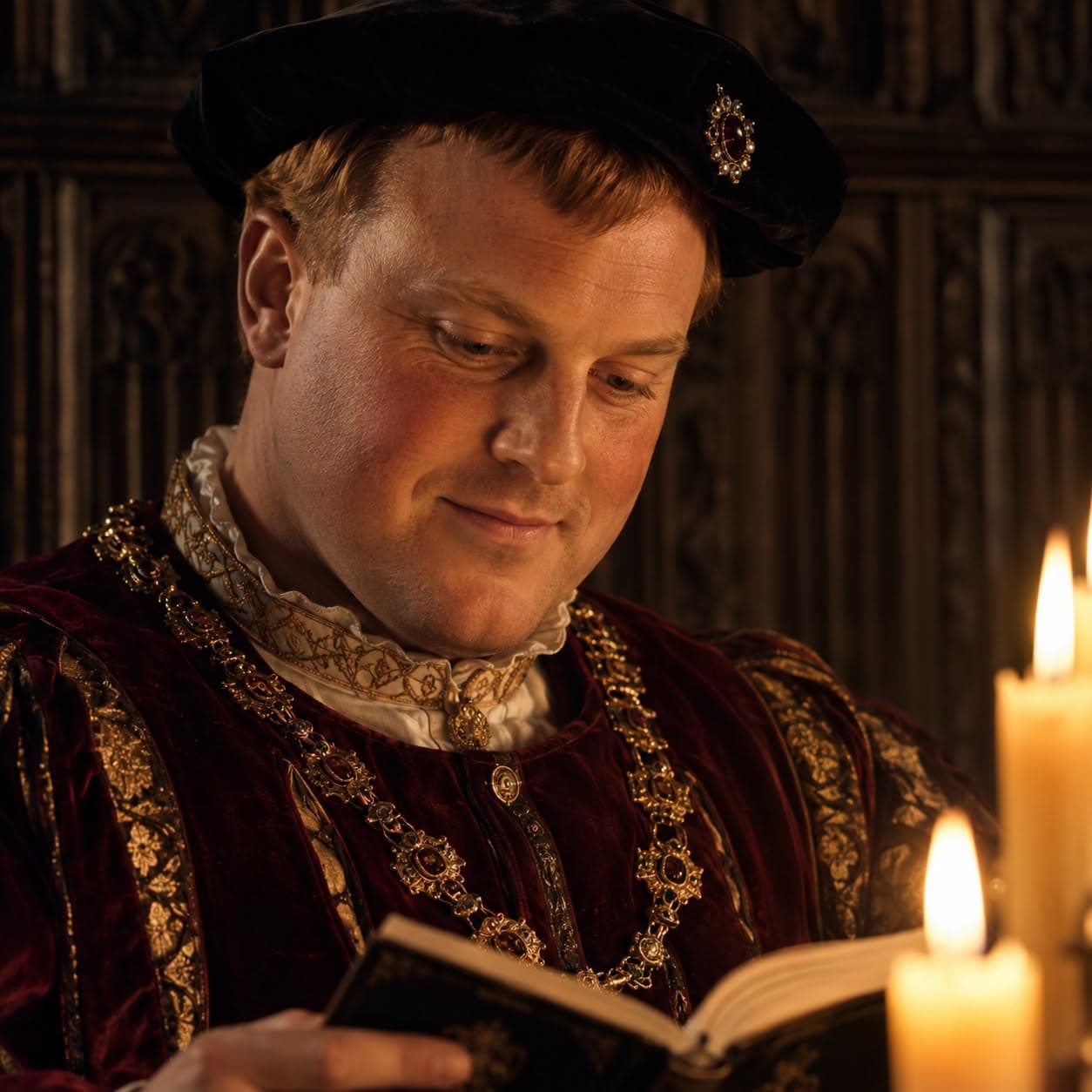

He had started writing a letter so awful that he could not bring himself to finish writing it...
The Chancellor of Würzburg sat down to write to a friend in August 1629. He had believed the persecutions were over. He was wrong, and he wrote it plainly. It had started again, and no words could adequately describe the horror of it.
Four hundred people in Würzburg stood accused, close enough to arrest that a knock at any of their doors before the week was out would not have surprised anyone. Priests. Council members. Doctors. Court officials. A wealthy man was not safe. A poor man was not safe. A woman's reputation for modesty did not save her, and a man's education did not save him either.
A week before the letter was written, a nineteen-year-old girl was executed. She was known across the city as its most beautiful, its most modest. The chancellor feared seven or eight more would follow her, the best people the city had, by his own reckoning.
A dean was arrested. Two other clergymen fled the city rather than answer a summons. A notary of the ecclesiastical court, a learned man everyone respected, was tortured the day before the letter was sent.
Then the children.
Three and four year olds were said to have consorted with the devil. The chancellor had watched seven year olds executed. He had watched students of ten, twelve, fourteen, fifteen die, boys still being trained for the priesthood, killed before they reached it.
The process worked the same way every time. A person was tortured until they named someone else. That name produced an arrest. That arrest produced a confession, and the confession produced more names. Nobody had to plan for it to reach this far. It reached this far because that is what the process did, on its own, once it was set running.
Philipp Adolf von Ehrenberg had ruled Würzburg since 1623, prince and bishop both, spiritual and temporal lord of the same territory. The courts operated under his authority. The prisons filled under his authority. His own nephew, Ernst von Ehrenberg, a young page who had neglected his church attendance, was executed among them, convicted of witchcraft and attending the witch-dances.
By the chancellor's own estimate, a third of the city stood implicated in one way or another by 1629.
On 16 July 1631, Ehrenberg died. He was forty-seven. There was no crowd at the prison gates. No announcement that it was over. The persecutions in Würzburg simply stopped having the one thing that had kept them running for five years, a bishop, a court, and a machine built to find more names than it started with. Later that year, Swedish forces took the city, and whatever remained of the old system could not be put back together under new hands.
The people still in the prisons that July would not have known what had changed, only that something had. They had been wrong before, in the years before 1631, about believing it was finished.
Historians count roughly 900 executions across the prince-bishopric between 1626 and 1631. The number is an estimate, built from fragments of surviving lists, because no single register held all the names at once.
At least twenty-six of the dead were children.
The chancellor, in the middle of his own 1629 letter, stopped himself. There were more names he could have written, more ranks, more particular horrors. He wrote that he could not go on, and should not.
The killings had continued for another two years.
Four hundred years later, that is still the only part of the letter anyone needs. A man ran out of words to describe what his own city had done to itself, while the killing was still going on, and he kept writing anyway, until the point where even he had to stop.