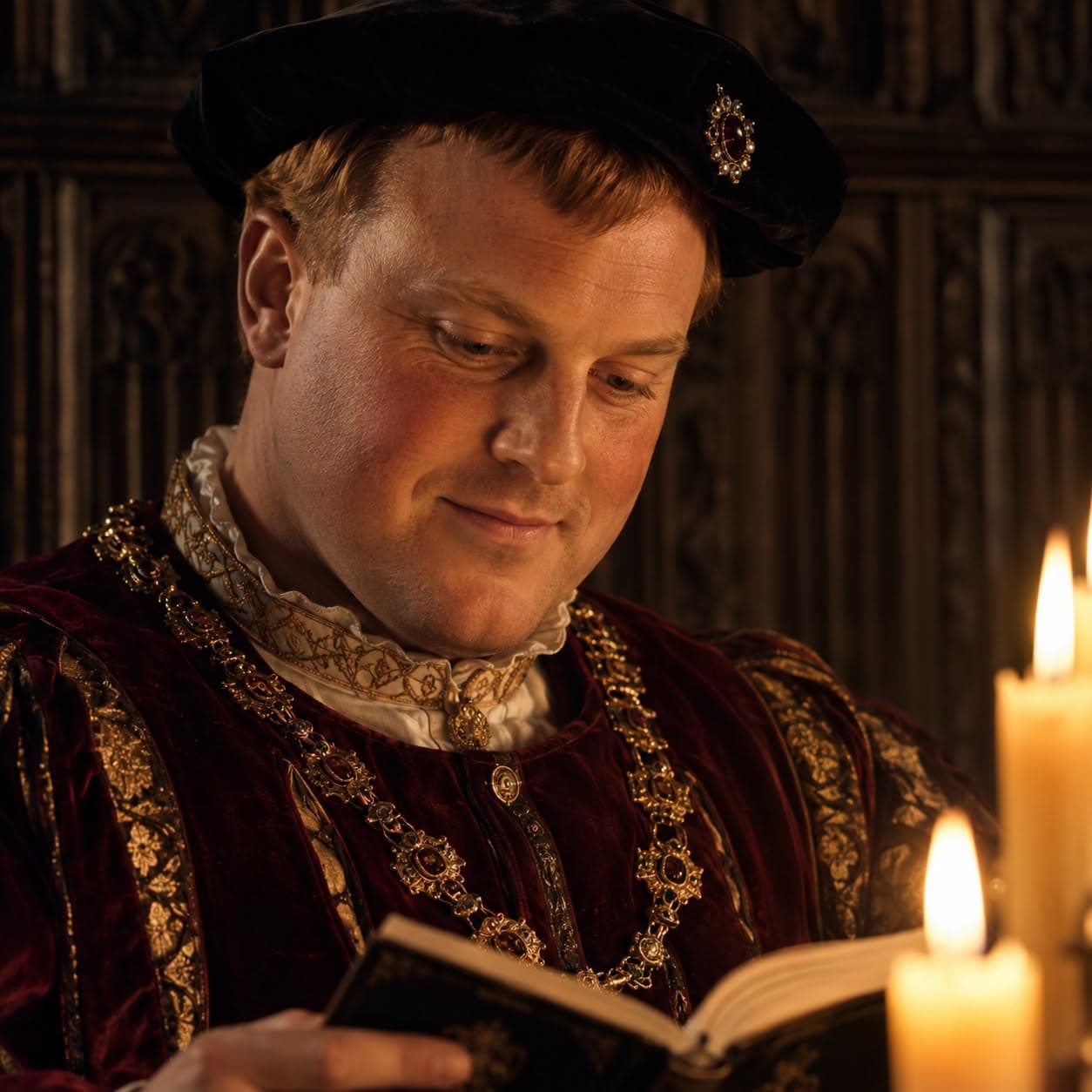
Henry VIII had built a court to end his marriage. Catherine refused to recognise it and appealed over his head to Rome. The Pope took the matter out of Henry's hands.
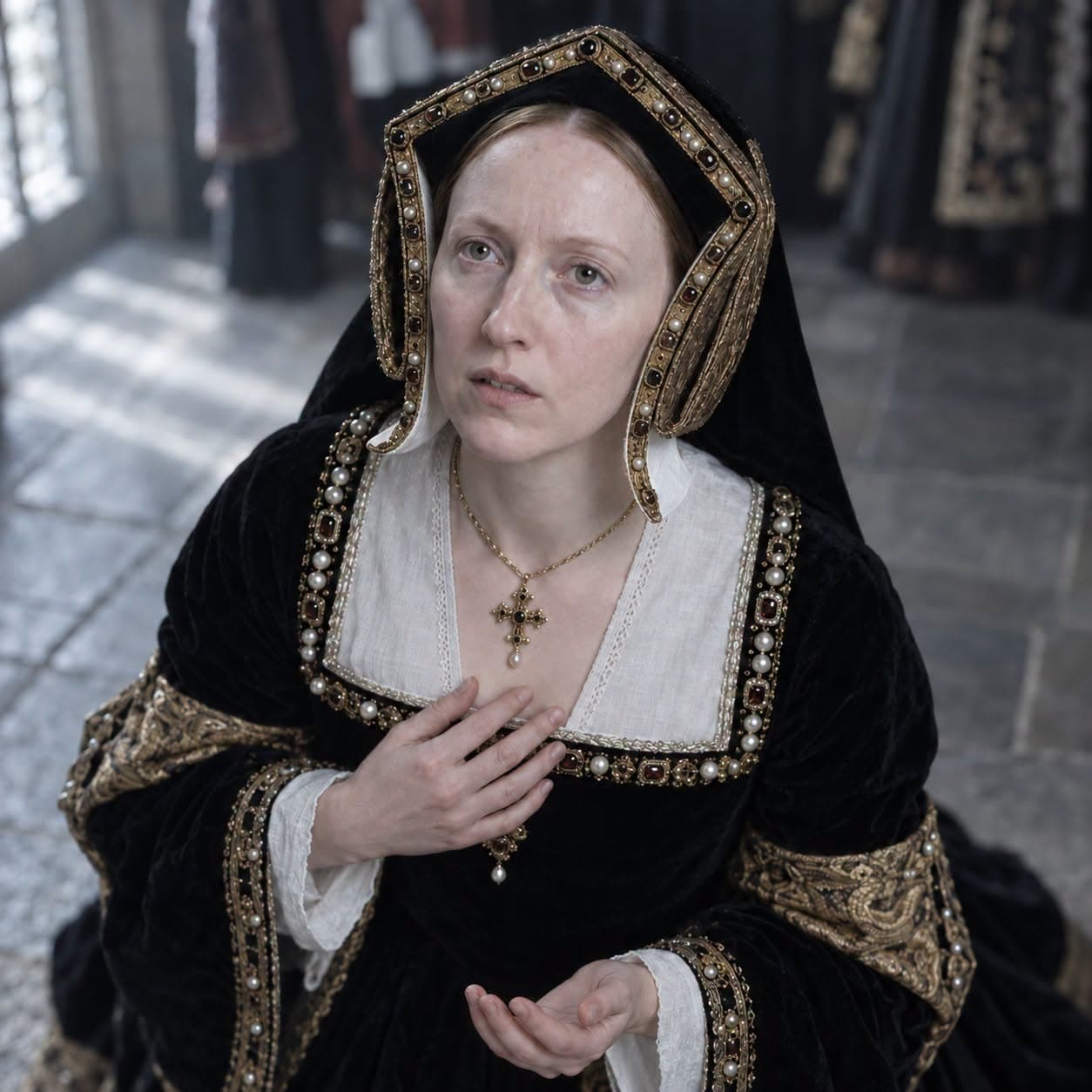
Catherine of Aragon had knelt before her husband in the crowded hall at Blackfriars and asked him to remember the woman she had been to him for twenty years. Henry VIII sat before her as king, but Catherine spoke to him as the man she had married. She reminded him that she had come to him a virgin, that she had been a true and obedient wife, and that she had borne his children. She appealed to his conscience, to the years they had shared and to the judgment of God. Then, having said what she had come to say, Catherine rose and left the court.
It was June 1529, and Henry had spent years trying to prove that their marriage should never have existed.
The court at Blackfriars was meant to settle the matter. Cardinal Wolsey and Cardinal Lorenzo Campeggio had been authorised to hear the king's case in England, and Henry had every reason to hope that the proceedings would finally give him what he wanted: a declaration that his marriage to Catherine was invalid, leaving him free to marry Anne Boleyn. Catherine, however, had already decided that she would not trust the question of her marriage to a tribunal sitting in her husband's kingdom and under the enormous weight of his wishes.
Three days before her famous appearance before Henry, she had lodged a formal appeal to Rome. She challenged the authority of the court and insisted that her case belonged before the pope.
At the centre of everything was a marriage that had taken place nearly three decades earlier. Catherine had first come to England to marry Henry's elder brother Arthur, Prince of Wales. They were married in November 1501, when both were teenagers, but Arthur died only months later. Whether that brief marriage had ever been consummated now mattered enormously. Catherine maintained throughout her life that it had not. When she later married Henry, a papal dispensation had been obtained to overcome any possible obstacle created by the earlier match.
For many years this had caused Henry little difficulty. He had married Catherine in 1509, crowned her beside him, lived with her as his wife and fathered children with her. Only one of those children, Princess Mary, survived infancy, and as the years passed without a living son Henry became increasingly convinced that something was wrong with the marriage itself.
His argument rested heavily on scripture. Leviticus warned that a man who took his brother's wife would be childless. Henry came to believe that his marriage to Catherine had offended divine law and that no pope could have made lawful something God had forbidden. If that were true, the dispensation that had allowed the marriage was worthless and Catherine had never truly been his wife.
Catherine refused to surrender. She had little political machinery of her own in England, but she possessed something Henry could not easily take from her: the right to appeal beyond him. If the king wished to argue that the pope who had permitted their marriage had lacked the power to do so, Catherine would take the case directly to the papacy. Henry could command a great deal in England. He could not yet command Rome.
The Blackfriars proceedings continued after Catherine walked out, but they were already in trouble. Campeggio had arrived in England under instructions that made him cautious, and Pope Clement VII faced pressures extending far beyond the private lives of an English king and queen. Catherine was the aunt of Emperor Charles V, whose armies had recently dominated Rome itself. Europe was divided by war, the Ottoman threat remained pressing, and Clement had every reason to avoid a decision that might deepen the political fracture of Christendom.
In July, Campeggio adjourned the Blackfriars court for the customary Roman judicial recess. It never sat again.
For Henry, this was a disaster. He had spent years waiting for an answer and had finally brought the question into an English courtroom, only to watch it slip away from him. Catherine's appeal had helped return the case to Rome, where Henry's influence was far less certain and where the pope had every reason to proceed slowly.
Catherine had made her stand at Blackfriars, but an appeal to Rome did not guarantee victory. Clement was cautious, diplomatic and painfully aware that whichever way he moved he risked angering one of Europe's great rulers.
Then, on 7 October 1529, Clement wrote to Henry.
Clement informed Henry that the cause had been suspended, and then addressed one of the central arguments surrounding the original papal dispensation.
If Catherine's account was true, Clement explained, and her marriage to Arthur had not been consummated, then the dispensation permitting her later marriage to Henry was perfectly sound in conscience. The impediment involved was not, in Clement's view, something that placed the marriage automatically beyond papal authority.
It was a qualified answer, but it was not the answer Henry needed.
For years Henry had been trying to establish that his marriage was invalid at its root, that the papacy itself had never possessed the power to permit it. Clement was refusing to accept that as self-evident.
The letter also revealed how far the case had spread beyond husband and wife. Clement urged Henry to consider the wider dangers facing Christendom, including the threat from the Ottoman Turks. To Catherine, the question was whether she was a lawful wife. To Henry, it had become bound up with his succession, his conscience and his desire to marry Anne Boleyn. To Clement, it was also part of a European political crisis in which England, France, the Empire and the papacy were all pulling in different directions.
She had walked into Blackfriars as the woman whose marriage Henry wanted judged and walked out refusing the authority of the court itself. The tribunal adjourned. Rome took control of the cause.
Henry still had a wife. Anne Boleyn was still waiting. And Cardinal Wolsey was now running out of time.
Wolsey had devoted years to finding a solution to the king's "Great Matter". Henry had expected results. Wolsey had not produced them. By the autumn of 1529 his extraordinary career was collapsing, and before long he surrendered the Great Seal.
Henry had attempted to place their marriage before a court sitting in his own kingdom, and Catherine had refused to allow that court to have the final word. She had knelt before the king as his wife, spoken in defence of her marriage, and then appealed beyond him.
Four months later, Henry was still waiting for his freedom.