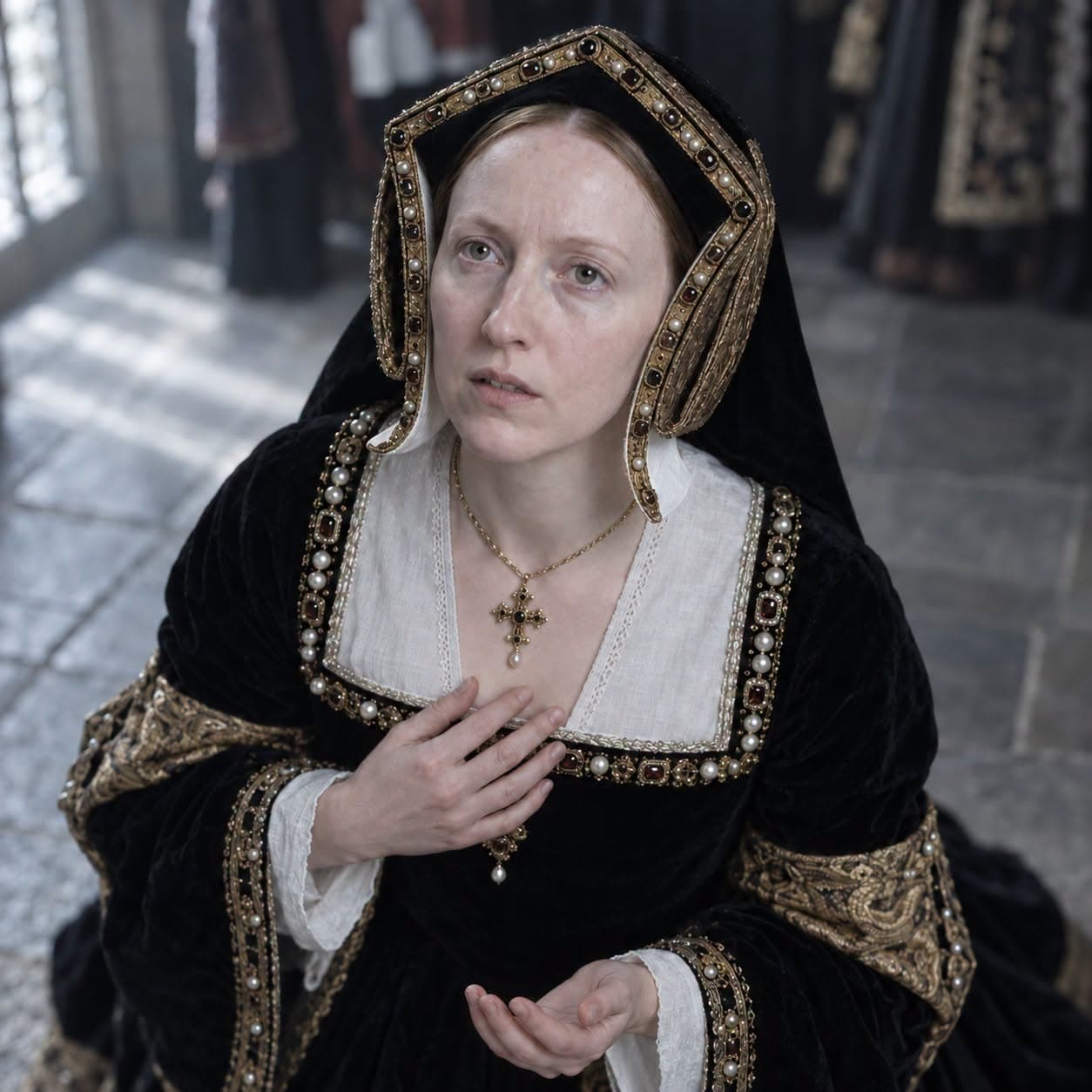
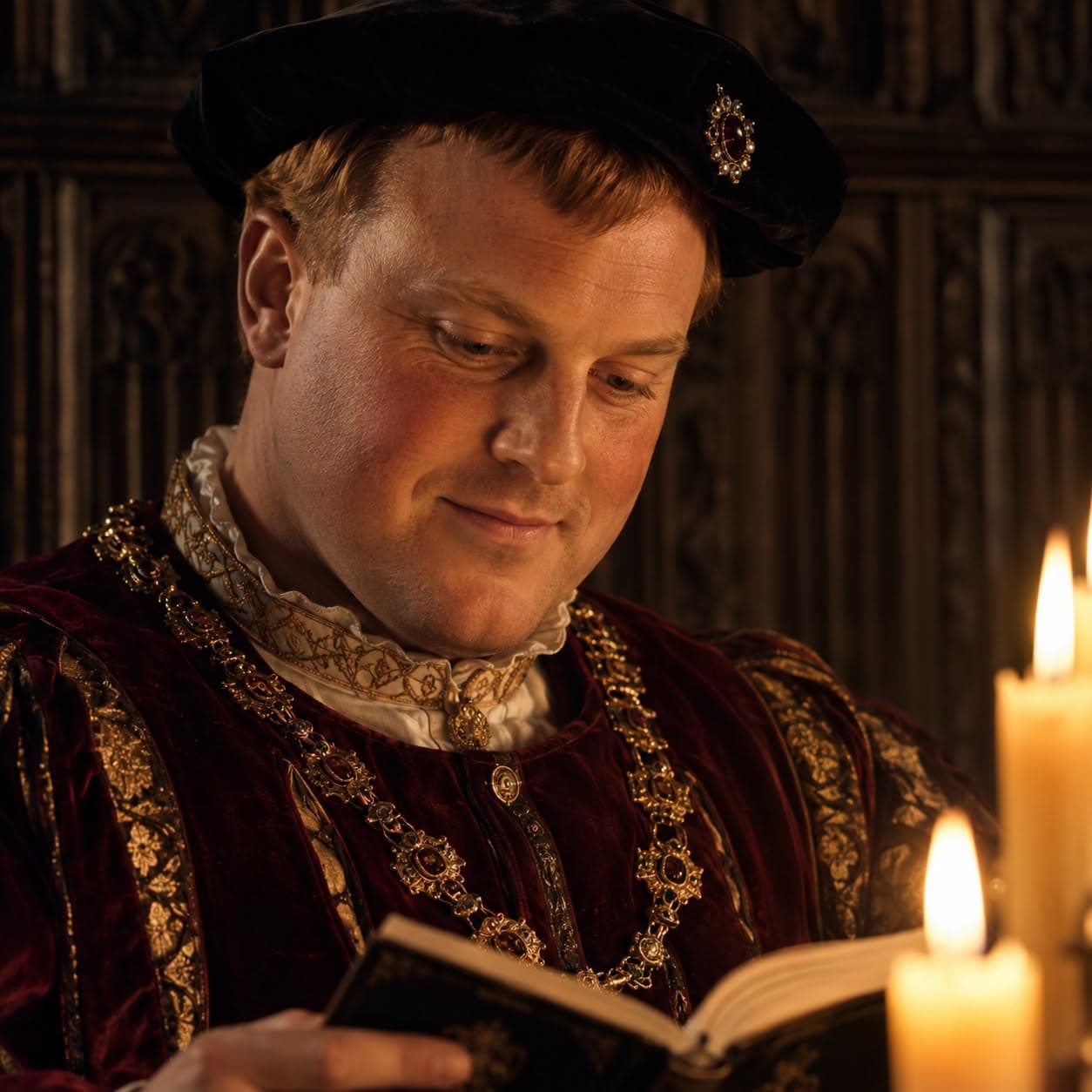
He cried aloud for the Lord to open Henry VIII's eyes. Then they burned him.
William Tyndale was cold in his prison cell at Vilvoorde. His clothes were inadequate for the approaching winter, and the long evenings left him sitting alone in darkness. In a letter from his cell, he asked for a warmer coat, a woollen shirt and something with which to patch his leggings. He asked whether he might have a lamp in the evening, for it was tiresome to sit alone in the dark. Then, after asking for clothes and light, he made another request: could somebody please send him his Hebrew Bible, his Hebrew grammar and his Hebrew dictionary, so that he might continue his work.
He had already spent much of his adult life doing that work in hiding. Tyndale wanted scripture to be available in English in a form that ordinary people could actually understand, and he was prepared to leave England to make it happen. A manuscript could be found and destroyed. A printed book could be reproduced hundreds of times, packed into bales and barrels, carried across the North Sea and passed from one pair of hands to another.
His English New Testament appeared in 1526. Copies were smuggled into England from the Continent, and the church authorities hunted for them. Tyndale's translation was denounced, copies were publicly burned, and anyone distributing them risked punishment. Yet every book destroyed represented only one copy of words that were already spreading beyond the authorities' control.
His translation choices could carry theological meaning, and his other writings were more direct still. That made him useful to some people in Henry VIII's England and dangerous to others.
It was said that Anne Boleyn owned Tyndale's The Obedience of a Christian Man and that a copy reached Henry VIII, who was impressed by its arguments about the authority of kings. Henry is said to have remarked that it was a book for him and all kings to read.
If Henry expected the evangelical writer to become an intellectual ally in everything that followed, Tyndale disappointed him.
In 1530, in The Practice of Prelates, he turned directly to the king's attempt to end his marriage to Catherine. Tyndale opposed the annulment. Scripture, as he understood it, did not give Henry the answer he wanted. Tyndale was not prepared to alter that answer simply because the man asking was a king.
Tyndale wrote fiercely about the duty of subjects to obey rulers while simultaneously insisting that a ruler could not make scripture mean whatever suited him. Henry was moving towards a break with Rome partly because Rome would not resolve his marriage as he wished. Tyndale, already condemned by the old religious establishment, had now placed himself against the king as well.
For years he remained beyond the reach of the English authorities, moving through the German lands and the Low Countries while continuing to translate. There were attempts to persuade him to return. Tyndale would not trust himself to England unless there was some assurance that the English people would be allowed scripture in their own language. He continued working abroad instead, living in Antwerp in the house of an English merchant, Thomas Poyntz, among English merchants who could offer him protection.
His protection eventually failed because of another Englishman. Henry Phillips arrived in Antwerp in 1535 and succeeded in gaining Tyndale's confidence. In May he invited Tyndale out to dinner. The entry to Poyntz's house was too narrow for two men to pass, and Tyndale, a man of no great stature, went first, with the taller Phillips behind him. Officers sat waiting on either side of the door. Phillips pointed with his finger over Tyndale's head, so that they could see which man to take.
Tyndale was taken to Vilvoorde Castle, near Brussels, and remained there for more than a year. He was tried for heresy under the authorities of the Habsburg Netherlands and condemned that summer. The translator whose books had been hunted through English ports now faced the punishment reserved for a condemned heretic.
On 6 October 1536 Tyndale was brought out at Vilvoorde to the place of execution. He was chained to the stake with a cord round his neck, with straw and wood piled round his feet. The executioner strangled him first, and then the fire was lit. John Foxe wrote that his last cry was a prayer: "Lord, open the King of England's eyes."
In 1537, only about a year after his execution, the Matthew Bible appeared in England. Published under the name of Thomas Matthew and associated with Tyndale's friend John Rogers, it incorporated enormous quantities of Tyndale's translation. Tyndale himself had translated the New Testament and substantial portions of the Old Testament before his arrest. Now those words were circulating in a Bible that received royal approval.
The transformation went further. In 1538, royal injunctions required an English Bible to be made available in parish churches. The following year came the Great Bible, produced under the patronage of Thomas Cromwell and authorised for use in the Church of England. Its text descended through earlier English versions that were deeply indebted to Tyndale.
Tyndale had lived as an exile while his New Testaments were confiscated and burned. He had been betrayed, imprisoned, condemned as a heretic and killed. Yet English men and women were soon standing inside their parish churches reading scripture in language that owed an immense debt to the man whose translations authorities had once tried to keep out of their hands.
While he sat at Vilvoorde asking for a lamp and his Hebrew books, the world outside his cell was already moving towards a settlement in which an English Bible would be not merely tolerated but required.
They could burn his books when they found them, and in the end they could burn his body. What they could no longer do was stop his English translation from spreading.