Robert Aske rode into a rebel camp to muster men sworn to preserve their king. They had taken up arms against his government. They wanted the king to put things right.
On Tuesday 24 October 1536, he arrived at Hampole in Yorkshire and ordered a muster on the neighbouring heath above Barnsdale. The pilgrims were advancing towards Doncaster, where royal forces stood in their way. Other contingents were still coming forward. Aske had an armed movement to bring together, and a king to persuade that its grievances deserved a hearing.
He was a Yorkshire lawyer, from a family long settled at Aughton, and a fellow of Gray's Inn. Within weeks he had become a captain of the commons. The Pilgrimage of Grace had entered York, where he ordered the return of displaced monks and nuns to their houses. At Pontefract, Lord Darcy had yielded the royal castle to the insurgents. Men who ordinarily obeyed great lords were now requiring great lords to take their oath.
The oath held together things which Henry's government was pulling apart. It bound the pilgrims to the Church and to the preservation of the king and his children, while demanding the removal of evil counsellors. It also demanded the expulsion of men of low birth from royal counsel. These were people defending an accustomed order, with its ranks and privileges as well as its religious life. Aske's movement could challenge the men governing England without accepting that it was disloyal to England's king.
That distinction had a great deal of work to do.
Earlier that year, Parliament had authorised the suppression of smaller religious houses. For the Crown, there were lands, buildings and revenues to take possession of. For the people defending them, there were places of worship and sources of help which belonged to the pattern of ordinary life. Closing the gates could reach well beyond the men and women who had lived inside them.
When Aske later explained his opposition, he spoke of alms for the poor and hospitality for travellers, of divine services diminished and masses left unsaid. He complained of ornaments and relics mistreated, of tombs pulled down and sold. His case for the abbeys joined bodily relief to spiritual comfort. Food, shelter and worship belonged in the same account. The men gathering under him were asking to keep a world in which those things were provided together.
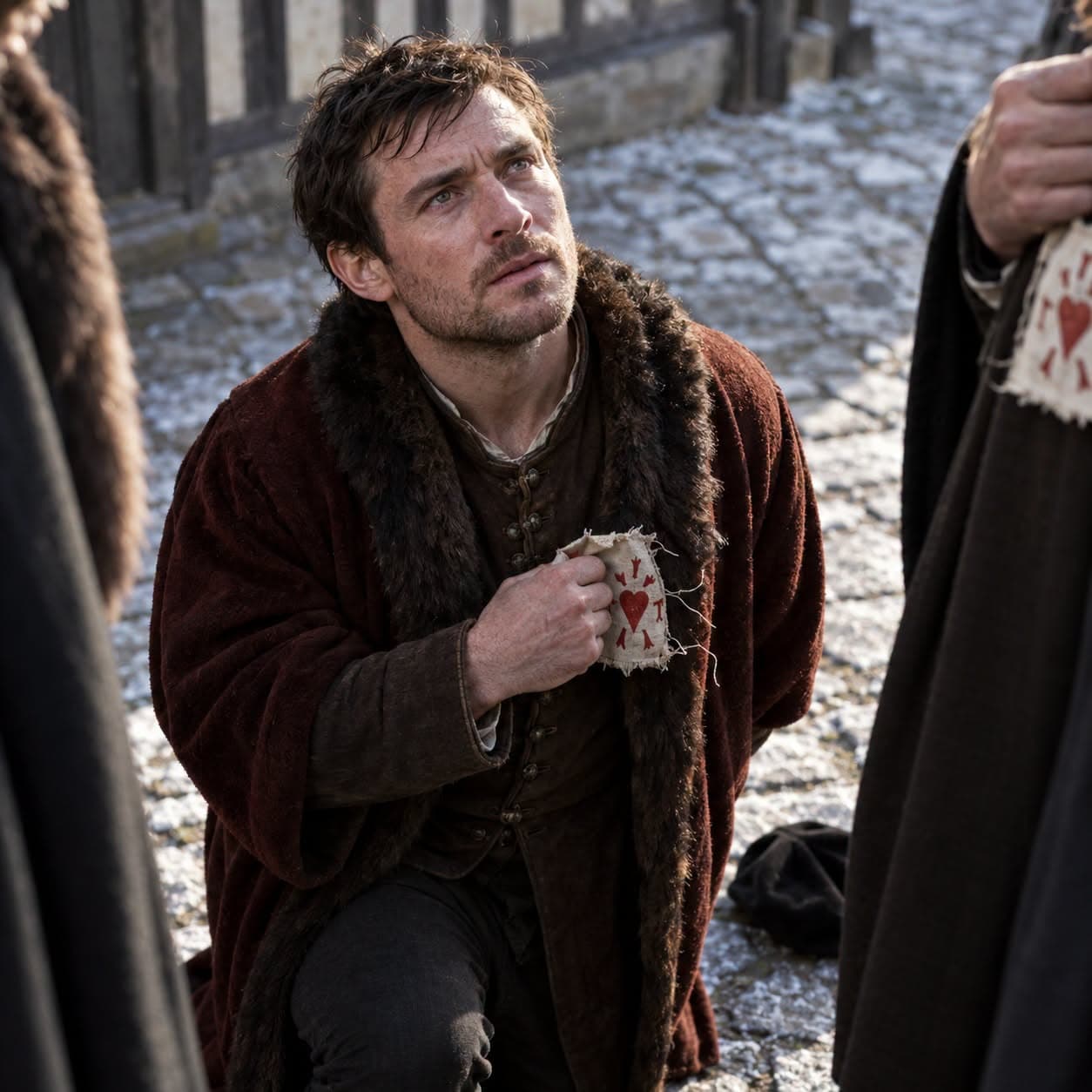
They carried their religion into the field. The Five Wounds of Christ appeared on pilgrim badges, a declaration worn on clothing. Their oath forbade entering the movement for private profit or killing out of personal hatred. That did not make an armed rising harmless. It set out what its leaders claimed the weapons were for.
At the muster on 24 October, a royal herald arrived with a letter from the Earl of Shrewsbury at Doncaster. The captains held a council before the assembled host. They decided that Aske should ride back to Pontefract to consult Darcy about their answer. Before leaving, he appointed two gentlemen to look after the herald's comfort and safety.
Aske later reckoned the host on that heath at thirty thousand or more, with thousands more held back at Pontefract. Shrewsbury had far fewer men at Doncaster. Aske used that strength to bring the king's men to the table. The Duke of Norfolk, commanding royal forces, became the king's negotiator. On 27 October, at a conference by Doncaster bridge, the two sides agreed a truce and an undertaking to carry the pilgrims' grievances to Henry. The final settlement was still weeks away.
By December, a general pardon and the promise of a parliament at York offered a way home. On 8 December, the pardon was read to the pilgrims at Pontefract and the commons dispersed. At Doncaster, Aske knelt and asked to give up the office and name of captain. He tore off his Five Wounds badge. The pilgrims around him did the same, crying that they would wear no badge nor sign but the badge of their sovereign lord.
He had called men together. Now he sent them home.
Henry invited him to court that Christmas and received him favourably. Aske was given a jacket of crimson satin and asked to write an account of his part in the rising. The lawyer who had spoken for the commons could now put their case before the king himself. He returned north supporting the settlement, trying to keep people quiet while they waited for its promises to be fulfilled.
In January 1537, Sir Francis Bigod launched another rising. Aske tried to prevent it. Its failure nevertheless gave the government its opportunity to proceed against the northern leaders. The promised parliament at York never met. Aske was arrested in April and imprisoned in the Tower of London. The indictment acknowledged the pardon for the earlier rebellion, then alleged fresh conspiracy after it. He was convicted of treason in May.
His appeals had become smaller. On 11 May, days before his trial, at the end of answers to his examiners, he asked for money and clothing: a shirt, hose, a doublet and shoes. He had neither money nor clothes to wear, he wrote, and begged for them for the reverence of God. The man to whom Henry had given crimson satin at Christmas was asking for the ordinary things needed to get through another day.
Aske had ridden into the October camp with men to muster and messages to answer. On 28 June, he was sent north again on horseback, a condemned prisoner taken from the Tower. At York, on the scaffold, he asked more than once for the king's forgiveness. He was hanged there on 12 July 1537.