They accused him of a crime that nobody had committed. They hanged him anyway.
Richard Langhorne had spent his professional life defending people under English law. When he was accused of plotting to murder King Charles II, that same law denied him the right to have a lawyer defend him. He was a barrister, familiar with the courts and the rules of evidence, but the charge against him was high treason, and in seventeenth-century England a man accused of treason was expected to answer the prosecution himself.
His troubles began on 7 October 1678, when he was arrested and committed to Newgate Prison without any prior examination. England was in the grip of a panic that had begun only weeks earlier, when a former Catholic seminarian named Titus Oates claimed to have uncovered an enormous conspiracy to murder the king, overthrow the government and establish Catholic rule. Oates supplied names, meetings, correspondence and elaborate details of a secret organisation supposedly preparing to destroy Protestant England. Much of the country believed him, and arrests began almost immediately.
There was no such conspiracy.
But Richard Langhorne was particularly vulnerable because there was something real behind the accusations made against him. He was a Catholic barrister who had acted as legal adviser to the Jesuits, managing business affairs, property arrangements and financial matters for a religious community whose activities were severely restricted under English law. His connections were genuine, his correspondence existed, and he had spent years helping Catholics conduct their affairs in a country where their religion exposed them to prosecution. When the authorities began searching the papers of arrested priests, Langhorne's name appeared in their business dealings.
His professional relationship with the Jesuits could be presented as evidence that he occupied an important position within a secret Catholic network. In October 1677, when Oates was expelled from the English College at Valladolid in Spain, Langhorne's son Charles had entrusted him with a letter to his father. Oates later went to St Omer with Richard's reply, thanking the Jesuits for all they had done for his sons. When Oates later made his accusations, he claimed that Langhorne's earlier correspondence dealt with treason. Langhorne found himself charged not merely with assisting Catholic priests, but with helping to organise the murder of his king.
He remained in Newgate for more than eight months before his trial. He was kept in solitary confinement, with little opportunity to answer the accusations gathering against him. Outside the prison, the allegations were becoming more extravagant. Oates was treated as a national hero, while other informers came forward with stories that appeared to confirm his claims. Among them was William Bedloe, whose evidence would become central to Langhorne's prosecution. The stories did not need to agree in every particular.
On 14 June 1679, Langhorne was finally brought before the Old Bailey. He was accused of conspiring against the life of Charles II and the Protestant government, with Oates and Bedloe among the principal witnesses against him. The Crown had the machinery of prosecution at its disposal, while Langhorne was required to conduct his own defence. He knew the weaknesses of the evidence and understood the importance of exposing contradictions, but he had no independent counsel to examine the witnesses, organise his case or argue the facts on his behalf.
His papers had been seized and thoroughly examined, but nothing establishing his involvement in treason had been found. The informers nevertheless insisted that incriminating documents had existed, leaving open the suggestion that they had been destroyed before the authorities could discover them.
He could produce his surviving papers and demonstrate that they contained no conspiracy, but how could he prove that some other document had never existed? How could he establish that a secret meeting had never taken place, or that a conversation described by an informer had never occurred? The prosecution could claim that evidence had disappeared, while the absence of that evidence did little to weaken the accusation. Langhorne was being asked to prove a negative, with his life depending on whether the jury believed him.
He attempted to expose the contradictions in Oates's testimony and called witnesses who could challenge the informer's account of where he had been at particular times. Some had known Oates at the Catholic college of St Omer and could testify that he had been there when he claimed to have been elsewhere attending conspiratorial meetings. Yet even these witnesses faced a terrible disadvantage. They were Catholics, or connected with Catholic institutions, and their testimony was heard in a courtroom surrounded by an atmosphere of intense religious hostility.
Langhorne's arguments failed to persuade the jury. Despite the contradictions he identified and the absence of documentary proof of treason, he was found guilty. The sentence was the punishment prescribed for a man convicted of high treason: he was to be hanged, drawn and quartered.
His execution did not immediately follow. Langhorne was granted a temporary reprieve, partly through the efforts of his Protestant wife, Dorothy, and because the authorities still believed he might possess valuable information. They wanted to know more about the Jesuits, their property and the supposed conspiracy. A pardon was offered if he would confess his guilt and make the disclosures demanded of him.
Langhorne did possess information about Jesuit property because he had handled such affairs as part of his professional work. He was prepared to disclose what he knew about those holdings, and he did so. The authorities had therefore been right about one thing: he was a man who knew a great deal about the financial arrangements of English Catholics.
But when they demanded information about the plot to murder Charles II, Langhorne continued to insist that he knew nothing of it. He could disclose genuine transactions and identify real property, but he could not supply details of a conspiracy in which he maintained he had never participated.
On 14 July 1679, Richard Langhorne was taken to Tyburn for execution. He had prepared a statement defending his innocence and his religion, and he continued to deny the treason for which he had been condemned. He declared on the scaffold that not only a pardon but many preferments and estates had been offered to him if he would give up his religion. He prayed that God would bless the king and the kingdom and that there might be no more blood shed, and then he said that he would say no more in public.
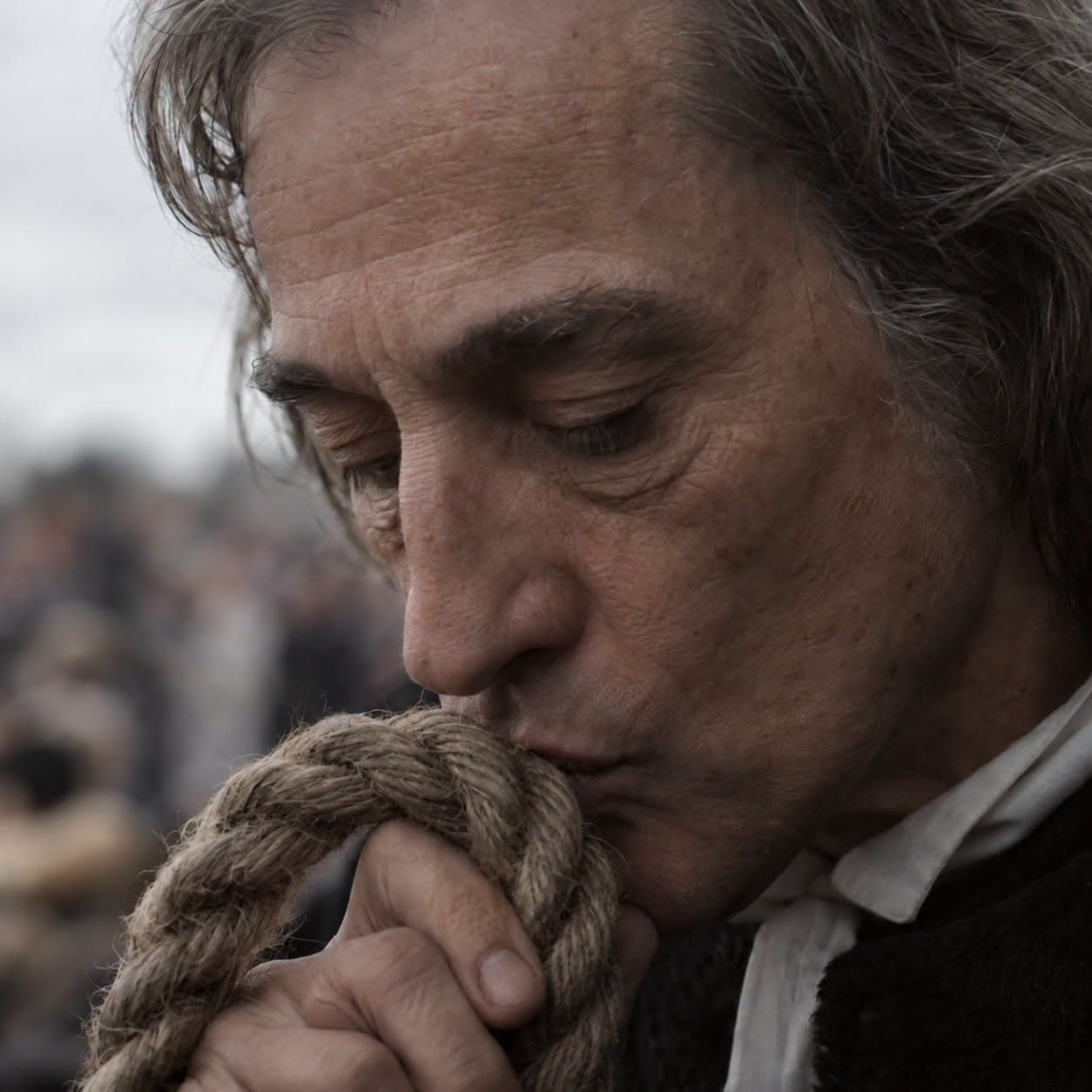
As the hangman placed the rope round his neck, he took it in his hands and kissed it. His last words to the hangman were: "I am desirous to be with my Jesus."
The Popish Plot did not end with his death. More Catholics were prosecuted, and the accusations continued to influence English politics for years. Yet the credibility of Titus Oates and the other informers gradually collapsed as their contradictions became impossible to ignore. In 1685, Oates himself was convicted of perjury in connection with evidence he had given during the prosecutions. The man whose testimony had helped send innocent people to their deaths was finally exposed in a court of law.
Langhorne had been dead for nearly six years.
The abuses of the Popish Plot trials became part of the argument for changing the way England tried people accused of treason. In 1695 Parliament passed legislation that, from the following year, allowed defendants facing such charges to have lawyers conduct their defence. It was a protection Langhorne had been denied seventeen years earlier. He is remembered by the Catholic Church as a martyr and was beatified in 1929.
By the time England finally changed its treason laws to give accused men the right to proper legal representation, the barrister who had been forced to defend himself was already long dead.