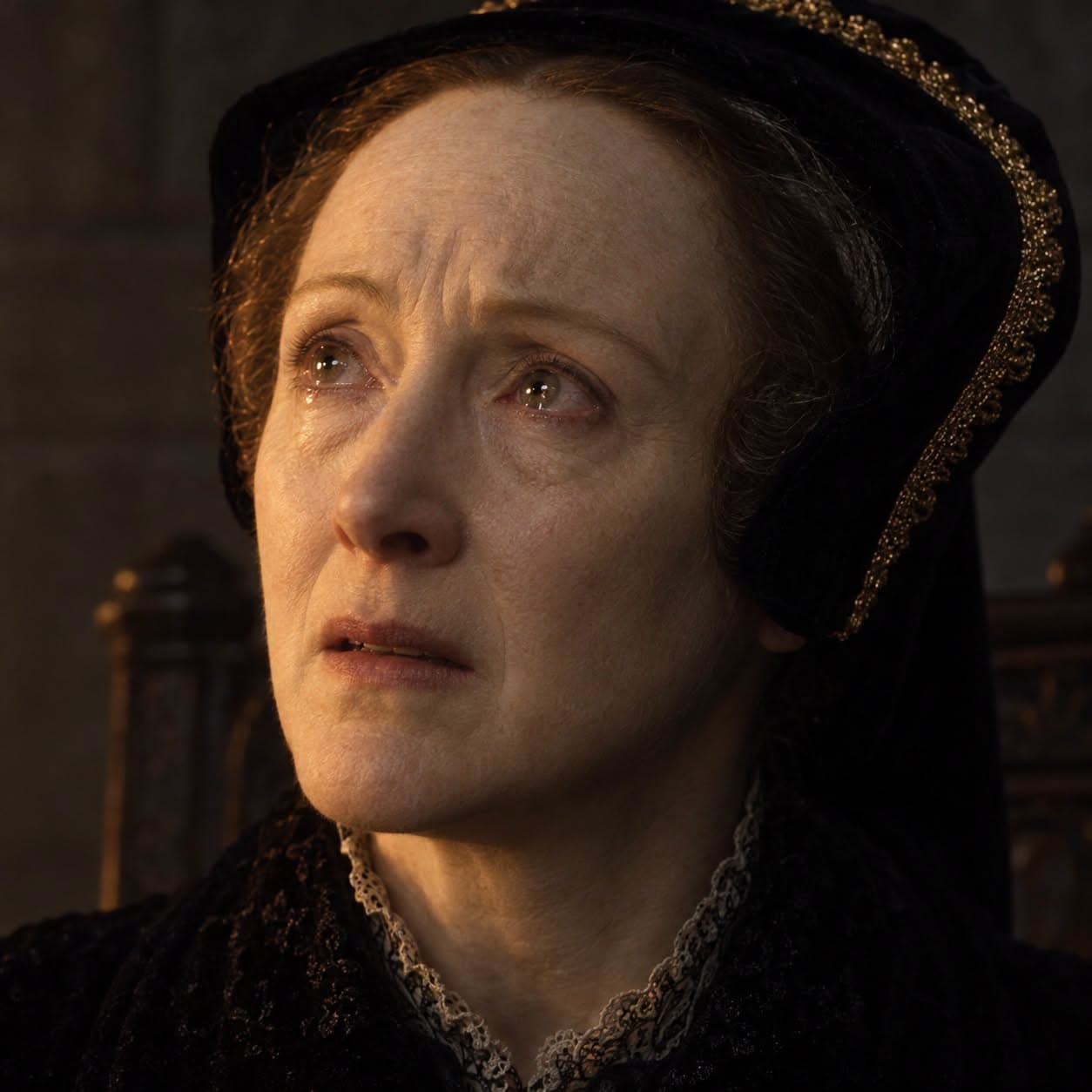
They had come to pray for the queen. Twelve days later, she was dead.
A solemn procession passed through the streets of London on Thursday 11 October 1537. Friars, priests and clerks walked in their ceremonial copes, followed by the lord mayor, aldermen and the city's trade guilds in their liveries. It was an extraordinary gathering of religious and civic authority, brought together for a single purpose. As the chronicler Charles Wriothesley recorded, they had come to pray for the queen, who was still in labour.
Miles away, at Hampton Court Palace, Jane Seymour had been enduring a difficult childbirth for the better part of two days.
She had entered her lying-in confinement on 16 September, withdrawing into the apartments prepared for the birth of her first child. The rooms were hung with rich textiles, their windows covered against the daylight, and the queen was attended by the women of her household and the king's trusted physician, William Butts. It was meant to be a protected space in which she could give birth and recover before returning to the public life of the court. By 11 October, however, the delivery had become sufficiently prolonged that prayers were being organised throughout the capital.
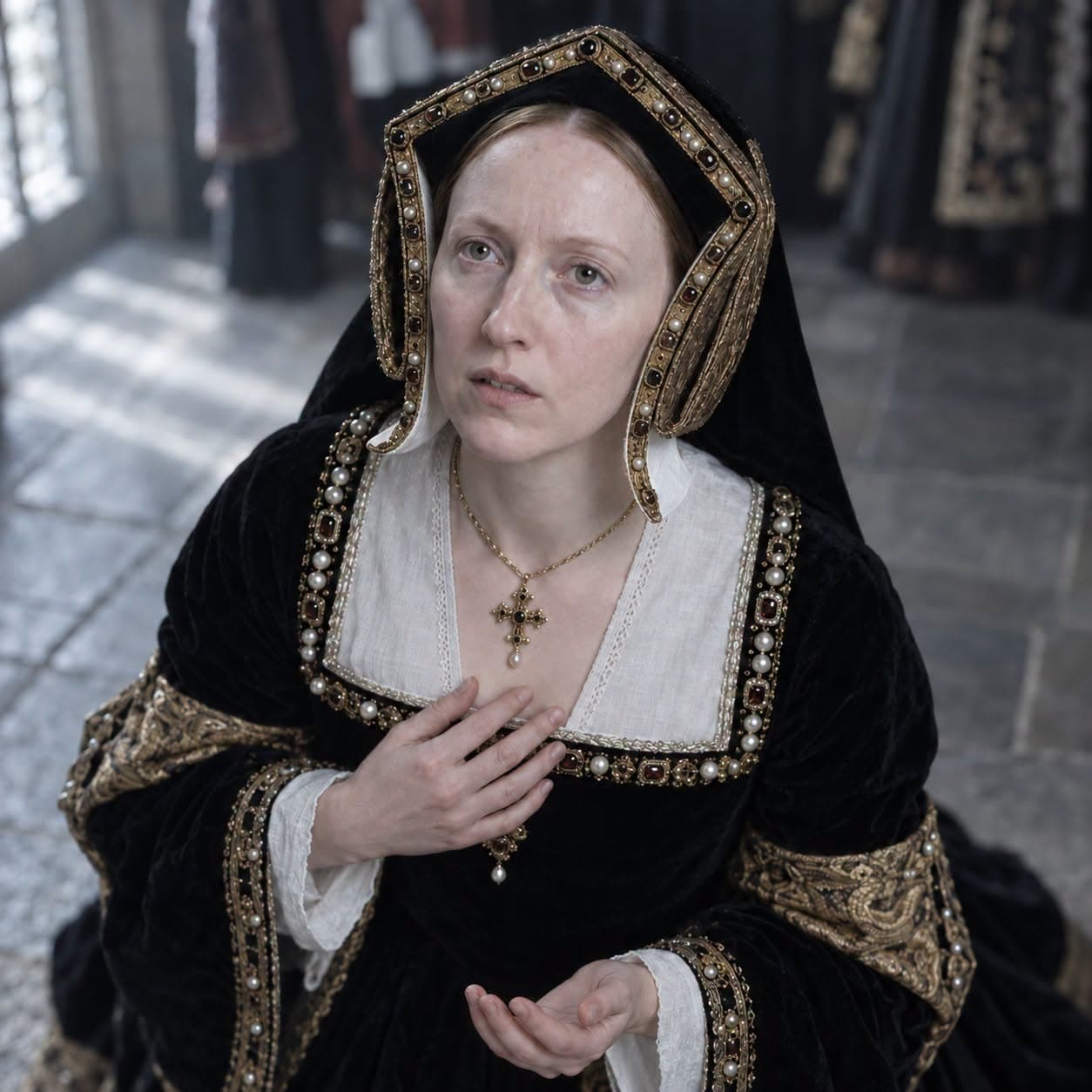
There was more resting upon this birth than the usual hope for a healthy royal child. Henry VIII had been king for twenty-eight years and still had no legitimate son to succeed him. Catherine of Aragon had borne him several children, but only their daughter Mary had survived. Anne Boleyn had given him another daughter, Elizabeth, and had been executed the previous year. Henry had married Jane only eleven days after Anne's death, and the question of whether this third marriage would finally provide a male heir hung over the court.
Jane had served both Catherine and Anne before becoming queen herself. She knew the position she occupied, and she had seen what had happened to the women who held it before her. Now she was approaching thirty, enduring her first childbirth in a royal household that had spent decades waiting for a prince.
The men who walked through London praying for her safe delivery could do nothing to ease the labour taking place at Hampton Court, but the outcome mattered to every one of them. A surviving son would secure the Tudor succession in a way that Henry's daughters, whose legitimacy he had repudiated, could not.
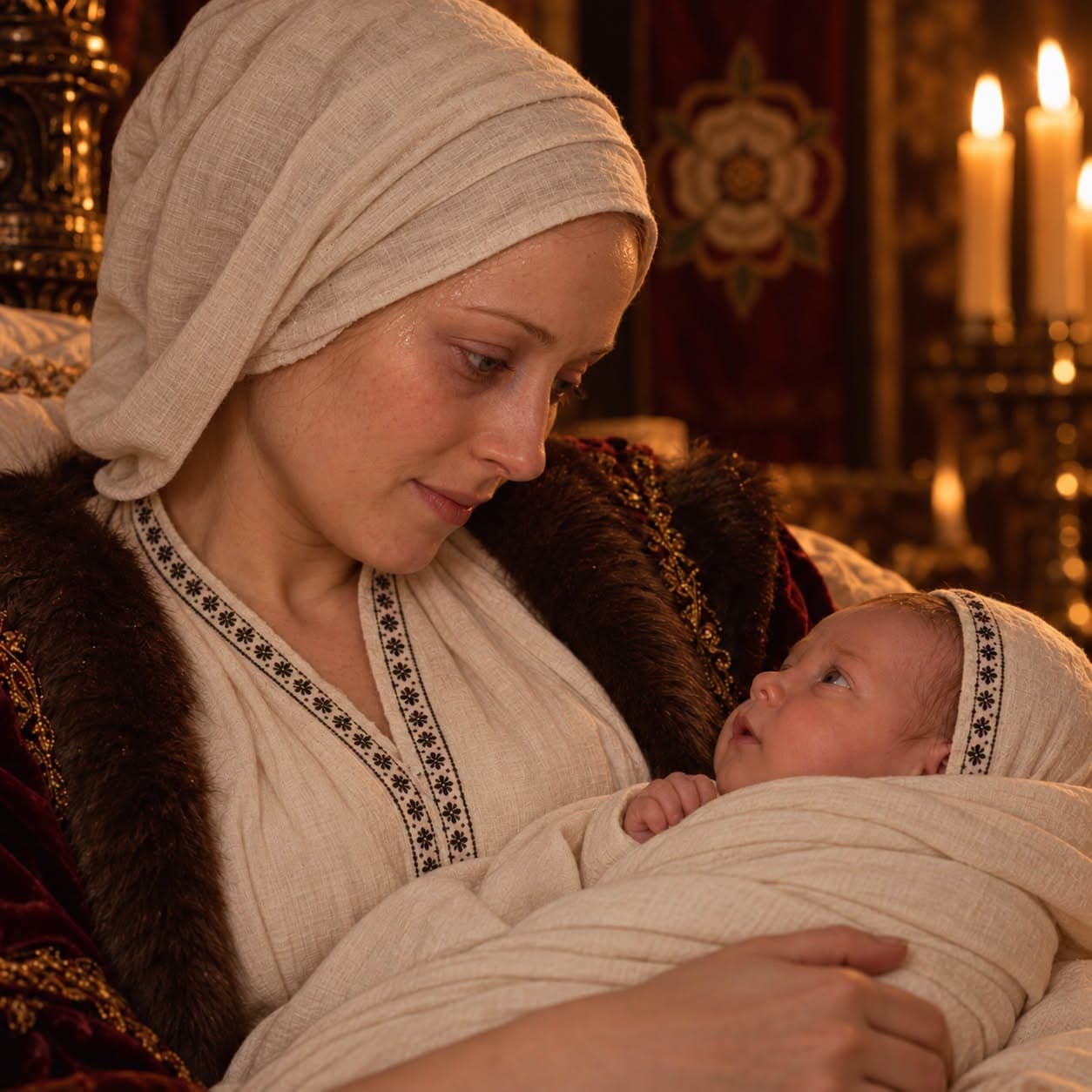
The labour continued through Thursday and into the night. At approximately two o'clock on the morning of Friday 12 October, Jane gave birth to a boy. He was named Edward.
The news travelled swiftly to London. By eight that morning the *Te Deum*, the great hymn of thanksgiving, was being sung in every parish church. Bells rang across the city and fires were lit in the streets. At nine, the religious orders assembled at St Paul's with their crosses, candlesticks and rich ceremonial vestments, joined by bishops, royal officials, the lord mayor and the representatives of the city's guilds. The same London that had processed in prayer the previous day now gathered to give thanks for the safe arrival of a prince.
The celebrations continued long after the morning services had ended. Guns were fired from the Tower of London, musicians played in Cheapside, and great fires burned in the streets as evening fell. Wine was provided for the poor, with barrels set out so that ordinary Londoners could share in the festivities. Wriothesley recorded more than two thousand gunshots from the Tower that night, while church bells continued ringing until ten o'clock.
At Hampton Court, the birth was announced in letters prepared in Jane's name and sent under her signet. They declared that she had been delivered of a prince, conceived in lawful marriage, and asked those receiving the news to give thanks for the child and pray for his preservation. The language was formal and concerned with the peace and security of the kingdom, but behind it was a woman who had spent days in labour and was now beginning the uncertain business of recovery.
For a short time, Jane appeared to be recovering well. Preparations continued for Edward's christening, which took place on 15 October in the Chapel Royal at Hampton Court. A great raised font had been constructed for the ceremony, and the infant prince was carried beneath a canopy through a gathering of the most important people at court. His half-sister Mary, now twenty-one, served as one of his godparents, while four-year-old Elizabeth also took part. The two girls whose births had not settled the succession were present to welcome the brother who now stood before them both.
Jane did not attend the christening, as mothers were customarily kept apart from public ceremonies during their confinement. Afterwards Edward was carried back to her apartments, where she was sitting up in bed to receive him. Henry was also present, and the little prince received his parents' blessing.
Plans were already being considered for her churching, the religious ceremony that would mark her recovery from childbirth and allow her to return to court life. But within days the signs became less encouraging. Jane developed a serious illness, and by 18 October her condition was causing increasing concern. The difficult delivery had ended with a living child, yet her own recovery was no longer assured.
On 19 October another solemn procession was held in London, this time at St Paul's. The prayers were for the preservation and welfare of the prince and for the health of the queen. Only a week earlier the city had celebrated Edward's birth with bells, bonfires and wine. Now the religious authorities were again asking God to protect his mother.
At Hampton Court, Jane's illness continued. There were moments when her attendants believed she might improve, followed by renewed deterioration. On the morning of 24 October, at eight o'clock, members of her household wrote to the king's council reporting that she had been very ill throughout the night. She had appeared to recover somewhat the previous afternoon, but the improvement had not lasted. Her confessor had attended her and was preparing to administer the last rites.
Jane Seymour died later that day, twelve days after giving birth to Edward. She was about twenty-nine years old. The precise cause cannot now be established, although a serious infection following childbirth is considered a likely explanation. The delivery had given Henry VIII the son he had sought throughout his reign, but the woman who bore him did not survive long enough to leave her confinement.
The public ceremonies continued, although their purpose had changed. On 12 November Jane's body was carried from Hampton Court towards Windsor in a funeral procession accompanied by nobles, clergy and ladies dressed in black. The king's eldest daughter Mary, who had stood as godmother at Edward's christening less than a month earlier, now served as chief mourner at the funeral of his mother.
That same afternoon, London gathered once more. A solemn memorial service was held at St Paul's, attended by the mayor, aldermen, sheriffs and the city guilds in their ceremonial dress. The churches that had sung thanksgiving for Edward now offered prayers for Jane's soul. From noon until six the bells tolled across the parishes, and solemn peals accompanied the mourning. The following morning requiem masses were celebrated throughout the city.
Edward would grow up to become King Edward VI, although his mother would never see him take the throne. Jane was buried in St George's Chapel at Windsor, where Henry VIII would eventually be laid beside her.
The prince whose birth had filled London's streets with bells and bonfires survived. The queen for whom the city had prayed did not.