Richard Gwyn left his wife eleven shillings and his rosary beads. He handed them to Catherine as he was taken out to be executed. They were, in effect, everything he had to leave her.
On 15 October 1584, the Welsh schoolmaster and poet was hanged, drawn and quartered at Wrexham. He had spent more than four years in prison. Through examinations, fines and a sentence of death, the offer kept returning: acknowledge the queen's authority over the Church, and there was a way out.
He acknowledged her as his lawful queen. That was not enough.
Richard was born at Llanidloes around 1537 and made his living teaching in north-east Wales, at Overton, Wrexham and Gresford. At Overton he married Catherine, a local woman. They had six children, and three of them would outlive their father. He wrote religious poems in Welsh which defended Catholic belief and attacked Protestant teaching, and he could be sharp about the people who preached it, too. The schoolmaster had a tongue, and imprisonment did little to improve his manners.
For a time he conformed. Pressed by the bishop's officers, he attended the established Church's services, greatly against his stomach. Soon afterwards he fell ill and resolved that, if he recovered, he would become a Catholic. He recovered. From then on, his refusal to attend those services, known as recusancy, brought him under scrutiny. He taught for a while in an old barn at Erbistock, escaped an arrest at Wrexham in 1579 and was caught again in July 1580. He was sent to Ruthin gaol in heavy irons. At the autumn assizes he was offered a pardon if he would go to church.
He refused, and went back to prison.
The authorities eventually arranged the attendance themselves. In May 1581, at Wrexham, six of the sheriff's men carried him into church, heels upwards, took him around the font and set him down beneath the pulpit. A preacher was waiting. Richard moved his legs until the clatter of his irons drowned out the sermon. They could bring the schoolmaster to church. Getting a quiet congregation out of him was another matter.
He was put in the stocks from ten in the morning until eight at night, then fined for brawling. Further fines followed for staying away from church. Asked what he had toward paying them, he answered: "Sixpence." He was given two pairs of irons for his legs instead. Money could be demanded even when there was none to collect.
In November 1583, Richard was examined and tortured in the manacles. Questions about his reconciliation and the pope's authority reached into his allegiance to Elizabeth. On the papal bull which had excommunicated her, his answer was recorded: "Notwithstanding that Bull, the which I never saw, I believe and confirm that she is our lawful Queen." He would recognise her sovereignty. He would not give her the religious obedience being demanded.
At his trial in October 1584, he and two fellow prisoners, John Hughes and Robert Morris, faced charges of high treason. Witnesses accused them of trying to persuade another man to become a Catholic and of acknowledging papal supremacy. One said Richard had recited rhymes of his own making against married priests and ministers. The judges invoked Catholic rebellions and plots; the prisoners protested their innocence. Refusal to attend church had brought fines. The allegations about religious persuasion and allegiance now carried a capital sentence.
Morris was acquitted. Hughes was reprieved. Richard was condemned, and met the sentence with a question: "Is it any more than one death?"
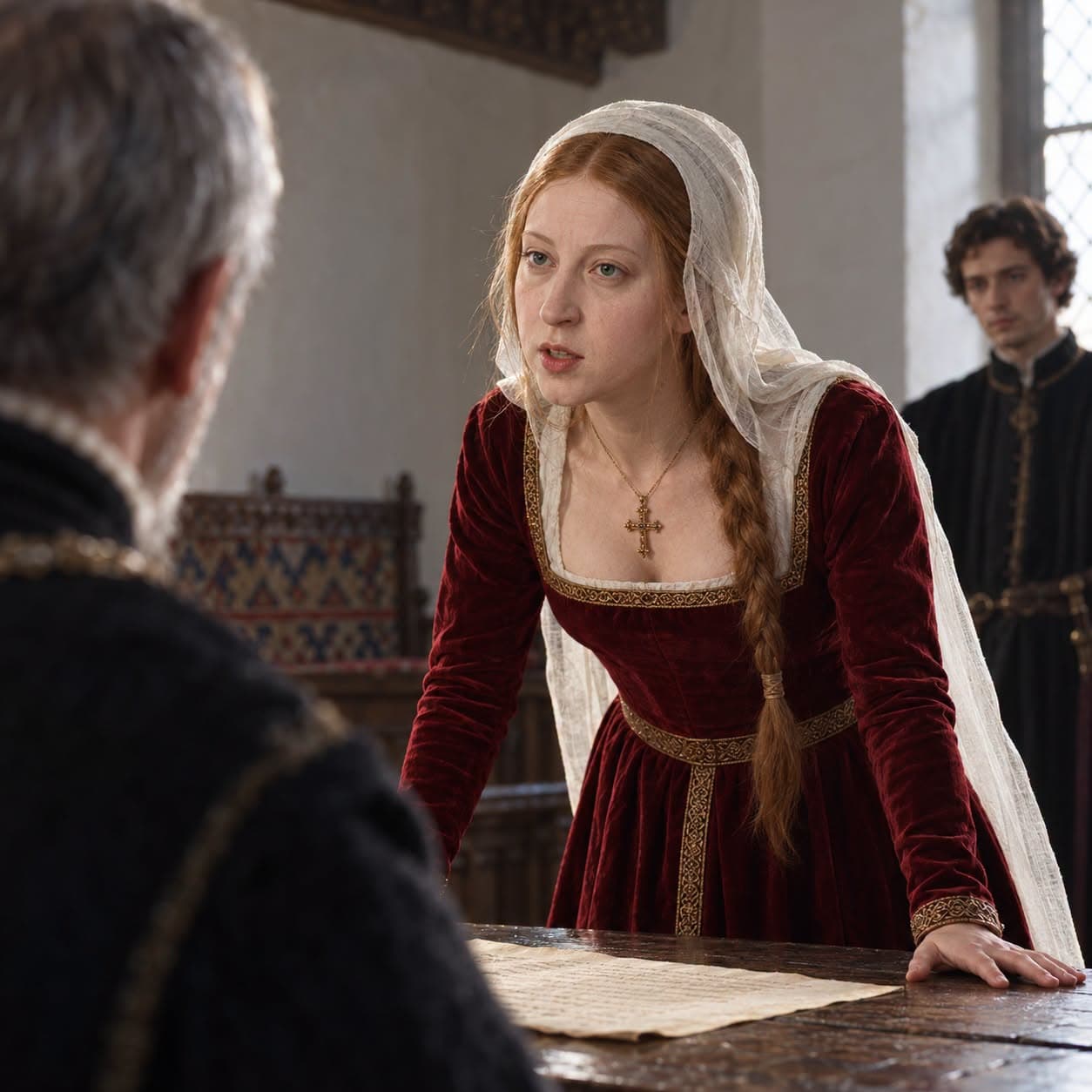
Catherine and Hughes's wife came before the court, each carrying a baby. Simon Thelwall, the judge who had passed sentence, advised them against following their husbands' disobedience. Catherine answered him: "If you lack blood, you may take my life as well as my husband's." She accused the witnesses of being ready to testify against her too, if someone paid them. The judge had already condemned her husband. She challenged him anyway, with a child in her arms. Both women were sent to gaol, then released on bail.
On 13 October, a gentleman came to offer Richard his release if he would acknowledge the queen as supreme head of the Church. The sentence had been pronounced, but the bargain was still available. Richard refused it again. The following day he prepared small farewell gifts for priests and friends, entrusting their distribution to Catherine.
His gaoler, Coytmor, had let the prisoners out on parole to visit their homes. Now Coytmor was ordered to carry out the execution. At about ten o'clock on the last morning, Richard heard a great noise from the back of the gaol and asked what it was. The gaoler's wife was lamenting for him. He turned to his wife. "I pray thee, Catherine, go and comfort her."
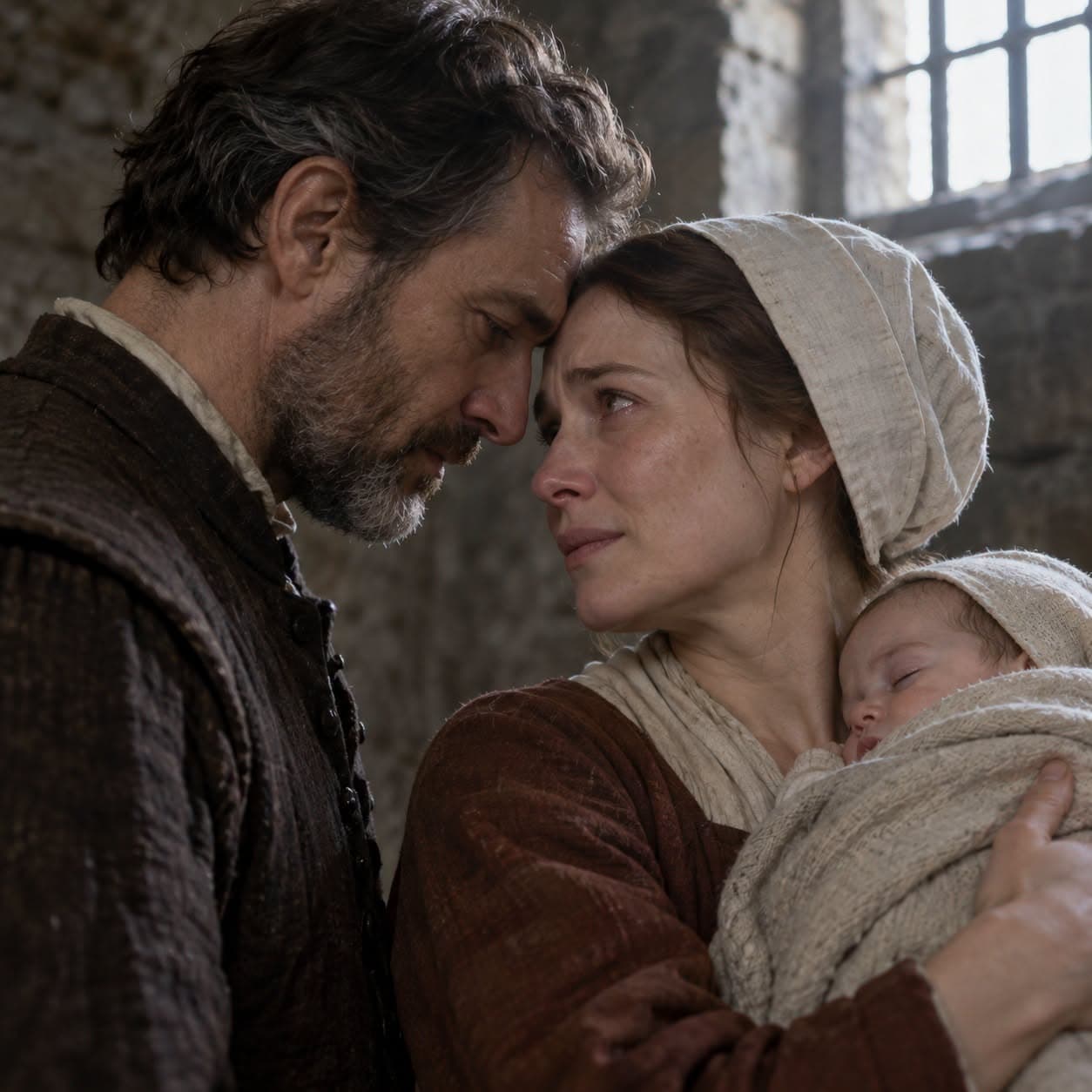
Before leaving, Richard kissed Catherine and blessed their baby, making the sign of the cross on the child's forehead. The common gaol was full of weeping people, and he laid his hands on their heads one after another. Outside, more were waiting, and he reached his hands out of the window to take his leave of them. A gentleman who had once been his pupil stood crying. Richard told him: "Weep not for me, for I do but pay the rent before the rent-day."
At the gallows he forgave Coytmor and acknowledged Elizabeth once more as lawful Queen of England. Then he asked a pardon of his own: "I have been a jesting fellow, and if I have offended any that way, or by my songs, I beseech them for God's sake to forgive me." His last words were "Jesus, have mercy upon me." He was hanged in his irons, and the hangman leaned his weight on the shackles to shorten his pain. The rest of the sentence followed.
On the walk to the gallows he had prayed the rosary on the end of the string that held up his irons. His own beads had already gone to Catherine with the eleven shillings, handed over as he left the gaol on the morning she spent comforting the gaoler's wife. She was left with the beads, the money and the baby he had blessed on his way out. He kept the irons to the end.