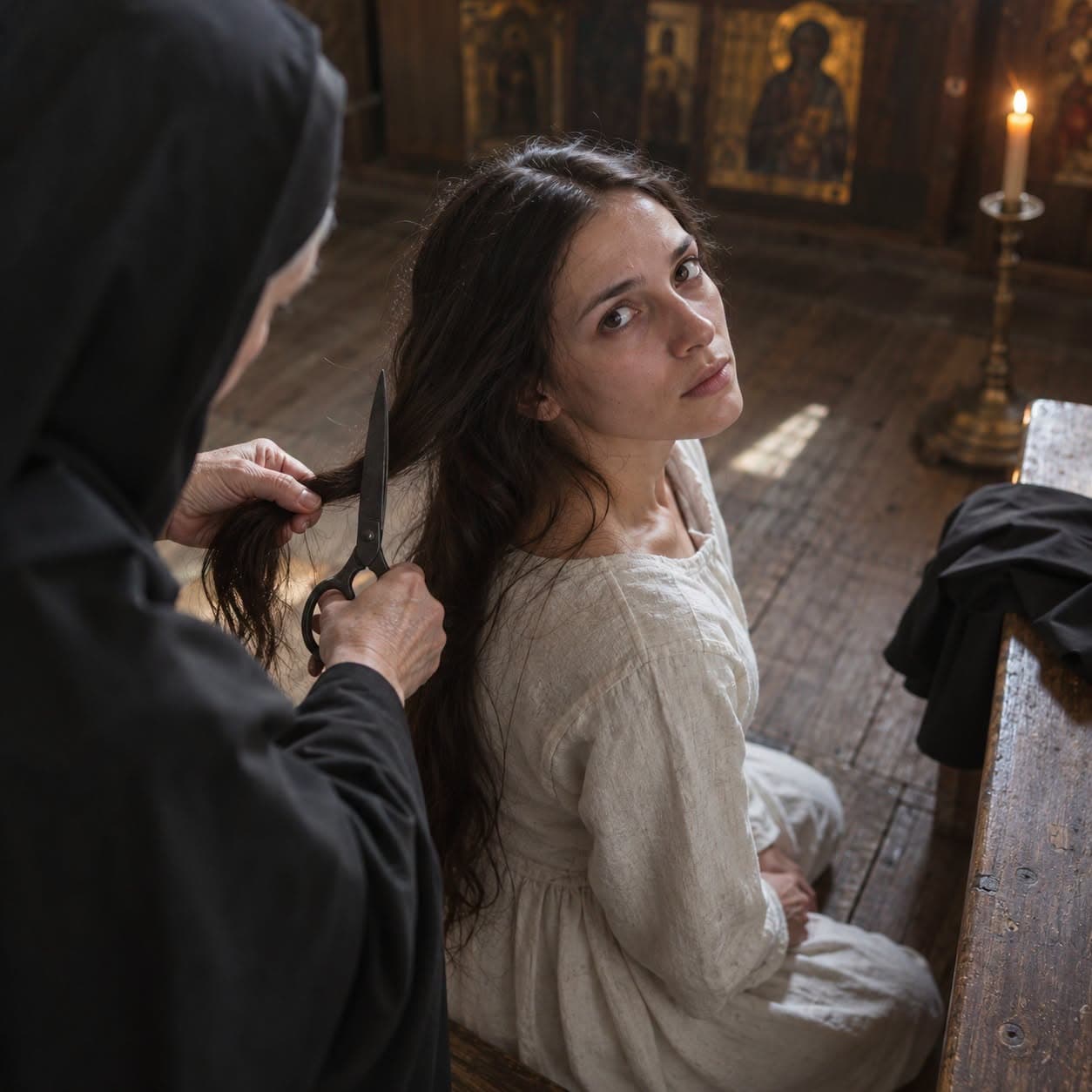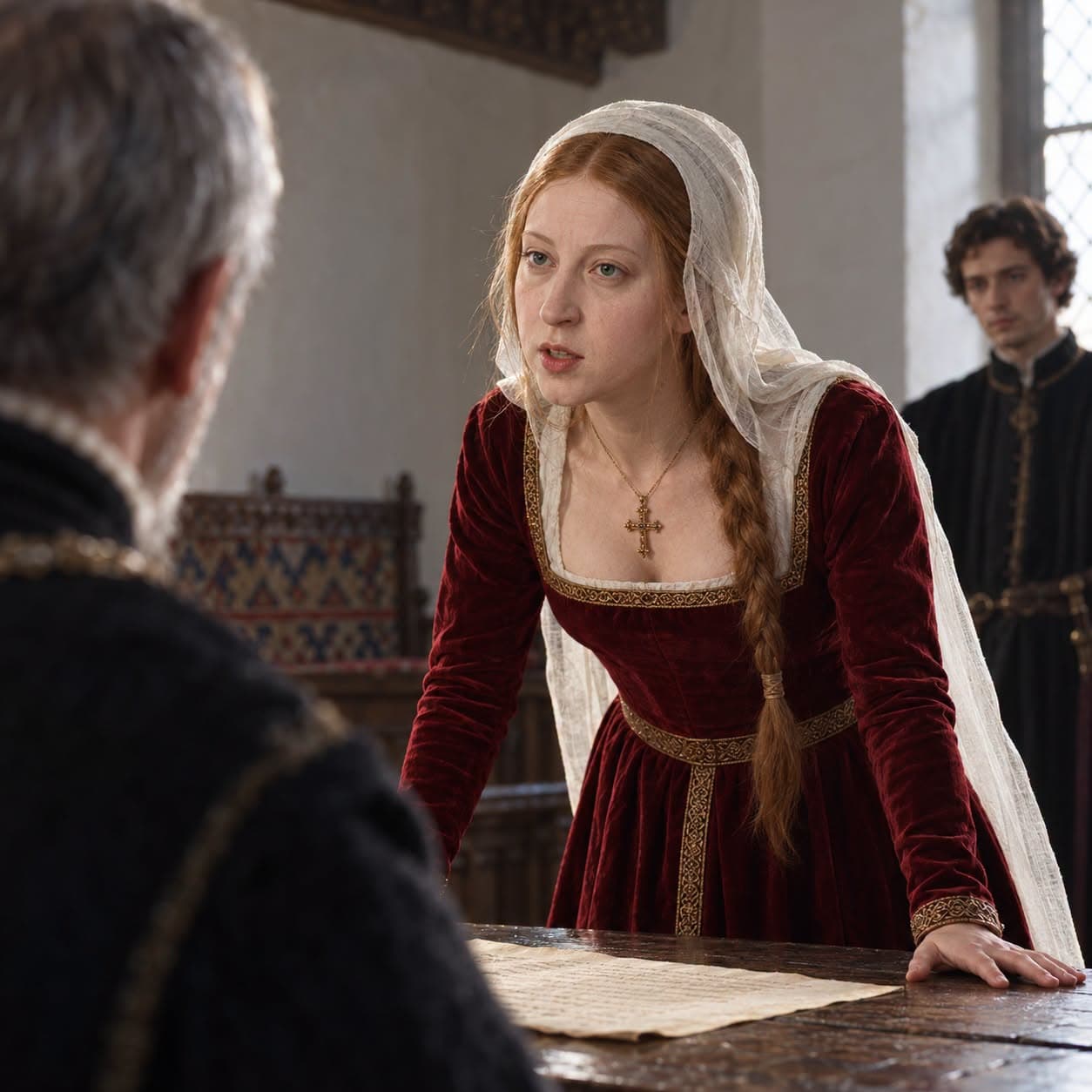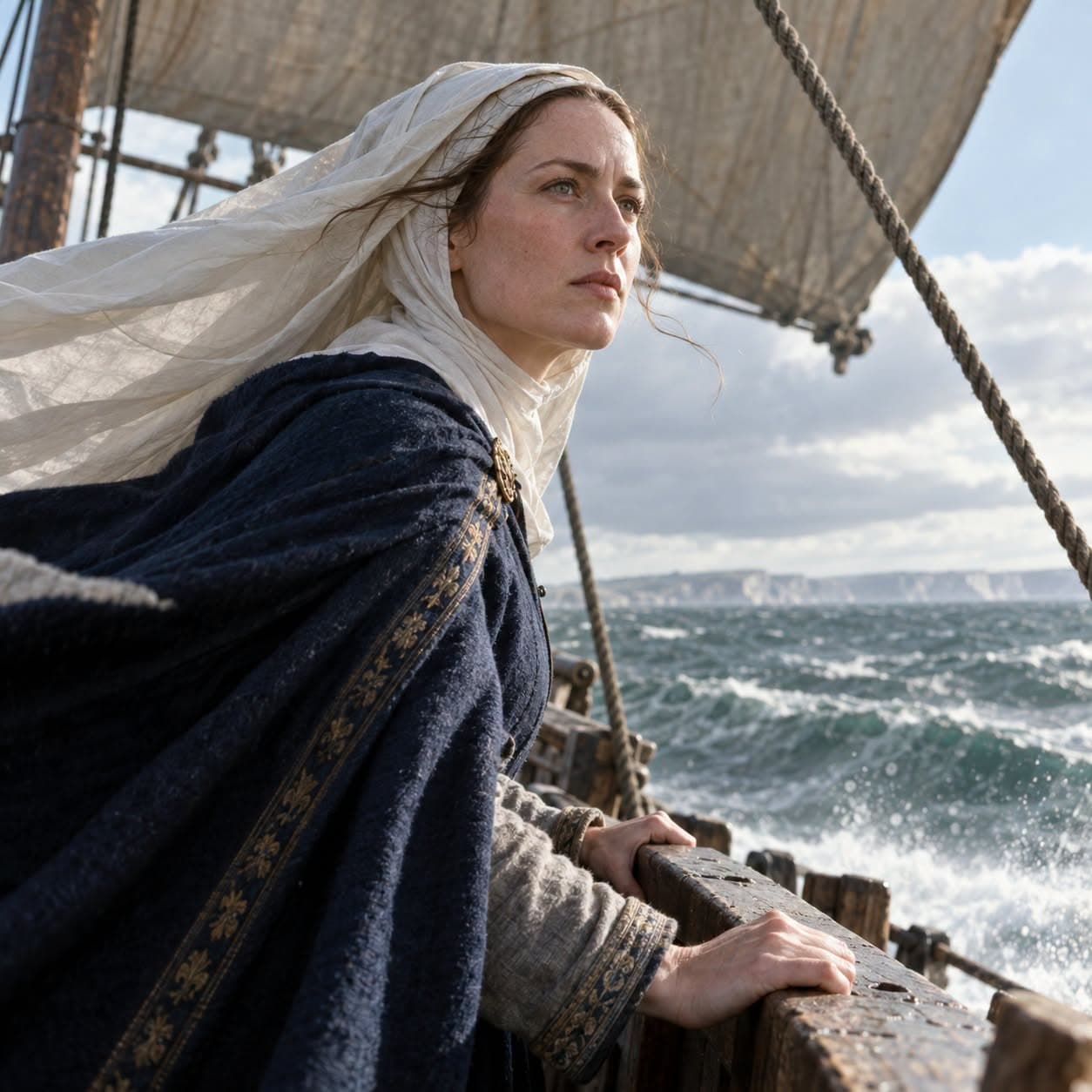
She was about thirty when she became a king's widow and a king's mother in the same night. Her son was nine. The men who would govern for him did not put his mother in charge.
During the night of 18–19 October 1216, by the Julian calendar, King John died at Newark Castle. Isabella of Angoulême's eldest son became Henry III, inheriting a kingdom already at war over who should rule it. Rebel barons had invited Prince Louis, son of the French king, to take the English throne. There was an adult claimant with an army in England, and there was Isabella's little boy.
She had entered royal life very young herself. When she married John on 24 August 1200, she may have been only twelve; he was already in his thirties. She brought him a claim to Angoulême, the county in south-western France of which she was heiress. It was a marriage with land and power attached to it, whatever either person felt about the other. The bride's inheritance mattered to a king with territories on both sides of the Channel.
Across their marriage came two sons and three daughters: Henry, Richard, Joan, Isabella and Eleanor. She had been crowned at Westminster within weeks of the wedding. In sixteen years as his wife she had not been given a share in governing his kingdom.
Henry had turned nine on 1 October. Before the month was over, his father's supporters would have to make a king of him in public as well as by inheritance. A child could carry the royal name. Other people had to hold the kingdom together around him, win back support and fight the men who had offered it to somebody else.
On 28 October he was crowned at Gloucester Abbey. The coronation was hurried, arranged while his claim was still being contested. Louis had not been crowned. Henry's supporters now had an anointed king to rally around, however small the boy beneath the crown.
William Marshal, Earl of Pembroke, became guardian of king and kingdom, the regent responsible for preserving both. Isabella remained the king's mother. Those were different positions, and the authority went with Marshal's.
Her son had inherited his father's throne. She had not inherited his government.
There was still a widow's provision to secure, a household to maintain and property to defend. Rank settled how she should be addressed; it did not settle every question about what she could obtain. In January 1217 Pope Honorius III wrote to Isabella after John's death and placed her person and goods under papal protection. The letter offered condolence, but it also concerned the preservation of her rights. Even a queen needed those put in writing.
At Exeter, the question became as particular as which rooms she could use. An order issued in Henry's name in April 1217 instructed Robert de Courtenay to give her the hall and large chamber at Exeter Castle for her immediate use. The king's mother required accommodation, and the king's government had to order that it be made available. A hall and a chamber were less grand than a kingdom, but they were somewhere to live.
That year Isabella returned to France and her inherited county of Angoulême. She had land there in her own right, a position that existed apart from being John's widow. In England the regency belonged to Marshal. In Angoulême there was government for her to undertake herself, with neighbours and competing interests that made possession of a title only the beginning of the work. Her county also lay among the continental lands on which Henry's family had always depended, so what happened there mattered to both of them.
She still called herself Queen of England.
In a letter of 1218–19 she asked Henry for help to defend her lands and obtain part of the provision John had made for her. She warned of danger from the French king and from neighbours who could be just as threatening. A widow's entitlement was of limited use until it produced something she could spend.
The greeting called Henry her "dearest son". The request that followed was blunt. She said she had asked repeatedly for counsel and help and had received neither. Family obligation and political business occupied the same letter.
She sent two envoys, Geoffrey of Boteville and Waleran, to explain matters she preferred not to put in writing, and she pressed for an answer that would arrive as more than promises: "do not appease us with words".
She had been a queen at about twelve and a widow at about thirty. The son she was writing to was still a boy. The crown was his, and so was the government that held what his father had left her. His mother had to ask it, like any other petitioner, for her share.