
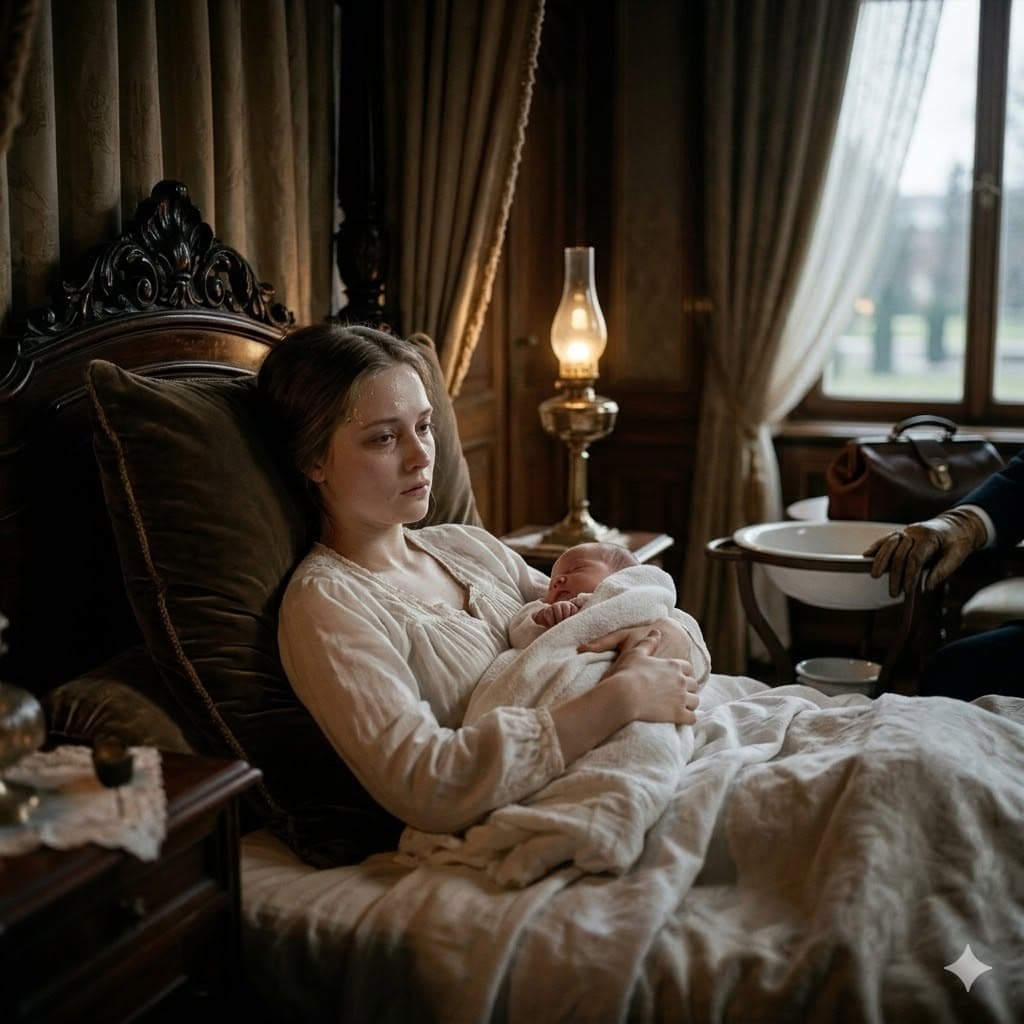
Being born into the highest levels of European nobility could not save twenty-one-year-old Princess Anna of Hesse from the absolute terror of Victorian childbirth. Born on May 25, 1843, she entered a world of immense privilege and wealth where her family connections placed her at the very center of European royalty. Yet underneath the glittering tiaras and velvet gowns, women of her era faced a silent predator that cared nothing for titles or royal bloodlines. The delivery room was a terrifying battlefield where survival was never guaranteed.
Anna was known for her striking beauty and gentle nature. As the daughter of Prince Charles of Hesse and by Rhine, her future seemed secure and radiant. She married Friedrich Franz II, the Grand Duke of Mecklenburg-Schwerin, stepping into a prominent role that required her to secure the succession. This was the ultimate duty of any noblewoman, a perilous expectation that demanded they risk their lives to produce an heir. The pressures of court life were heavy, but the physical toll of this fundamental duty was a far darker shadow hanging over young brides.
When Anna became pregnant with her first child, the royal household undoubtedly rejoiced. The anticipation of a new heir brought celebrations and intense medical scrutiny from the finest physicians available in Europe. However, medical knowledge in the mid-nineteenth century was shockingly primitive regarding infection control. Doctors routinely moved from autopsy rooms to delivery suites without washing their hands. Even a princess surrounded by the most expensive care money could buy was entirely exposed to invisible dangers during labor.
She successfully delivered a baby daughter named Anna, bringing a brief moment of immense joy to the Grand Ducal family. That happiness was shattered almost immediately when the young mother developed a raging fever. Puerperal fever, commonly known as childbed fever, swept through her weakened body with terrifying speed. The royal doctors were completely powerless to stop the bacterial infection that was ravaging her system and every treatment they attempted proved useless against this invisible enemy.
Just one week after bringing new life into the world, Princess Anna succumbed to the infection and died at the heartbreaking age of twenty-one. Her sudden passing sent shockwaves through the courts of Europe, serving as a grim reminder of female vulnerability. Her tragic story strips away the romanticized veneer of the Victorian era to reveal a harsh biological reality. It proves that behind the grand portraits and sprawling palaces, these women faced terrifying risks that connected them directly to the poorest mothers in their kingdoms.