She had once asked for women to be armed. The deputies were now explaining why they should stay at home.
On 30 October 1793, or 9 Brumaire Year II in the revolutionary calendar, France's governing assembly, the National Convention, prohibited women's political clubs. Pauline Léon and her fellow organiser Claire Lacombe had founded their society only that May. In less than six months, the women had gone from establishing their own place in the Revolution to being told that such a place could not be allowed to exist.
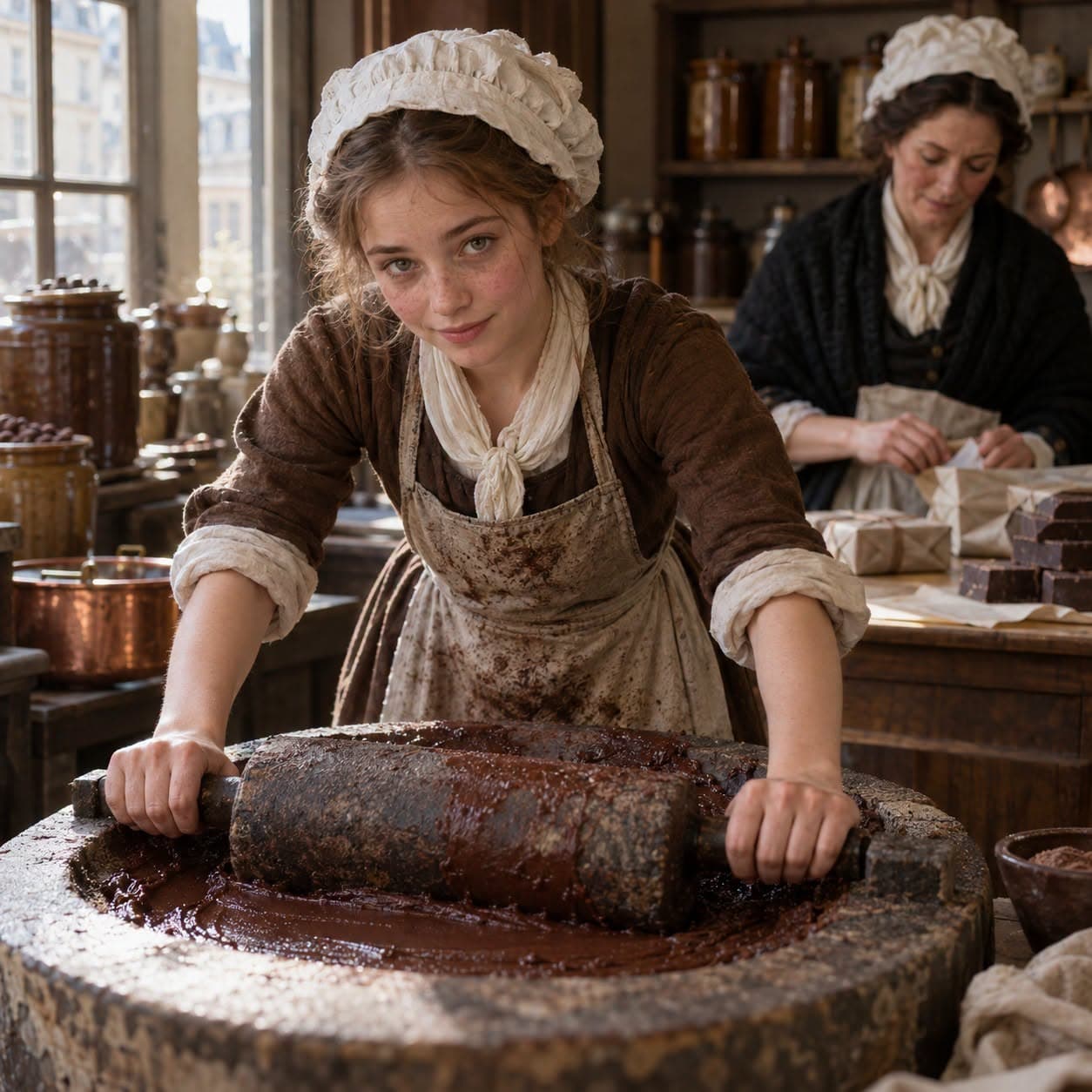
Pauline came from a Parisian family that made chocolate. Her father died in 1784, and at about sixteen she helped her mother keep the business going and support the family. Work and household responsibilities were already part of her life before legislators began explaining them to her. When the Revolution opened new ways of acting in public, she joined political societies, spoke at meetings and took part in the agitation against royal power.
On 6 March 1792, she read a petition to the Legislative Assembly. More than three hundred women had signed it. They wanted permission to obtain pikes, pistols, sabres and firearms, and to practise using them. Their argument began with something difficult to dismiss: women had lives and liberty to defend too.
The petition did not promise to abandon children and households. It took care to say the opposite. The women wanted the means to protect themselves if danger reached them. They were asking the men who spoke so readily of natural rights to explain where a woman's right to self-defence ended.
Pauline had brought a petition. Claire Lacombe brought herself.
Claire had been an actress, working in Marseille and Lyon before coming to Paris. On 25 July 1792 she addressed the Assembly, asked to take up arms and said she had come to offer her country her person. In the same speech she urged mothers to stay at home and raise their children to love liberty. Two weeks later she took part in the fighting at the Tuileries on 10 August and was honoured for her courage. She was twenty-eight by the autumn of 1793.
In May 1793, Claire and Pauline helped found the Society of Revolutionary Republican Women. Its members could meet without needing admission to an organisation governed by men. They could discuss public affairs, prepare petitions and send deputations to demand action. A woman who might be dismissed alone could arrive with the authority of other women behind her.
They were radical republicans, impatient with anyone they believed was obstructing the Revolution. They demanded measures against hoarding and high prices, and pressed the authorities to act against the Republic's enemies. They were quite willing to put pressure on other people.
Other women could put pressure on them.
By late October, hostility had gathered around the club's members and their revolutionary dress. The tricolour cockade, a ribbon badge of allegiance, had been made compulsory for women in September. The red liberty cap was another matter. Wearing one asserted a particularly militant identity, and some women bitterly resented attempts to make them adopt it.
Around the Innocents market, near Saint-Eustache, the dispute turned into confrontations between militants and market women. Complaints reached the Convention that women in red caps had tried to force others to wear them. The complainants insisted that no law required this costume. They would obey the legislators; they would not take orders from other women.
These were women with their own livelihoods and their own understanding of the Republic. Refusing a red cap did not make them royalists. Nor did being a woman require them to accept Pauline and Claire's organisation as their representative.
On 29 October, women petitioners appeared before the Convention to protest against the pressure. One of them asked for women's popular societies to be abolished altogether. The demand that helped destroy the club had come from a woman.
The deputies took it further.
Fabre d'Églantine warned that red caps would be followed by demands for belts and pistols. He described the women's societies as made up of adventuresses, female knights-errant and "emancipated girls". The women who wanted weapons to defend the Revolution had become, in his account, a threat that required containing.
The following day, André Amar presented the report of the Committee of General Security. A quarrel over clothing had become a question about whether women were capable of political life at all. His answer was no. Women, he told the deputies, were hardly capable of "lofty conceptions and serious cogitations". Their duties lay in the household, in educating children and encouraging virtue by their example. Public argument demanded qualities he assigned to men.
Women could still listen. Amar allowed them to attend political discussions, while denying that they should take an active part. The distinction left the speaker's place on one side and the women on the other. Claire had told mothers to stay at home herself, fifteen months earlier. She had said it standing before the deputies.
The Convention adopted the prohibition. It covered women's clubs and popular societies under any name. It did not punish only those accused of forcing a cap on a neighbour. It removed the organisation through which Pauline, Claire and their companions had acted together.
Pauline had stood before legislators with a petition bearing hundreds of women's names. With Claire, she had helped turn that collective voice into a society. The deputies' decree required no account of what each member had done. Being a women's club was enough.