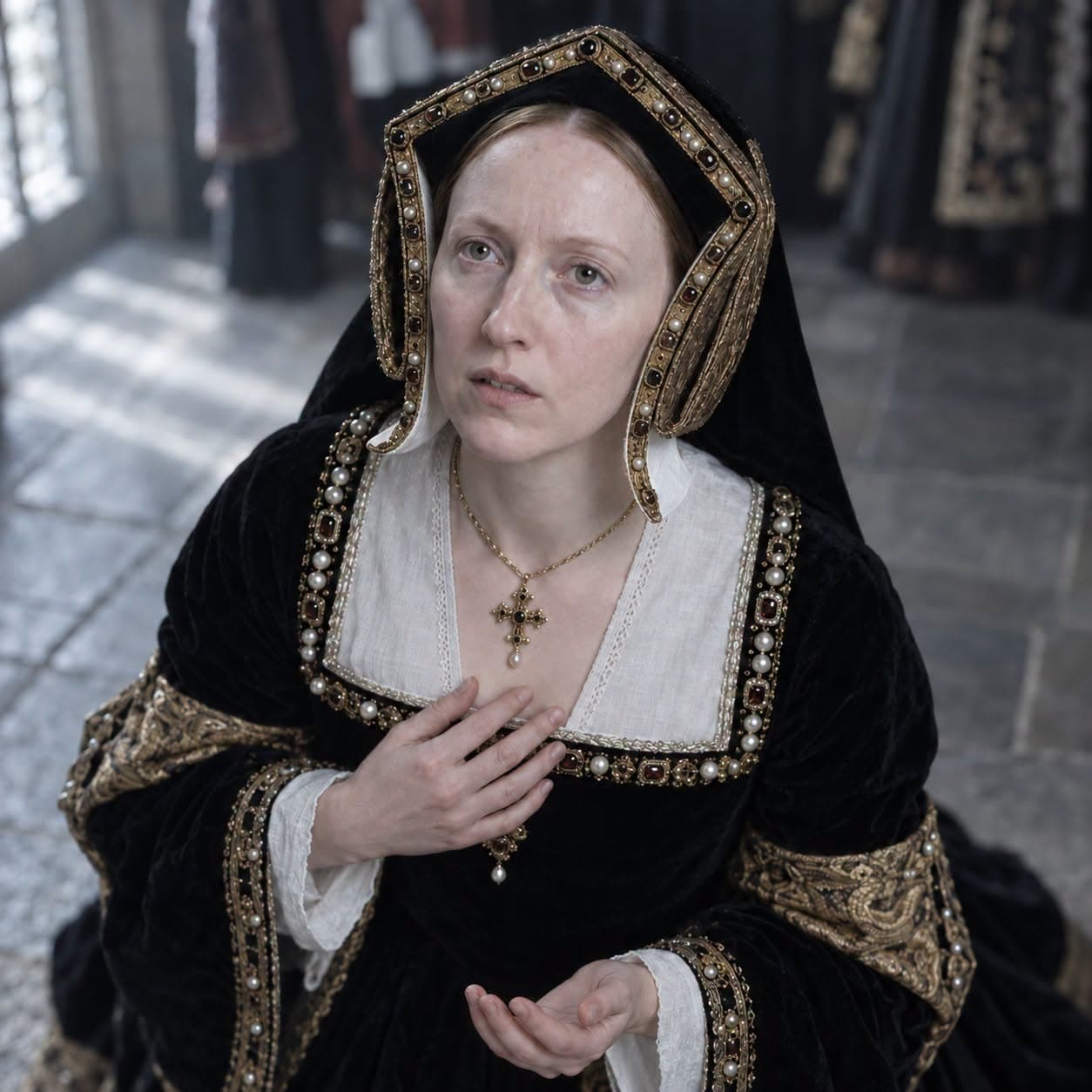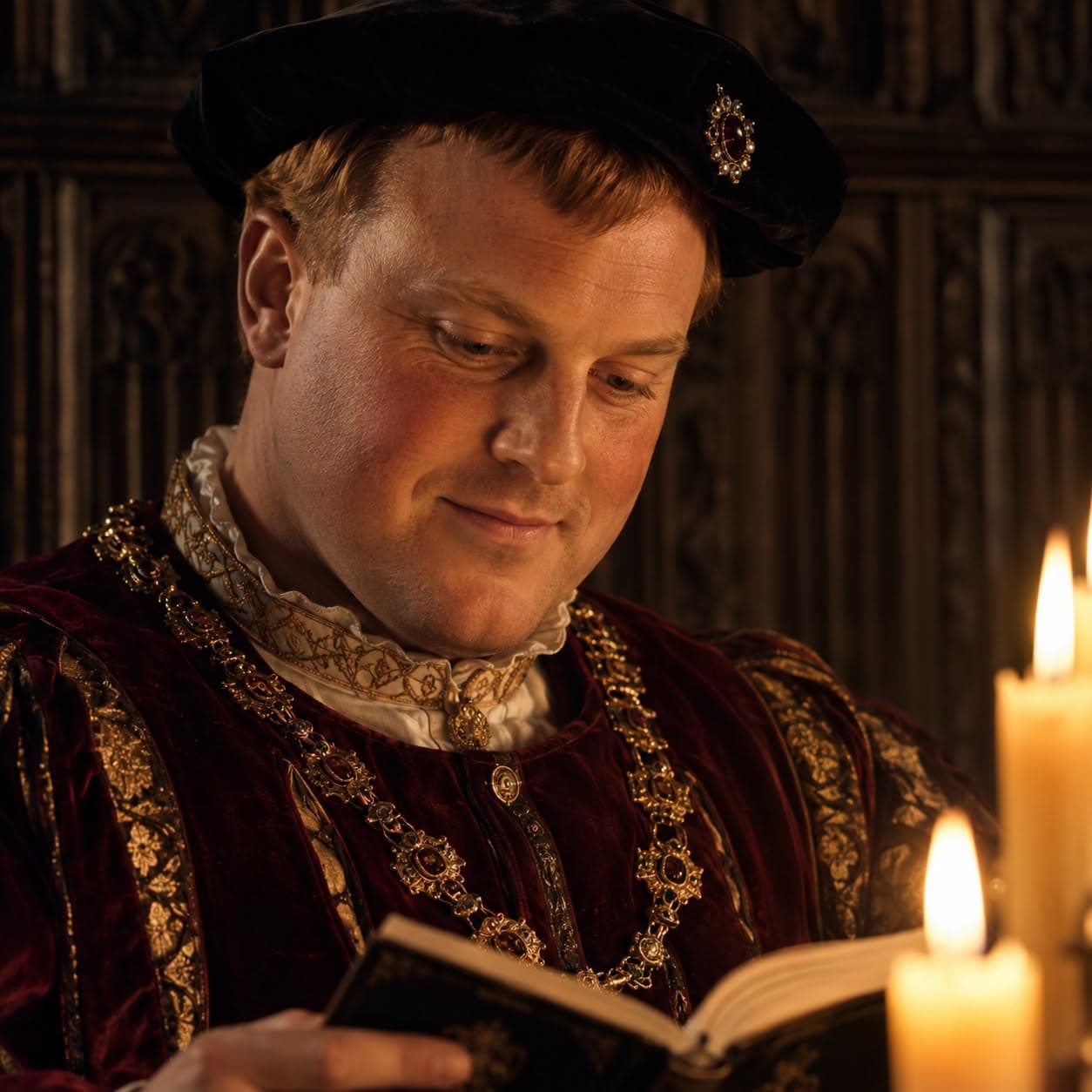
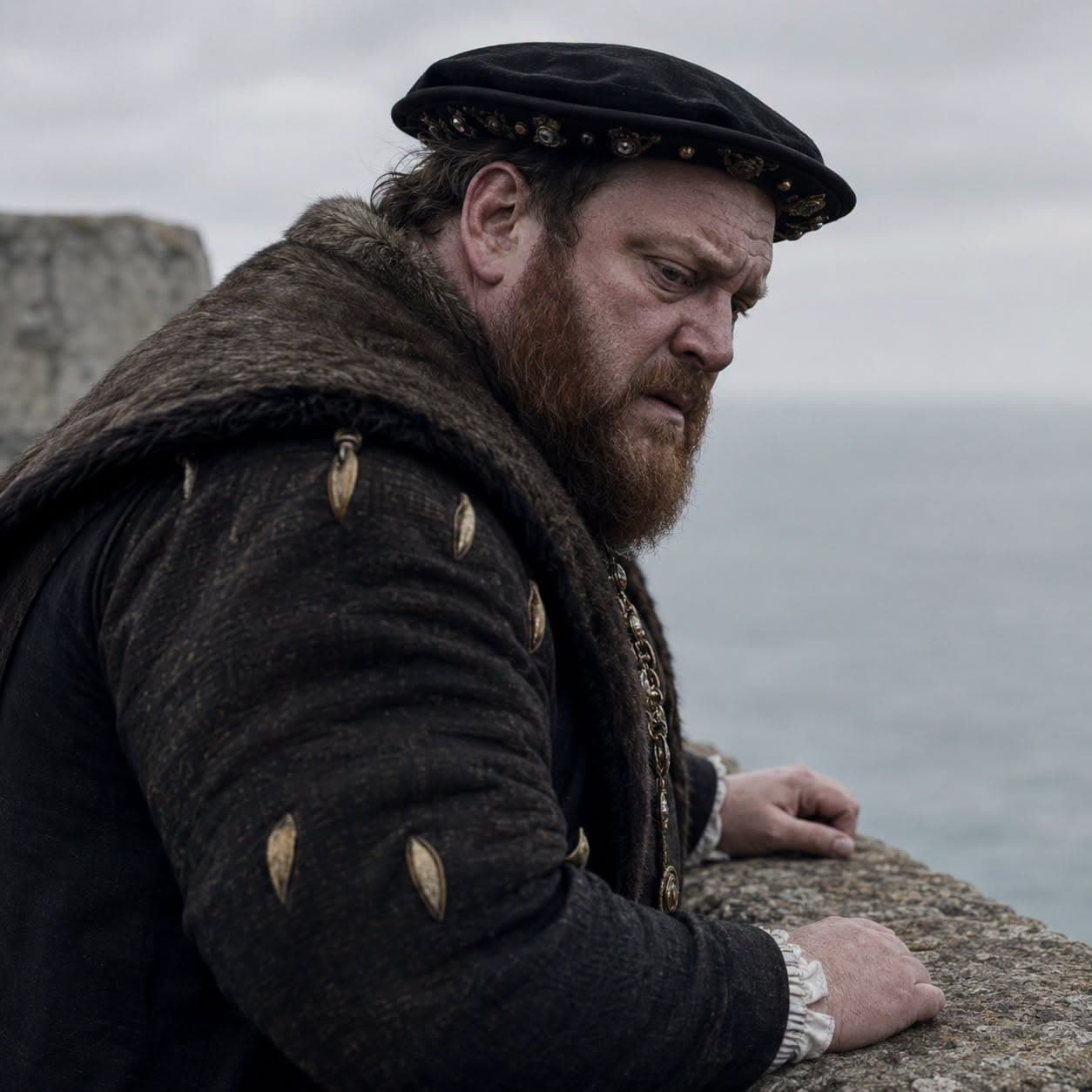
Henry VIII was close enough to see it happen and too far away to do anything about it. The Mary Rose had survived thirty-four years, a rebuild, and a war. She was gone within minutes once the wind turned against her.
The Mary Rose had just fired her starboard guns and was turning to bring her port side to bear when a sudden gust of wind caught her. She heeled over, her open gunports dipped beneath the surface, and the sea poured in. In minutes, one of the oldest and most trusted ships in the king's navy was gone, taking most of her crew down with her while the man who owned her watched from the shore and could do nothing at all.
It happened on 19 July 1545, in the middle of the Battle of the Solent, as England faced one of the largest invasion fleets ever sent against her. France's King Francis I had assembled as many as two hundred ships and tens of thousands of troops, a force so large that England's outnumbered navy, perhaps eighty vessels strong, had no real choice but to shelter in Portsmouth Harbour and wait for an opening. The Mary Rose sailed out to meet that threat as one of the fleet's most senior ships, a veteran of thirty-four years' service, built in 1509 and substantially rebuilt in 1536, not a fresh vessel meeting an unlucky end but an old, trusted flagship being asked for one more fight.
Nobody agrees on exactly how many men she was carrying that day. Her intended complement was somewhere around four hundred, but wartime pressure had swollen her crew well beyond that. Contemporary accounts and later estimates of the total crew range up to seven hundred, a figure repeated in period sources and by some modern museum accounts alike. During the modern excavation, the skeletal remains of exactly 179 men were found inside the wreck. What almost everyone agrees on is the outcome: of however many men were aboard, fewer than forty escaped. Her captain, Vice Admiral Sir George Carew, drowned along with most of his men.
Even the cause of her sinking is still argued over, centuries later. The most widely accepted explanation is simple bad luck compounding a real design flaw, a gust of wind striking an overloaded ship at the exact moment her lower gunports were open. But a witness with the French fleet believed their galleys had sunk her with cannon fire, a claim other accounts don't support. Some historians still wonder whether her crew, in the chaos of turning to fire a second broadside, simply forgot to close the ports they'd just used. Nearly five hundred years on, there is still no single, settled answer for why she went down.
The battle did not end with her. The French tried to press their advantage, attempting landings at St Helens, Bonchurch, and Sandown on the Isle of Wight, and were beaten back each time by local militia. Within days the invasion had lost its momentum entirely, and by 28 July the French fleet had withdrawn and turned for home. England won the war this ship died in. That victory did nothing to soften what Henry watched happen in front of him.
The wreck lay where she sank for over four centuries, forgotten beneath the Solent's silt until divers rediscovered her in 1971. It took more than a decade of painstaking underwater work, nearly 28,000 individual dives and over 22,000 hours spent on the seabed, before she finally broke the surface again on 11 October 1982, watched live by an estimated 60 million people around the world. What came up with her turned a single afternoon's disaster into one of the richest windows anyone has ever had into ordinary Tudor life.
Among the thousands of objects recovered was a small dog, found curled near the sliding door of the carpenter's cabin. For decades everyone assumed she was female, the ship's one recorded woman, and gave her the name Hatch after the door she'd died beside. It took DNA testing in 2021 to reveal that Hatch was actually a young male terrier, closely related to a modern Jack Russell, with a brown coat, probably kept aboard to hunt rats. He was maybe two years old. He had likely spent nearly his whole short life on that ship, and he never left it.
The human details are just as unguarded. A surgeon's chest held two small metal syringes, one for treating ordinary constipation, the other a more delicate instrument for gonorrhoea and bladder stones, the everyday, unglamorous business of keeping several hundred men alive at sea. Someone had packed away a pair of matching left-handed leather mittens, the only handwear found anywhere on the ship, possibly meant to protect an archer's hand from the heat of firing flaming arrows. In the stores below, barrels of butchered beef, salted pork, and cod over a metre long sat waiting to be eaten, alongside plum stones and pea pods left over from meals nobody got to finish. And near one of the gun decks, divers found a bronze cannon over three metres long, cast by two London brothers named Robert and John Owen, still loaded, still primed, exactly as it had been the moment the sea took the ship out from under the men standing beside it.
Henry VIII lived another two years after that afternoon at Southsea Castle. The ship he lost took nearly 450 years to come home, and when she finally did, she didn't just bring back timber and iron. She brought back a dog whose name would never be forgotten, a surgeon's tools still packed for men who never needed them again, and a gun still loaded for a shot that was never fired.