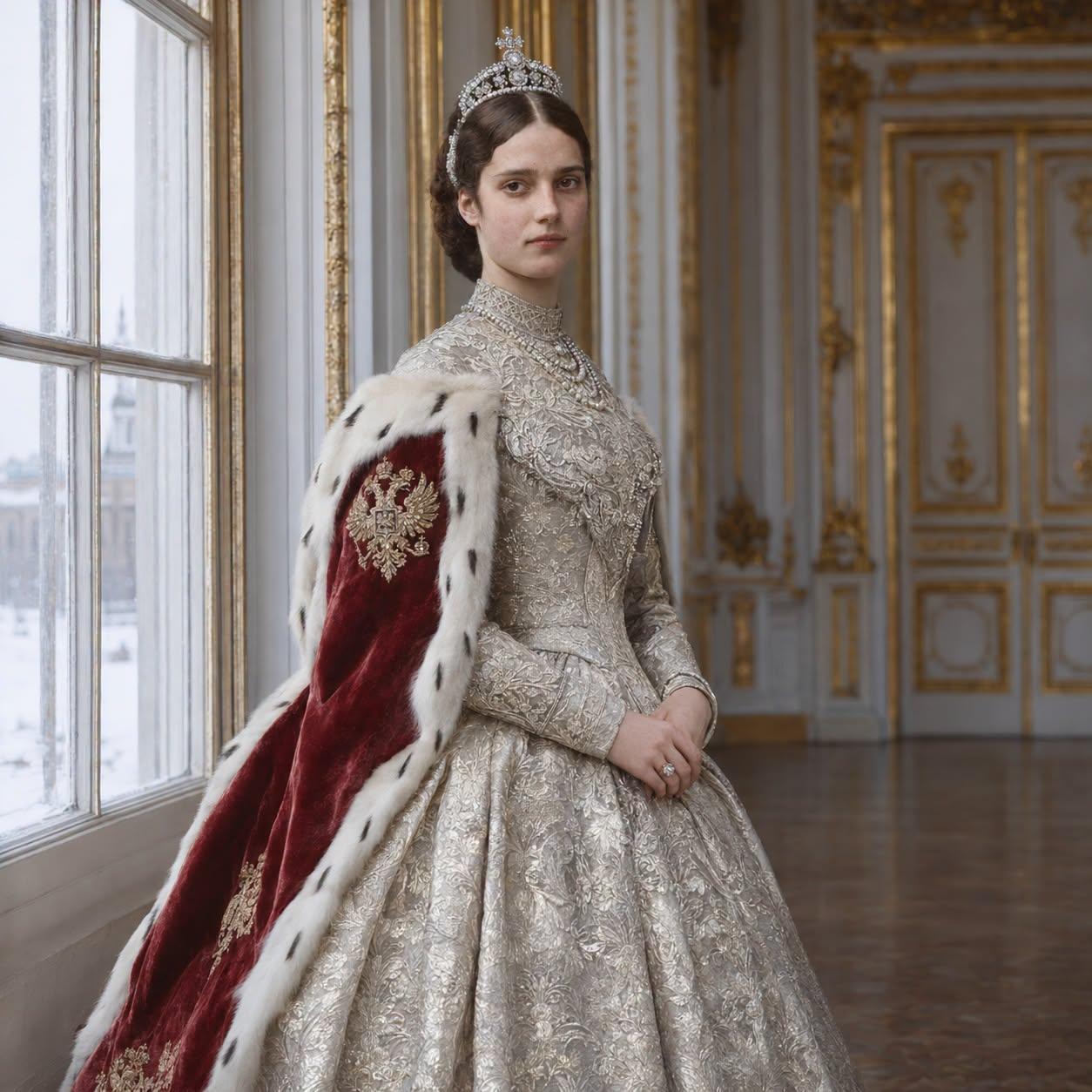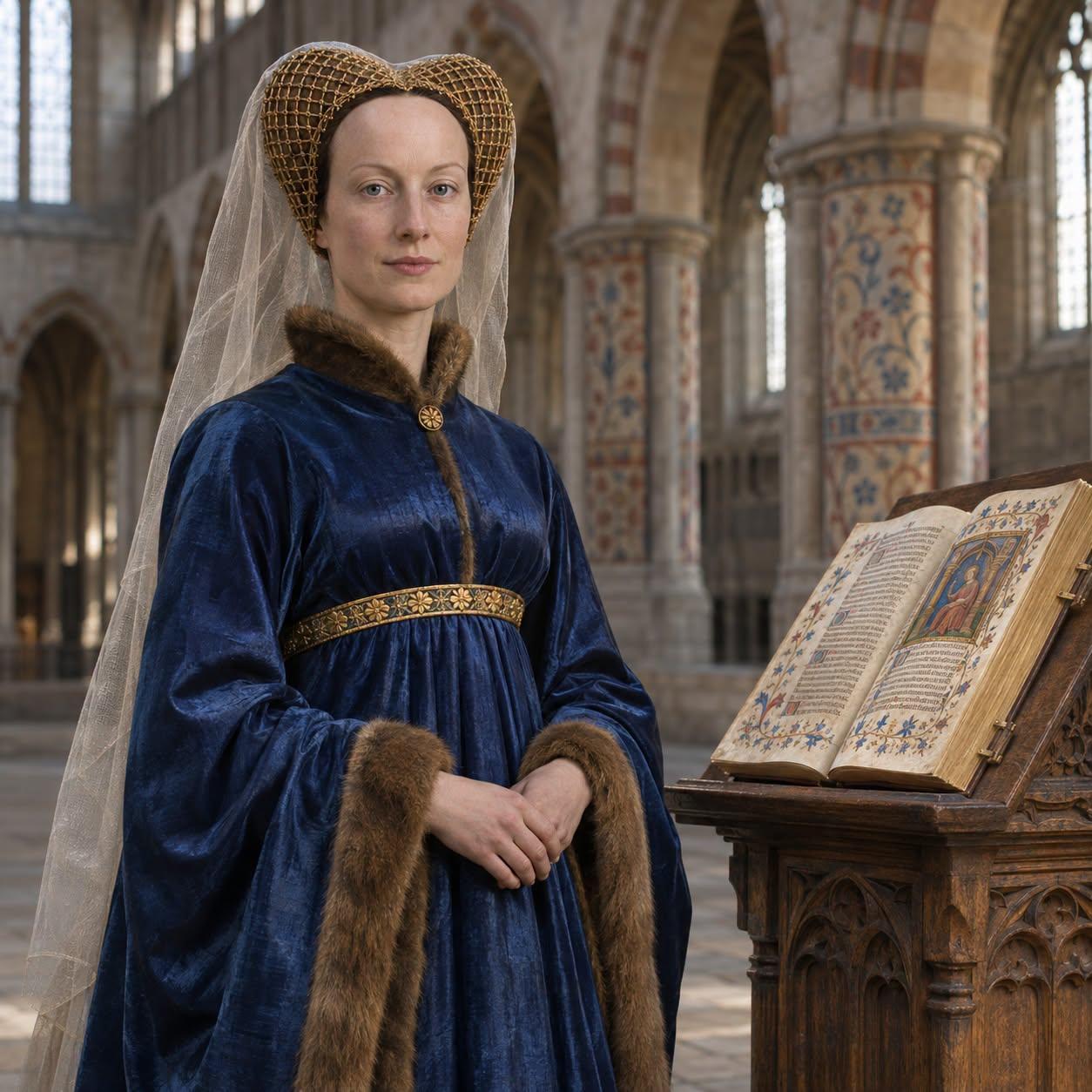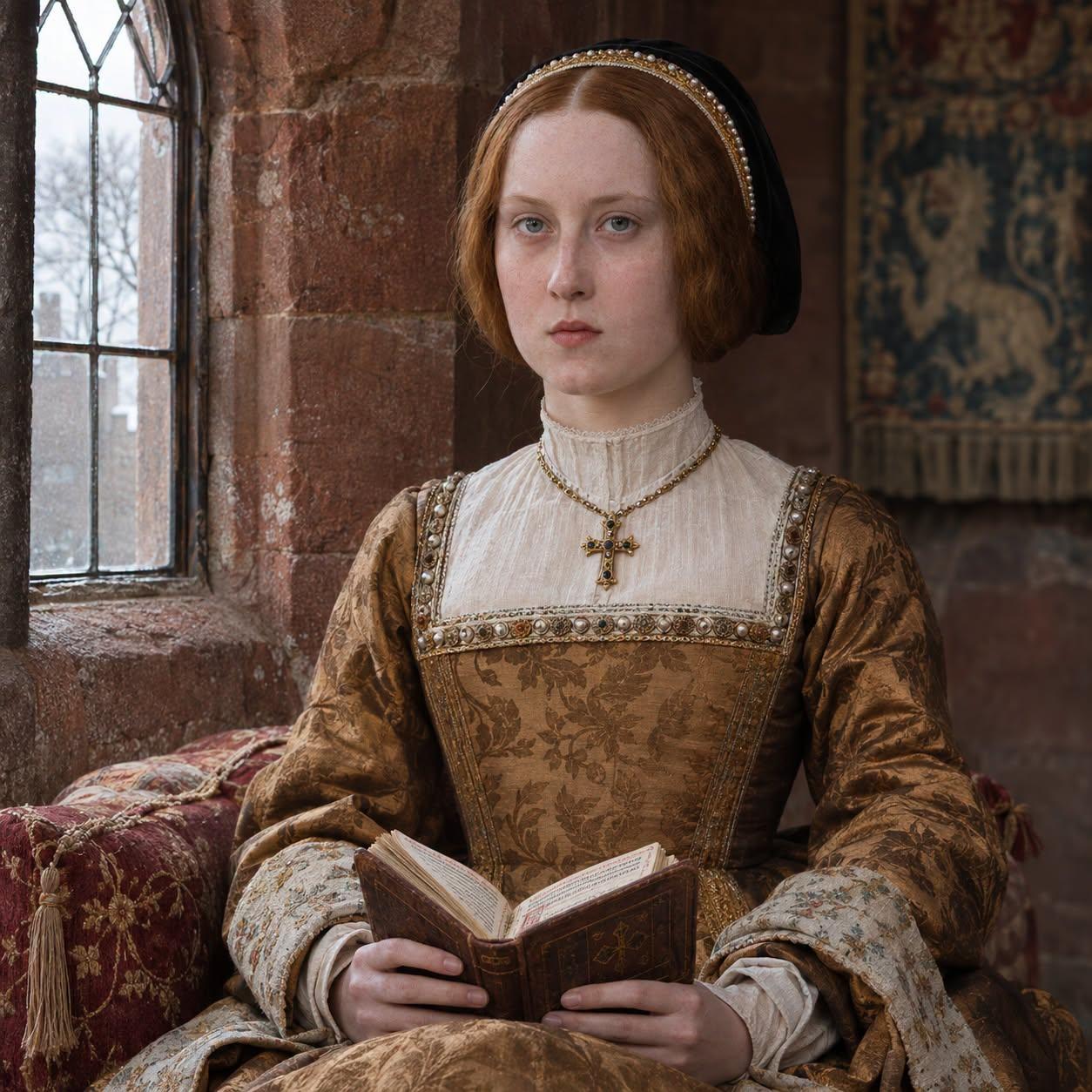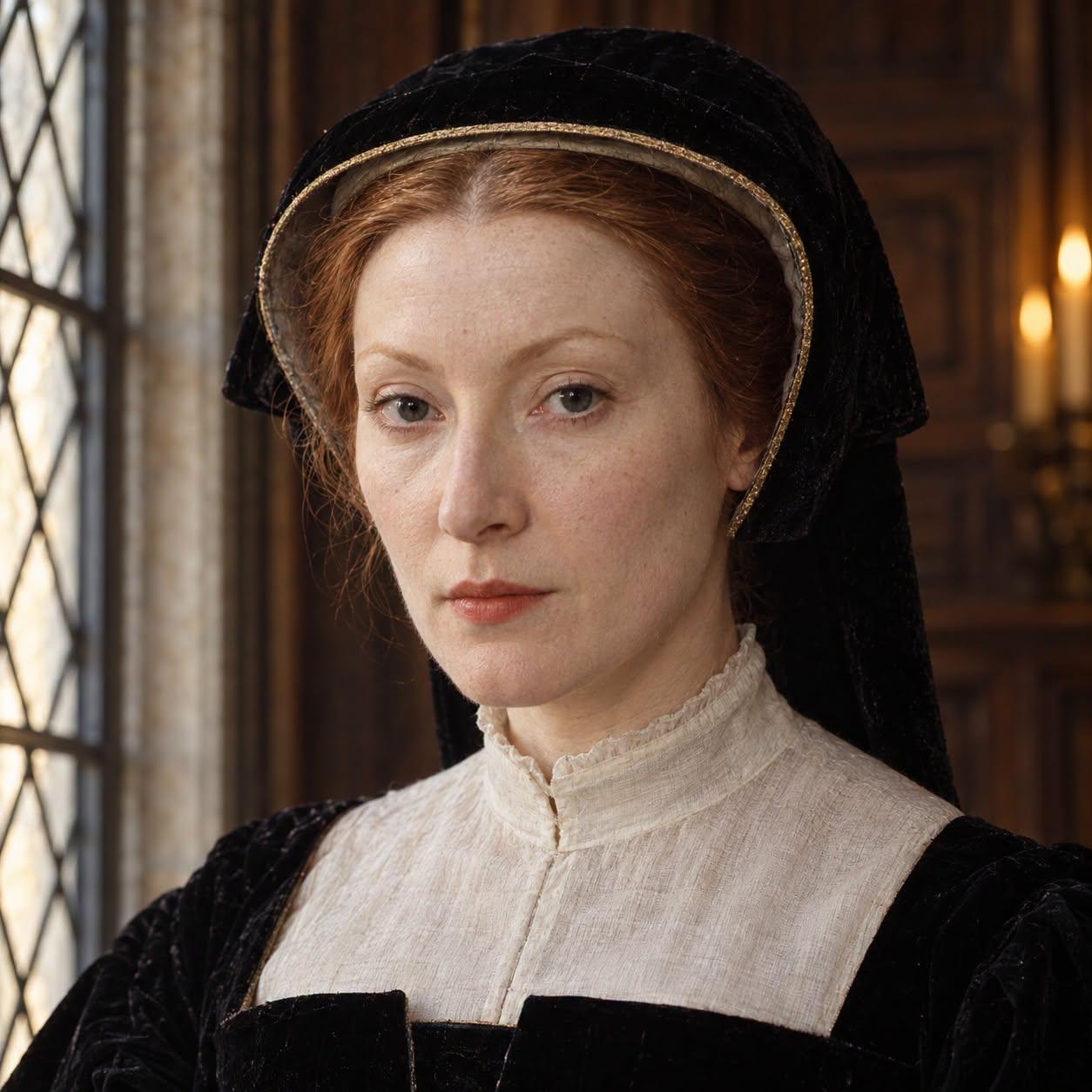
Less than six weeks earlier, her son had died in France. Her daughter was still there. Mary entered London with the honours of a queen and only one child left alive.
On 2 November 1551, Mary of Guise, Queen Dowager of Scotland, came down the Thames from Hampton Court to London. She was thirty-five. After landing, she rode to the Bishop of London's palace beside St Paul's, escorted by a company of English lords and attended by her own ladies and gentlewomen. The mayor and aldermen sent gifts to keep her household. England knew how to receive a queen when it wished to.
It had recently been at war with her daughter's kingdom over the question of whom that daughter should marry.
Mary was French by birth, a daughter of the powerful Guise family. Before she became Queen of Scots, she had been Duchess of Longueville, married to Louis d'Orléans. Their son Francis was born in 1535. Louis died while she was pregnant with their second boy, who lived only a few months. When she married James V and went to Scotland in 1538, Francis remained in France. He was still a toddler.
A second marriage had brought another family. Two little Scottish princes died in infancy. A daughter followed in December 1542, and within days James was dead too. The baby became Mary, Queen of Scots. Her mother was a widow for the second time, with a son in one country and a daughter who had inherited another.
The girl's marriage was soon being negotiated. Henry VIII wanted her for his son Edward. A union of the two royal children promised England an influence over Scotland that generations of fighting had failed to secure. When the agreement broke down, Henry sent an army. Edinburgh burned. After Henry's death, the government ruling for the young Edward continued the attempt to force the marriage.
The child at the centre of it was not yet five.
Her mother worked for French support, and in 1548 the Scottish Parliament agreed to a different marriage, to the French king's eldest son. The little queen sailed to France to be brought up at his father's court. Her mother remained in Scotland. France supplied protection and a royal upbringing, but it required the child herself. The arrangement put the future bride beyond the reach of English armies and a sea between mother and daughter.
Peace eventually allowed Mary of Guise to follow her. In the autumn of 1550 she went to France, where she could see both her daughter and Francis after years of separation. She stayed for more than a year. There were family visits, journeys with the French court and negotiations for the money and support on which her position in Scotland depended. She was a mother visiting her children, and a queen mother conducting business. Neither role could be put aside for very long.
Then, at Amiens in September 1551, Francis died while travelling with her. He was fifteen. The toddler she had left behind when she went to Scotland had grown into a young duke. She had returned to France and seen him again, but he did not live to reach his sixteenth birthday.
All four of her sons were now dead.
Her daughter was eight, settled at the French court and promised to its heir. Mary of Guise was going back to Scotland, where the child's crown still required the work of adults. She was not yet Regent. That power lay with the Earl of Arran, who governed in her daughter's name. Her importance rested on her position as the queen's mother, her French connections and the support she could obtain and keep.
By the time she passed through England, peace had been agreed between the English and Scots at Norham that June. English nobles now escorted the mother of the girl English armies had tried to obtain.
At her London lodging, the welcome took a practical form. The city sent beef, mutton, veal, bread, wildfowl, quails, salmon and sturgeon, with wine, beer and spices, and wood and coal for the fires. A royal visitor brought a household, and a household had to be fed and warmed. The supplies acknowledged her rank as plainly as the lords who had ridden beside her.
Two days later, on 4 November, she went to Westminster to be received by Edward VI. He had turned fourteen that October. He met her, embraced and kissed her, and led her into the presence chamber. England had gone to war to make this boy her daughter's husband. Mary dined with him in state. The war had ended with the little queen in France, intended for another husband, while her mother sat at the English king's table.
On 6 November she rode out of London through Bishopsgate with English lords and their long trains of horsemen around her, and at the gate the city's chamberlain presented her with a hundred marks. There was still a journey north to make, to the country where her daughter's authority had to be sustained. Across the Channel, the daughter remained among the children of the French court. Of the five children Mary had borne, she was the one still living, and she was not going home with her mother.