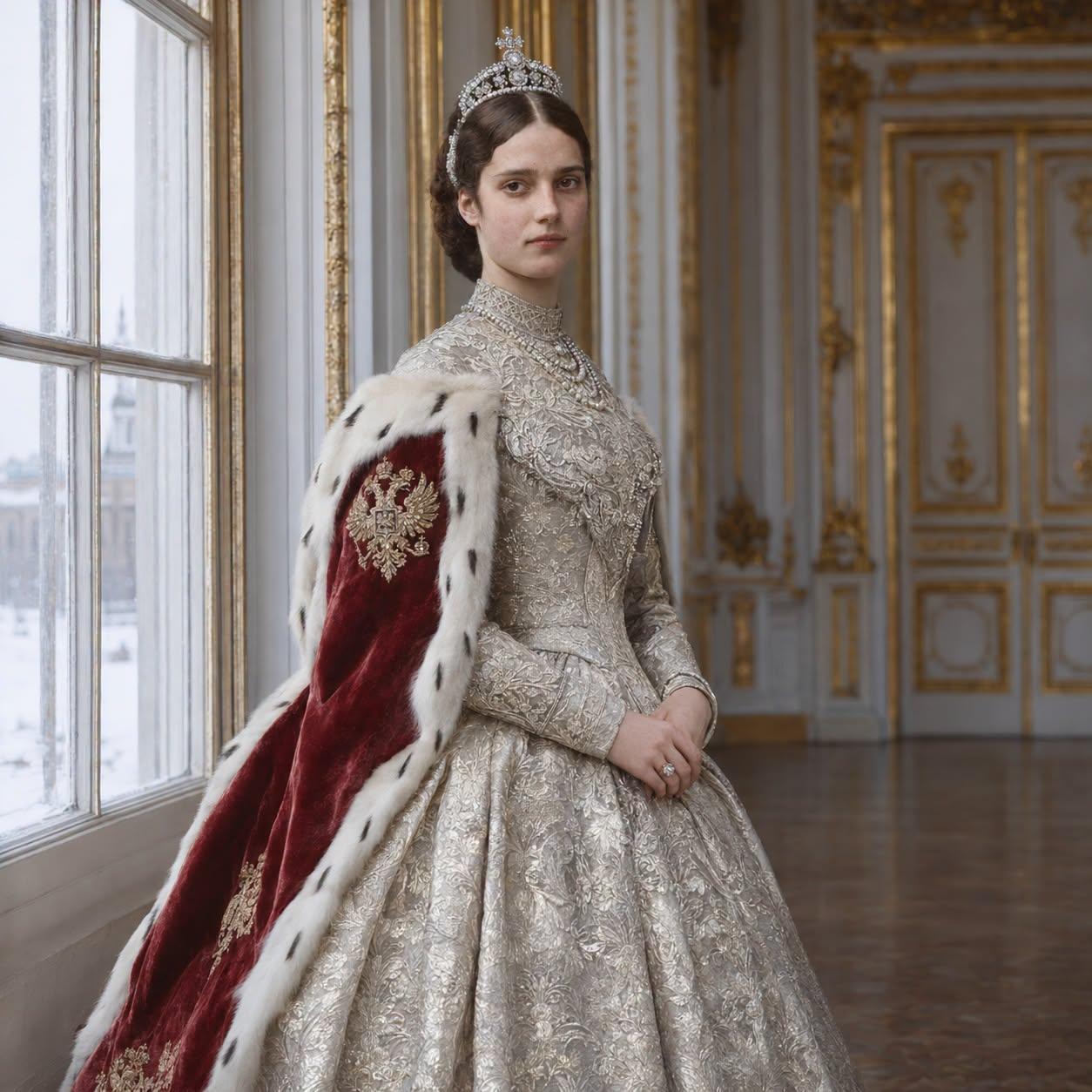
Hundreds of men came out to meet a fifteen-year-old bride. Catherine was being received as a future queen. Within five months, she would be a widow.
On 8 November 1501, Catherine of Aragon was travelling towards London when Edward Stafford, Duke of Buckingham, met her between Chertsey and Croydon. He brought some three hundred to four hundred gentlemen and yeomen wearing his livery, the clothing that marked them as his men. Her wedding to Arthur, Prince of Wales, was six days away. England was already giving her a reception worthy of the marriage.
A welcome of that size did two jobs at once. It honoured the bride, and it showed everyone on the road how many men the Duke of Buckingham could put into his colours. Royal weddings began well before anyone reached the altar. There were ranks to acknowledge, alliances to display and a bride whose arrival needed to look like the great occasion it was.
Henry VII had held his crown for sixteen years. Now his eldest son was to marry the daughter of Ferdinand of Aragon and Isabella of Castile, rulers whose support carried weight far beyond their own territories. For the Tudor family, the wedding offered a place among Europe's established royal houses. For Catherine, it meant becoming part of a household in which her husband was expected, in time, to be king.
She had been born on 16 December 1485, the youngest daughter of Ferdinand and Isabella. Her sixteenth birthday was still more than a month away, on the other side of the wedding. The men arranging the marriage had a diplomatic alliance to consider; the girl making the journey had a life to begin within it. Both things were true, although only one could be laid out in a treaty.
Catherine had grown up with an example of queenship that went well beyond a place beside a king. Isabella held the crown of Castile in her own right. Her marriage to Ferdinand joined two ruling lives, and her daughters' marriages carried those connections into other courts. Catherine's departure belonged to that family business, but her mother had also attended to the person who would have to live with its consequences.
Isabella wanted her daughters educated beyond the domestic accomplishments expected of noblewomen. Catherine studied Latin and religious texts. Faith and learning were part of her preparation for the household she was entering, rather than ornaments to be set aside once a husband had been found. The young bride on the English road had been prepared to take her place among people for whom family, religion and government were seldom separate matters.
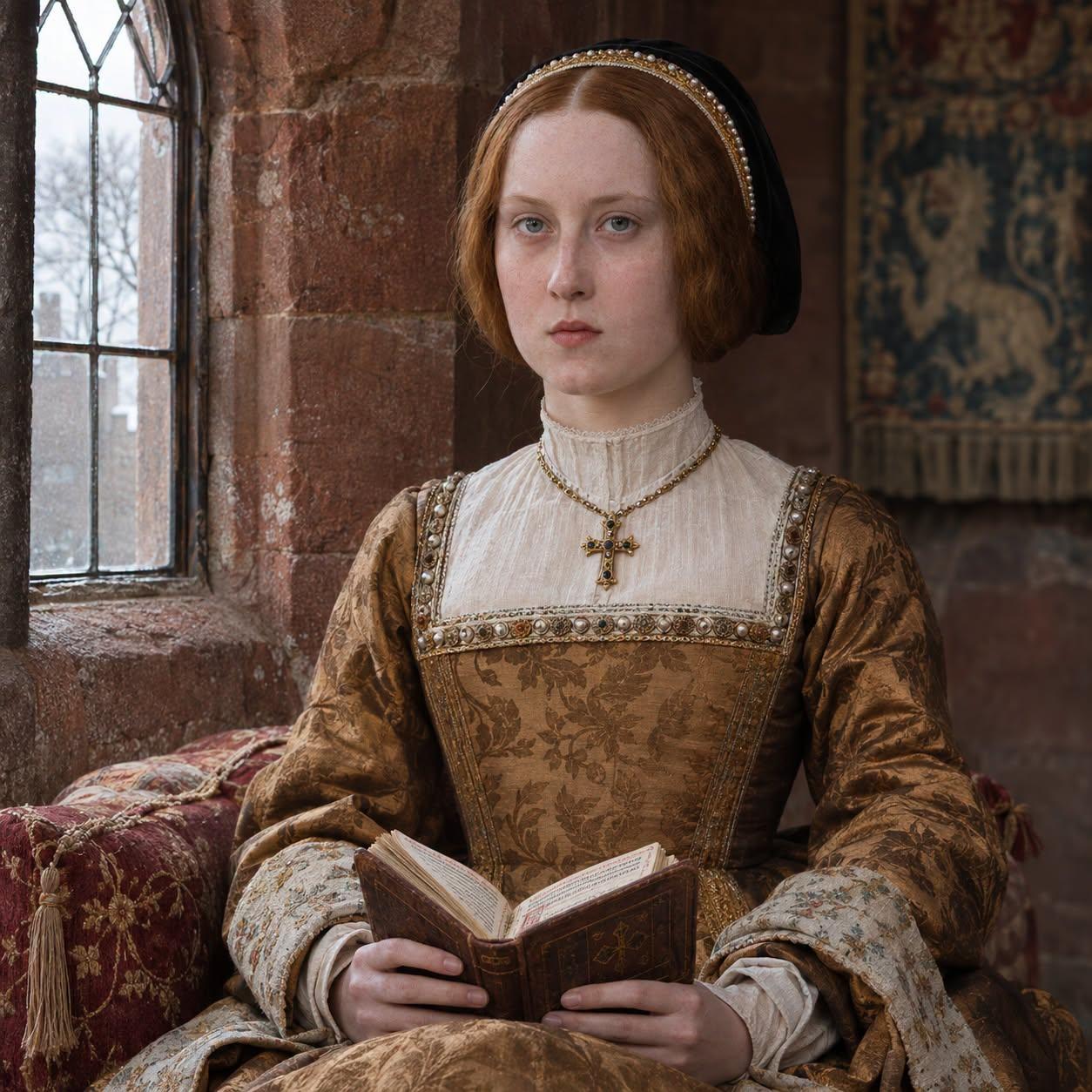
She had fair colouring and thick reddish-gold hair. The familiar image of the older queen, solemn beneath an English hood, belongs to another part of her life. In November 1501 she was still the adolescent daughter sent from Spain, accompanied by her own people, being received in stages by the people who would become her husband's subjects.
The welcome did not end with Buckingham.
On 12 November she made her formal entry into London, where pageants marked her progress through the city. Four days had passed since the duke met her on the road, and two remained before the wedding. Each stage of the welcome was grander than the last, and each said the same thing in public: the bride had arrived, and the alliance was nearly made.
There was a more domestic welcome, too. On the day before the wedding, Catherine was brought to Baynard's Castle to meet Elizabeth of York. Elizabeth was Arthur's mother and the queen whose place Catherine might one day inherit. After the roadside escort and the city's pageants, this was a meeting of two women: the mother of the bridegroom and the girl who would marry her son the next day.
On 14 November, Catherine and Arthur were married at Old St Paul's Cathedral. He was fifteen as well. After all the negotiations and receptions, the marriage itself joined two adolescents, each carrying the expectations of a royal family. Celebrations and tournaments followed. What had been arranged between their parents had become their shared life.
Shortly before Christmas they set out from London for the Welsh borders, and Ludlow Castle became their home. The castle was an established centre of royal government, and Arthur's duties as Prince of Wales gave them a household of their own. Catherine had arrived in England to marry the heir, and now she lived alongside him in the work and surroundings of that position. Beyond the wedding lay the prospect of years together before a coronation.
Those years never came. On 2 April 1502, Arthur died at Ludlow. Catherine was sixteen, and their marriage had lasted less than five months. Hundreds of men in a duke's livery had come out to meet her as Arthur's future queen. By the following spring, she was his widow.