Mary dressed her young cousin in a velvet bonnet, because the queen wanted the girl out of her French fashions. Her help survives in other people's letters. Later writers gave her another young woman's translations instead.
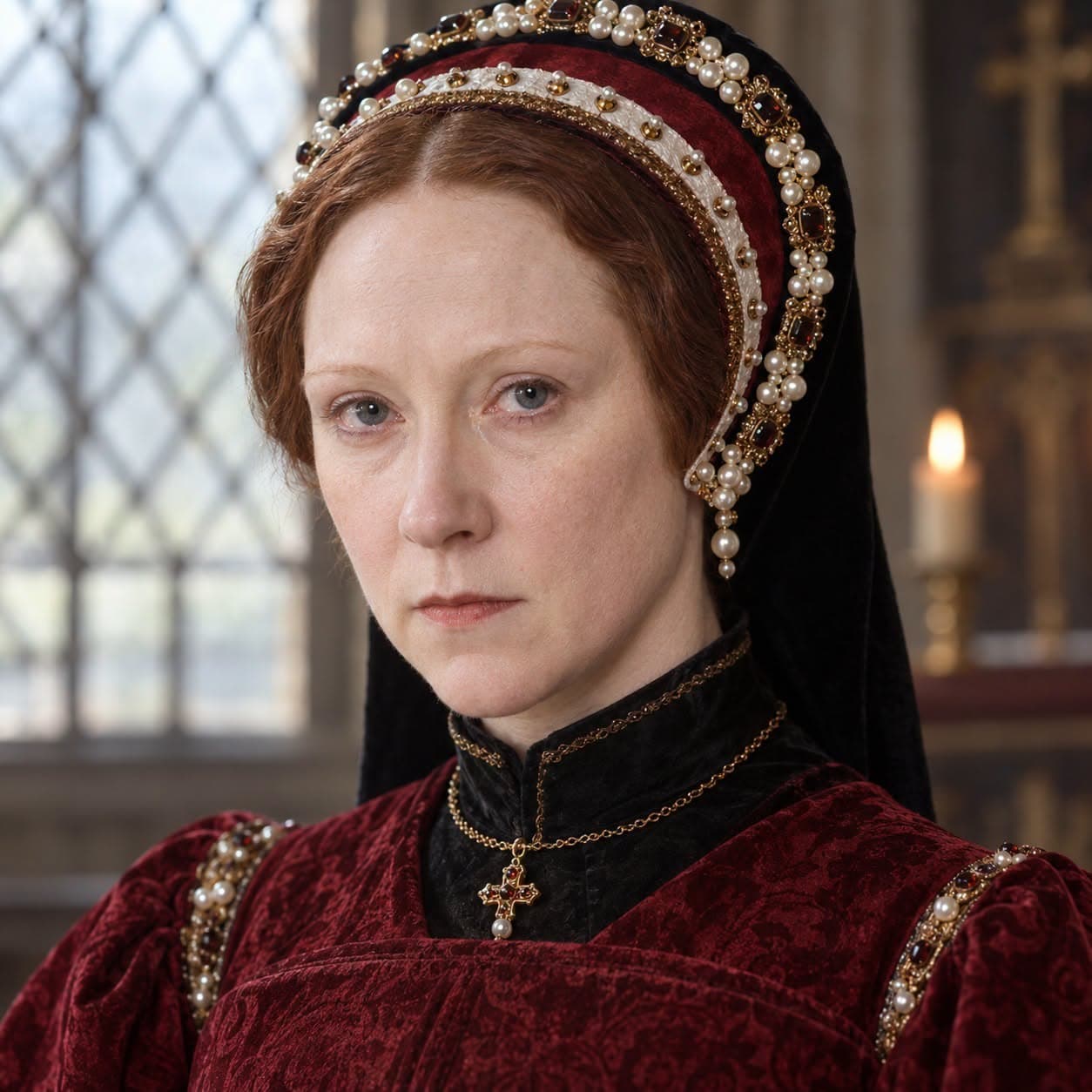
Mary Arundell died on 20 or 21 October 1557 at Bath Place, her husband's London house on the Strand, later known as Arundel House. She had been Countess of Sussex and then Countess of Arundel, a widow and a stepmother in two noble families. By that autumn, another Mary in the family had already been carried to her grave. Their lives would become entangled long after both were dead.
Twenty years earlier, Mary was serving Jane Seymour, Henry VIII's third queen. She came from the Arundells of Lanherne in Cornwall, the daughter of Sir John Arundell and Katherine Grenville. Her mother's sister was Honor Grenville, Lady Lisle, wife of the king's deputy at Calais. In January 1537 Mary married Robert Radcliffe, Earl of Sussex. He had been married twice before, and his new wife entered a family which already had sons and daughters. Becoming a countess meant becoming a stepmother at the same time.
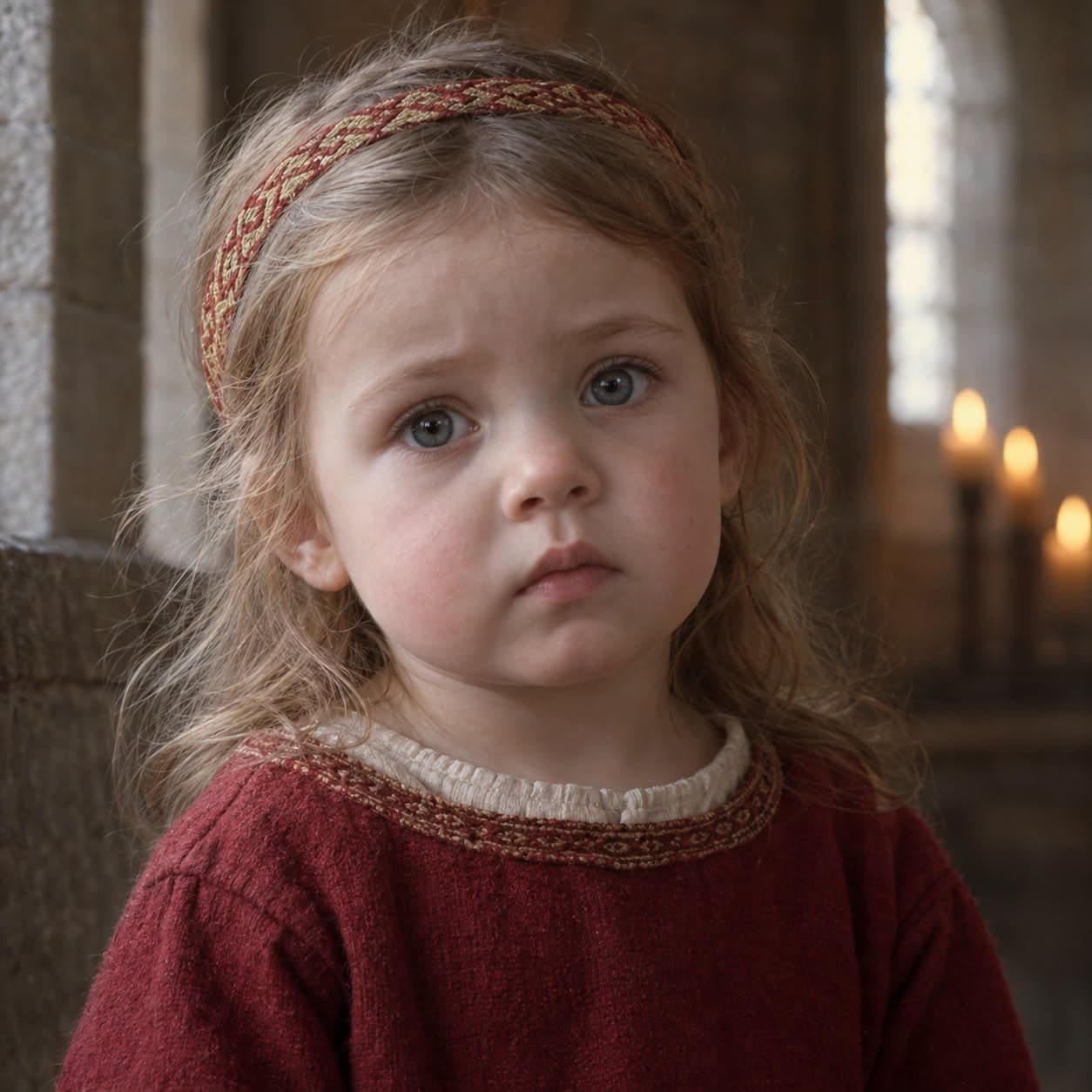
That year Lady Lisle was trying to place her daughters at court from across the Channel, and her niece was the family's woman on the spot. Anne Basset was sworn into the queen's service in September 1537, the day after the pregnant Jane took to her chamber to await the birth. The appointment came with a problem. Anne had spent years in France, and the queen wanted her out of her French apparel and into an English bonnet and frontlet of velvet. The family's agent reported seeing Anne at court in the velvet bonnet in which Lady Sussex had attired her. In October, as the queen's newborn son was about to be christened, it was Lady Sussex who sent with all speed to the Lisles' agent to have a new gown made for the girl, of lion tawny velvet or black.
The court of Henry VIII ran on great appointments and small logistics, and somebody had to see to the second kind. That autumn it was Mary.
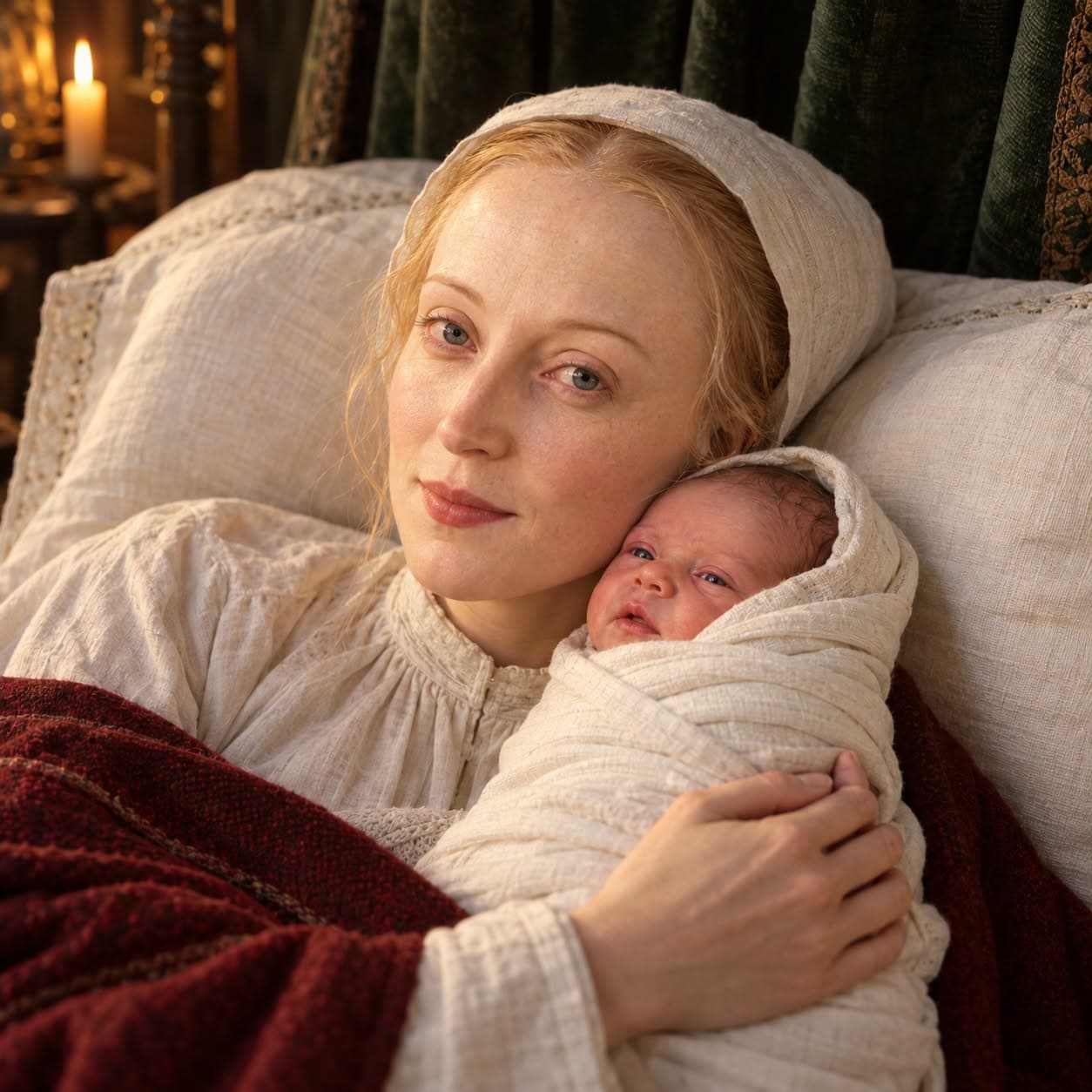
A son was baptised in March 1538 and died young. Sussex died in 1542. Three years later Mary married Henry Fitzalan, Earl of Arundel, becoming his second wife. Once again, the title and the stepchildren arrived together. Among them was his daughter Mary Fitzalan, the younger Mary whose name would eventually become so troublesome for her stepmother's biography.
The family names did little to help. Mary Arundell had married the Earl of Arundel, whose daughter was also Mary. One had been born with the name which the other's family title supplied. The distinction was clear enough in their relationship: the countess was the stepmother, the girl the stepdaughter. On a manuscript page, it was easier to lose.
During the 1550s, the younger Mary prepared Latin translation exercises as New Year's gifts to her father. She worked from Greek and English sources, gathering sayings and examples from classical writers. Four small paper volumes survive. A daughter's learning was the gift, set down in her own hand for the man who received it. One volume was a joint effort with Sussex's son John Radcliffe.
One of the manuscripts bears the name "Maria Arundell". The writer was Mary Fitzalan, who later married Thomas Howard, fourth Duke of Norfolk, and became a duchess. The daughter had written the exercises for her father; later accounts credited his wife.
The duchess died first. In August 1557, about two months after the birth of her son, Mary Fitzalan died at her father's London house, the same Bath Place on the Strand. On 1 September she was brought to St Clement Danes, the church, the house and the street hung with black and heraldic arms. The younger Mary's books survived her.
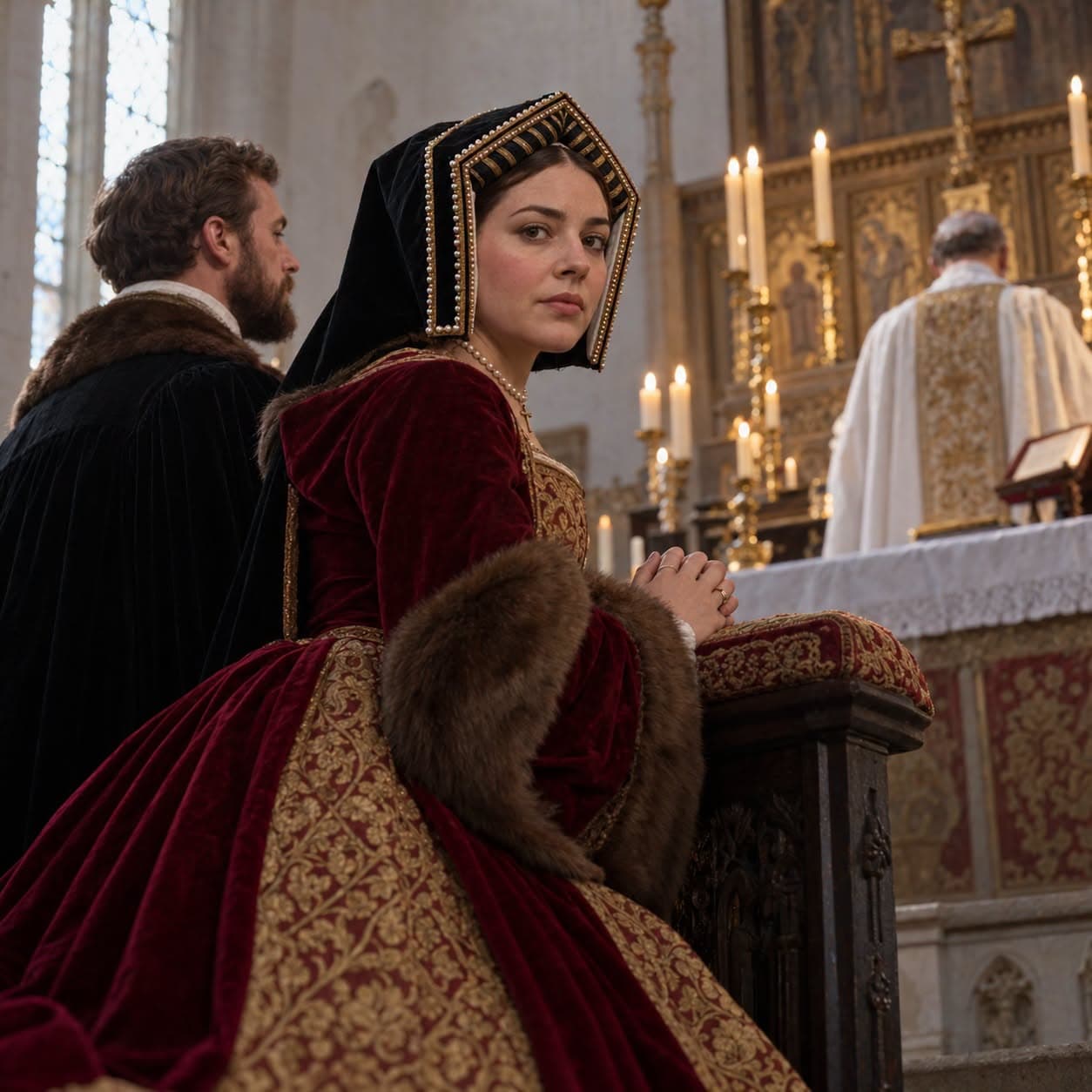
Seven or eight weeks later the countess died in the same house, and the same church made ready again. On 27 October she was brought there with the Bishop of London and the choir of St Paul's, four heralds in their coats of arms and twenty-four poor men in black carrying torches. The following day, after the requiem mass and a sermon, she was buried. Two women of one household had left the same house for the same church in a single autumn, each with the ceremony belonging to her rank.
Their later biographies were less orderly. The countess acquired the duchess's literary work, and then details belonging to Margaret Acland, Lady Arundell of Trerice, a woman of the following century. One account gave the Tudor countess a death in 1691, which was generous of it by about a hundred and thirty years. Three women had been fitted into one biography, and the two who were not her supplied its most conspicuous claims.
But the girl in the velvet bonnet is still there in the letters. Jane Seymour died in October 1537, within days of her son's christening, and Anne Basset was left without a mistress or a place. In November her mother wrote to Mary, acknowledging that the countess and her husband had taken Anne into their household until she might come to have a place again, and promising that her kin would not be put to any charge. When Anne no longer had a mistress, she still had a place with Mary.