They began with water. At dawn in Paris, a woman was strapped down in the Conciergerie and forced to swallow water until her body became an instrument of pain all by itself. The question extraordinaire was not a hidden act. It was part of the script.
Marie‑Madeleine‑Marguerite d’Aubray, Marquise de Brinvilliers, was made to drink somewhere around sixteen pints, roughly eight or nine litres, while her limbs were held fast and the interrogators waited for the point where her body could no longer carry what they were forcing into it. Then they dressed her in a shift, seated her on a cart, and took her through the streets of Paris to the place of execution, because in Louis XIV’s France torture and execution were not separate things but stages of one continuous ceremony.
She was on that cart not as an innocent wrongly caught in a machine, but as a woman who had poisoned her father and brothers for money, and whose trial had already begun to show the court something about itself it had not wanted to see. On or about 17 July 1676, she was led to the Grève, beheaded with the sword that marked her status as noble, and her body was burned and the ashes scattered into the Seine. The crowd saw a single neck and a single blade.
The king, reading reports later, saw that the circle of poison around his own court had just become impossible to ignore.
Marie‑Madeleine‑Marguerite d’Aubray was born on 22 July 1630, into a family woven directly into the fabric of royal justice. Her father, Antoine Dreux d’Aubray, was lieutenant civil of the prévôté of Paris, a senior magistrate whose job was to keep order in the capital. She grew up in a house where law was not an abstraction but the work her father did every day, where warrants, depositions, and sentences flowed through the rooms as part of ordinary life.
She married the Marquis de Brinvilliers, but the marriage did not bring the quiet respectability her father might have hoped. In Paris she took a lover, an army officer named Jean Baptiste Godin de Sainte‑Croix. Antoine Dreux d’Aubray, affronted by the scandal, used the tools he had to hand. He had Sainte‑Croix arrested and confined in the Bastille, believing that a spell in the king’s fortress would put an end to the affair.
It did not end anything. It gave Sainte‑Croix time and company.
In the Bastille he shared quarters with an Italian named Exili, suspected of being a poisoner, and moved in circles that included the king’s own chemist, Christopher Glaser. There he learned how to prepare subtle, slow-working poisons, how to combine arsenic, corrosive sublimate, and other agents into powders and liquids that could be slipped into food or drink without raising immediate suspicion. When he left the Bastille, he carried with him more than wounded pride.
He carried recipes.
Together, Sainte‑Croix and Brinvilliers began to experiment. Contemporary accounts describe her visiting hospitals and the poor under colour of charity, using some of those encounters to test doses on people who would never see a magistrate or a court. It is treated by historians as close to certain that she tried poisons on the poor and on patients before turning fully on her own family, calibrating symptoms and timings in bodies nobody important was watching.
The first death in the family came in 1666. Antoine Dreux d’Aubray fell ill and died suddenly, his physicians attributing his end to a violent attack of gout. Later investigation, and Brinvilliers’s own admissions, turned that diagnosis upside down. The attack of disease had been an attack of poison, administered by a daughter whose lover had once been her father’s prisoner.
Four years later, in 1670, it happened again. Her brothers Antoine and François died under similarly suspicious circumstances. Their valet, a man named La Chaussée, had been acting as the hand that placed the powders in broths and drinks at her direction. When suspicion finally reached him, he was arrested and interrogated. Under torture he confessed to helping poison the brothers and was condemned to be broken alive on the wheel in 1673, a spectacle that preceded his mistress’s death by three years.
Brinvilliers and Sainte‑Croix had not acted out of sudden rage or fear. They had cleared a path to the inheritance. With the father dead and the brothers removed, the Aubray estates flowed towards her, and through her towards the man whose imprisonment had started the whole sequence. The murders were cold, calculated, and organised upwards and downwards at once: hospital patients and poor people used as test subjects, then a magistrate and his sons taken as final targets.
For several years after Antoine’s death, rumours swirled but nothing stuck. The poison was subtle, the deaths plausibly natural, and Antoine’s own status made open accusation against his daughter unlikely. The machinery shifted only when Sainte‑Croix himself died.
In 1672 Sainte‑Croix died suddenly. Later romantic legends claimed he was overcome by fumes while working in his laboratory, but the historical reality was far more mundane: he died of a natural illness in his bed. Among his belongings was a small locked box, held by a notary as security against his debts. When the Bastille commander ordered it opened after his death, it revealed a cache of letters and memoranda: Brinvilliers’s own instructions, details of the poisonings, and evidence of the scheme laid out in writing.
That box did what suspicion alone had not done. It turned private crime into public case. Antoine’s successor at the lieutenant civil’s office, and other magistrates, now had papers they could point to, not whispers. Warrants followed.
Brinvilliers did not wait for them. She fled, first to England, then through the Dutch Republic and parts of Germany, finally seeking refuge in a convent in or near Liège. Cloistered walls had protected many aristocrats from worldly jurisdiction before her. She believed, for a time, that they would protect her too.
They did not.
Louis XIV’s lieutenant of police, François Desgrais, was sent to fetch her. He did not arrive in Liège as a uniformed officer with a warrant in hand. He travelled under a disguise, presenting himself as a priest and gaining access to the convent on that basis. Once inside, he seized her and removed her under armed escort back towards Paris.
As she was taken, Brinvilliers reportedly tried to kill herself rather than face the French courts. She failed. By April 1676 she was back in the capital her father had once helped rule, confined now not in a family townhouse but in the Conciergerie, waiting for interrogation.
The manhunt had crossed borders and breached religious walls to reach her. It had taken the death of a lover, the opening of a box, and a disguised priest to pull one woman from behind layers of privilege back into a system she had grown up watching from inside.
In Paris she was questioned, tried, and condemned for the murders of her father and brothers. But in the France of Louis XIV, condemnation was not the end of the questioning. Before execution, the court ordered the question extraordinaire — the severe form of torture used to extract final confirmations and names.
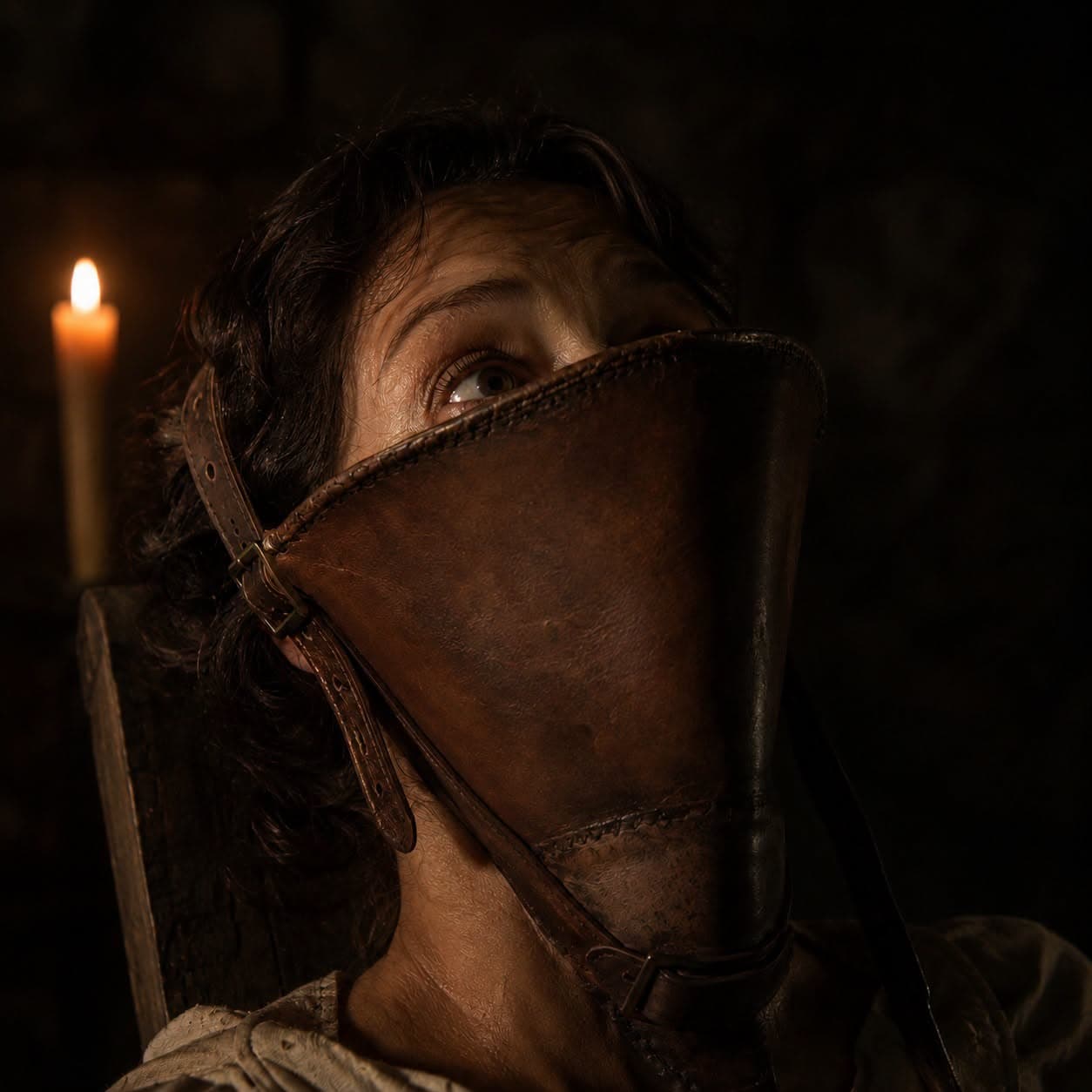
They bound her, forced her mouth open, and poured water down her throat in repeated measures until she had swallowed roughly eight or nine litres. Her stomach and lungs had to carry it. The pain of drowning from the inside was not incidental. It was the point. The law believed truth lived somewhere beyond that threshold, that a body sufficiently broken would surrender secrets a mind alone would not.
Under torture she confessed fully to the poisonings. She gave details of doses and timings, and she spoke not only of her own crimes but of a wider practice. It was in this context that she reportedly said that “half the people of quality” were engaged in poisoning, an exaggeration perhaps, but one that the men listening did not treat as mere hyperbole.
That line, from a woman whose hands and conscience were already stained, landed in ears primed for fear. It suggested that whatever she and Sainte‑Croix had done was not unique. It was part of a larger, half-hidden pattern, reaching far beyond one family.
After the water and the confession, she was drawn out of the prison and onto the cart. They stripped away the markers of rank: no elaborate dress, no wig, no jewellery. She wore only a shift, bare-headed, taken through the streets where people could see the fall of a woman whose father had once been one of the city’s highest officers.
At the Grève, as noble, she was granted the sword. Common poisoners might be hanged or burned alive. She was beheaded, the blade flashing once and severing the head from the body in a gesture intended to look clean, almost merciful, compared to other punishments. Afterward her corpse was burned, reduced to ash, and the ashes scattered in the Seine, as if fire and river together could scrub away what had been revealed about the city and the court.
The sequence completed itself: water forced in, confession dragged out, body paraded, neck cut, flesh burned, ash dissolved into the river that ran under the king’s city. The woman who had tested poisons on bodies nobody counted became, in the end, a public lesson in what the state believed justice looked like.
Her case did not end with her ashes. It started something.
In the years immediately after her trial and execution, magistrates and police began to hear more reports of “mysterious deaths” and of people buying powders and potions from fortune‑tellers and midwives in Paris. There were stories of love philtres, abortifacients, and poisons sold in the same rooms, of black masses and whispered names of clients.
The king’s chief of police, Gabriel Nicolas de La Reynie, opened a wide inquiry. In 1679 Louis XIV established a special court, the Chambre Ardente, to handle cases of poisoning and sorcery, a tribunal that would sit in a chamber hung with black and lit by candles, dedicated to burning out the poison his city now seemed to hold.
Over the next several years the inquiry issued hundreds of arrest warrants. Britannica’s summary gives figures of 210 sessions, 319 warrants, and 36 death sentences, with others condemned to exile or the galleys. Among those charged and executed was Catherine Deshayes, known as La Voisin, a fortune‑teller and seller of potions whose clientele ranged from ordinary Parisians to members of the aristocracy.
She was burned in 1680 as a poisoner and sorceress.
The investigation brushed close to the king himself. Madame de Montespan, Louis XIV’s powerful mistress, appeared in the depositions as a client of La Voisin, accused of buying love potions and participating in rituals meant to secure or hold the king’s affection. No formal charges were brought against her. Louis halted public proceedings when allegations climbed that high, but the stain remained. The same world that had watched Brinvilliers’s cart pass by now watched dossiers circulate that hinted at poison and sacrilege in rooms hung with mirrors at Versailles.
Historians treat Brinvilliers’s trial as the spark that lit this wider panic. A magistrate’s daughter had poisoned her own father and brothers, used hospital wards as test grounds, fled across borders, been dragged back in disguise, tortured, and put to death. When she said under torture that half the people of quality were involved, it sounded less like an excuse and more like a signal.
Louis XIV, the Sun King, had built Versailles as a stage for majesty, with rigid etiquette, polished stone, and carefully controlled access to his person. Brinvilliers’s story forced him to confront that the threat he feared was not only in foreign courts or peasant uprisings, but in the hands of his own subjects, concealed in powders, sold quietly in the capital, and carried into the palaces by people who knew how to smile and bow.
The crowd that watched the blade fall at the Grève saw a woman pay for what she had done. The king who read the files understood something else: that once a society learns how to kill cleanly, invisibly, with powders in a glass rather than swords in a street, there is no clear line keeping that skill out of its highest rooms.