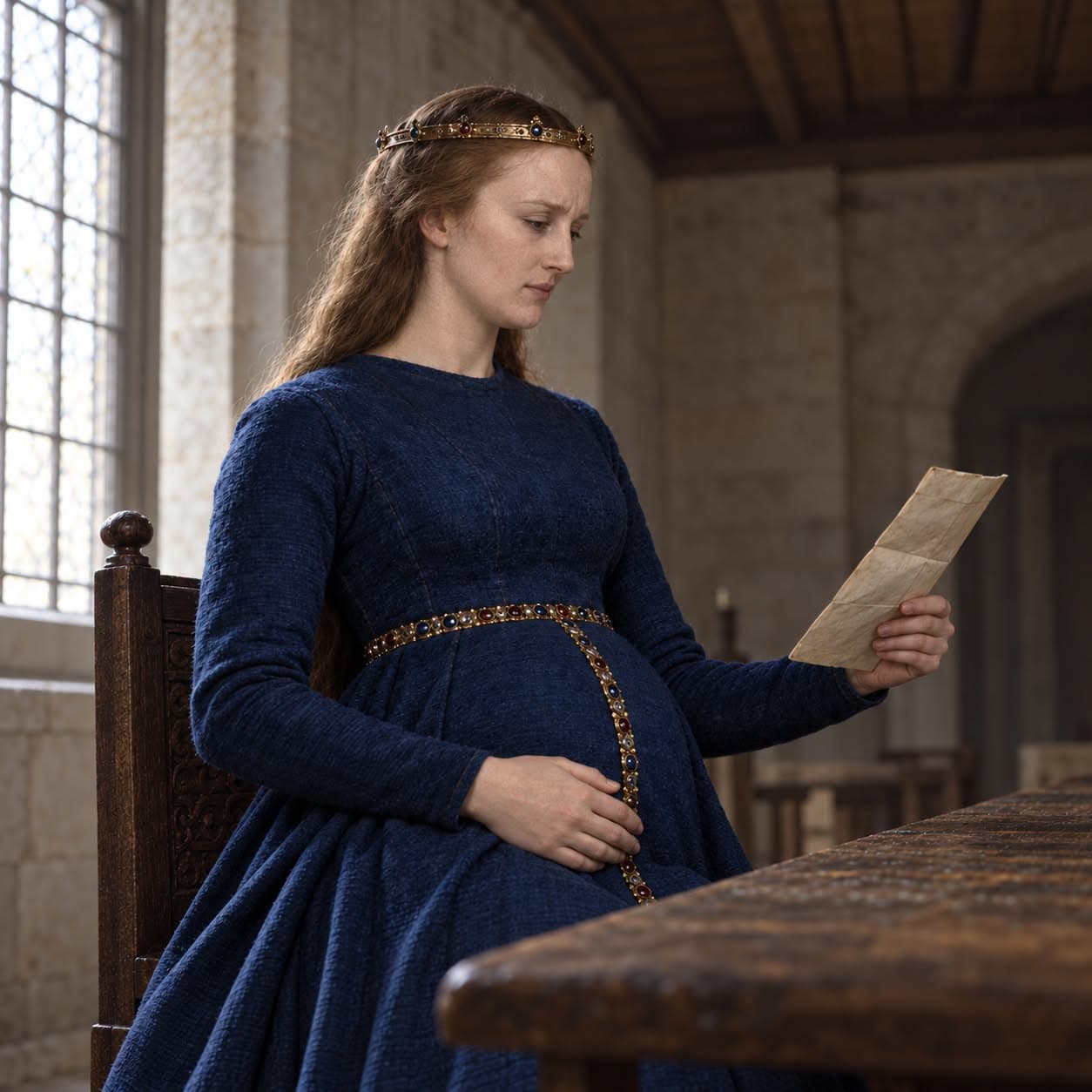
Pregnancy kept Marie of Anjou at Chinon. It did not keep the king's government out of her hands. When Charles VII travelled to Dauphiné, his wife remained behind with authority to act in his place.
Marie was born at Angers on 14 October 1404, the eldest daughter of Louis II, Duke of Anjou, and Yolande of Aragon. Her father claimed the kingdom of Naples. Her mother belonged to the royal house of Aragon and spent much of her life keeping her family's interests alive through war, marriage and diplomacy. Marie grew up among people for whom a child's marriage could settle a political question before the child was old enough to understand it.
She was nine when she was betrothed to Charles in 1413. He was a younger son of the King of France, with two elder brothers ahead of him. The children spent part of their upbringing together in the Angevin family's care, moving between Anjou and Provence. Then both of Charles's brothers died, and the boy intended for Marie became heir to a kingdom divided by civil war and invaded by England.
By the time they married at Bourges in April 1422, even his inheritance had been challenged. The Treaty of Troyes had excluded Charles from the succession in favour of Henry V of England and his heirs. Paris was beyond the young couple's control. When Charles's father died that autumn, there were rival claims to the French crown, and Marie's family stood behind her husband's.
Their first child, Louis, was born in July 1423. Marie was eighteen. He supplied the marriage with a son and Charles's embattled cause with an heir. There would be thirteen more children over the following twenty-three years, while the king travelled, fought and gradually recovered his kingdom.
Marie stayed behind often. There was usually someone who needed her there.
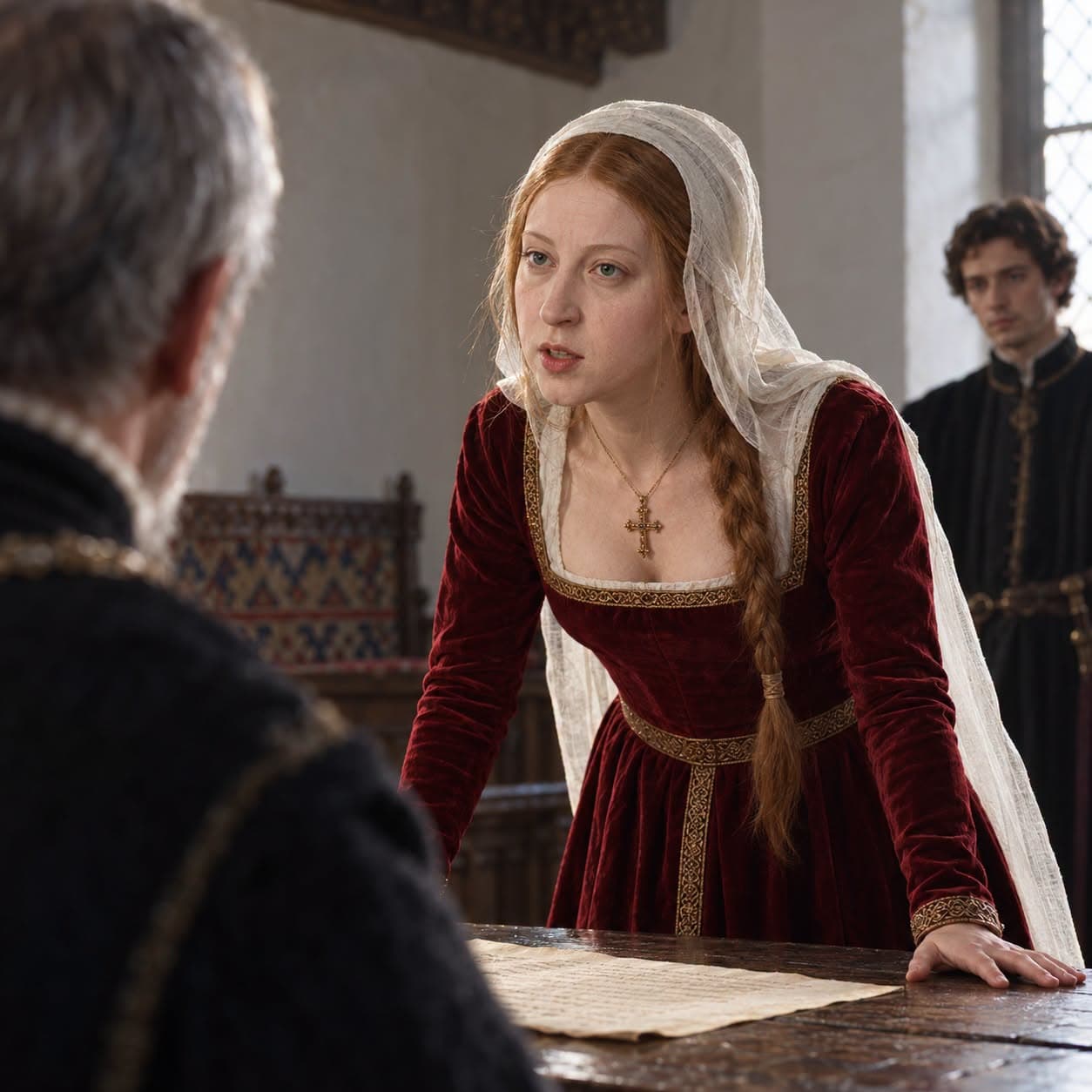
Joan of Arc's victories brought Charles to his coronation at Reims in July 1429. Marie set out with the court and was sent back from Gien. She never received a coronation of her own. Yet the uncrowned queen could exercise powers considerably more practical than ceremony. During Charles's absences she presided over his council. In 1434, when the king went into the Dauphiné, acts issued that April name her as his lieutenant. Her daughter Yolande was born that September. The authority was delegated and intermittent, but it was real. When the king went away, royal business still had to be done.
Her responsibilities also extended to the person, household and expenditure of the dauphin Louis. Raising the next king involved servants, education, money and access, all matters with political consequences. In Marie's life, the nursery and the government were never very far apart.
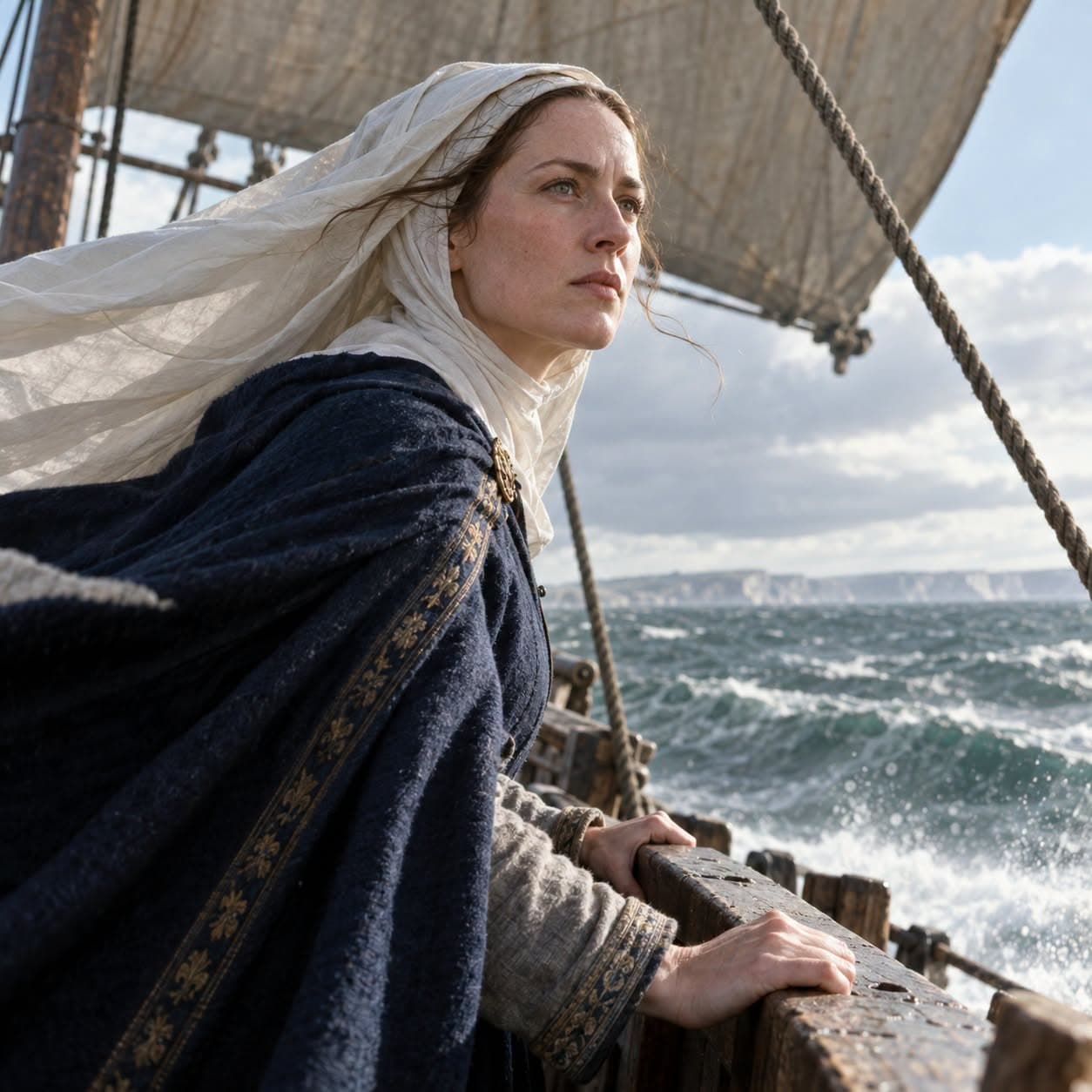
At Tours on 24 June 1436, Marie presided over the court in the great hall as Margaret of Scotland, who had crossed the sea to marry Louis, met him for the first time. Yolande was there too, along with Marie's daughter Radegonde. The girl arriving to join their family was entering the same world of childhood marriages that had brought Marie to Charles. Margaret was eleven. Louis was not yet thirteen. His mother had already spent more than twenty years living with the consequences of her own betrothal.
Less than a fortnight before that welcome, Marie's son Philippe had died at four months old. Her son Jacques died the following March. A daughter, Marguerite, born in 1437, died in July 1438. Twin daughters were born that September. One of them, also named Marie, survived only five months.
By the mid-1440s, Charles had brought Agnès Sorel into public prominence as his mistress. She belonged to Marie's household and became a conspicuous presence at court, receiving wealth and exercising influence of her own. The king's marriage and his affair existed alongside one another. Marie bore her youngest son, Charles, in 1446, while Agnès was established in the royal favour.
What Marie thought of it went unrecorded. What remained publicly expected of her was clear enough: she continued as queen, mother and head of her household. Her husband's attention had acquired another destination. The responsibilities attached to his wife continued to arrive where they always had.
Agnès died in 1450. Marie's life continued for another thirteen years.
Chinon became her preferred residence from 1454. She maintained a household of about a hundred people and commissioned work at the castle. Her accounts preserve the ordinary requirements of a royal woman making rooms fit to live in: tables, window fittings, a wooden reading stand with a turning support for her prayer book, and a large chest for bed linen.
Her younger children, Madeleine and Charles, lived there with her. Books were supplied for Charles's lessons, including an alphabet book and a Latin grammar. The household that had produced an heir was still occupied with teaching a younger boy to read.
Charles VII died in 1461, and Louis succeeded him. Marie lived long enough to become the mother of the reigning king. She died on 29 November 1463, aged fifty-nine, at the abbey of Les Châtelliers in Poitou.
Years earlier, pregnancy had kept her at Chinon while she acted for her absent husband. She had returned there, housed her children and ordered its rooms. When her eldest son became king, he confirmed her hold on the castle. Chinon remained hers after Charles was gone.