Marie de Bourbon's daughter inherited her fortune at six days old. People would tell her how fortunate she was. She would grow up to give a different account.
Marie was born on 15 October 1605 at the château of Gaillon in Normandy, the only child of Henri de Bourbon, Duke of Montpensier, and Henriette Catherine de Joyeuse. Both her parents brought great names and property to the marriage. Her father belonged to a branch of the Bourbon royal family; her mother was Duchess of Joyeuse in her own right. Before Marie could do anything for herself, her future was already valuable to other people.
Her father died in 1608, when she was two. Marie became Duchess of Montpensier in her own right, a child with a title that did not depend on any husband she might eventually marry. The lands were hers. The question of whom she would marry interested the royal family considerably more than questions about most two-year-olds.
She had already been promised to a son of Henri IV, the little Duke of Orléans. He died in 1611, aged four, and the marriage plans passed to his younger brother Gaston. One royal child had died; another could take his place. Marie's inheritance remained sufficiently desirable for the arrangement to survive the loss of its original bridegroom.
Gaston's mother, Marie de Médicis, wanted the match. By 1626, so did King Louis XIII and his chief minister, Cardinal Richelieu. Gaston was the king's younger brother, and Louis and his wife, Anne of Austria, had no child. If Louis died without a son, Gaston stood next in line to become King of France. A marriage for him therefore concerned rather more people than the two who would make it. The bride had the blood and the fortune; the bridegroom had the prospect of a crown.
He was reluctant to marry her.
His resistance became entangled with the opposition to Richelieu, in the affair known as the Chalais conspiracy. The plot failed. Gaston remained the king's brother, and Marie remained the bride the king and his minister intended him to marry. The political struggle had been considerable. It had not produced a different wedding.
On 5 August 1626, at Nantes, the marriage articles were agreed and the couple were formally betrothed. That night, bonfires marked the celebrations. The following day Richelieu himself celebrated the marriage in the cathedral. The minister who had helped insist upon the match was there to conduct it.
Marie was twenty. She had been a duchess since childhood, and a prospective royal bride for almost as long. Now she became Duchess of Orléans as well, wife to the man known at court as Monsieur. She was Madame. After years in which her marriage had been discussed, postponed and resisted, there was a ceremony, a husband and a new place in the royal household.
A pregnancy followed. The child would inherit through a mother whose property could pass to a daughter and a father whose claim to the Crown could pass only through the male line. The distinction mattered. A girl could succeed to Marie's great inheritance. She could not take Gaston's place in the succession to France.
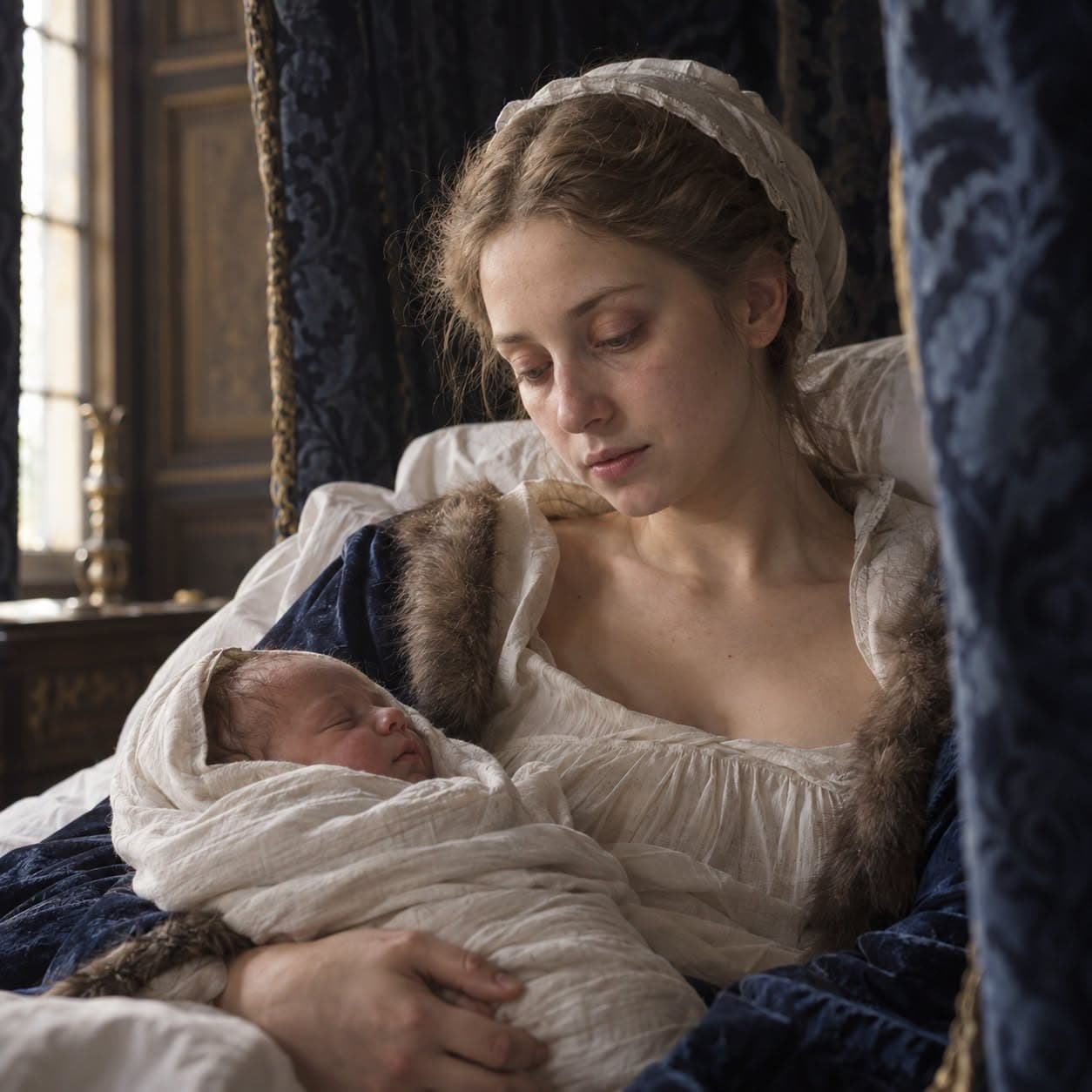
On 29 May 1627, at the Louvre, Marie gave birth to a daughter, Anne Marie Louise. The baby survived. Six days later, Marie died in the same palace. She was twenty-one, and had been married for less than ten months. The woman whose future had occupied so much of the royal family's attention had scarcely begun her life as Madame.
Her daughter became the new Duchess of Montpensier. The inheritance had survived the death of a bridegroom. It survived the death of the bride.
Soon after Marie's death the infant was given a household grander than any daughter of France had ever had, larger than those her aunts, the queens of Spain and England, had kept before their marriages. She was lodged at the Tuileries, and her attendants carried her along the great gallery to visit the king and queen at the Louvre, the palace where her mother had died. She had servants, royal relations and the inheritance that had made her mother's marriage so desirable.
When she came to write about her beginnings, she put her mother's death before the advantages of her birth. Most people, she wrote, thought the great wealth her mother had left, of which she was sole heiress, ought to console her for the loss. Her own judgement was different: "I, who understand today what advantage her care would have been to my upbringing, and her influence, joined with her tenderness, in settling my future, can never sufficiently regret her loss."