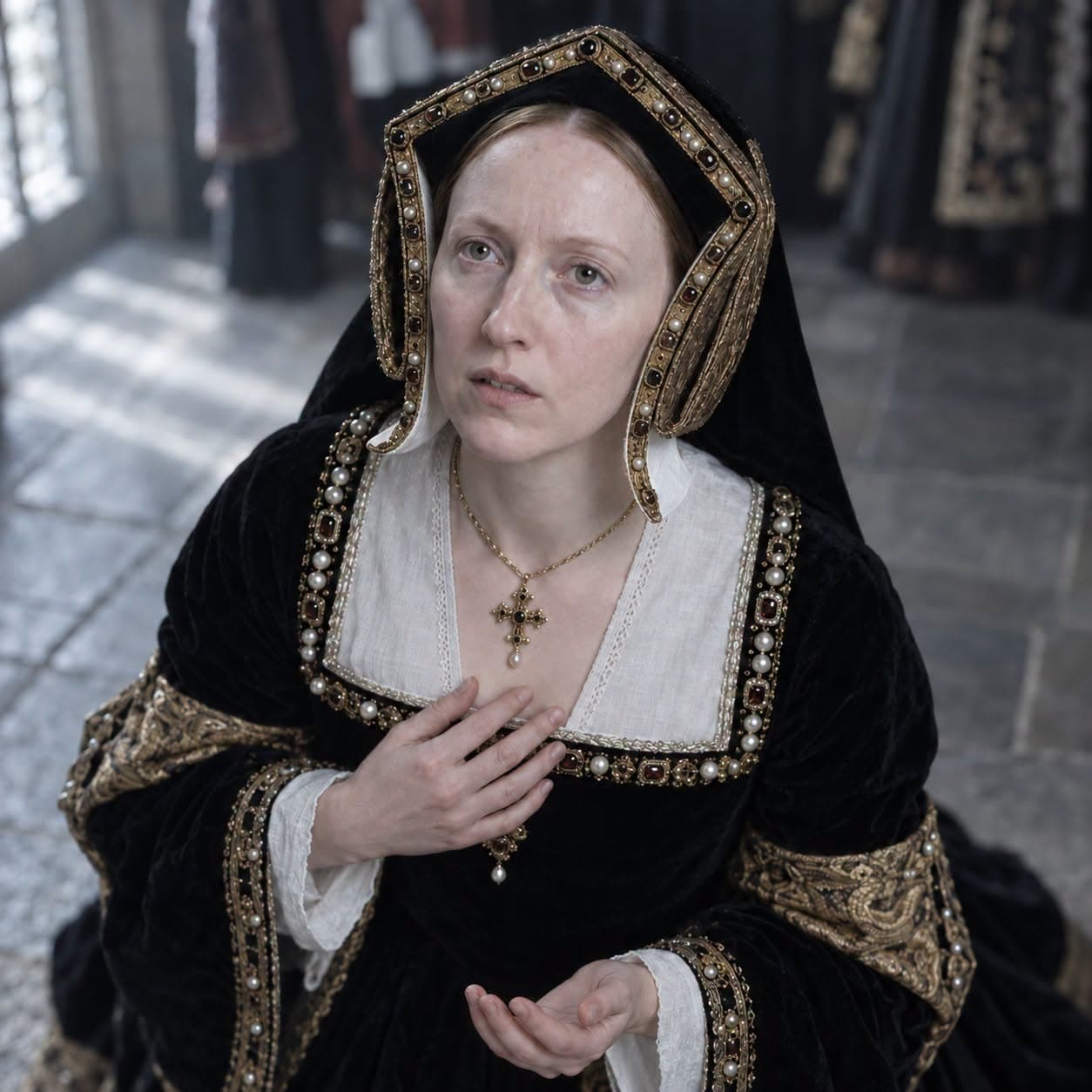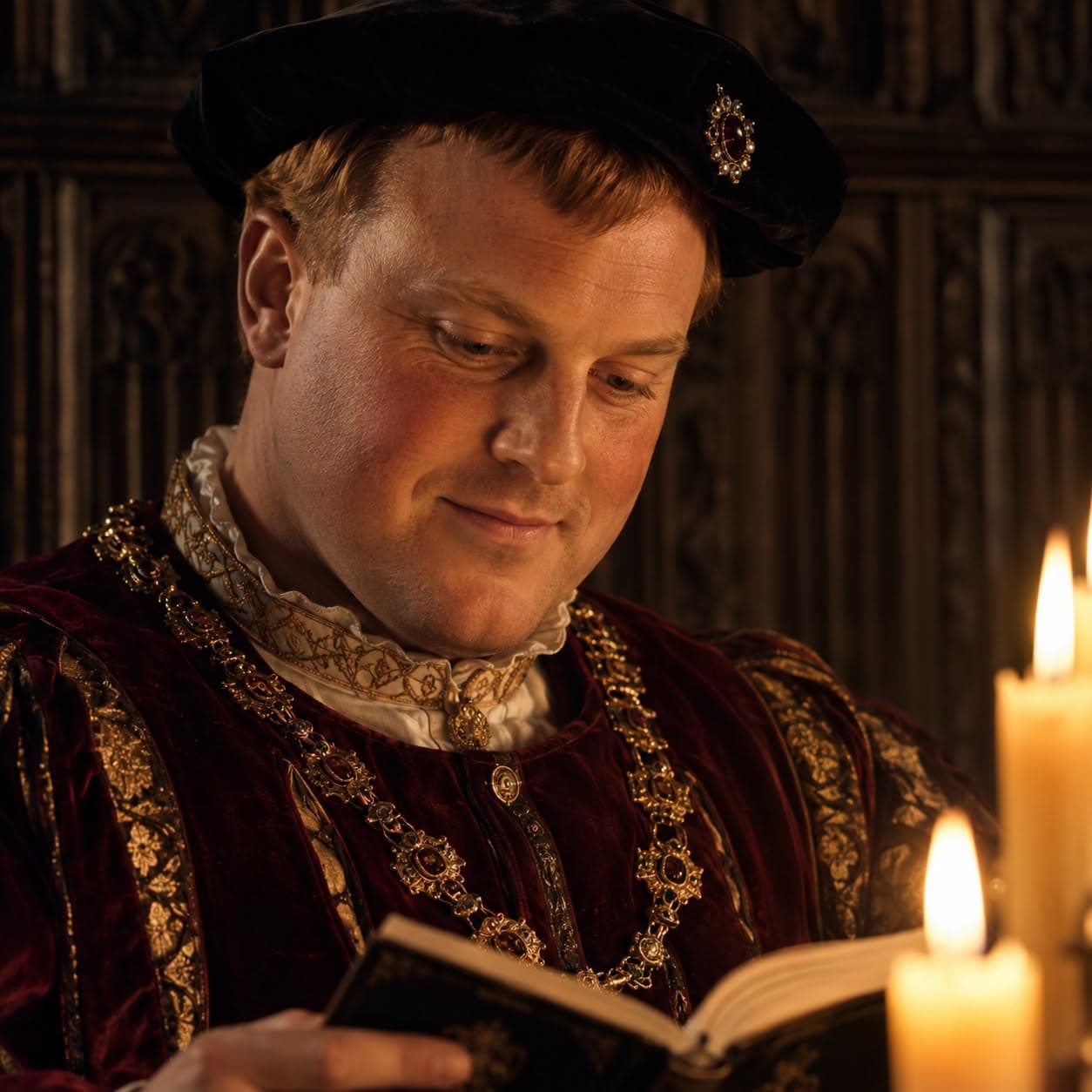
On 19 July 1746 she gave birth to a daughter at Versailles. Three days later she would be dead. The heir to the French throne had to be dragged away from her bed.
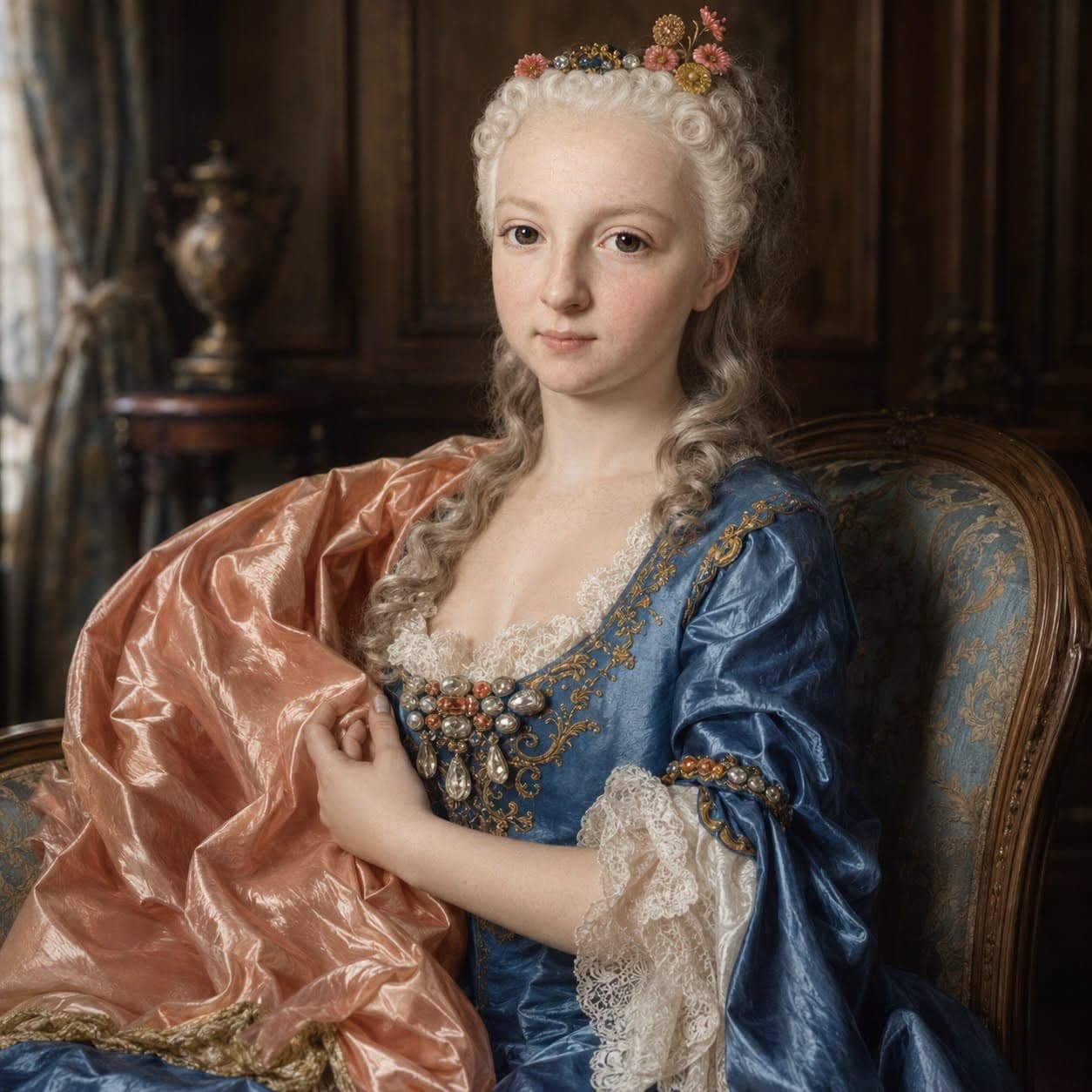
María Teresa Rafaela was born on 11 June 1726 in the Royal Alcázar of Madrid, the daughter of King Philip V of Spain and Elisabeth Farnese. She came into a world already shaped by Bourbon dynastic bargains. In 1725 the French had abruptly broken off the engagement between Louis XV and her elder sister, Infanta Mariana Victoria, sending the girl back to Spain and leaving real bitterness at both courts. Nearly fifteen years later, the remedy chosen was another Spanish princess. María Teresa Rafaela was promised to Louis, Dauphin of France, son and heir of Louis XV.
The match was concluded on paper long before she arrived. Under her mother’s influence she was kept in Spain until she was older. She was married to the Dauphin by proxy in Madrid on 18 December 1744, departed for France in January 1745, and reached Versailles on 21 February. The official wedding took place there two days later, on 23 February, performed by Cardinal de Rohan in the palace chapel. In France she was known as Marie Thérèse Raphaëlle d’Espagne, addressed as Madame la Dauphine, the highest‑ranking woman in the kingdom after Queen Marie Leszczyńska.
The marriage did not begin smoothly. It was not consummated on the first night, a failure that was treated as a public embarrassment and used to undermine her position among the courtiers who watched everything. She was described as beautiful, dignified, pious, and well educated, with red hair that drew unkind comment and a shy nature that isolated her further. She was openly hostile to the king’s new mistress, Madame de Pompadour, who had made her first public appearance at Versailles at the Yew Tree Ball held in the Dauphine’s honour. The Dauphin and Dauphine disliked the way the mistress drew attention away from the queen. Gossip about the unconsummated marriage persisted until September 1745, when the couple finally put an end to it. After that, by every report, they were close and devoted, spending most of their time together.
On 19 July 1746, at Versailles, Marie Thérèse Raphaëlle gave birth to a daughter. The child was baptised Marie Thérèse and styled Madame Royale. The Dauphine did not recover.
The Duke de Luynes, a courtier keeping a detailed journal of life at Versailles, recorded what happened next. He wrote that Madame la Dauphine made her confession, that she was bled twice at the feet, and that a “general suppression” followed which took her consciousness and did not give it back. Bleeding was a standard treatment, applied at the extremities to draw off what physicians of the time considered excess humours. In this case it did nothing. Three days after the birth, on 22 July 1746, María Teresa Rafaela died, twenty years old.
Louis, Dauphin of France, did not accept it quietly. Contemporary accounts state that his father, Louis XV, had to physically drag him away from his wife’s deathbed. Versailles went into official mourning. An autopsy was performed, as was customary for a royal death. The doctors reported finding, in the language of their own medicine, “a great deal of milk in her brain.” They were diagnosing lait répandu, the pervasive eighteenth-century medical belief that unsuckled breast milk could migrate through the body and pool fatally in the organs. What they were actually looking at, almost certainly, was white pus from severe postpartum sepsis or meningitis.
Her burial was at the Basilica of Saint‑Denis, the royal necropolis outside Paris. She was interred there on 6 August 1746. At the time of her death, her father Philip V had been dead for less than two weeks; he had died on 9 July 1746 in Spain. The infant daughter she left behind died at Versailles in April 1748, not yet two years old.
Versailles did not stop. In 1747 the Dauphin married again, this time to Princess Maria Josepha of Saxony, daughter of Augustus III of Poland and Maria Josepha of Austria. She bore him eight children, including the future Louis XVI. Madame de Pompadour’s influence over the court continued. The Bourbon alliance with Saxony and Poland added another link to the same chain María Teresa Rafaela had already been part of.
Almost twenty years passed. Louis, Dauphin of France, died in 1765, predeceasing his father and never becoming king. Before his death he made one specific request. He asked that his heart be removed and placed beside the grave of Marie Thérèse Raphaëlle at Saint‑Denis, not beside Maria Josepha of Saxony, the wife who had shared the rest of his life and given him his sons. The arrangement was carried out. His heart went to the tomb of the Spanish princess who had died at twenty in Versailles, three days after her first child was born.
He had been dragged away from her bed in July 1746. When he died, he sent part of himself back to her.