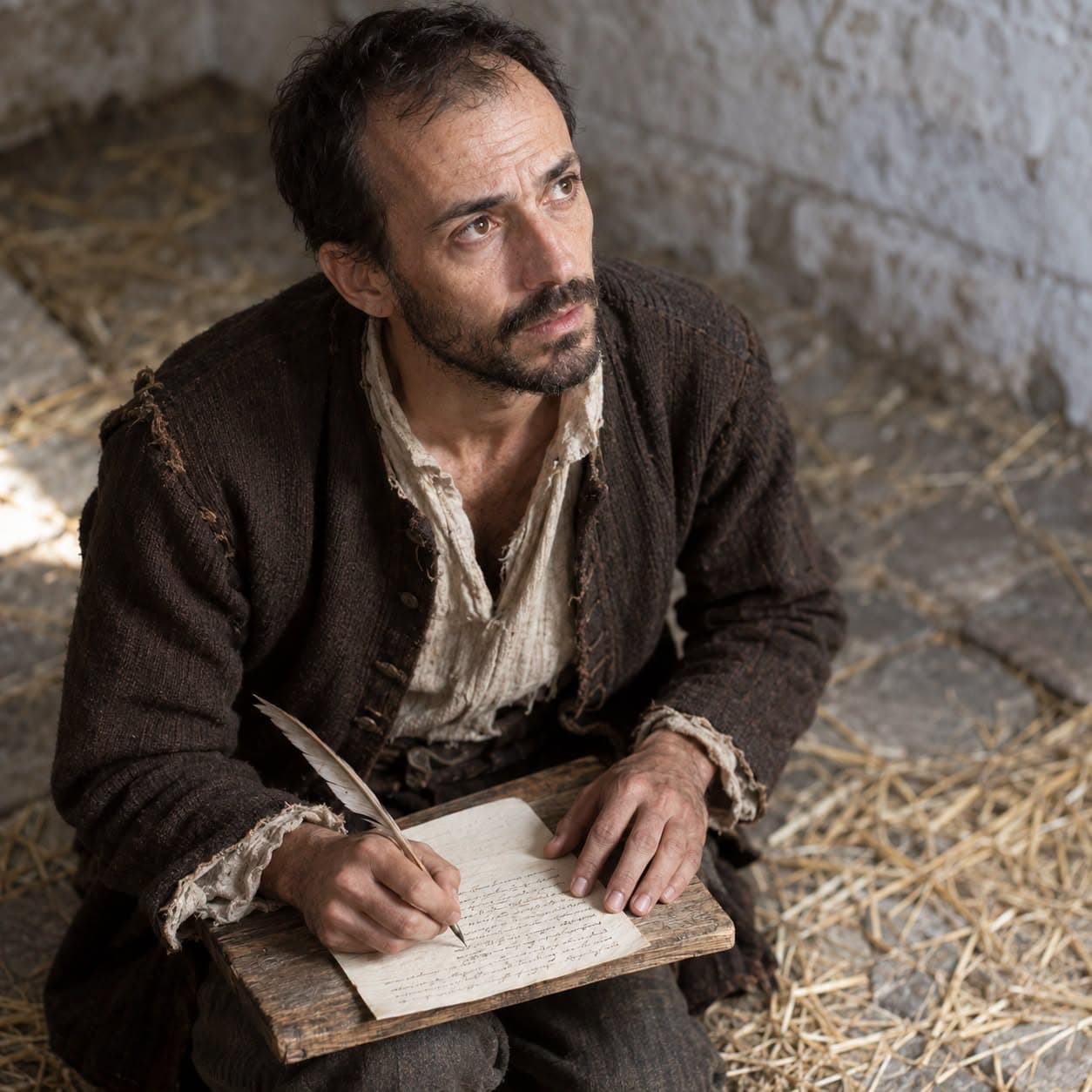
She was willing to let him go. She wanted the terms in writing first.
By 24 October 1599, Pope Clement VIII had set the annulment of Marguerite de Valois's marriage to Henri IV in motion, naming judges to hear the case in France. Their final judgment was still weeks away. Marguerite was at Usson, a fortress on a hilltop in Auvergne, negotiating what would remain hers when she was no longer the king's wife.
She had been nineteen when she married him. A daughter of Henri II and Catherine de' Medici, and sister to the reigning Charles IX, she brought the blood and standing of the Valois to a marriage intended to help reconcile Catholic and Protestant France. She was Catholic. Henri, then king of Navarre, was Protestant. Their wedding on 18 August 1572 drew Protestant nobles to Paris for the celebrations. Six days later, the St Bartholomew's Day massacre began. A marriage made in the hope of reconciliation had scarcely begun before the killing surrounded it.
The marriage had been made to settle a kingdom. Now it would be unmade to settle a dynasty.
There had been years of political alliances and quarrels between its beginning and its end. Marguerite had supported her husband, opposed her brothers and eventually broken with Henri too. Her brother Henri III had her confined at Usson, but the woman negotiating from the fortress in the 1590s was no longer simply its prisoner. She had become its mistress, maintained a household there and begun writing her memoirs. Distance from the court had not ended her correspondence with it. Much of the business of her future travelled in letters.
Negotiations to annul the marriage had begun in 1593. Henri needed legitimate descendants to establish his dynasty. Marguerite agreed to cooperate. She also required provision for her debts, protection for her property and income, and a secure place to live. There was a household to maintain and creditors to answer. Being born a king's daughter did not make the accounts disappear.
The promises came more readily than the money. Henri assured her of his goodwill; Marguerite pressed for the documents that would make it useful. She thanked him, appealed to influential intermediaries and asked again. Her letters could be lavish in their professions of obedience while remaining exact about what she required. The king's contentment occupied a good deal of the page. So did the arrangements for her own.
Henri's desire to marry his mistress, Gabrielle d'Estrées, had complicated the business. Rome resisted the prospect of that marriage. Gabrielle died on 10 April 1599, removing a major obstacle to the annulment, although Marguerite's financial position still had to be settled. The possibility of a marriage to Marie de' Medici, a princess from the ruling family of Tuscany, offered a different future for the crown. Before Henri could take another wife, however, his existing marriage had to be declared invalid.
Wanting an heir was a reason to seek an annulment. It was not, by itself, the legal case for one. The proceedings examined the circumstances in which the marriage had been contracted, including the necessary dispensations and whether Marguerite had freely consented. The bride of 1572 was now being asked to help undo what had been done when she was nineteen.
She helped.
On 17 November, she wrote from Usson to Madame de Carnavalet, asking her to testify that Marguerite had spent the day before her betrothal crying in Carnavalet's room in a tower of the Louvre. This was the account she wanted placed before the judges: a young woman distressed by the marriage being arranged for her. She connected the request directly to their separation and the kingdom's need for successors.
Another letter went that day to the duchess of Retz, an old friend. Marguerite asked her to testify to the pressure her mother had used to obtain her consent. Friendship was being called upon to do a particular piece of work. The women who had known her as a young princess were being asked to supply evidence for the end of her marriage.
When the commissioners came to Usson to take her own statement, she gave them a single sentence to carry back. "Never have I had in my heart the will to consent to this marriage."
On 17 December 1599, the judges declared the marriage null. Within days Henri sent word to Usson that he did not wish to be her brother in name only, but in deed as well. After twenty-seven years as her husband, he was offering a different kind of family relationship, one that left him free to marry someone else.
Henri offered to pay her creditors himself. Marguerite preferred to manage her debts on her own terms, against 200,000 écus paid in four yearly instalments, and her lands and revenues were confirmed to her. It did not clear every difficulty from her accounts. Collecting what was promised would remain a task of its own. But the arrangements gave substance to the assurances of royal friendship.
At forty-six, Marguerite had agreed to give up her place as Henri's wife. Her birth, her household and her claims had all formed part of the bargain. On 29 December, letters patent confirmed her title as duchess of Valois and her right to continue as queen. The marriage was over, and the terms were in writing. She was still Queen Marguerite.