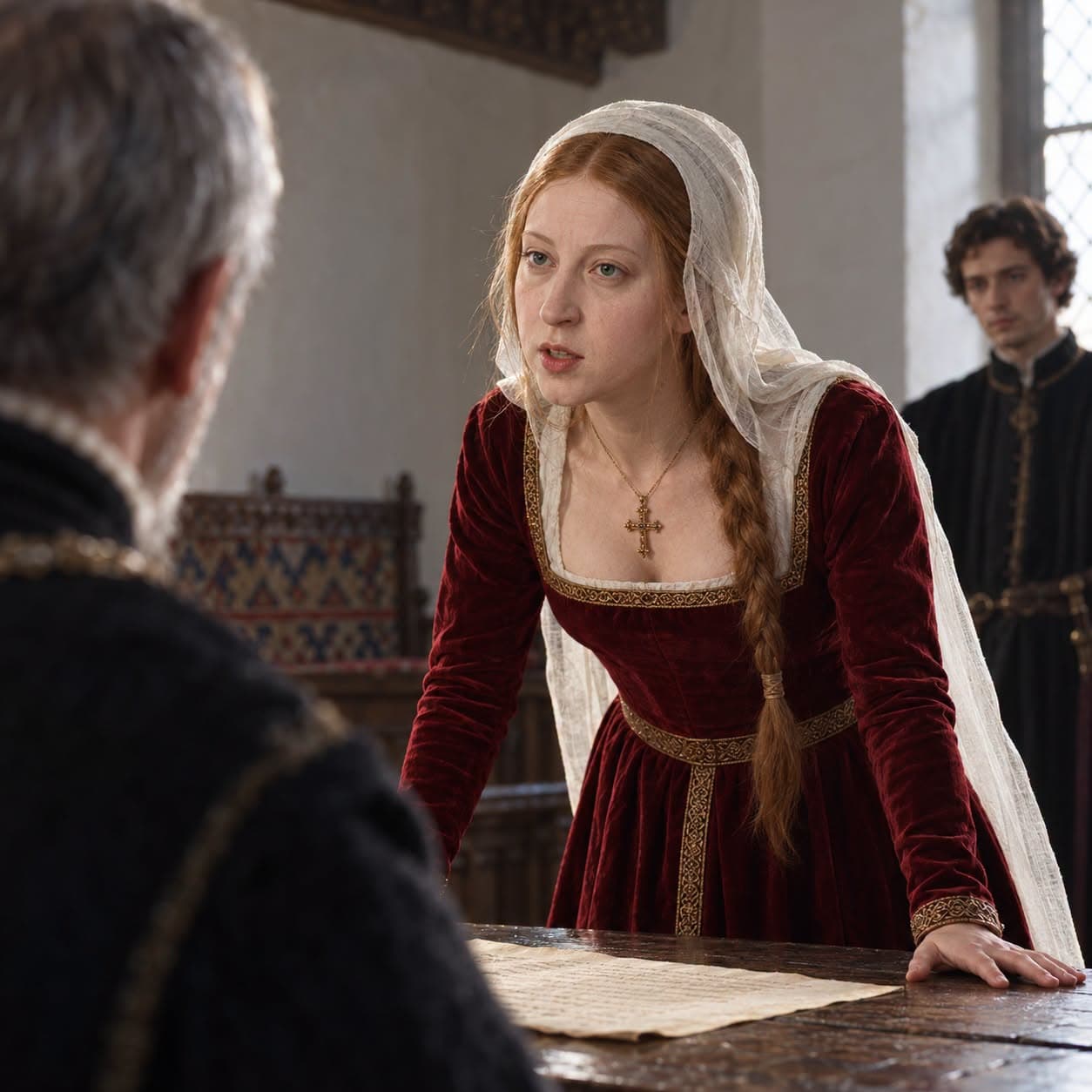
She carried her infant son before his father and asked the king to bless him. He said nothing.
Henry had looked at the child, lowered his eyes and remained silent. The Duke of Buckingham had already tried to obtain the king’s blessing and received no answer. Now the queen herself stood before her husband with the baby they had waited eight years to have, and even the sight of their only child could not rouse him.
Edward was born on 13 October 1453 at Westminster Palace, on the feast of the Translation of Edward the Confessor. He was named Edward. Margaret of Anjou was twenty-three and had been married to Henry VI since she was fifteen. For eight years the court had waited for news of an heir, and for eight years there had been none.
The king had collapsed in August, when she was heavily pregnant. He was almost entirely unresponsive, unable to conduct the business of kingship or to communicate with the people attending him. The physicians could offer little explanation and less relief. Nobody could say whether Henry would recover, or whether the child would grow up with a father who knew him.
The baby was baptised the next day, with Cardinal John Kemp and Edmund Beaufort, Duke of Somerset, as his godfathers and Anne, Duchess of Buckingham, as his godmother. It was a christening fit for a Prince of Lancaster, held while the king remained withdrawn from the world around him. Margaret kept to her chamber until her churching on 18 November. When she came out nothing had changed. Decisions that should have been Henry’s were being made by councillors and lords, and she was a French queen of twenty-three with a five-week-old son and a husband who would not answer her.
Over that winter, Edward was carried to Windsor to be shown to his father. The Duke of Buckingham took the prince in his arms and presented him to the king, asking him to bless his son. Henry gave no answer. Buckingham stayed where he was, holding the baby, waiting for some sign. None came.
Margaret came in, took Edward from the duke and held him up to her husband herself. She asked for the blessing in her own words. The king looked once at the prince and lowered his eyes again.
She did not stop there. She asked the lords to let her govern in her husband’s name, and to make provision for her household and her son. They refused. In the spring they made Richard, Duke of York, Protector of the Realm, a man with a claim to the throne of his own.
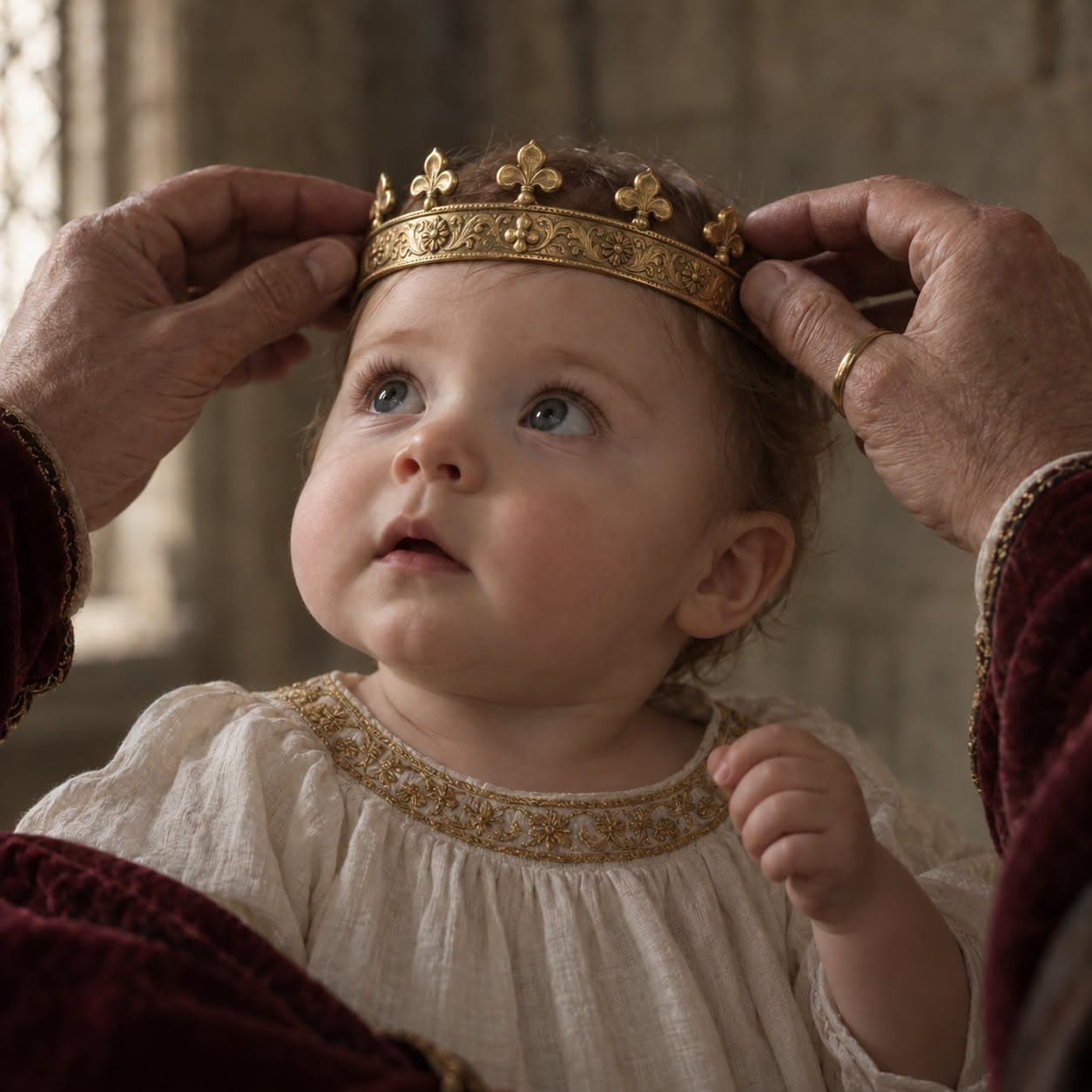
In March, Parliament had named Edward Prince of Wales. On 9 June, at Windsor, the ceremony was held. A gold circlet was set on his head, a ring placed on his finger and a rod of gold put in the hand of a boy not yet eight months old. Margaret was there. His father could not take part.
The summer passed, and then the autumn. Edward turned one in October with his father still shut inside his illness. Henry had been ill for fourteen months.
Then, around Christmas 1454, something changed.
Henry began to recover. He returned to his prayers, and on St John’s Day he sent his almoner to Canterbury with an offering. On Monday 30 December, Margaret brought Edward to him again. This time, when Henry looked at the child, he asked what the prince was called. Margaret told him that his name was Edward.
Henry raised his hands and thanked God. He asked who the godfathers were, and when she told him, he was pleased. She had to tell him that Cardinal Kemp was dead. He had not known, and he said that one of the wisest lords in the land had gone. He told her that he had known nothing of what people had said to him during his illness, nor where he had been.
The boy in front of him was fourteen months old. Henry had missed his birth, his baptism, his first Christmas and the day he was made Prince of Wales. He said that he was in charity with all men and wished all the lords were too. When two senior churchmen visited him after Twelfth Day, they found him able to talk as he had before the illness, and they wept for joy as they left.
A year earlier, Henry VI had looked at his son and lowered his eyes. This time he asked his name, and then he thanked God for him.