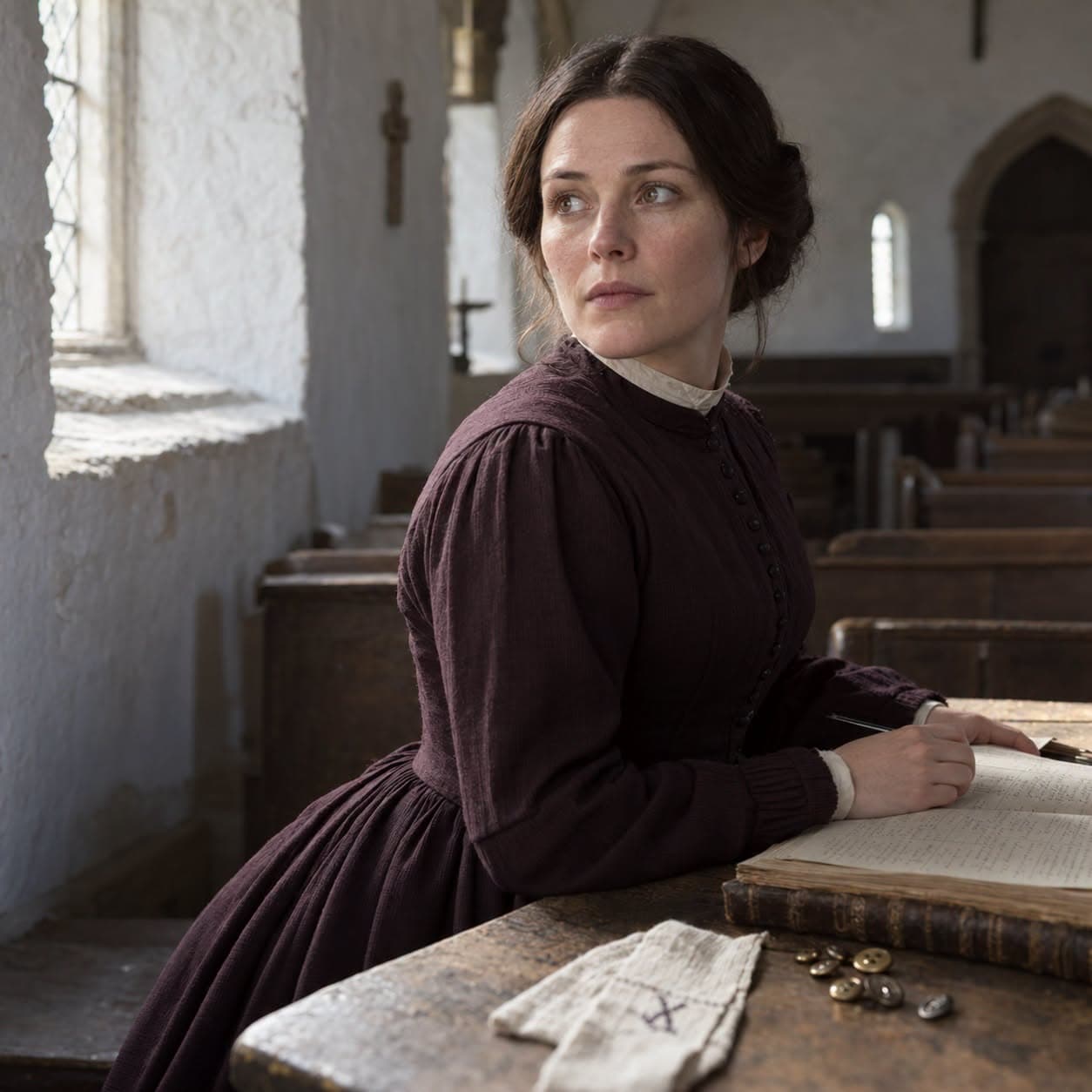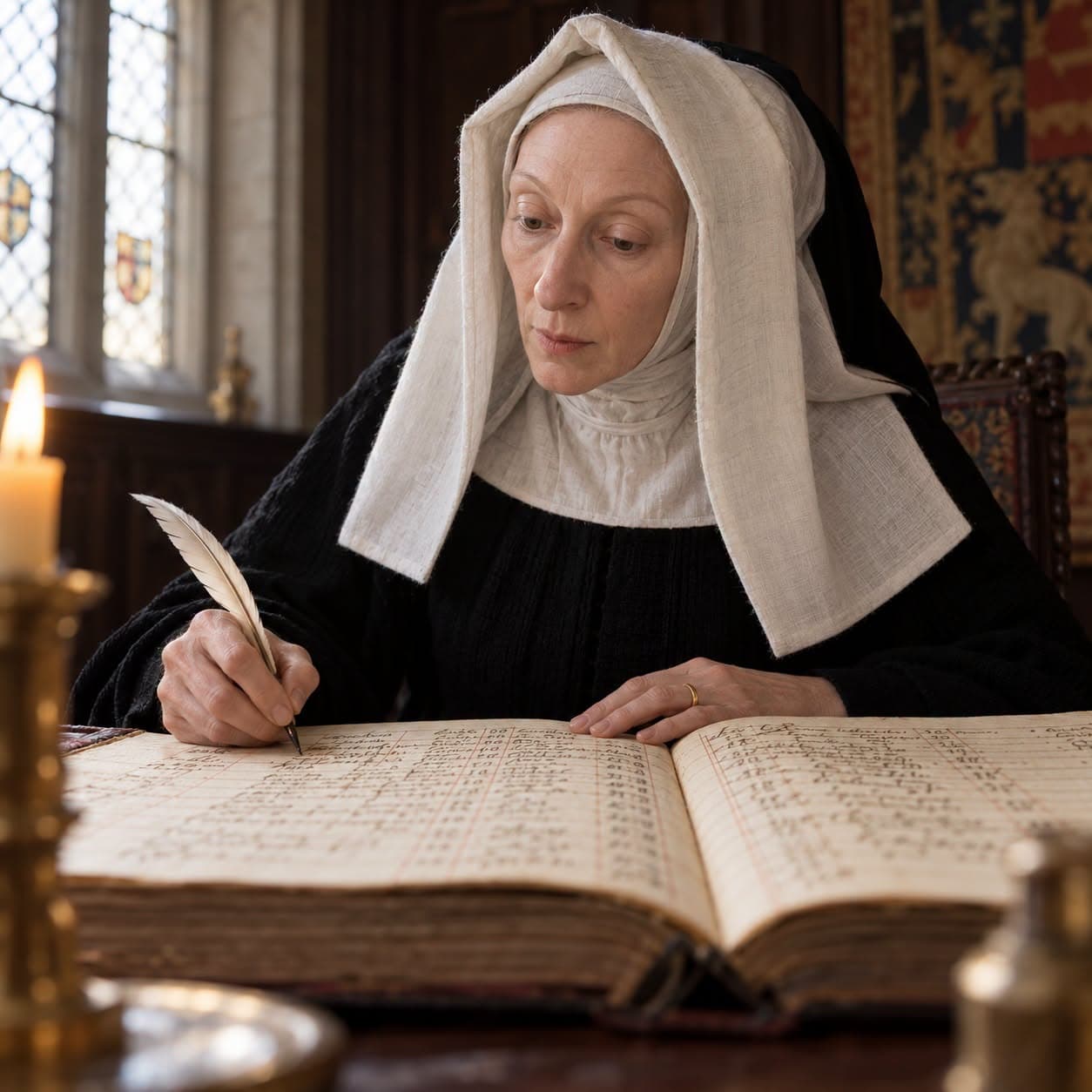
Margaret Beaufort signed her name at the foot of almost every page of her household accounts. When she died, other people had to speak for her. The college she wanted was not in her written will.
On 22 October 1512, at Lambeth, the Archbishop of Canterbury granted probate of Margaret Beaufort's will, together with her spoken wishes for a college. She had been dead for three years. Her son Henry VII was dead too, and her grandson Henry VIII was king. In Cambridge, the college she had wanted to establish was still being brought into being. Royal kinship had given her extraordinary influence. It could not settle the paperwork in her absence.
The accounts bring her back into view on a smaller scale. On 24 April 1503, thirteen shillings and fourpence went to John Fawne, her scholar at Cambridge, for a quarter of a year. Above that payment was the cost of carrying ale to Coldharbour, her house in London. Below it were rewards to a hardwareman and to a servant of her husband. Learning had its place among the expenses of keeping a household running. The scholar needed paying, just as the ale needed delivering.
Her clerks kept the books. Margaret put her name beneath their work. Almost every page carries her signature, a repeated reminder that the money belonged to a woman who took an interest in where it went.
She had already refounded God's House in Cambridge as Christ's College and endowed teaching in divinity at both Cambridge and Oxford. Religion ran through these gifts. Supporting learning meant providing for the teaching and preaching of the Christian faith, work intended to continue long after the person paying for it had been buried.
Her friend and religious adviser John Fisher, Bishop of Rochester and Chancellor of Cambridge University, encouraged another foundation. The old Hospital of St John the Evangelist had fallen into disrepair. Its site and resources could form the beginning of a college. It was a practical proposal with a great deal of practical work attached: permissions to secure, an existing institution to dissolve, buildings to provide and an income to maintain the people who would use them.
Margaret died on 29 June 1509, at the Abbot of Westminster's house, only days after attending her grandson's coronation. A month later Fisher preached in her memory. "Every one that knew her loved her," he said, "and everything that she said or did became her." He was also one of the executors responsible for carrying her wishes forward. There was the public work of commemorating the king's mother, and then there was the much less accommodating business of getting things done.
The college had a foundation charter by 9 April 1511. Yet the will Margaret had sealed in June 1508 said nothing about it. She had given her directions by word of mouth. The witnesses who later gave evidence could describe what she had said, but they could not point to a line of it in that document.
Her voice had to reach the court through theirs.
Church law allowed spoken last wishes to stand if they could be proved. Her directions were set down in a memorandum for founding the college, and the archbishop's court proved them alongside the will. What Margaret had said now carried the weight of what she had written. It was one stage, not the finish. Further proceedings followed in Chancery.
There her executors were authorised to receive the revenues of estates held in trust for the performance of her will. The money could help build, furnish and endow the college. There were two distinct things to secure: recognition of her wishes, and access to the income that would make them possible. A college could have a charter and still need money for almost everything a charter promised.
That income came with a limit. The estates were ultimately to pass to Henry VIII as her heir. The executors could draw on their revenues while carrying out her will; the college had no permanent claim to the land. Within a few years the king's auditors and counsel were pressing his rights, the lands had to be given up, and other funding had to be found. Fisher's task continued as one source of support gave way to another.
Margaret's possessions helped too. Money she had lent, and the proceeds of selling her plate, jewels and household goods, went to the foundation. The contents of her houses were turned into the means of maintaining another household, this one full of scholars. The account books had once recorded what came into her keeping. Now priced lists of her belongings helped determine what could come of it.
Around First Court the college acquired its gatehouse, hall and chambers, with the old hospital chapel adapted for its use. These were the things behind the legal language: somewhere to eat, somewhere to live, somewhere to pray. Fisher and the other executors had to carry an intention through to each of them. Margaret could no longer sign the next page or settle the next difficulty herself.
St John's opened in 1516, seven years after her death. Her account books survived with it, the payments to servants, suppliers and a Cambridge scholar still set down in their columns and her name still at the foot of the pages. They are kept now in a college that began as something she said.