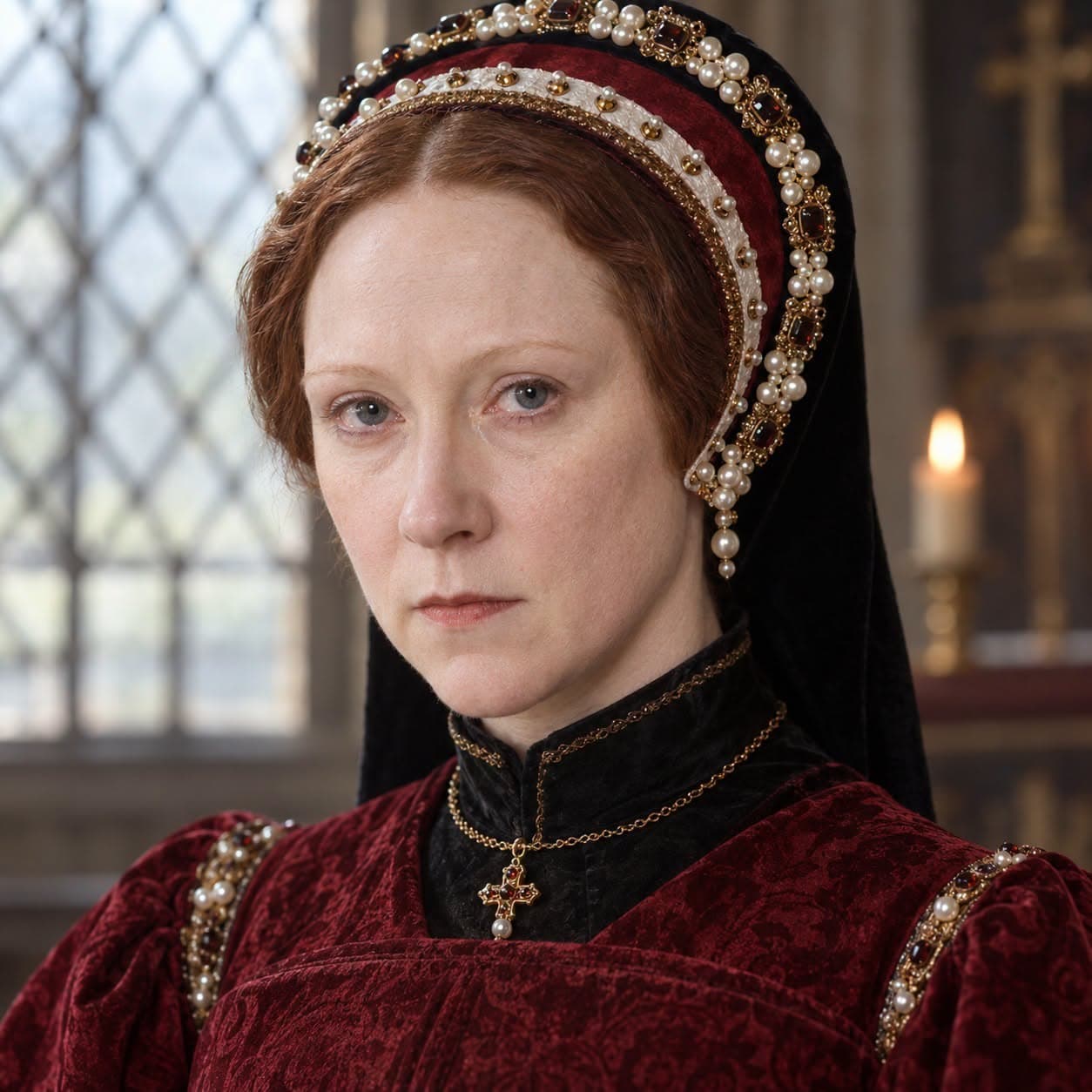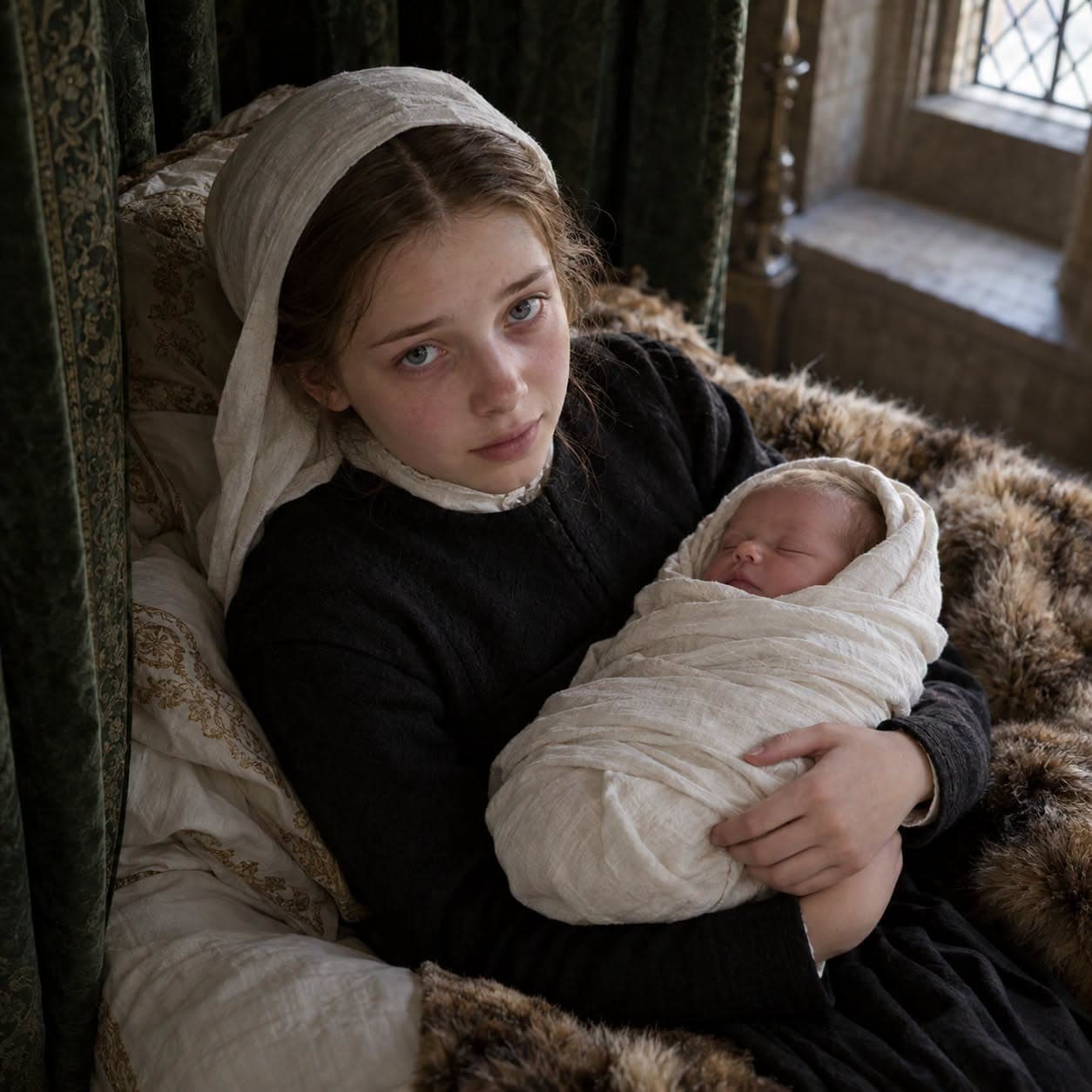
She was thirteen when she gave birth to him, and his father was already dead. Now her son was riding through London in purple velvet, with a canopy above his head. Margaret Beaufort was forty-two. The child had become the king.
On 29 October 1485, Henry VII was to process from the Tower of London to Westminster on the eve of his coronation. His gown was to be furred with ermine. Heralds were to go before him, and four knights on foot were to carry the canopy. Tomorrow he would be crowned in Westminster Abbey. Today London was being shown its new king, twenty-eight years old and back in England for less than three months.
It was a handsome arrangement for a family whose earlier journeys had so often been made for safety.
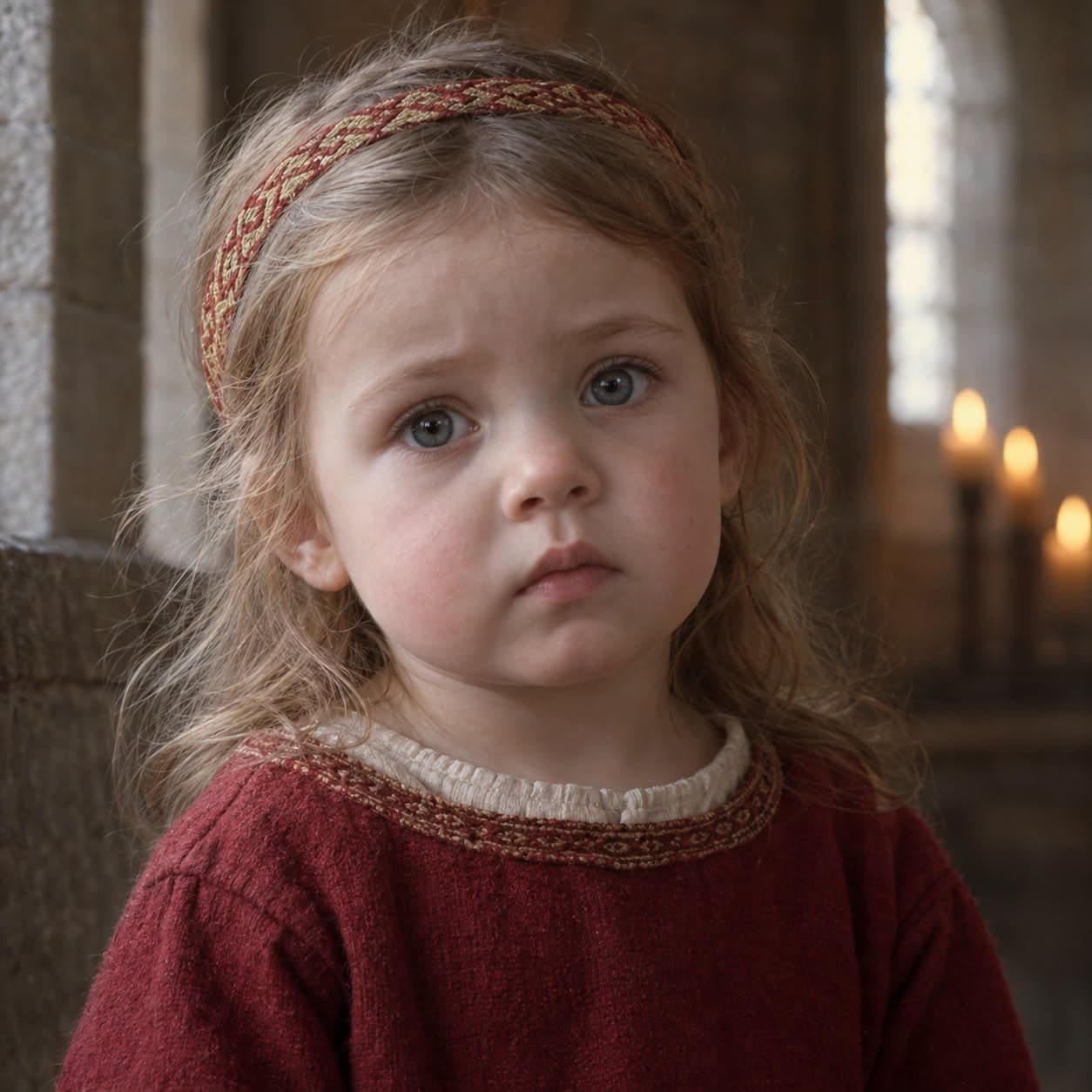
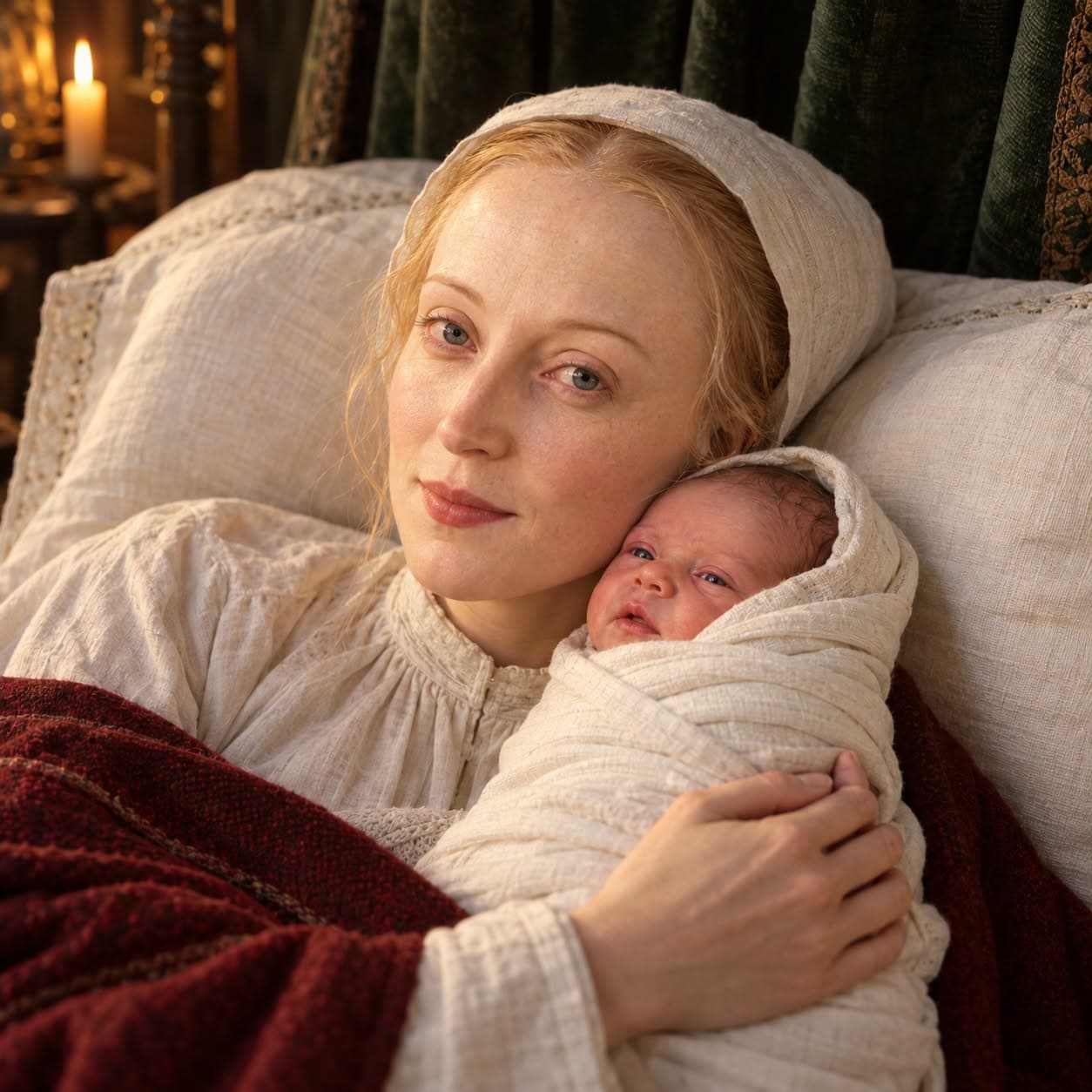
Henry had been born at Pembroke Castle on 28 January 1457. His father, Edmund Tudor, Earl of Richmond, had died of plague at Carmarthen in November 1456, leaving Margaret pregnant and widowed at thirteen. Edmund's brother Jasper took her under his protection. Before he became the uncle who accompanied Henry through exile, he was the brother-in-law who sheltered the boy's mother when her husband could no longer do it.
Margaret was an heiress, the daughter of a duke, descended from John of Gaunt. Those were advantages when adults were arranging her marriage. They offered rather less assistance when she had to give birth. She was still so small that the survival of mother and child was afterwards spoken of as something close to miraculous. Both lived. Henry would be her only child, through two further marriages and more than half a century of life.
They did not spend those years together. Henry grew up in Wales, passing into the wardship of William Herbert, a supporter of the Yorkist king Edward IV. A noble child's wardship carried rights over property and marriage; it was a valuable thing for a king to give a useful man. Margaret had borne the boy. That did not mean she could decide where he lived.
In 1471, when Henry was fourteen, Jasper took him out of the country. They sailed from Tenby and found refuge in Brittany. The child who had been sheltered at Pembroke was now old enough to need shelter across the sea. He would spend the next fourteen years abroad, while his mother remained in England.
Getting him home did not originally mean making him king. Margaret worked for his return to royal favour and the recovery of an inheritance. In 1482 she negotiated with Edward IV for terms that offered a way back. A future in England, with lands and the king's permission to enjoy them, was substantial enough to negotiate for. There was no canopy in that bargain.
Then Edward died, and his brother took the throne as Richard III.
At Richard's coronation in July 1483, Margaret carried the train of his queen, Anne Neville. It was an honour, and a public one. She had a place close to the crown, although it belonged to another family. Her husband, Thomas Stanley, was a powerful courtier; marriage to him had helped give her access to the Yorkist court. She could serve its ceremonies as well as negotiate with its king.
Within months she was working to overthrow him.
Her physician, Lewis Caerleon, carried messages to Elizabeth Woodville, Edward IV's widow, who had taken sanctuary at Westminster with her daughters. Through that connection Margaret helped negotiate a marriage between Henry and Elizabeth's eldest daughter, Elizabeth of York. A mother with an exiled son and a mother sheltering her daughters could offer each other something neither possessed alone. Their children would marry, and Henry would challenge Richard for the throne.
The rising in the autumn of 1483 failed. Henry's attempted expedition ended in a return to Brittany. The promised marriage remained a promise between people who could not yet safely come together, let alone govern England. Margaret's contacts had opened a possibility. They had not delivered a kingdom.
In the parliament of early 1484, her lands and goods were transferred to Stanley. Richard placed her under her husband's supervision and restricted her household. The woman who had used her position to send messages and build alliances was to have less freedom to do either. Stanley retained the property and responsibility for controlling its owner. It was a particularly domestic arrangement for dealing with a political enemy.
On 7 August 1485 Henry landed in Wales with an army. On 22 August, at Bosworth, he defeated Richard, who was killed in the battle. Jasper had brought his nephew through exile. Margaret had helped build the alliance that made him a candidate for the crown. Neither of them could fight the battle for him.
Now Jasper was to ride behind him towards Westminster. The uncle who had once taken him away from England would follow him through its capital, with heralds ahead and the ceremony of kingship around him. Margaret's son had needed another man's permission to come home. On 29 October, the plan was for men to walk beside his horse, carrying a canopy over him.
The crowning was still a day away. In July 1483 Margaret had carried a queen's train into the ceremony that established Richard's kingship; tomorrow the king in the Abbey would be her own son. For now there was the planned journey from the Tower to Westminster, the ermine and the purple velvet, and the grown man meant to ride beneath the canopy. She had been thirteen when she bore him. He was twenty-eight now.