She was twelve when she left her twin sister to join her husband in Spain. Her father was king of France. He had arranged a royal marriage. A country for the couple would take rather longer.
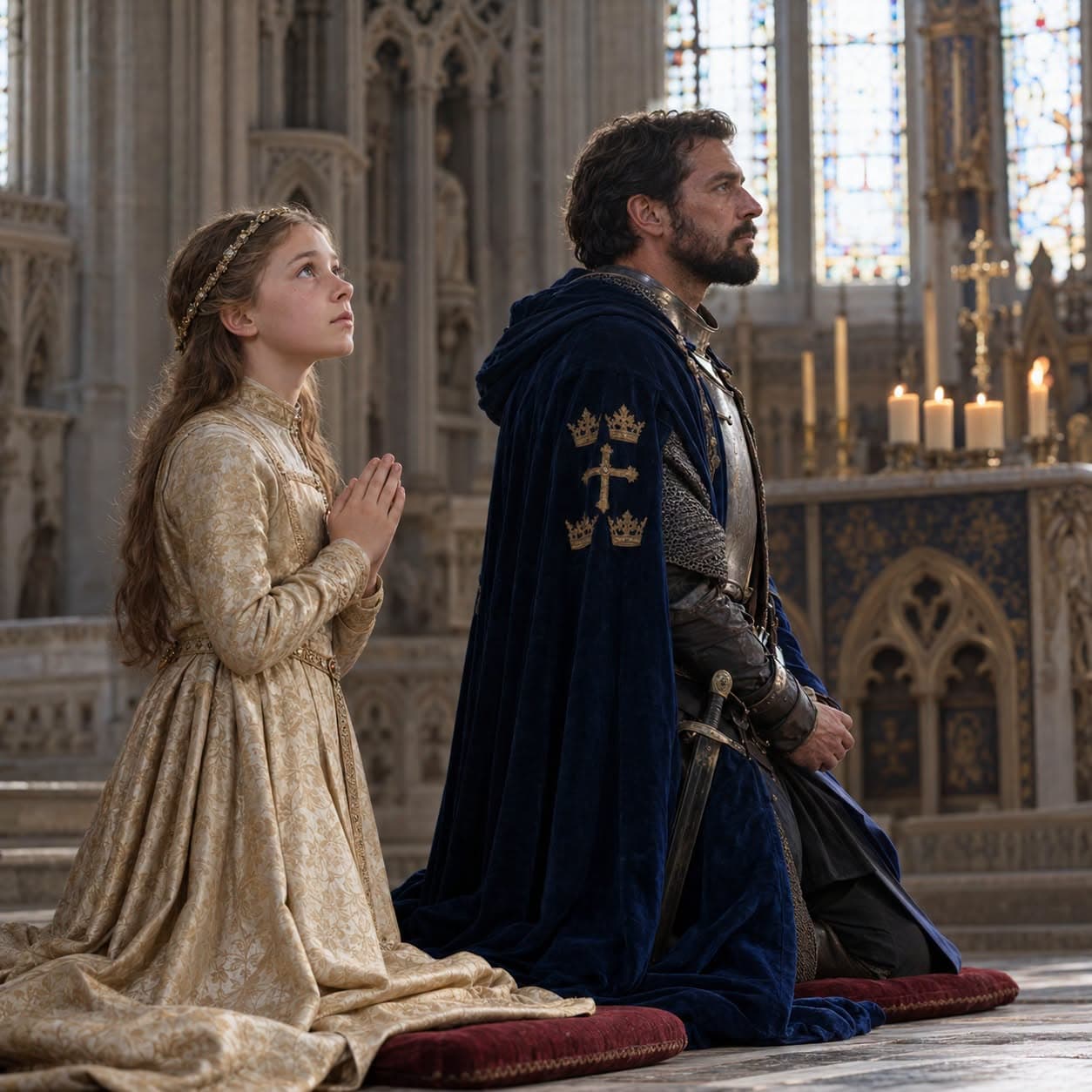
On 25 October 1739, Louise-Élisabeth, the eldest daughter of Louis XV and Queen Marie Leszczynska, married the nineteen-year-old Infante Philip of Spain at Alcalá de Henares. They had already been married by proxy at Versailles on 26 August, twelve days after her twelfth birthday. The French ceremony had made her a wife while she was still at home. The Spanish one brought her into the family whose future she was now expected to share.
At Versailles she had been Babette. She called her parents "papa-roi" and "maman-reine", names that brought the monarchy down to a size a child could live with. She and Henriette had been born there together in August 1727 and brought up at court. Their rooms were in the Princes' Wing, overlooking the South Parterre. Before there was a Spanish marriage, there were two sisters growing up in the same palace, with the same parents and the same view.
The family was already accustomed to separation. Four of their younger sisters had been sent away to the abbey of Fontevraud because keeping so many princesses at court was considered too expensive. The twins had stayed at Versailles with their parents and their younger sister Adélaïde. Louise-Élisabeth's departure would separate the twins. Of Louis XV's eight daughters, she would be the only one to marry.
The match had a history older than the bride. In 1725 Louis XV had broken off his engagement to a Spanish princess, Marie-Anne-Victoire, and married Marie Leszczynska instead. Relations between the French and Spanish branches of the Bourbon family needed repairing. Now his eldest daughter was to marry a son of Philip V of Spain. Her younger brother, the Dauphin, was intended to marry Philip V's daughter. One generation's broken engagement was being answered with marriages in the next.
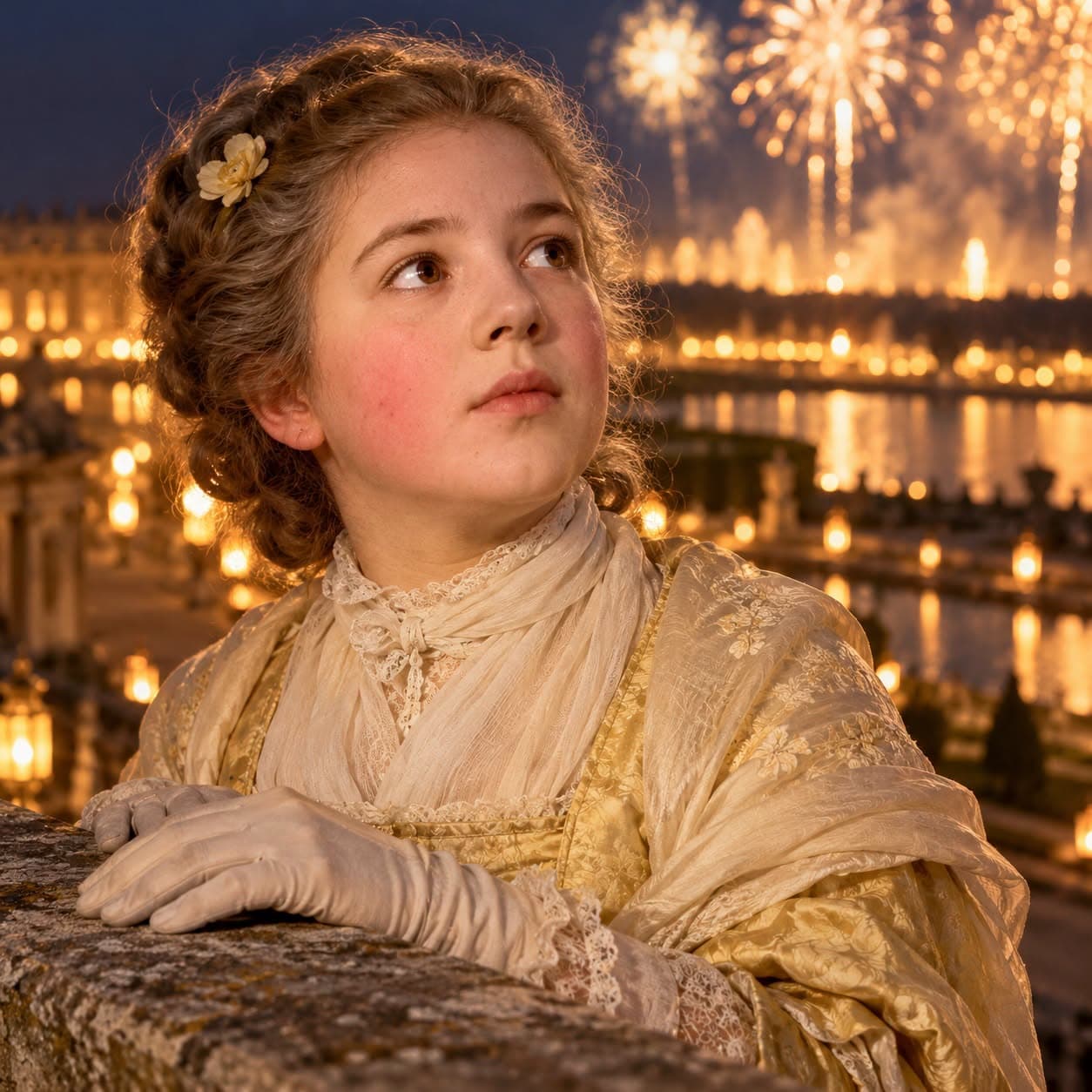
France celebrated accordingly. For the August wedding at Versailles there were illuminations and fireworks above the terrace beside the water parterres. Paris had celebrations of its own, arranged by the city and the Spanish ambassador. A marriage could be a public triumph well before the bride had begun living with her husband. Louise-Élisabeth's new title in France was Madame Infante. She had scarcely turned twelve, and already there was another name to get used to.
Then she had to say goodbye. Parting from Henriette was particularly difficult. The alliance required one sister in Spain while the other remained in France, and all the magnificence surrounding the wedding did nothing to alter that arrangement. Louis XV could be affectionate towards his daughter and still send her away. In a royal family, tenderness and diplomacy could occupy the same room quite comfortably. It was the child who had to leave it.
At Alcalá, the bridegroom waiting for her was a younger son of Spain's king and his second wife, Elisabeth Farnese. Philip was a prince, but he was not the heir to the Spanish throne. Nor did he yet have an Italian state of his own. Whether he would obtain part of the Farnese inheritance or some other territory remained unsettled. The wedding joined two branches of a ruling family without settling where the newly married couple would eventually rule.
Her place in the Spanish household could, however, be arranged in considerable detail. A contract for her food service took effect on the very day of the October wedding. It specified soups, veal, poultry and a cream tart among the dishes to be provided. The daily price was fixed at 600 reales. Her meals had a budget and a menu. Her husband's territorial prospects were rather less precisely set out.
Until those prospects were settled, the young couple held a relatively marginal place at the Spanish court, and Elisabeth Farnese kept a close and sometimes burdensome watch over them. She was Philip's mother and his most determined advocate, with ambitions in Italy that would shape both their lives. Louise-Élisabeth had left one mother's household for another, and this one belonged to a queen with plans.
When war took Philip away from Spain in 1742, Louise-Élisabeth began pressing France for troops and money, writing to her father and Cardinal Fleury, initially under her mother-in-law's dictation. Later she pursued her husband's interests in hard-edged letters of her own. Her father answered with general reassurances. The daughter whose marriage had helped bind the two courts together was now asking that connection to produce something practical.
The peace of 1748 gave Philip Parma, Piacenza and Guastalla. Louise-Élisabeth returned to France before joining him in their new dominions, and this time she came away with French financial support. Henriette was still at Versailles. The sisters saw each other again, and Louise-Élisabeth stayed for months before leaving for Italy in 1749. She had come back as a duchess, with a household and political interests of her own, while still being the daughter and sister who had gone away at twelve.
Henriette died in 1752, aged twenty-four, and was buried at Saint-Denis. Louise-Élisabeth continued to return to France, seeking support for her family. During her final stay she contracted smallpox and died at Versailles on 6 December 1759. She was thirty-two. She had been Babette, then Madame Infante, then Duchess of Parma. At Saint-Denis she was buried beside her twin.