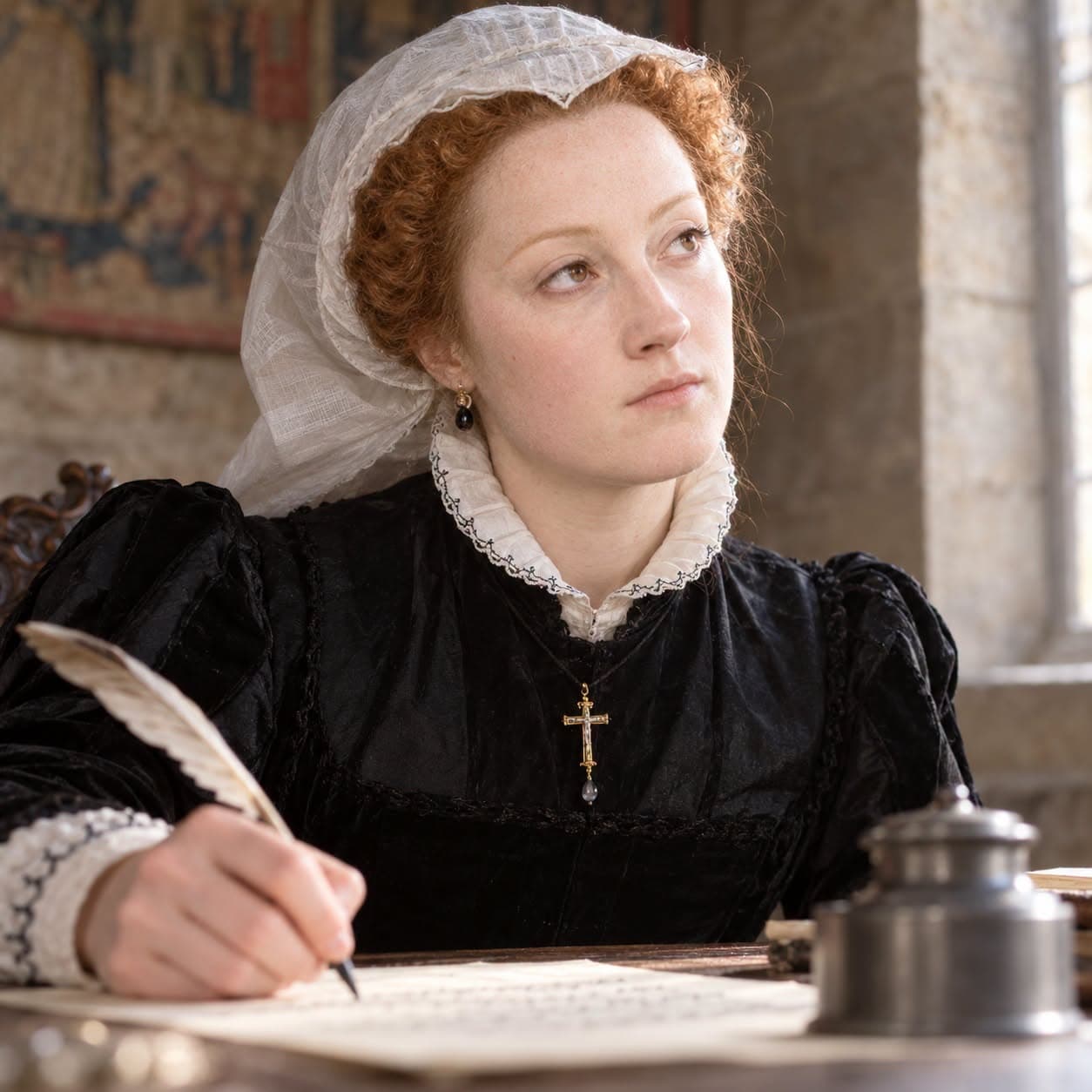
Mary was twenty-eight and had spent more than three years as a prisoner in England. Now the man who spoke for her was about to lose his own freedom.
On 24 October 1571, John Lesley, Bishop of Ross and ambassador for Mary, Queen of Scots, was brought before members of Elizabeth I's council and sent to the Tower of London. A scheme involving a royal marriage and a Spanish invasion was coming apart. Mary remained a prisoner, while the people who had worked for her release were being questioned about what they had done.
She had come to England in 1568 after losing her Scottish throne and suffering defeat in the attempt to recover it. Her son James had been crowned in her place. Elizabeth had the power to help her, but Mary also had a claim to Elizabeth's crown. She was Henry VII's great-granddaughter and a Catholic. Giving such a woman shelter was one thing. Allowing her the freedom to gather support was quite another.
Mary could write. She could appoint representatives, send instructions and seek help abroad. Captivity had taken away her freedom of movement, but she continued to conduct the business of a queen. The difficulty was that her business had to travel through other people's hands.
Lesley was one of those hands. He had already spent four months in confinement in London when he was released in May 1570, and Mary wrote from Tutbury to William Cecil, Elizabeth's principal adviser, to thank him. She asked Cecil to help the bishop obtain an audience with the English queen, and she asked something for herself as well: "I am bold thus priveli to pray yow to let me havve yowr advis." A queen was asking her cousin's minister, quietly, how best to please her cousin. She signed herself his "richt assured good frind".
By the spring of 1571, another route was being pursued. Roberto Ridolfi, an Italian banker, carried proposals to the Pope and Philip II of Spain. Spanish troops were to help overthrow Elizabeth, Mary was to take the English throne, and she was to marry the Duke of Norfolk. The scheme offered its supporters a Catholic monarchy and Mary a crown as well as release. She authorised the appeal for foreign intervention.
Her confinement did not make her politically harmless. Nor did agreeing to such a scheme give her command of the men, money and armies needed to carry it out. Those remained elsewhere, beyond her reach, while the letters and messages connecting her to them could be seized much nearer home.
The investigation reached messengers and Norfolk's secretaries. Under interrogation, they supplied information that exposed the arrangements. The promised intervention never became a rescue. What did reach Mary's household was an order for closer confinement.
On 5 September, Cecil, now Lord Burghley, wrote to the Earl of Shrewsbury, her custodian. Mary was to be told that her dealings with Norfolk and others were known, and pressed to answer. Elizabeth wanted her strictly kept. An endorsement on the letter concerned reducing the Scottish queen's household to sixteen people of all kinds. Three days later, a list was drawn up at Sheffield of the officers, servants and gentlewomen still attending her.
A queen's household meant the people who attended her, carried out her business and made daily life possible. The instruction brought the consequences of the conspiracy into that small world. Abroad, men had discussed armies and a change of monarch. In England, the authorities were counting how many people Mary should be allowed to keep around her.
Lesley, already detained for months, was brought before councillors at the Lord Mayor's house on 24 October. The Earl of Bedford delivered Elizabeth's accusation that he had worked against her. He would no longer be treated as an ambassador. Mary herself was dismissed as a "pretended Queen justly deprived from her Realm". She had sent him to speak with a sovereign's authority. The men questioning him did not accept that she had any.
He claimed the protection of his office and his safe-conduct. He was sent to the Tower and threatened with the rack. The man who had been her hands in London became another prisoner answering the English government's questions.
He had spoken for her. Now he had to answer for himself.
On 26 October he confessed the outlines of the conspiracy. Five days later he explained its particulars in detail. On 8 November one of his examiners reported that he now held the worst opinion of her character. Her representative's words were reaching Elizabeth's ministers as testimony, supplying evidence against the enterprise that was supposed to free her. Norfolk would be executed the following year. Mary remained confined.
Yet Lesley still tried to advise her. On 3 November he managed to send a letter urging her to write to Elizabeth and ask her to reject the statements of Mary's enemies. The woman who had once asked Cecil for his advice in private was being advised again, by the one man whose hands were now tied. The letter was intercepted before it reached her.