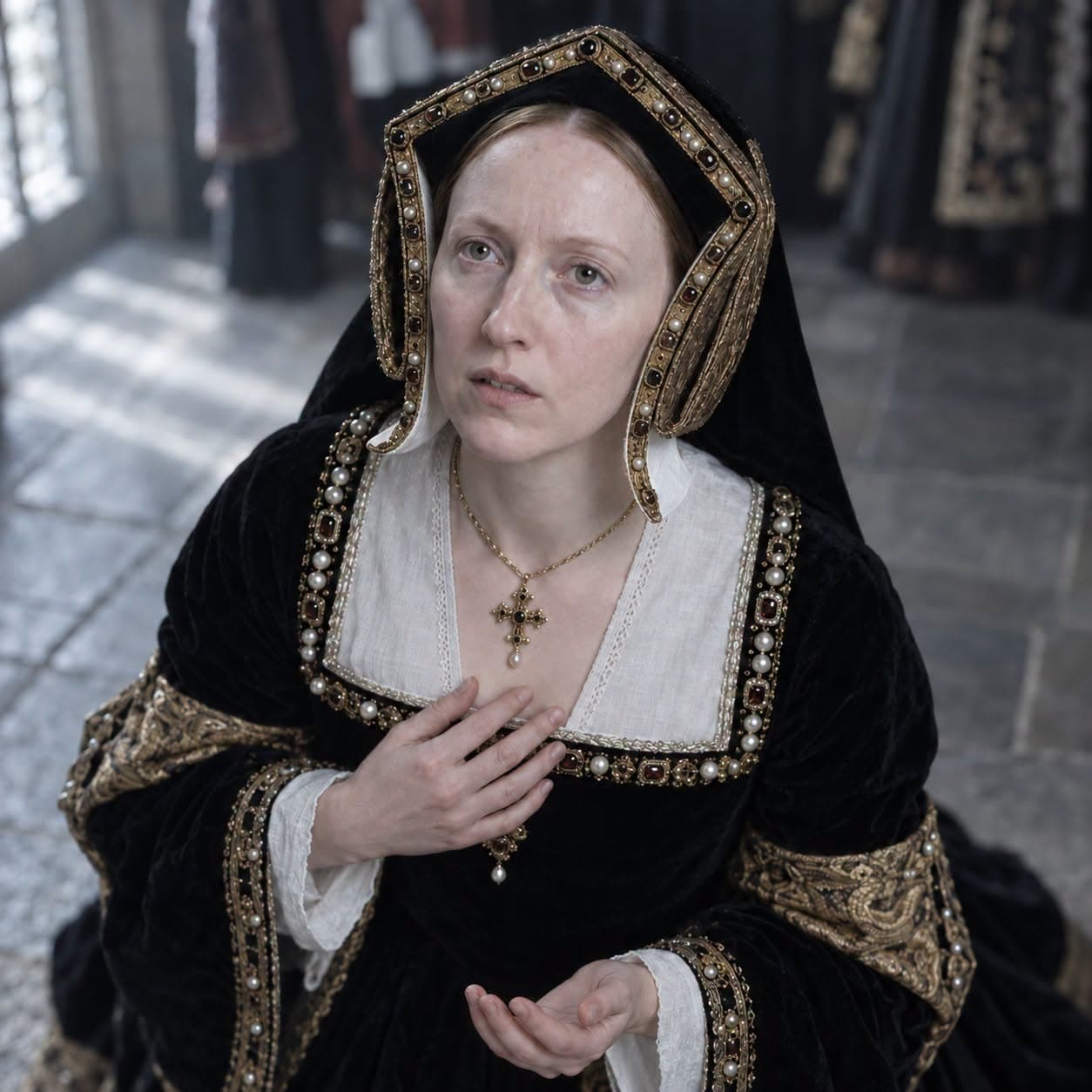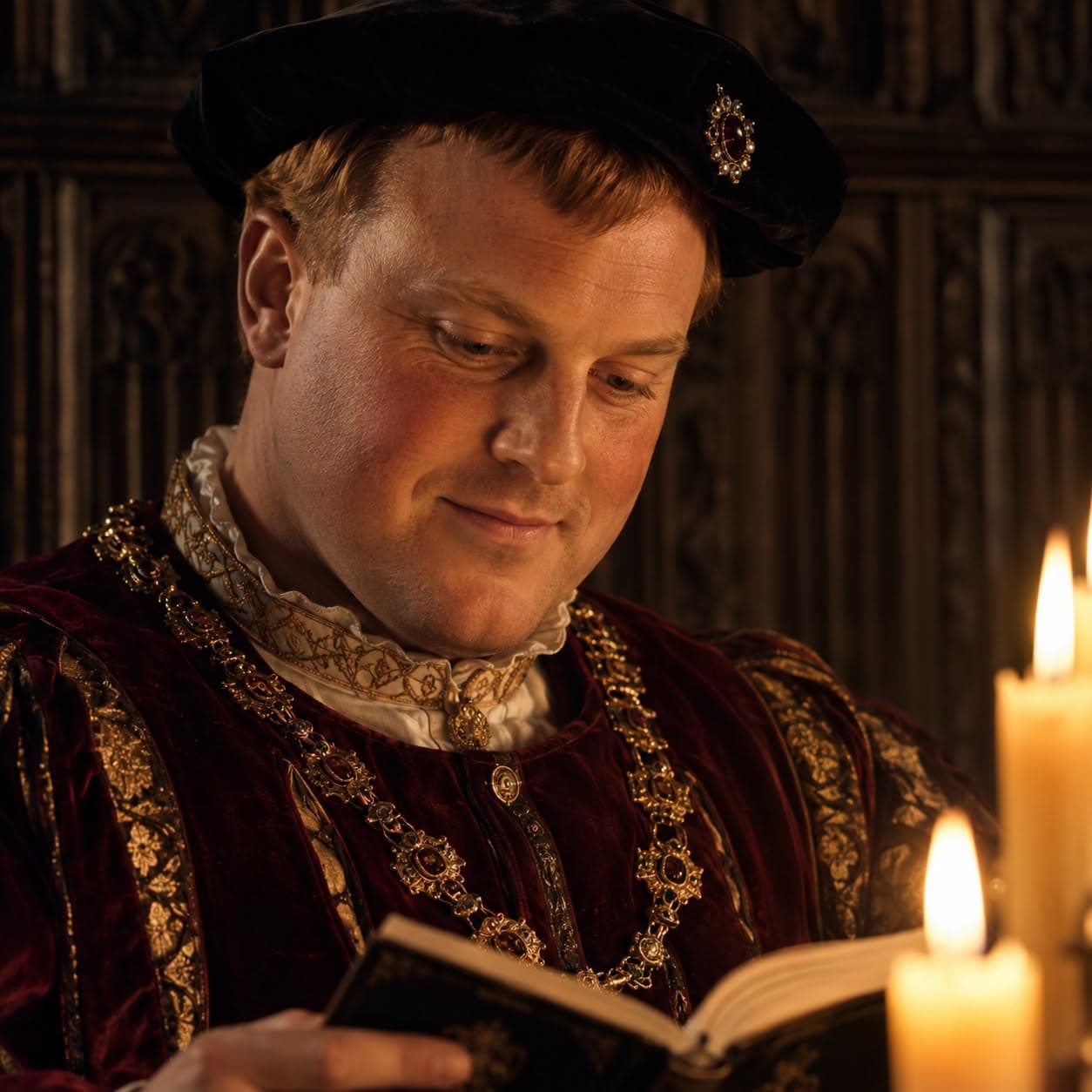
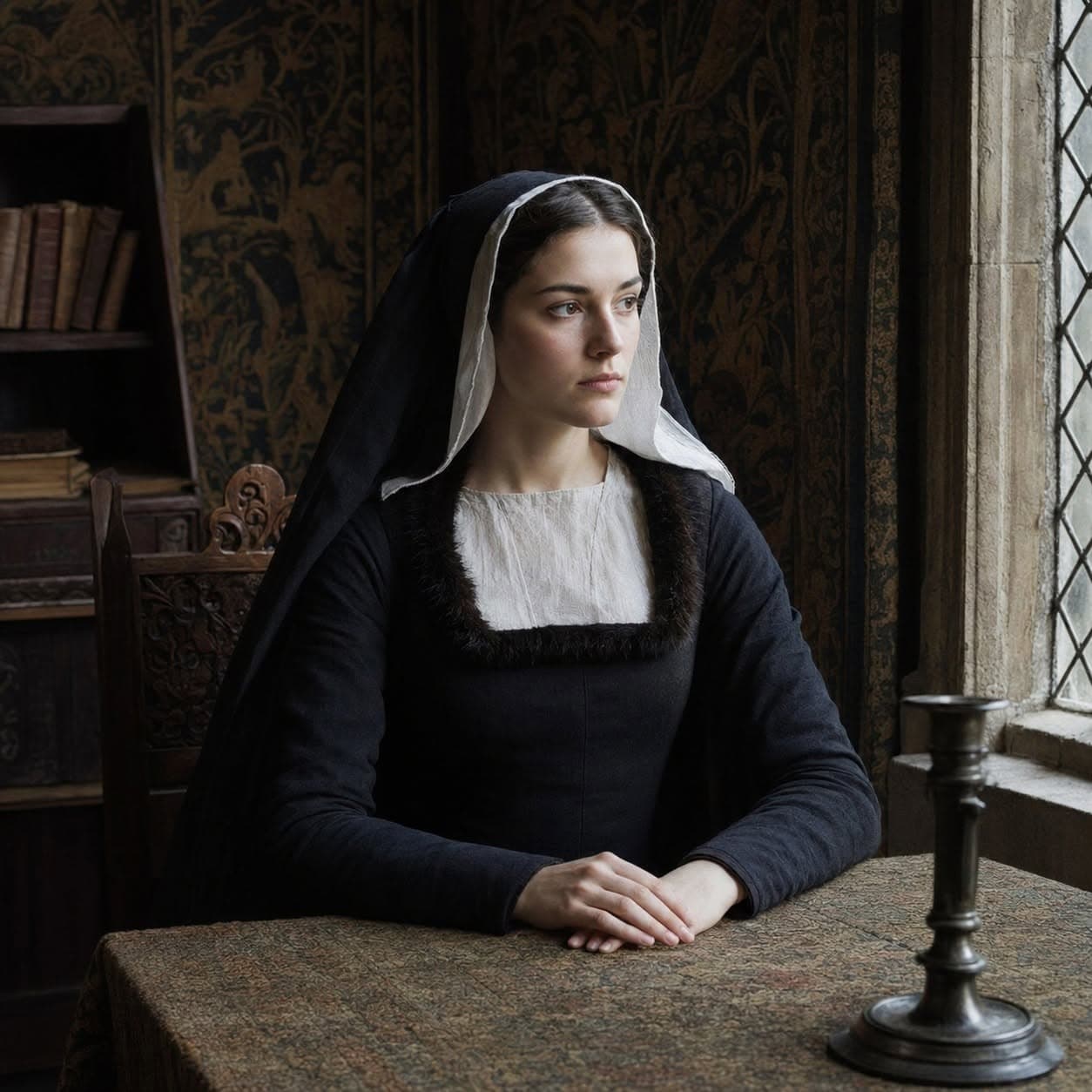
She made the same choice twice. Her daughter made it once. Between the three of them they changed the succession of England. Nobody called it strategy. Nobody had a charge for that.
Jacquetta of Luxembourg was born around 1415, the eldest daughter of Pierre de Luxembourg, Count of Saint-Pol, and she came into the world with the kind of lineage that opened every door in northern Europe. Her family had connections to the French crown, to the Burgundian court, and to the most powerful noble houses on the continent.
She was educated, multilingual, and by the time she was sixteen or seventeen she had been given in marriage to John, Duke of Bedford, regent of France and brother of Henry V. Bedford was one of the most powerful men in Europe. His household was among the finest in England. His library was extraordinary. His position placed Jacquetta at the centre of English governance of France at the precise moment when that governance was beginning to unravel.
She was a duchess before she was twenty. She had access to everything.
Bedford died in September 1435. He was forty-six. He left Jacquetta a widow at approximately twenty years old, wealthy by the terms of her jointure, ranked as a dowager duchess, and in possession of every connection his world had given her and none of the power those connections had rested on. She had no children. She had no fixed position at court beyond the courtesy owed to Bedford's widow. She had a royal pension, the goodwill of Henry VI's government, and the specific problem of every widowed noblewoman of the period: that her rank existed in relation to a man who no longer existed, and the question of what happened next was entirely outside her control unless she controlled it herself.
Within two years she had married Richard Woodville. He was a knight in her own household, the son of Bedford's chamberlain, capable and ambitious and entirely without the rank she had occupied as a duchess. The court was baffled and then scandalised. The marriage required royal permission and she had not obtained it. Henry VI fined her a thousand pounds. The fine was paid and the couple were received back at court within a year and the scandal dissolved because scandals of that kind dissolved when there was nothing left to feed them. What the court read as passion was something considerably colder.
Jacquetta had been the widow of one of the most powerful men in England and she understood precisely what that widowhood meant without a protector. Richard Woodville was not a great match. He was the right instrument. She had decided, having seen what inherited rank looked like when it was removed, that she would build something she owned rather than hold something she had been given. The court saw a duchess marrying beneath herself. She saw a family beginning.
The family she built became the most consequential of her generation. Richard Woodville rose steadily, becoming Lord Rivers and eventually an earl. Their children were numerous, well-placed, and carefully deployed, with sons guided into military and administrative positions and daughters steered into marriages with the highest nobility in England. Jacquetta spent the 1440s and 1450s at the heart of the Lancastrian court, ranked immediately below the queen, intimate with Margaret of Anjou across two decades of friendship that survived the catastrophes of Henry VI's reign.
She was present at every significant event. She accumulated the specific currency that formal rank could not confer and could not remove: she knew everyone, she understood everything, and she said only what was necessary. Her son Anthony was becoming one of the most cultivated men in England, tournament champion and translator, a figure of European reputation. Her daughter Elizabeth was at court. The network Jacquetta had been building since the death of Bedford was complete and it was entirely hers.
The precise circumstances of Edward IV's approach to Elizabeth Woodville have been debated ever since. What is not debated is where the marriage took place, at what hour, and who was present. It took place at Grafton Regis in Northamptonshire, at dawn, with three witnesses. One of them was Jacquetta. She had married without royal permission in 1437 and paid the fine and recovered everything. She was in the room while her daughter made the same choice and she said nothing publicly before or after. She had done this before. She understood the cost and the recovery and the position it would build. The court would be baffled, then scandalised, then forced to accommodate itself to a fact it could not undo.
She had watched that sequence once from the inside. She watched it again.
What followed was the period of maximum Woodville ascent and maximum Woodville danger. The family rose at a speed that alarmed the established nobility and generated the specific kind of resentment that powerful men carried quietly and acted on when circumstances allows. The Wars of the Roses required navigation of a kind that destroyed most of the families who attempted it. Jacquetta navigated.
When the Lancastrian cause collapsed at Towton in 1461 and Edward IV took the throne, the Woodvilles were Lancastrian by history and Yorkist by the marriage at Grafton Regis. Jacquetta managed that transition with the efficiency of a woman who had spent thirty years building relationships across every available faction. Her husband Richard became a figure in the Yorkist court. Her daughter became its queen. The family that had been manageable became, within three years of Towton, the most politically significant house in England after the crown itself.
It was this that Warwick could not accept. In 1469, having lost the political argument and found his influence displaced by a family he regarded as upstarts with royal access, he reached for the one weapon that required no evidence, because he had run out of the kind that did.
Witchcraft.
His associate Thomas Wake produced a lead figurine before the council, a small model of a man in armour broken at the middle and bound with wire, and swore it had been used by Jacquetta to bewitch Edward IV into the marriage that made her daughter queen. The council investigated. The charge rested entirely on Wake's testimony and the figurine. Jacquetta appeared before the council herself and denied everything. The investigation found nothing.
Within months Warwick had released Edward from captivity, his political position had collapsed, and the charge against Jacquetta was formally dismissed. The figurine was ordered destroyed. What Warwick had called witchcraft the council could not prove, because it had not been witchcraft. It had been thirty years of patient, deliberate construction that had no name in law and no charge attached to it.
She outlasted him. Warwick died at Barnet in April 1471. Edward IV was restored. Elizabeth was queen again. The grandchildren Jacquetta had watched born into the royal nursery were secure. She had survived Bedford's death and the Woodville marriage scandal and two reversals of the Yorkist throne and a formal witchcraft investigation before the king's council.
She died in May 1472 and was buried in Reading. Her will was modest. She had not asked for ceremony. She had never needed it to know what she had built.