The bells rang across Brussels on 18 July 1501 for a girl who would wear three northern crowns before she turned twenty-five, and lose every one of them long before she died.
Isabella of Austria was born into a family already coming apart. She was the third child of Philip the Handsome and Juana of Castile, granddaughter of Emperor Maximilian I on one side and Ferdinand and Isabella of Spain on the other, born into more royal blood than almost anyone alive in Europe that summer. It did not buy her a stable childhood. Her parents were often away in Spain, her father died when she was five, and not long after, her mother was declared mad and confined in Castile by Isabella's own grandfather Ferdinand. She was raised by her aunt Margaret of Austria in the Netherlands, with her grandfather Maximilian standing in as a distant substitute for the father she'd lost.
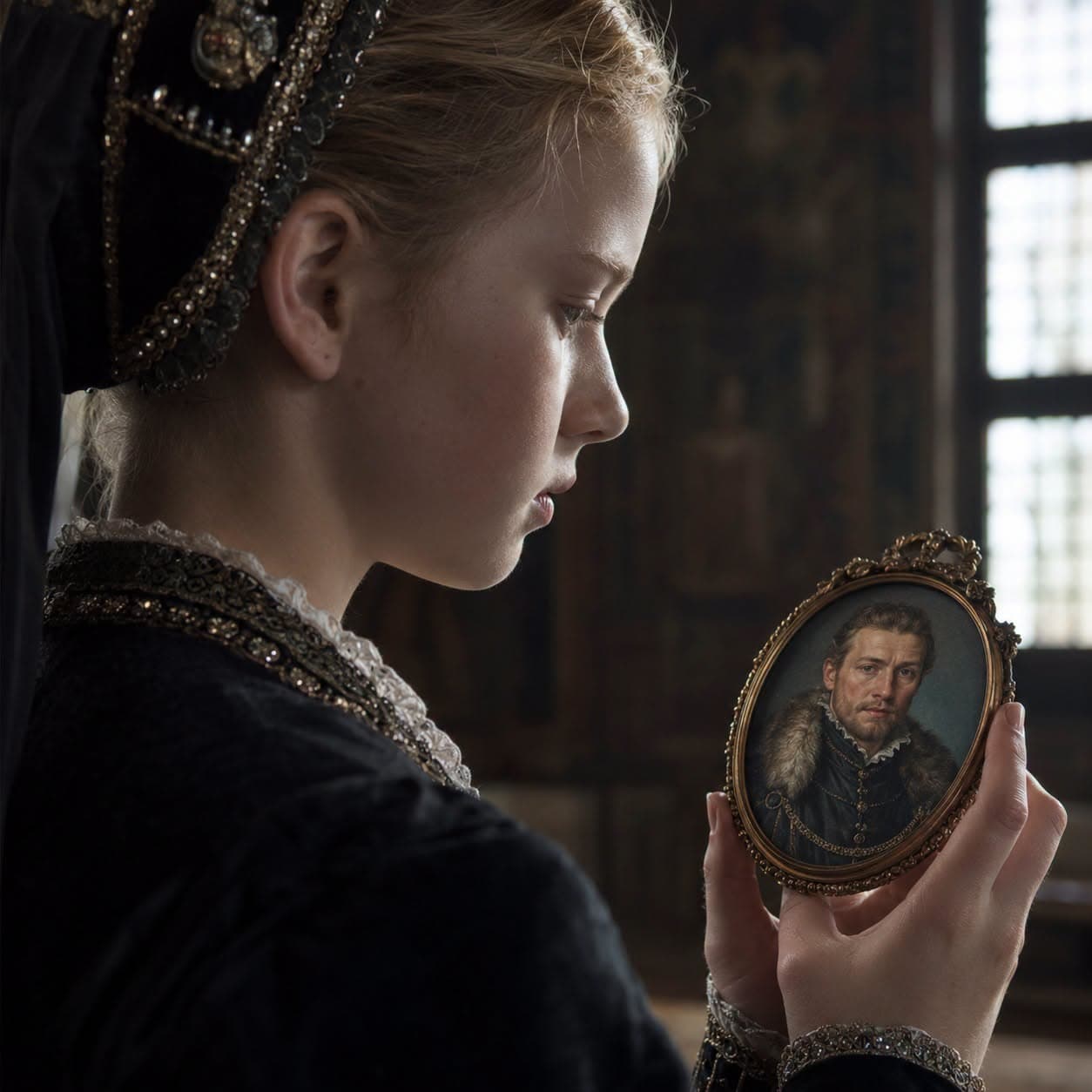
She was married before she had ever met her husband. On 11 July 1514, one week before her thirteenth birthday, she stood at a proxy wedding in Brussels, her own grandfather, Emperor Maximilian, standing in for the groom, thirty-three-year-old Christian II of Denmark, who was not present at all. She remained in the Netherlands for another year, said to have fallen for a painted portrait of him, before finally sailing for Copenhagen in July 1515, surviving a storm that scattered her escort fleet along the Danish coast. She did not actually meet her husband, or have the marriage ratified, until 12 August 1515, more than a year after she had already been legally bound to him.
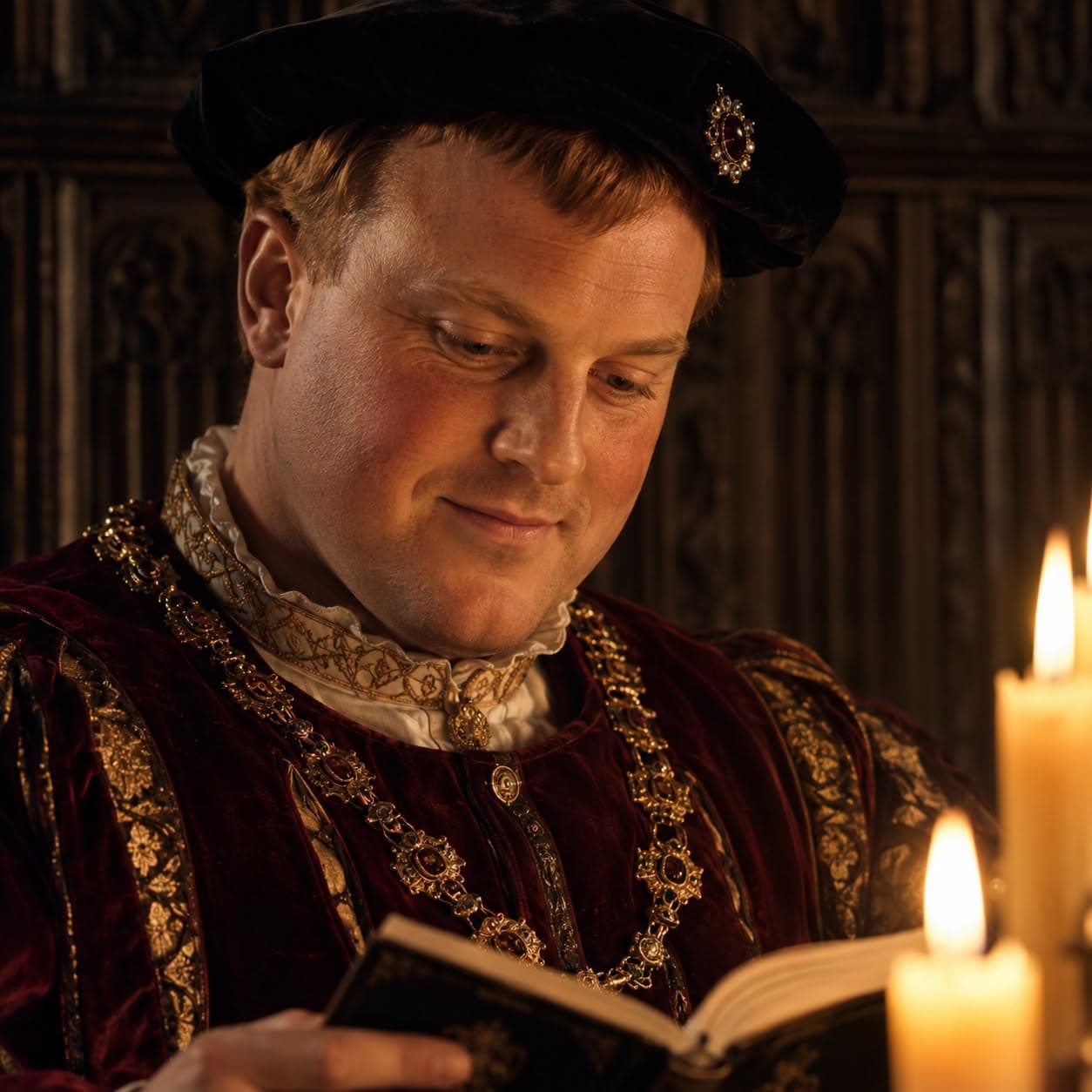
She came second from the moment she arrived. Christian openly kept a mistress, a Dutch woman named Dyveke, installed near the palace, and Isabella found she had almost no influence at her own court while her rival lived. Her family pressed Christian to give up the mistress. It made no difference. When Dyveke died suddenly in 1517, Christian became convinced a nobleman named Torben Oxe had poisoned her. A proper council had already cleared Oxe once. Christian pushed the case through an irregular lower court instead, got the guilty verdict he wanted, and had Oxe executed. That single act of vengeance for a mistress is what historians point to as the moment the Danish nobility turned against their king for good, the first crack in a throne that would collapse entirely within six years.
Only after Dyveke's death did Isabella gain any real standing of her own. In 1520 Christian made her regent and relied on her as a political advisor, the one period in her adult life when she held genuine authority rather than simply enduring someone else's decisions.
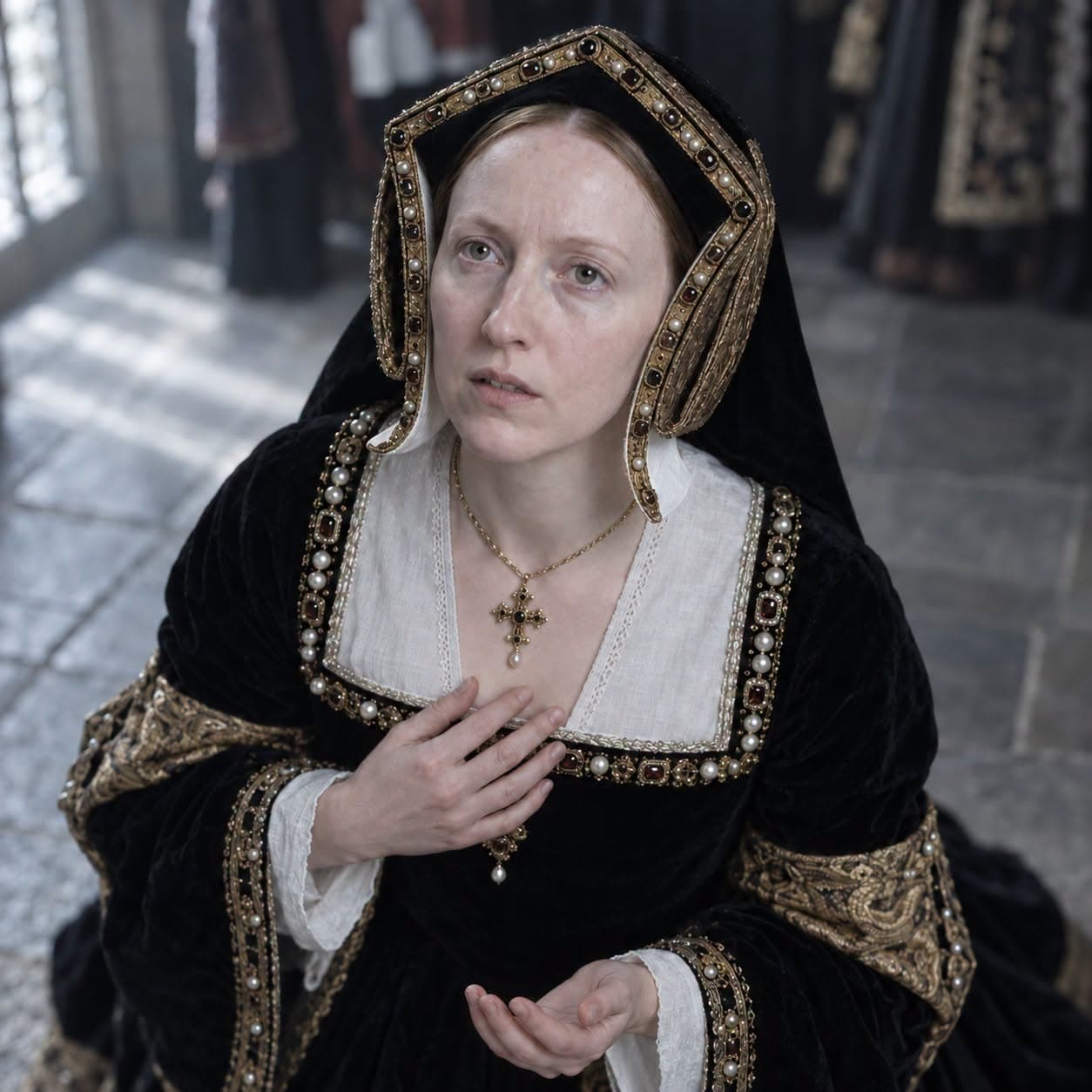
It did not last. In 1523, three years after Stockholm had watched Christian order the mass execution of Swedish nobility that became known as the Stockholm Bloodbath, the backlash finally caught up with him. He was deposed as king of Denmark and Norway. Isabella was given a real choice at that moment, one that says more about her than almost anything else in her life: stay in Denmark, safe, under the protection of the new king, or go into exile with a husband who had spent most of their marriage making her feel unwanted. She chose him.
They fled to the Netherlands and on into Germany, searching for allies who might help Christian claw his throne back. Stripped of court and status, Isabella grew close to the teachings of Martin Luther during the family's travels through Germany. In 1524, at Nuremberg, she took communion in the Protestant manner, in public. Her own family, the Habsburgs, were enraged when word reached them, and Christian, worried that his last hope of regaining a throne depended on their support, told her to hide her Protestant sympathies from then on. Even her own conscience became something to be managed for someone else's political survival.
She fell ill in 1525 and never recovered, dying near Ghent in January 1526, twenty-four years old. She left behind daughters, including Christina, who would go on to marry into Milan and then Lorraine with a degree of standing her mother never had, and a son, John, who lived to fourteen before dying six years after her and was later moved to share her tomb. She is reported, with real uncertainty since it was never fully confirmed, to have received last rites in both the Catholic and Protestant traditions at once, as though even her death refused to settle which side of that divide she truly belonged to.
Her body waited in Ghent for more than three hundred years. It was not until 1883 that the Danish government finally arranged to move her remains to Odense, back to the kingdom that had crowned her at fourteen and abandoned her at twenty-two. Even her resting place was decided by other people, long after she could have any say in where she belonged.