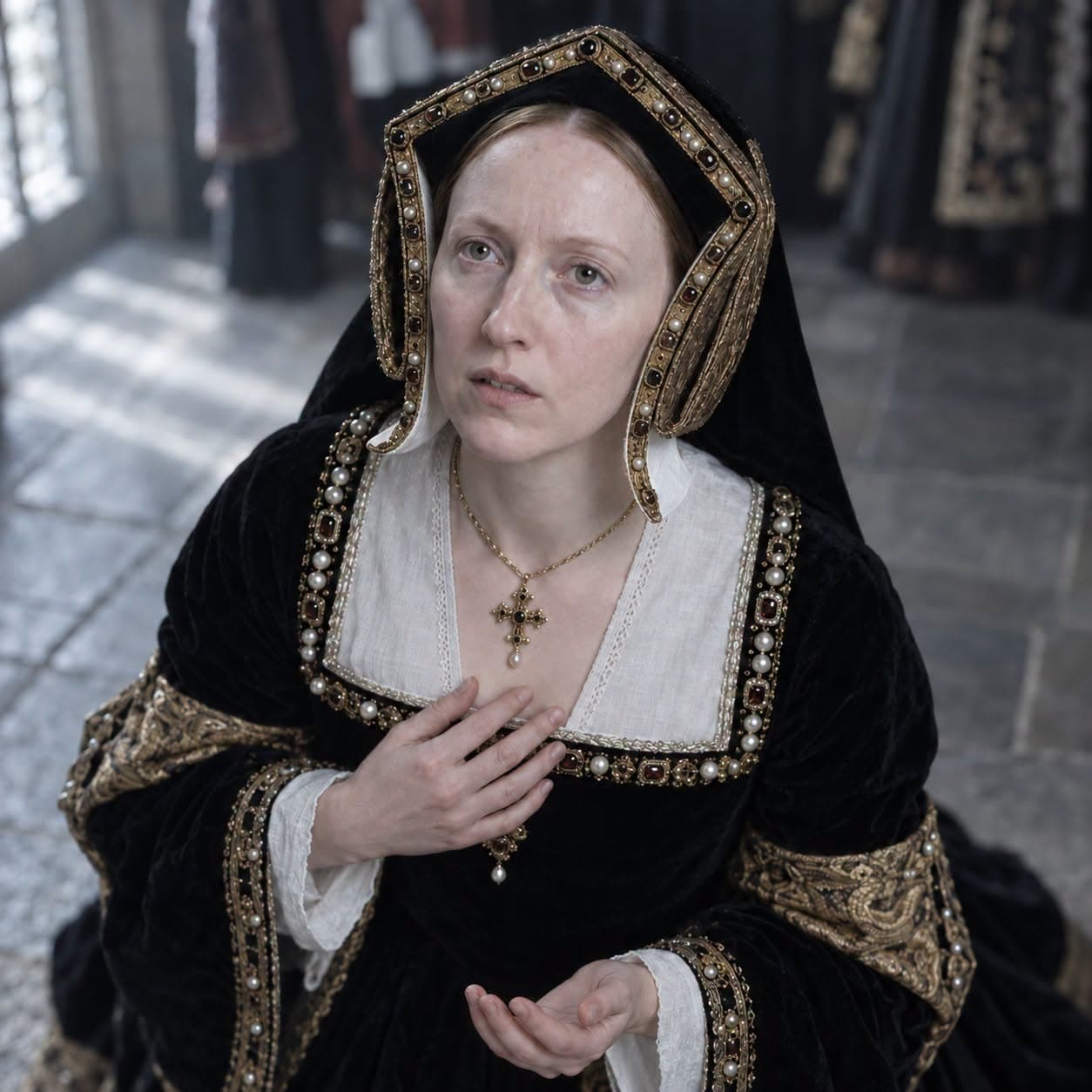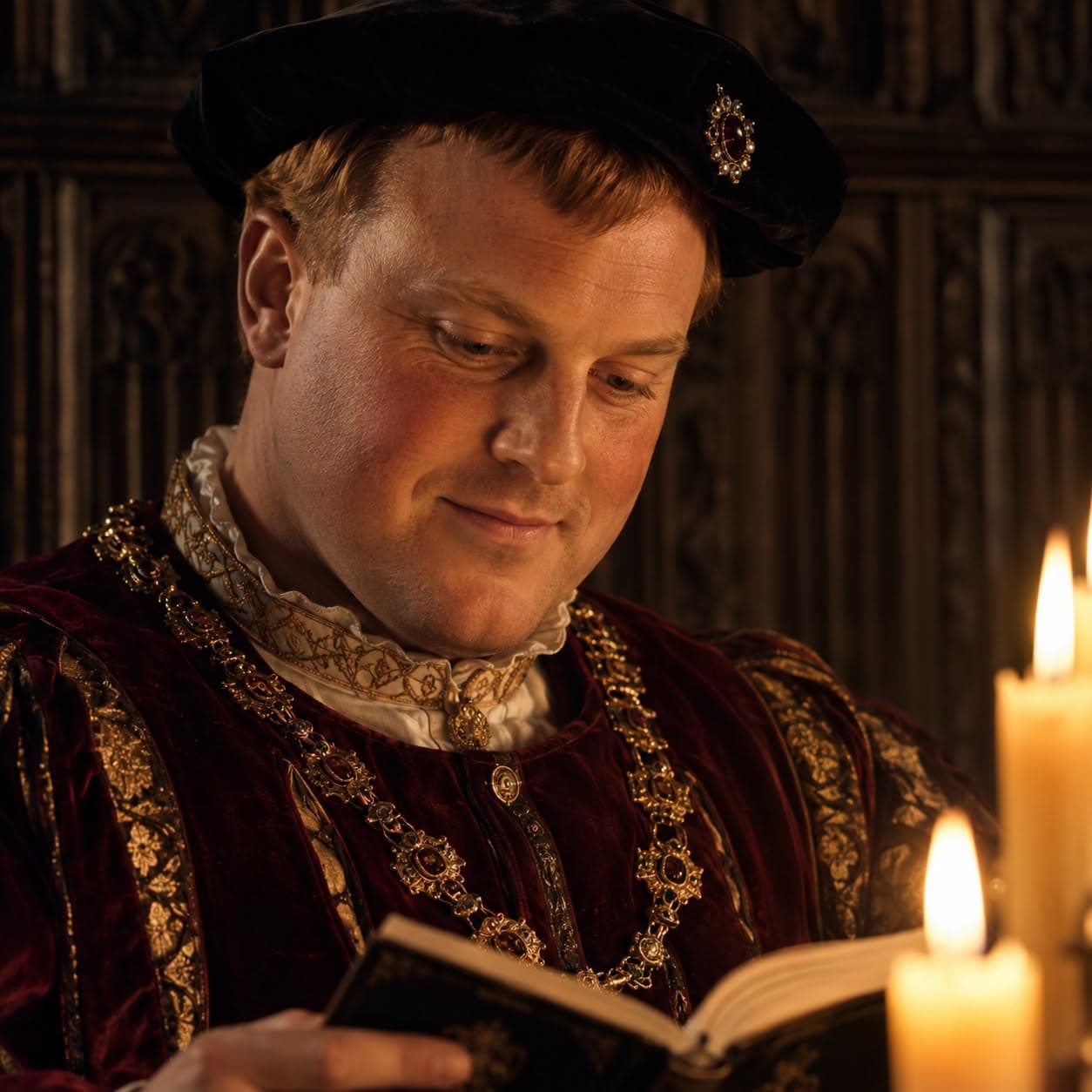
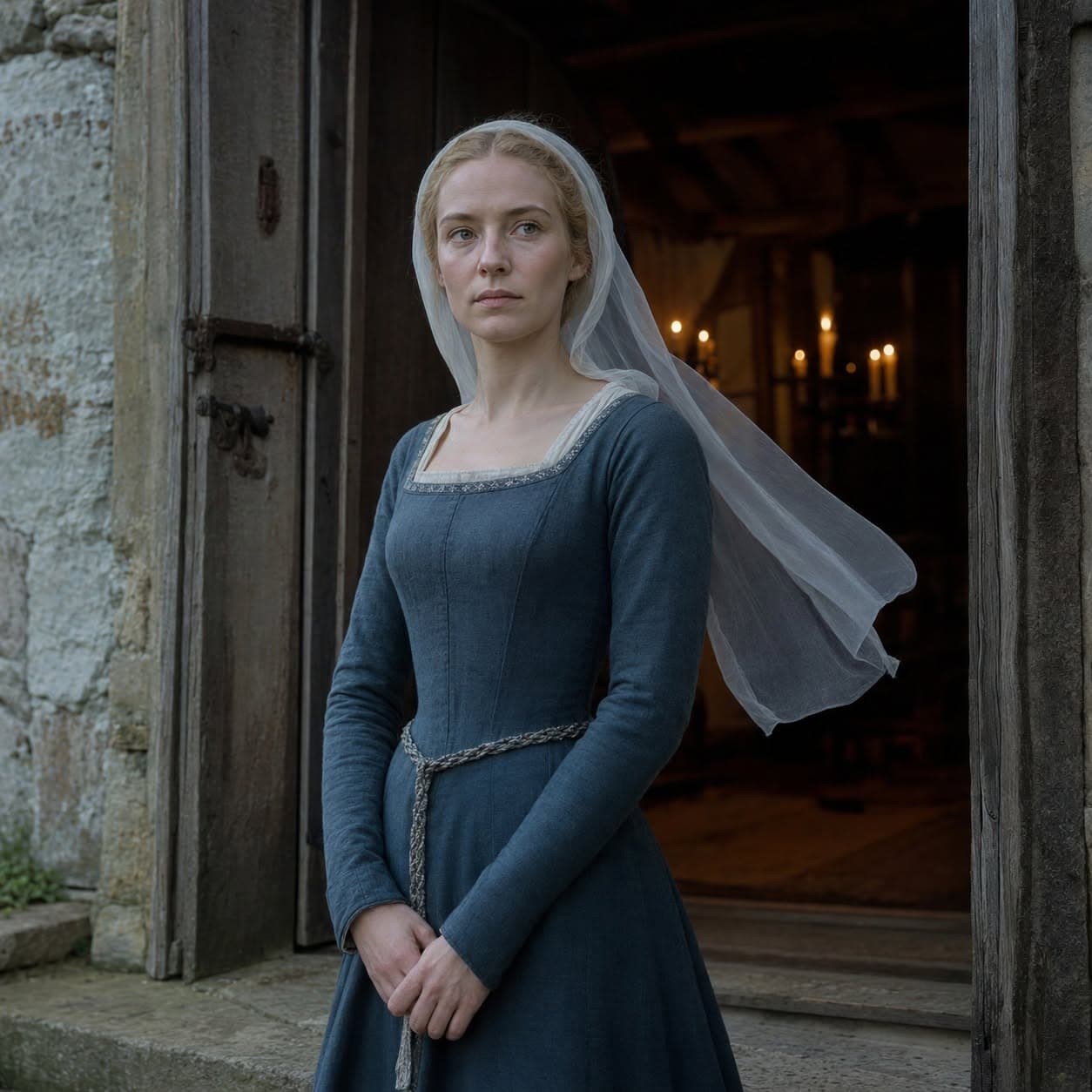
She had been Queen of England. She died in a convent with nothing, having asked for a quiet funeral with no expense. No explanation was ever recorded. Henry VII never gave one.
Elizabeth Woodville was born around 1437, the eldest daughter of Richard Woodville and Jacquetta of Luxembourg, and she grew up in a family that occupied a peculiar position in the English nobility: respectable, connected, but not powerful, the kind of family that attended great events without shaping them.
Her mother Jacquetta was the widow of the Duke of Bedford and one of the highest-ranking women in England; her father was a knight. The combination gave Elizabeth good connections and limited prospects, which was the situation she occupied until the morning in May 1464 when Edward IV married her in secret at her family home at Grafton Regis, at dawn, with only her mother and two ladies as witnesses.
She was a widow. Her first husband, Sir John Grey, had fought for Lancaster and died at the Second Battle of St Albans in 1461, leaving her with two young sons and a disputed inheritance. She was twenty-six or twenty-seven, educated, composed, and by all contemporary accounts strikingly beautiful. Edward IV was twenty-two years old and accustomed to taking what he wanted without particular consequence. The precise circumstances of how she became his wife rather than his mistress have been debated ever since.
What is not debated is the result.
He announced the marriage to his council four months later. Warwick, who had staked his reputation across every European court on a French diplomatic match that no longer existed, said nothing publicly and began making different calculations privately. The marriage that Elizabeth Woodville contracted at dawn in a house in Northamptonshire was the domino that started the sequence. Everything that followed (Warwick's switch to Lancaster, the alliance with Margaret of Anjou, the Lancastrian invasion, Barnet, Tewkesbury, the first political childhood of Anne Neville) traces back to that room.
Her family rose with her at a speed that alarmed people who had worked their entire lives for what the Woodvilles accumulated in years. Her father became an earl in the years that followed. Her brothers received titles, offices, lucrative wardships. Her sisters were married into the highest nobility at a rate that looked, to those watching, like a family stripping the available resources of the English peerage before anyone could stop them. The hostility this generated was not irrational. The Woodvilles were outsiders with royal access and they used it without apparent concern for the resentment they were building, because Edward was alive and powerful and the resentment was manageable while he was.
He died on the ninth of April 1483. He was forty years old. He left a twelve-year-old heir, a council full of rival factions, and a Woodville family that had made serious enemies on every side of the political landscape and had no protector left.
Elizabeth's brother Anthony Rivers and her son Richard Grey were riding south from Ludlow with the young king when Richard of Gloucester intercepted them at Stony Stratford. Rivers and Grey were arrested. The king was taken into Richard's protection. Elizabeth received the news in London and did the only thing available to her. She gathered her younger son Richard of York, her daughters, and as much as she could carry, and took sanctuary at Westminster Abbey.
She had been Queen of England for nineteen years. She was now a woman in a room, negotiating from behind the claim of holy sanctuary, while the world outside dismantled everything she had built.
Richard of Gloucester moved with the efficiency of a man who had been preparing for exactly this situation. In June 1483 Robert Stillington, Bishop of Bath and Wells, came before the council with a claim he had kept silent for fifteen years: that Edward IV had made a pre-contract of marriage with Eleanor Talbot before his marriage to Elizabeth, rendering the Woodville marriage invalid and their children illegitimate. The claim rested entirely on Stillington's uncorroborated testimony, delivered at the precise moment it was politically useful to the man who benefited from it.
Parliament accepted it. Titulus Regius was formally passed in January of 1484. Elizabeth's sons were declared bastards.
She was then subjected to what the sources describe carefully as persuasion to release her younger son from sanctuary. The Archbishop of Canterbury came to her. The council sent assurances. Richard of York, aged nine, was needed at his brother's coronation; it would be unkind to keep him from his brother; he would be perfectly safe. She released him. He walked into the Tower and joined his brother and was sighted occasionally through the summer of 1483. After that, the sightings stopped.
She stayed in sanctuary.
Then, in the autumn of 1483, a visitor came. Not in person; the approach was made through intermediaries, later identified by Tudor sources as her physician Lewis of Caerleon, moving between Westminster Abbey and the Beaufort household with the discretion of a man who understood what he was carrying. The message was a proposal: Henry Tudor, in exile in Brittany, would return, claim the throne, and marry Elizabeth of York. The Woodville name, the Yorkist legitimacy of Elizabeth of York, and Tudor's Lancastrian claim would be combined into a single solution.
Margaret Beaufort needed Elizabeth Woodville. Without the Woodville cooperation, Elizabeth of York's participation in the scheme was harder to secure. Without Elizabeth of York, Henry Tudor's claim to Yorkist legitimacy was a theoretical argument rather than a marriage. Without Yorkist legitimacy, the coalition Henry needed to build in England was considerably thinner. Beaufort was offering Elizabeth's daughter a crown. She was also offering Elizabeth herself a route out of a room in Westminster Abbey where she had been living for six months with her children and no future.
Elizabeth cooperated. She wrote to her son Dorset in Brittany urging him to join Tudor's cause. She agreed to the match. Whether she was a willing partner in a shared enterprise or a woman with no remaining options being offered the least bad of them is the question the record does not answer. What the record shows is that Beaufort needed her, approached her, and got what she needed.
In March 1484 Elizabeth did something that has puzzled historians ever since. She left sanctuary. She sent her daughters to Richard III's court, the daughters he had declared illegitimate nine months earlier, whose brothers had disappeared from the Tower under his protection. She negotiated terms with him directly: the girls would be treated honourably, they would be given in marriage to suitable husbands, they would not be placed in the Tower. Richard gave his word in writing before witnesses.
Whether she believed him, or whether she had simply calculated that her daughters had no future at all in a room in Westminster Abbey, the record does not say. She also wrote to Dorset urging him to abandon Henry Tudor and come home. She made her peace, publicly and apparently sincerely, with the man who had declared her sons illegitimate and who was, in the view of most of Europe, probably responsible for their disappearance. The explanations offered are two: rational calculation that Richard was king and Henry still an exile, or that she had learned something about her sons that altered her position entirely. The record does not say which. It never did.
Henry Tudor won at Bosworth in August 1485. Elizabeth of York became queen. Elizabeth Woodville became queen dowager, was granted lands and a pension, appeared at court, was treated with the honour appropriate to the king's mother-in-law. She had been a useful instrument in the making of the Tudor dynasty and the dynasty had been made and the position seemed secure.
For eighteen months.
In February 1487 Henry VII confiscated her estates and retired her to Bermondsey Abbey. The official reason presented to the council was her past inconstant conduct, specifically that she had delivered her daughters out of sanctuary into the hands of Richard III. Modern historians have long suspected this was a calculated legal cover story to mask his real motive: her potential complicity in the brewing Lambert Simnel rebellion, though no definitive contact with the conspiracy was ever documented. She was fifty years old, had no money, no power base, and no army. The true, unvarnished explanation was never recorded.
Henry VII did not leave explanations for decisions of this kind.
He had repealed Titulus Regius and ordered its copies destroyed. He had ensured that the question of his wife's legitimacy could not be publicly examined. He had built a dynasty on a foundation he had taken specific legal steps to prevent anyone from inspecting. Elizabeth Woodville had been present at the centre of that foundation. She knew what had been offered, what had been agreed, what had been promised, and what had actually happened to the two boys in the Tower whose disappearance made all of it possible. She knew more about the mechanics of the Tudor succession than almost any other living person.
In February 1487 she was sent to Bermondsey and her income was reduced and she did not come back.
She lived there for five years. She was not mistreated in any documented sense. She had an income and visitors and the ordinary routines of a religious house. She was simply elsewhere, removed from court and influence and the proximity to power that made her dangerous. She had been a useful tool in the making of Henry VII's England. The England had been made. The tool was put away.
She died on the eighth of June 1492. She was fifty-four or fifty-five years old. Her will requested a quiet funeral without pomp or expense. She asked to be buried beside Edward IV at Windsor with as little ceremony as possible.
She had been Queen of England. She asked to be buried without fuss. Whatever she knew, she took it to Windsor, and it has stayed there.