Elizabeth I was forty-eight when her last serious suitor crossed the Channel again. He was twenty-six, Catholic, and the brother of the King of France. Within weeks she would give him a ring. He would leave England without a wedding.
On 31 October 1581, François, Duke of Anjou, landed in England for his second visit to court the queen. His first had been in 1579, and between the two journeys there had been letters, embassies and negotiations enough to occupy a government. Now the man himself was back. Elizabeth was at Richmond, where preparations were being made to receive him and the Frenchmen who travelled with him.
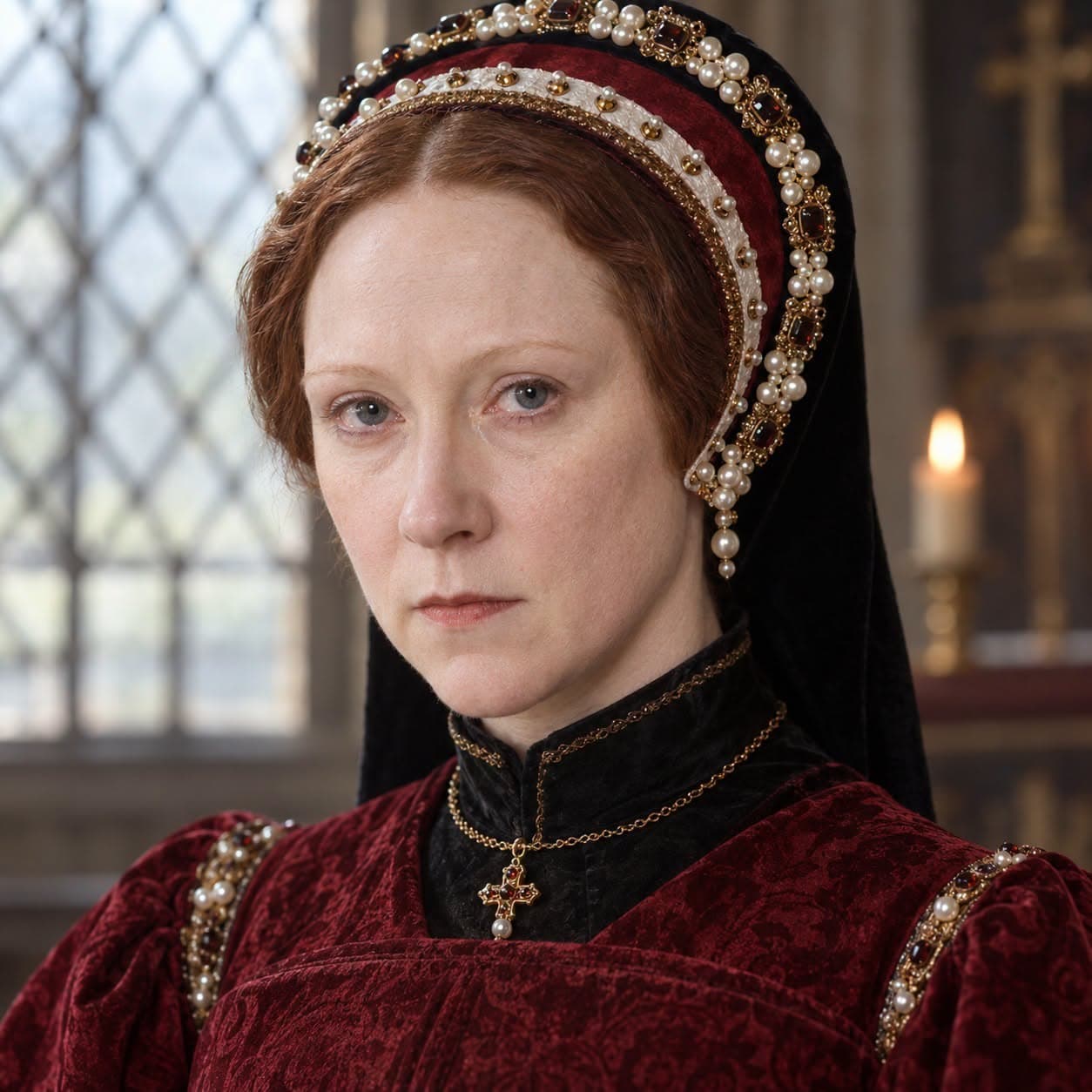
She had been Queen of England for nearly twenty-three years. The daughter of Henry VIII and Anne Boleyn had succeeded to a kingdom whose religion had changed repeatedly under her father, brother and sister. Her own Church settlement was Protestant. The man proposing to share her life heard Mass. For an English subject, the question of whom Elizabeth married could reach as far as the prayers said in his parish church.
François was the youngest son of Henri II of France and Catherine de' Medici, and the younger brother of the reigning king, Henri III. Smallpox had left his face scarred. Their letters had been affectionate, and she called him her frog. By the time he returned, they had already met, talked and conducted a courtship that could be intimate in its language and laborious in its conditions. A royal marriage needed rather more than two people to agree.
His arrival also brought the Netherlands into the English court. The provinces resisting Philip II of Spain had looked to Anjou for leadership, and he needed money to sustain his enterprise there. Elizabeth had already helped him financially. Supporting a French prince against Spanish power offered her an advantage, but only if France stood behind him. The proposed marriage and the proposed alliance were being negotiated together. A husband might bring an ally. He might also bring England into a war.
At Richmond, the household dealt with matters it could actually settle. Lodgings were arranged in the town, and inns were taken over for his companions. Before anyone had resolved the future of the English crown, somebody had to find beds for the French.
On 2 November, Anjou came to Richmond. There were English councillors to consult and French representatives to satisfy, as well as the queen herself. Their relationship had a public audience even when the conversations were private. Any assurance given in England could become a report to Paris, and any hesitation could travel just as quickly.
Three weeks later, at Whitehall, Elizabeth gave that audience something definite.
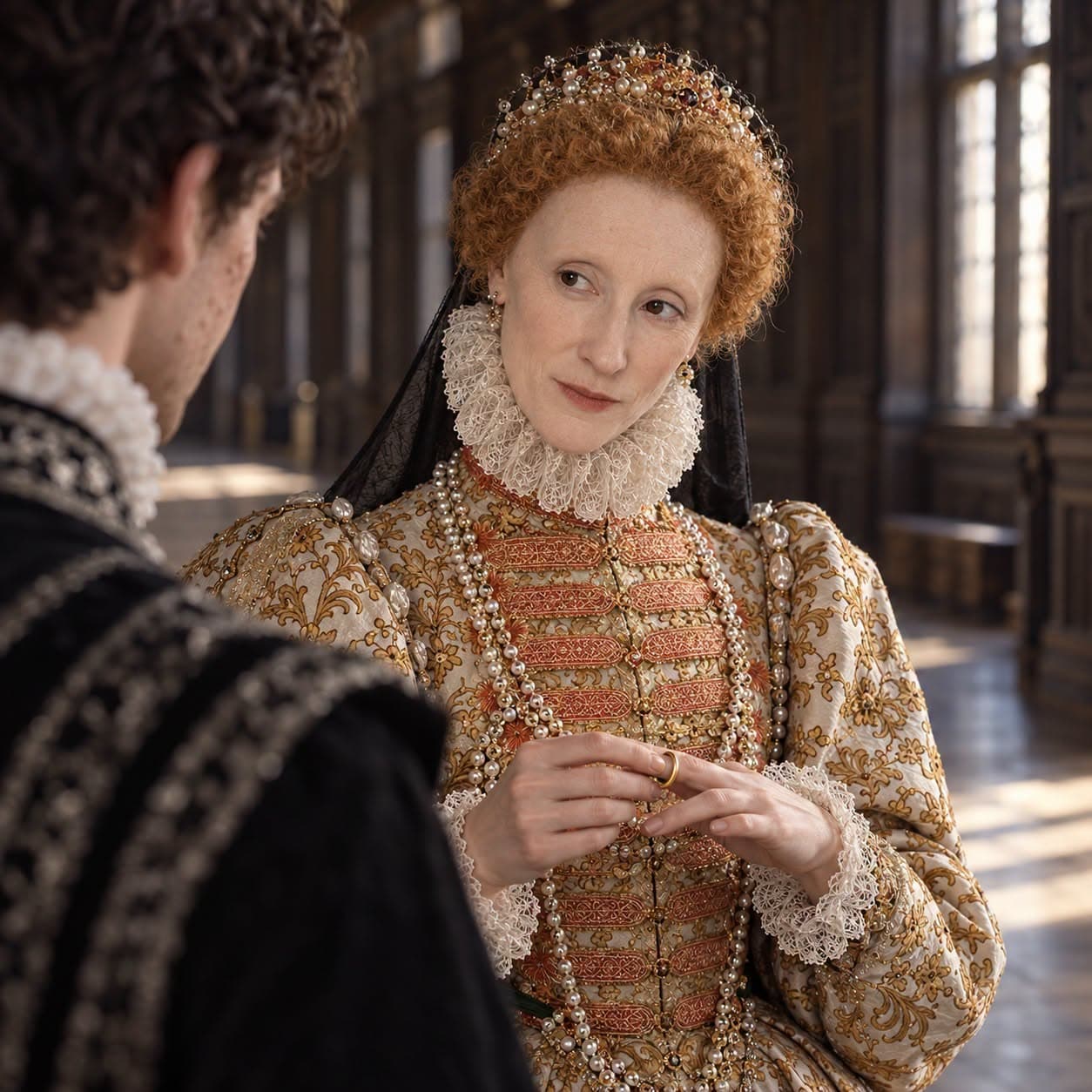
On the morning of 22 November, she and Anjou were walking in a gallery with Robert Dudley, Earl of Leicester, and Francis Walsingham present. The French ambassador came in with a question from his master. Henri III wanted to know, from Elizabeth's own mouth, what she intended about marrying his brother. It was a question which years of correspondence had failed to put to rest.
Elizabeth answered that Anjou would be her husband. She turned to him, kissed him on the mouth, took a ring from her own hand and gave it to him as a pledge. He gave her a ring in return. Then she called the ladies and gentlemen from the Presence Chamber into the gallery and repeated her declaration before them. What had begun with a small company now had witnesses enough to carry it through the court. Anjou sent the news to his brother.
There had been a promise. There had been no wedding.
By the following day, Elizabeth had drawn back from the commitment. The prospect of the marriage divided the people around her, and a declaration before witnesses had not removed the objections to a Catholic consort or settled the conditions demanded between the two kingdoms. Neither had it made the relationship simple. Affectionate letters, a public kiss and an exchange of rings could all belong to this courtship without resolving what Elizabeth would finally do.
Anjou stayed. The winter went on with entertainments, and on New Year's Day a tournament was held in his honour, and he rode in it. The ring scene had not made him a husband, but its reversal had not immediately made him an unwanted visitor either. His place in the Netherlands still mattered to Elizabeth, and her support still mattered to him. The negotiations went on around the meals, performances and ceremonies of the court.
In February 1582, Elizabeth accompanied him through Kent as he prepared to leave for the Netherlands. At Canterbury she feasted the French party and took her farewell. Leicester went on with Anjou, joining the English noblemen and gentlemen escorting him abroad. The crossing that had brought a prospective bridegroom into England was followed by another that carried him away with an English escort. Elizabeth turned back from Canterbury. She was forty-eight, and still unmarried, and she would never marry at all.