He spent twenty-two years trying to erase the blood of the Wars of the Roses, and the moment his heart stopped, the ink turned red again.
Edward was born on the twenty-eighth of April 1442 at Rouen in Normandy, the eldest surviving son of Richard Duke of York and Cecily Neville, and he grew up inside a family that understood its relationship to the crown as a grievance requiring resolution. His father spent the 1450s constructing the legal and political case that the House of York had a better claim to the throne than the House of Lancaster and that the incompetence of Henry VI's government had made the resolution of that grievance not merely permissible but necessary. Edward absorbed this entirely. He was eight years old when the formal Yorkist challenge began. He was eighteen when his father died at Wakefield and the resolution of the grievance became his responsibility.
He did not flinch from it. The speed with which he moved in the weeks after Wakefield is the first clear signal the record preserves of what kind of man he was. His father was dead in December 1460. By February 1461 Edward had won at Mortimer's Cross in the Welsh marches, had entered London, had been proclaimed king by the council and the acclamation of the city, and was marching north. He was not waiting for the situation to clarify. He was clarifying it himself.
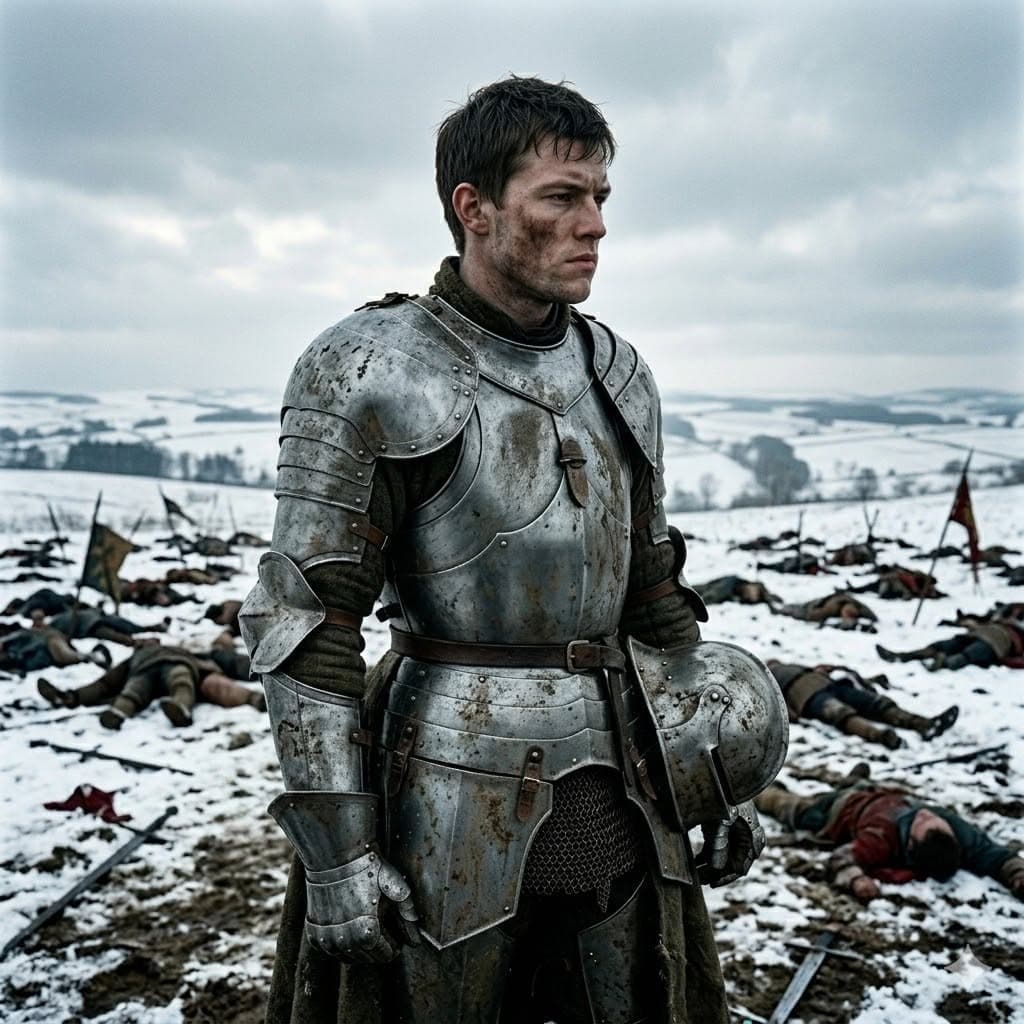
Towton was fought on the twenty-ninth of March 1461, Palm Sunday, in a snowstorm in the West Riding of Yorkshire, and it was the largest and bloodiest battle ever fought on English soil. The estimates of the dead run from nine thousand to as high as twenty-eight thousand depending on the source and the calculation though most now believe the figure to be closer to fifteen thousand. The Lancastrian army was broken entirely. Henry VI fled to Scotland. Margaret of Anjou fled with him. The leading Lancastrian nobility were dead on the field or executed in the days that followed. Edward IV was nineteen years old and the House of Lancaster was, to all appearances, finished.
This is where the clean slate begins. Edward stood on the field at Towton and looked at what he had done and drew the conclusion that a man of his temperament was always going to draw: that the problem was solved, that the past was cleared, that a new England could be built on the ground the battle had opened. The Lancastrian line still existed. Henry VI still breathed. Margaret of Anjou was still in Scotland with her son and her fury and her refusal to accept the verdict of any field. Edward knew all of this. He proceeded as if it did not matter, because the scale of Towton told him that force of will applied at sufficient intensity could close any question permanently. He had just proved it. He believed it. He would spend the next twenty-two years discovering the limits of that belief.
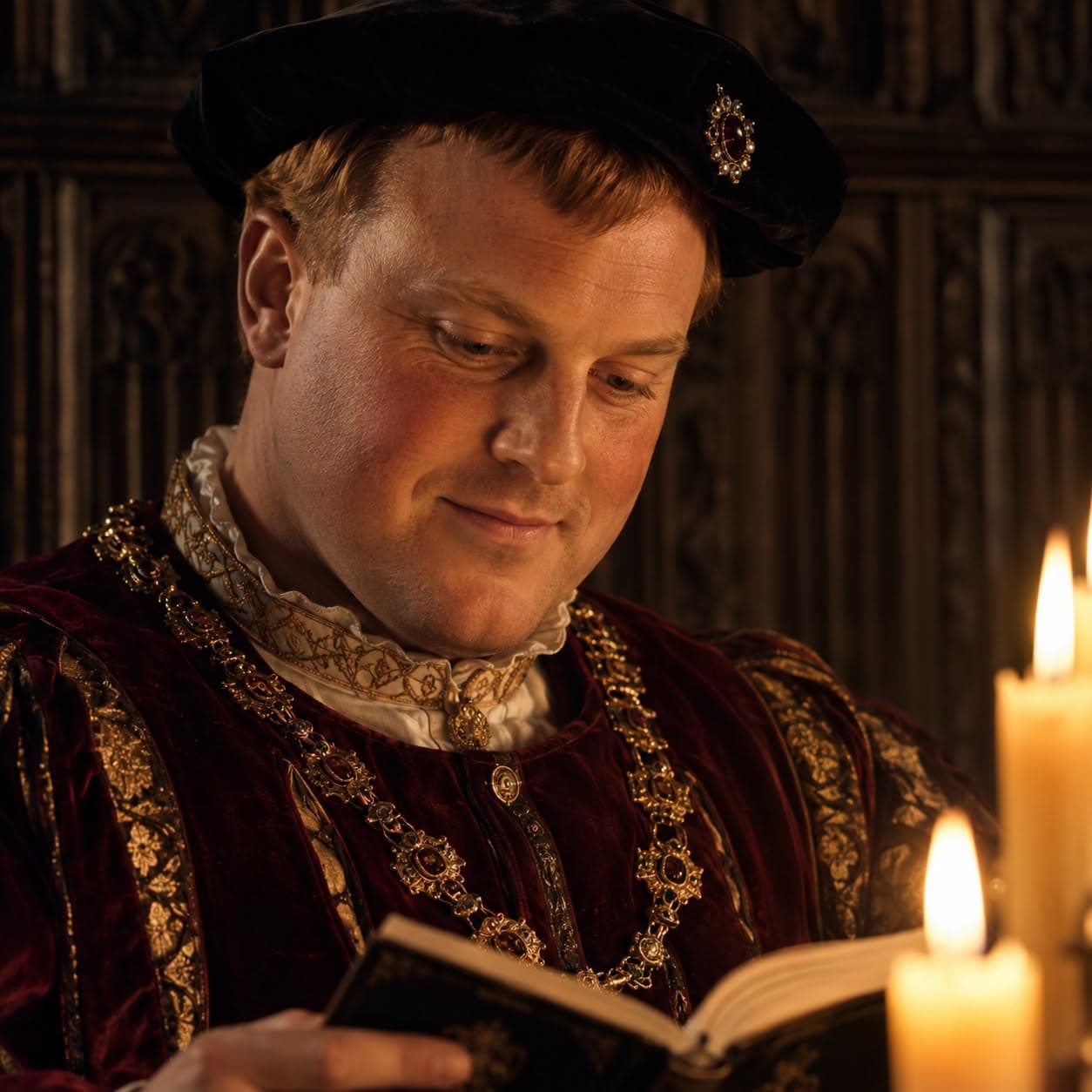
The court he built after Towton was deliberately magnificent. Edward understood something about kingship that his predecessors had understood only partially: that the crown required a performance, that the performance had to be sustained at every moment of public visibility, and that the man performing it had to be physically compelling enough to make the performance credible at close range. Edward was six feet two inches tall, broad-shouldered, and by every contemporary account striking in a way that made rooms turn when he entered them. He used this consciously. He dressed with deliberate extravagance. He cultivated accessibility, moving through his court with the easy confidence of a man who had never been told no and had decided that generosity was a form of power. The open-handed king who remembered names and faces and debts of loyalty was not an accident of character. It was a policy.
The Woodville marriage was the clean slate applied to dynasty itself.
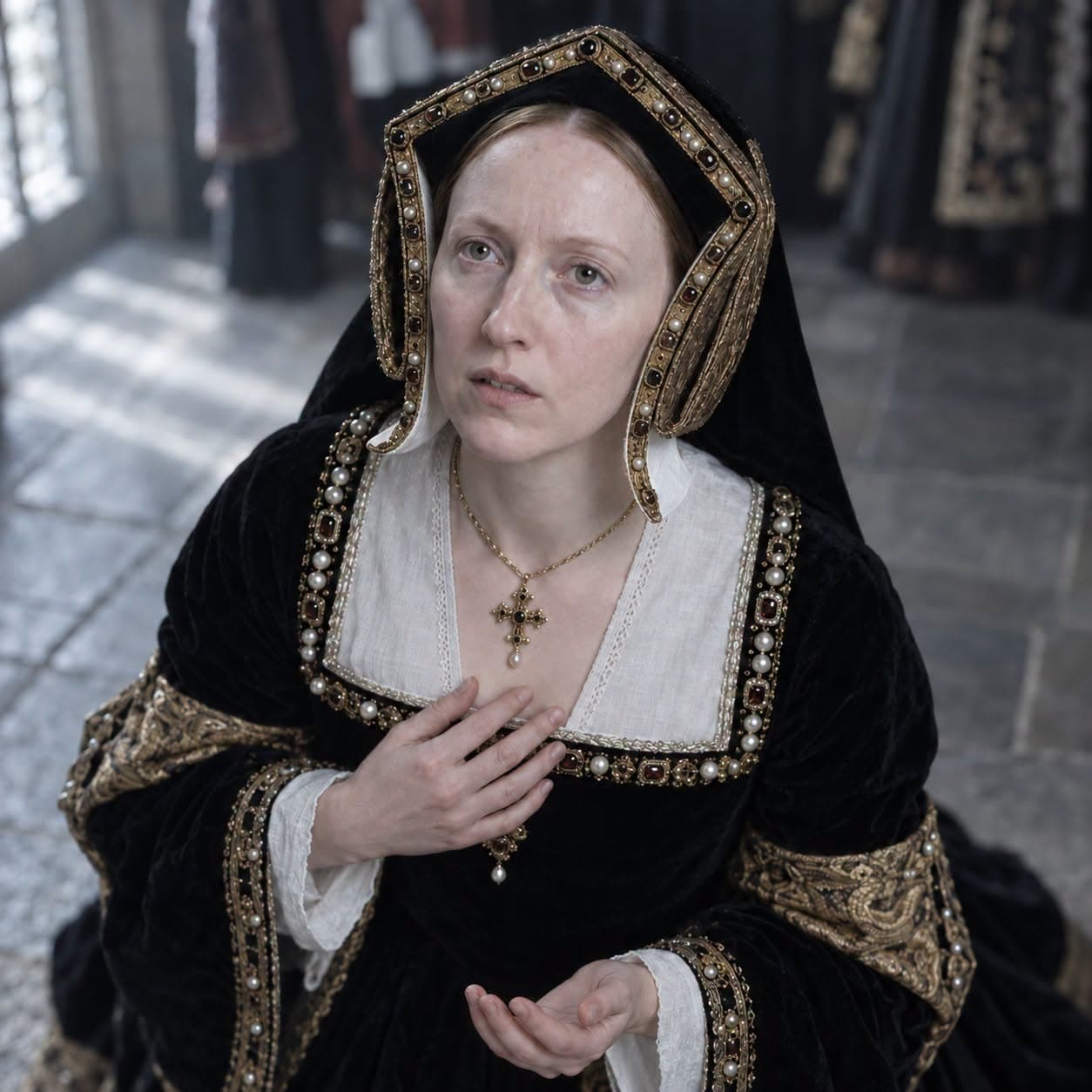
Edward married Elizabeth Woodville in secret at Grafton Regis in May 1464. She was the widow of a Lancastrian knight, the daughter of a family that was respectable but not powerful, and the match was by every conventional measure of the period wrong. Warwick had been negotiating a French diplomatic alliance for months, had staked his European reputation on the assumption that Edward would marry where he directed him, and was in the middle of those negotiations when Edward announced to his council in September that he had been married for four months and that the bride was Elizabeth Woodville. The council was silent for a long time before it found words.
What Warwick read as impulsive desire was something considerably more deliberate. Edward did not want a French bride because a French bride was the old system, the system of dynastic alliance and continental obligation and the tangled inheritance politics that had produced the Hundred Years War and the specific conditions of Lancastrian England. He wanted to build something new. A court that owed its position to him rather than to inherited alliance. A queen whose family would rise because he raised them and would therefore be loyal to him rather than to the independent power bases that old nobility loyalty ran through. The Woodvilles were not a mistake. They were a policy. The mistake was believing that the policy would not generate the resentment that all rapid ascents generate, and that the resentment could be managed indefinitely by the force of his own presence.
Warwick managed it for the better part of four years before he stopped managing and started acting. What matters is the shape of Edward's response to it: forgiveness, applied with the confidence of a man who believed that forgiveness was a form of power. When Warwick and George of Clarence raised rebellion in 1469 and captured Edward himself at Warwick Castle, Edward waited. The rebellion collapsed for want of a programme beyond the removal of the Woodvilles, and Edward was released, and the reconciliation that followed was the kind that satisfied no one and that Edward treated as a resolution because treating it as a resolution was consistent with the clean slate policy. The past was cancelled. The debt was zeroed. They would begin again.
It happened again. Warwick broke with Edward entirely in 1470, allied himself with the House of Lancaster he had spent a decade fighting, and launched the invasion that put Henry VI briefly back on the throne and sent Edward into exile in Burgundy. George went with Warwick. Edward was twenty eight years old, deposed, in a foreign court, with almost nothing. He was back in England within six months.
The campaign of 1471 was the most concentrated demonstration of Edward's military and political capability the record preserves. He landed at Ravenspur in March with a small force and moved south through a kingdom that was officially held against him, picking up support at each step with the specific momentum of a man who made others believe the outcome was already decided. George rejoined him before Barnet, persuaded by whatever combination of fraternal loyalty and political calculation George was capable of, and Edward treated the return as another zeroing of the debt. George was forgiven. Again. The slate was clean. Again.
Barnet was fought on the fourteenth of April 1471 in the fog that the chroniclers describe with the relish of men who understood that the fog was doing narrative work. Warwick died on that field, killed in the rout or killed after it, and the specific manner of his death was less significant than the fact of it: the man who had made Edward king was dead, and the threat he represented was closed. Tewkesbury followed three weeks later. The Lancastrian Prince of Wales died at Tewkesbury or immediately after it. Henry VI died in the Tower of London on the twenty-first of May 1471, the night Edward returned to London, and the chroniclers noted the coincidence without pressing it further, and Edward did not explain it, and the Lancastrian line was now genuinely finished in a way that Towton had only appeared to finish it.
Edward stood at the far end of 1471 and looked at what he had rebuilt. The throne was his again and more securely than before. The Lancastrian claimants were dead. George was back in the fold. Richard was governing the north with a competence that freed Edward from the administrative burden of a region that had always resisted central management. The court was magnificent. The performance was sustained. The clean slate was intact.
He spent the 1470s proving it to himself.
The French campaign of 1475 was the most expensive military preparation England had managed in a generation and it ended without a battle. Edward crossed the Channel with the largest English army to leave these shores since Henry V and accepted a pension from Louis XI at Picquigny instead of the war his nobles had equipped themselves to fight. The old nobility were contemptuous. Edward was pragmatic. The pension funded the court. The court funded the performance. The performance was the policy. He returned to England with French gold and used it to build the most prosperous and stable decade his reign produced.
St George's Chapel at Windsor was begun in 1475 and was still unfinished when he died. Edward commissioned it as the centrepiece of his dynasty's permanent presence, a building that would house the Order of the Garter and the tombs of Yorkist kings in a chain of succession that stretched forward indefinitely. The chapel's magnificence was not incidental. It was the clean slate carved in stone, the argument that the Wars of the Roses were concluded and that what followed was a Yorkist perpetuity. The building was not finished. He did not finish it.
In February 1478 he had his brother George drowned in the Tower.
The specific mechanism has never been confirmed. The Malmsey wine of the chronicles may be embellishment and may not be. What is confirmed is that George, Duke of Clarence, was attainted by Parliament on the charges of spreading false rumours, meddling with the administration of justice, and conducting himself in ways incompatible with the safety of the crown, and that he was executed privately in the Tower without a public ceremony of the kind that executions of great men normally received, and that Edward signed the warrant and that George was dead by the eighteenth of February 1478.
Edward had forgiven George twice. The first forgiveness, in 1469, had cost him his freedom for a period. The second forgiveness, after Barnet, had cost him the credibility of the reconciliation, because George had not stopped and was never going to stop. The warrant of 1478 was Edward finally understanding that the clean slate could not be applied to a man who would not accept that the slate had been wiped. George would keep returning to the old debts because the old debts were what George had instead of an identity. He could not be cancelled. He could only be ended.
Edward signed the warrant and George was ended and the court moved on with the efficiency of an institution that had learned to process the elimination of inconvenient men without visible disturbance. But something had shifted. The clean slate policy had required, above all, that Edward believe in it. The execution of George was the moment he proved to himself that he did not believe in it entirely, that there were debts that could not be zeroed, that the past had a weight that present force of will could not always lift. He did not draw this conclusion aloud. He returned to the performance. He attended to trade and to the prosperity of his kingdom and to the magnificence of his court and to the steady accumulation of royal wealth that was, by the late 1470s, making the English crown solvent in a way it had not been in living memory.
But beneath the golden surface of the late 1470s the spring was compressed to its absolute limit. The Woodvilles had spent fifteen years accumulating the resentment of the old nobility and had no protection beyond Edward's continued existence. Anthony Woodville, Earl Rivers, was governing the young Prince of Wales at Ludlow with the specific authority of a man who understood that his family's position died with the king and was positioning accordingly. The old nobility watched and calculated. Richard sat at Middleham and administered the north and governed the reality that the southern performance was designed to conceal. The council contained men who had been waiting for years to settle accounts that Edward's living presence had made it dangerous to touch.
The spring needed only one thing to release. Edward gave it that thing on the ninth of April 1483.
He had been ill for only a short time. The sources disagree on the cause, offering a chill contracted on a fishing trip, an unspecified fever, the accumulated consequence of a body that had absorbed twenty-two years of campaigning and considerable excess. He was forty years old. He had not prepared for this. He had not arranged the succession with the care of a man who understood that he might die before his heir was ready to reign, because arranging for it would have required him to acknowledge that his reign had an end, and Edward appears to have found that acknowledgement difficult to make. He had been performing permanence for twenty-two years. The performance had become the reality inside his own account of his world. He died without having solved the one problem his death would immediately produce.
The council met the morning after and the calculations began before he was cold.
The Woodvilles moved first. Rivers rode south from Ludlow with the young king and the specific momentum of a family that had known this moment was coming and had been preparing for it. The old nobility moved to counter them. The letters went out. The messages travelled. And four days' ride to the north, in a castle in Yorkshire that Edward had given him because he was the one who could be trusted with it, the most loyal man in the kingdom received a letter and read it and began to make arrangements.
Edward had built a court. He had won battles. He had governed well and spent lavishly and performed magnificence with a consistency and a conviction that no English king since Henry V had matched. He had spent twenty-two years trying to make the crown permanent and prosperous and settled and at peace with its own history. He had built St George's Chapel and left it unfinished.
He died at forty and left a twelve-year-old.
The past he had been trying to bury was still there. It had always been there. It was already moving.