He was the first that a young Henry VIII would order to be executed. Nobody felt inclined to argue against it.
Edmund Dudley had run the Council Learned in the Law for Henry VII, an instrument built to hunt down old feudal debts, forgotten dues, and legal technicalities that could be turned into fines. Henry VII reviewed the work personally and pushed for more of it, which meant the king benefited directly from the fear Dudley generated in every corner of the realm. Dudley did not merely serve the machine. He fed himself from it too, using the money that passed through his hands to buy estates in Sussex, Dorset, and Lincolnshire, so that by the time the old king died, nobody in England could easily separate the state's extortion from Dudley's own enrichment.
Henry VII died on 21 April 1509. Dudley and his partner Richard Empson were arrested within days, before the funeral had even been arranged, in a move too fast to be anything but planned in advance. The charge against Dudley was treason, built on the claim that during the old king's final illness he had ordered armed friends to gather in London, supposedly to seize control of the new king and council. It was almost certainly nothing of the kind. A man who knew how despised he was, watching his only protection in the world die, had reason enough to want armed friends nearby for his own safety. Lawyers took that reasonable fear and reshaped it into a plot.
On 18 July 1509, a commission at the Guildhall convicted him despite his plea of not guilty. Empson was tried separately that autumn at Northampton and convicted too. Then came the strange, drawn-out part of the story: both men sat in the Tower for more than a year while Parliament formally attainted them and the young king decided what to do with two men who had done nothing new since their arrest. Dudley used the time to write a treatise called The Tree of Commonwealth, a work of political counsel apparently intended to reach Henry VIII and demonstrate reformed wisdom worth sparing. Whether it ever actually reached him is not entirely settled; some accounts suggest the manuscript may not have found its way to the king at all, and that the earliest surviving copy may only have been preserved later, by Dudley's own son.
It made no difference either way. As Henry VIII travelled the country that summer, he kept hearing the same complaint over and over, that Empson and Dudley were still alive. On 17 August 1510, more than a year after the Guildhall verdict, he sent the writs. Both men were beheaded together on Tower Hill, killed not because of new evidence but because the crowd wanted to see it finished and the young king understood that granting that wish cost him nothing.
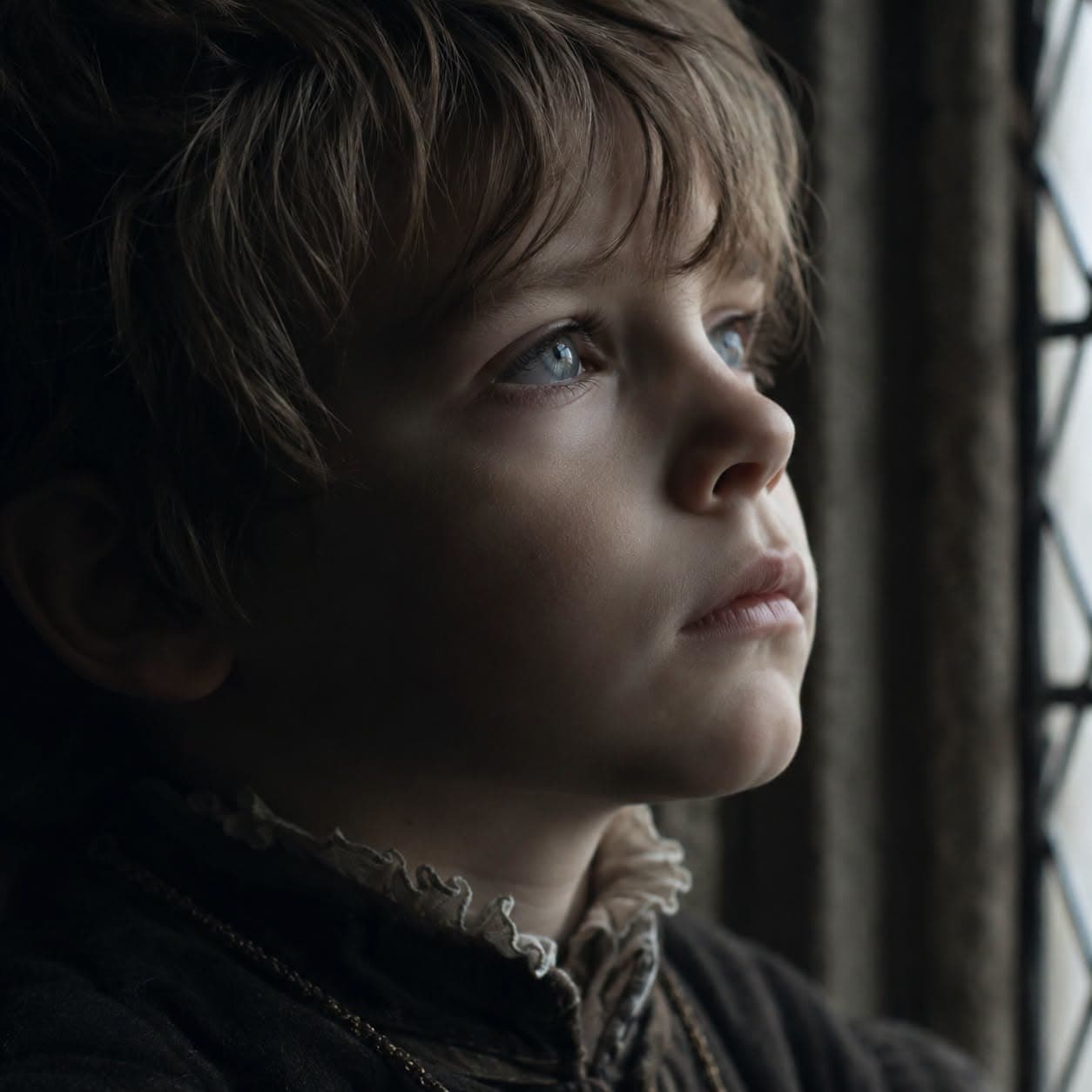
Watching that happen, or hearing of it soon after, was a boy of five or six named John Dudley, Edmund's son. He had done nothing. He had no debts collected, no dues extorted, no estates bought with fear money. He simply lost his father to a killing arranged to buy a new king three months of goodwill.
That boy grew up to become the second most powerful man in England. As Duke of Northumberland, John Dudley effectively ruled the country during the minority of Edward VI, commanding armies, controlling the council, shaping the succession itself in the final desperate weeks of Edward's life. His own son, Robert Dudley, became Elizabeth I's closest and most enduring favourite, the man rumoured for years to be the one person who might have married a queen who married no one.
The axe on Tower Hill in 1510 was meant to close a chapter and open a popular new reign with a clean, satisfying sacrifice. Instead, it created the men who would run the Tudor court within a single lifetime. Henry VIII killed a father to win three months of applause. The son he orphaned went on to hold more power than almost anyone else alive during the reign that followed, and the grandson stood closer to the throne than any subject in England for the length of a queen's entire reign.