She was fourteen when she married the Danish king's twenty-two-year-old son. Decades later, she would arrange marriages for other people. When she wanted to marry again, her own son helped stop it.
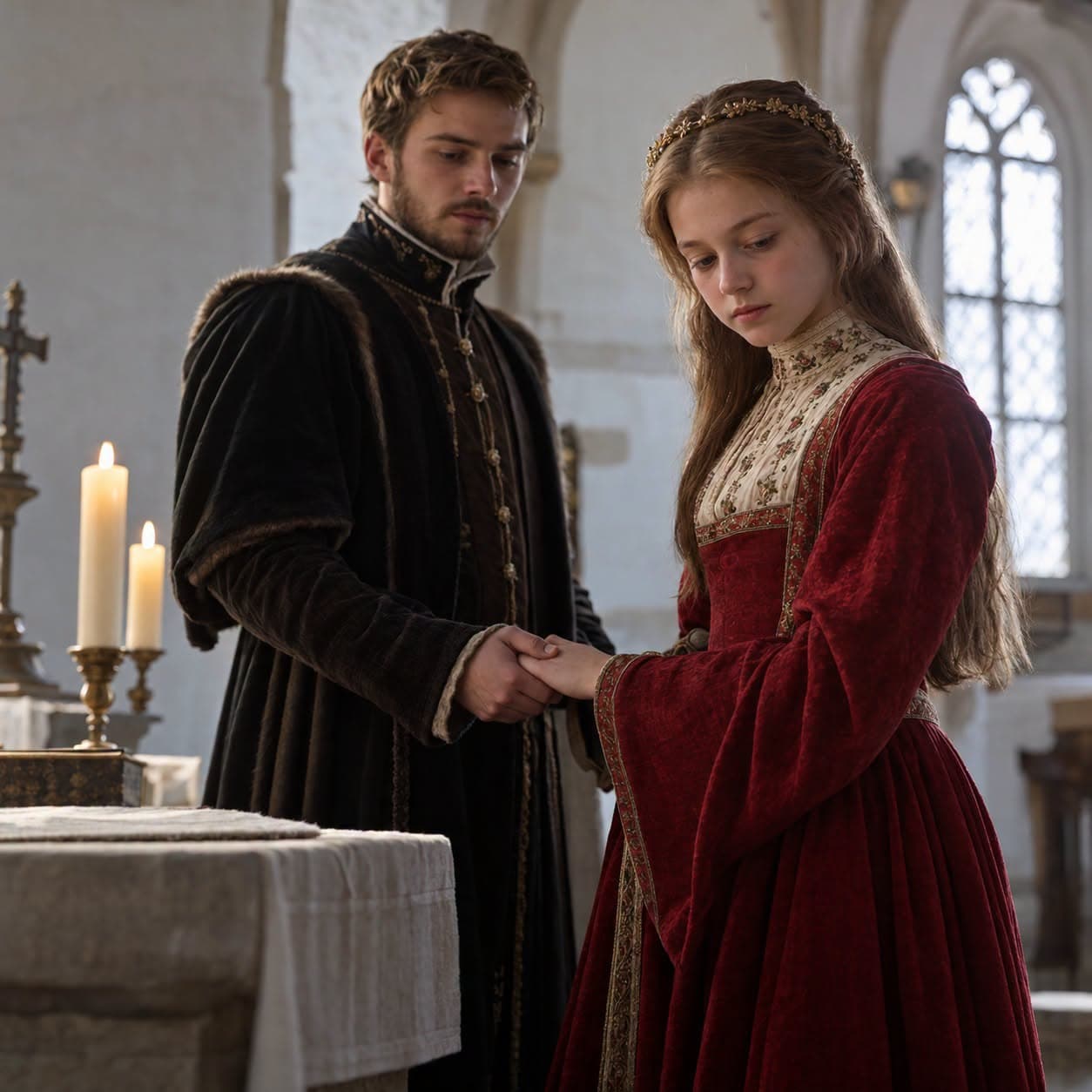
Dorothea of Saxe-Lauenburg married Duke Christian of Schleswig-Holstein at Lauenburg Castle on 29 October 1525. She had turned fourteen that July. He was the eldest son of Frederik I of Denmark, but he was not yet a king, and she was not yet a queen. The marriage brought a German duke's daughter into a king's family. It did not settle which member of that family Denmark would eventually accept on its throne.
Her parents were Duke Magnus of Saxe-Lauenburg and Catherine of Brunswick-Wolfenbüttel. These were princely connections, but Dorothea's first married household was a small ducal court at Haderslevhus in Schleswig. Christian had been given the districts of Haderslev and Tørning to support his establishment. Before there was a royal household to govern, there was this smaller one, with a girl of fourteen as its duchess.
Christian had already committed himself to the religious movement that would shape their married life. Four years before the wedding, he had heard Martin Luther at the Diet of Worms. He came away a follower. At Haderslev, that conviction acquired the force of government: in 1528 Christian introduced a Lutheran church order in his own territories, and the priests were required to accept the new teaching. Dorothea's early married world was one in which a prince could require religious change beyond the walls of his own household.
It was at Haderslev that their family began. Anna, their first child, was born there in November 1532, when Dorothea was twenty-one. Frederik, the son who would one day stand in the way of her own remarriage, followed in July 1534.
Across the border in Denmark, the men who would choose the next king were less enthusiastic. The governing council was predominantly Catholic, and Christian's religion was a serious objection to his succession. When Frederik I died in 1533, the council delayed choosing a king. Being the eldest son was useful. It was not enough.
Christian accepted election in 1534, during the civil war that followed. Only in 1536, after the surrender of Copenhagen, did he secure his kingdom. He and Dorothea were crowned together in Copenhagen's Church of Our Lady on 12 August 1537. Nearly twelve years separated the wedding at Lauenburg from the coronation. The fourteen-year-old duchess had become a woman of twenty-six.
The household over which she came to preside was run on strict Lutheran lines, and Dorothea took an active interest in how other people lived by them. She and Christian had five children. Around them she also brought up many children of the wider family and young noblewomen entrusted to her court. Her authority reached into the daily business of growing up.
The noble girls were being prepared to become noblemen's wives. Their education belonged to a world in which running a household and making a suitable marriage were substantial responsibilities, and the queen kept them occupied. One young woman complained in a letter that she was so busy she could not even tend her garden. Under Dorothea, leisure apparently required more negotiation than work.
Yet she also took pains over their futures, working to see them well married and keeping up lifelong connections with some of them afterwards. Dorothea's girls went out into the noble households of the kingdom, and her influence went with them.
Marriage was something she worked at for others. She sought matches for her children and the women of her court, and helped ordinary people on her estates with the cost of their weddings. Her care could be practical and generous. It also came with a firm conviction about the proper shape of somebody else's life.
In 1557 she gave that conviction a particularly splendid form. Copenhagen received a large bridal jewel of gilt silver, decorated with stones, enamel and pearls. At its centre was a pelican, with a shield bearing the arms of Saxe-Lauenburg, her father's duchy, and the year of the gift. The daughters of the city's mayors and councillors could borrow it for their wedding celebrations at the town hall. It was royal splendour, lent out for another family's occasion. Even generosity had its specified borrowers.
Two years later, Christian died. Frederik became Frederik II, and Dorothea became a dowager queen with Koldinghus and Sønderborg Castle and their lands to support her. She retained a court, property and considerable scope for action. Widowhood gave her an establishment of her own.
She also wanted another husband.
The proposed bridegroom was Duke Hans the Elder, Christian's half-brother. Frederik opposed the match, and resistance within the church helped bring the proposal to an end. Dorothea's influence over marriage had never been a gentle matter of standing aside and wishing people well. She had herself opposed Frederik's attachment to the noblewoman Anne Hardenberg. Now mother and son stood on opposite sides of another proposed union, and this time the marriage was hers.
Dorothea died at Sønderborg Castle on 7 October 1571, aged sixty, still managing her estates and intervening in her family's affairs. The girl who had married at Lauenburg became a queen who found husbands, paid towards weddings and supplied a jewel for other brides to borrow. Her own second wedding never took place.