Four-year-old Elizabeth carried her baby brother's baptismal cloth, and had to be carried herself. Her sister Mary walked behind him as godmother. Their father had declared both girls illegitimate, but there was still a place for them in the procession celebrating his legitimate son.
On 15 October 1537, Henry VIII's three-day-old son Edward was christened in the Chapel Royal at Hampton Court Palace. By royal custom, neither parent attended. Jane Seymour remained in her apartments, and Henry's daughters went into the chapel without them, taking their appointed places around the child who now stood alone as their father's legitimate heir.
Mary was twenty-one, the daughter of Katherine of Aragon, Henry's first wife. She had grown up as a princess, with her own household and an education suited to a king's daughter whose marriage would matter to the whole of Europe. Then her father decided that his marriage to her mother had never been valid. Katherine lost her position as queen. Mary lost her title, her place in the succession and the household that had surrounded her since childhood.
She was sent instead to live in the household of the new baby princess, Elizabeth, Anne Boleyn's daughter. Mary, who refused to accept that her mother had never been Henry's lawful wife, was required to occupy a subordinate place beneath her little sister. In Henry's family, even the order of the nursery depended on which marriage he currently recognised.
Then Elizabeth lost her place too.
Anne Boleyn was executed in May 1536, two days after her marriage to Henry had been annulled. The child who had displaced Mary was now declared illegitimate herself. That summer Parliament passed a new succession settlement that excluded both daughters and settled the crown on Henry's children by Jane. When Edward was born, he filled a vacancy his father had cleared himself.
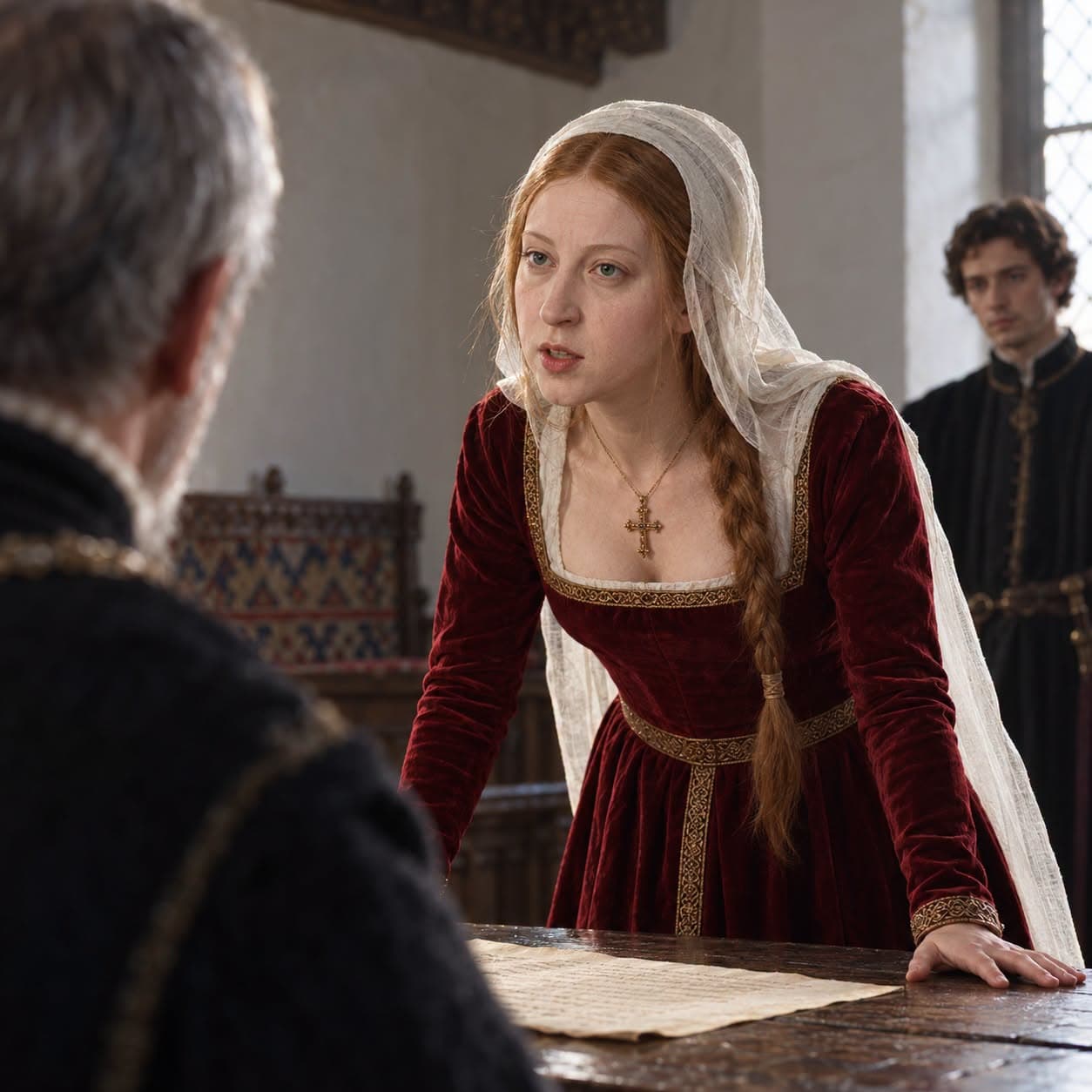
Elizabeth was too young to understand any of it. Mary was not, and she had resisted for years. In June 1536 she finally submitted, acknowledging her parents' marriage as unlawful, her own illegitimacy and her father's supremacy over the English Church. Reconciliation required her to put her name to the things she had spent years refusing to accept.
Jane Seymour had urged Henry to receive Mary again. She had once served Katherine of Aragon, and as queen she developed an affectionate relationship with Katherine's daughter. When Mary returned to court, Jane gave her a diamond. There was room for kindness within this family, although kindness and a place in the succession remained quite separate matters.
Now Mary was to stand as godmother to Jane's son. The woman who had helped bring her back to her father was the mother of the boy who would inherit his crown.
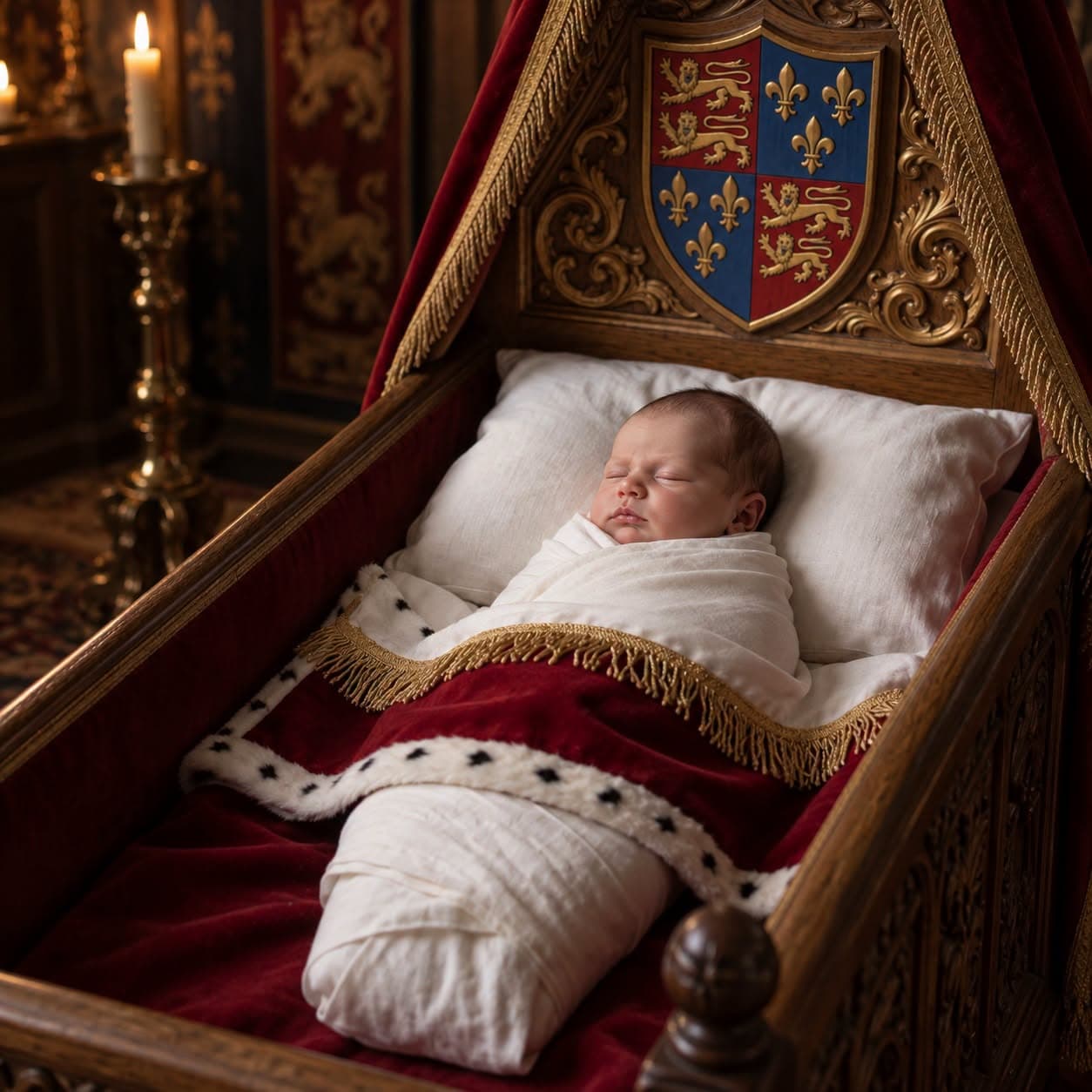
The christening took place at night. Inside the chapel, an octagonal platform had been built around the font so that the assembled company could see the ceremony. Edward was carried beneath a canopy by the Marchioness of Exeter, with his nurse and midwife following. Lords and officers of the household had their prescribed positions. This was a baby whose passage from one room to another required a considerable number of important people.
Ahead of the canopy came Elizabeth, bearing the chrisom, the baptismal cloth. Jane's brother Edward Seymour, Viscount Beauchamp, carried her. The child entrusted with an object for the prince's christening was still small enough to need an adult's arms herself.
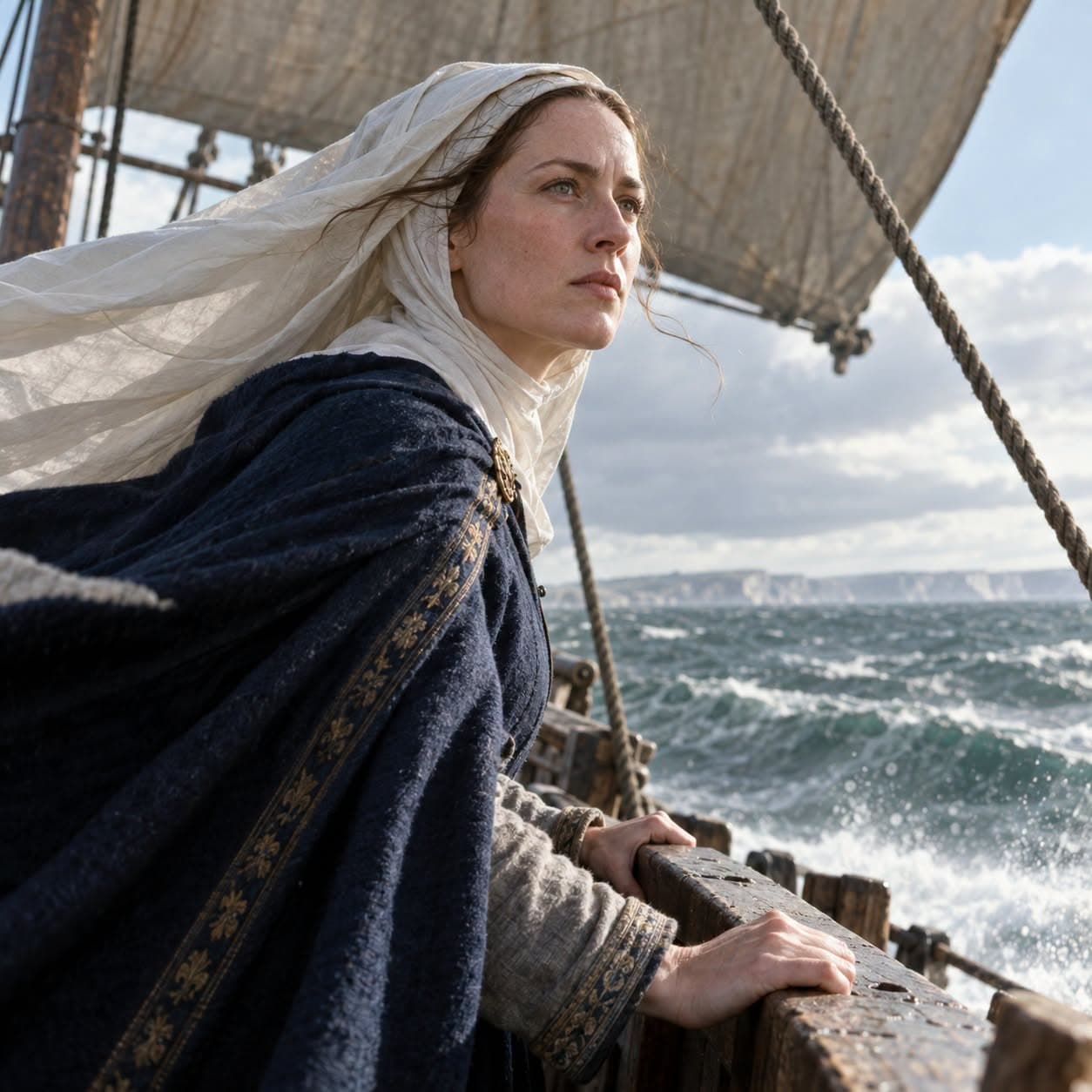
Directly behind the canopy came Mary, with Lady Kingston carrying her train. She had a place of honour, attendants and a gift for her godson, a gold cup. Her father could remove her right to inherit his kingdom without making her an ordinary young woman. The ceremony still had to reckon with a king's eldest daughter.
Once Edward had been christened, the torches were lit and his name and titles proclaimed. The Te Deum was sung. Mary and Elizabeth were served spices, wafers and wine, with noblemen appointed to bring their cups and dishes. The law excluded them; the household knew exactly how to serve them.
On the way back, Elizabeth went with Mary, while the gold cup and the other gifts were carried towards the royal apartments. Mary had once been made to live beneath Elizabeth in the nursery. Now the two of them walked together in their brother's procession, his claim accepted and neither of theirs restored.
Edward was carried to the king and queen for their blessing. Jane, three days after giving birth, received him sitting up in bed. The court had seen the prince presented with torches, trumpets and a canopy. In his mother's chamber he was brought back to her.
She died at Hampton Court on 24 October, nine days after the christening. When her body was taken to Windsor for burial, Mary was her chief mourner. Within a month of walking behind Jane's son into the chapel, she walked behind Jane's coffin.
Edward became king in 1547 and died in 1553, aged fifteen. By then the law had changed again. In 1544 Henry had restored both daughters to the succession behind their brother, without making either of them legitimate. The young woman who had walked behind the canopy became Queen Mary I. After her death in 1558, the little girl carried ahead of it became Queen Elizabeth I. Both sisters wore the crown their father had meant for the boy carried between them.