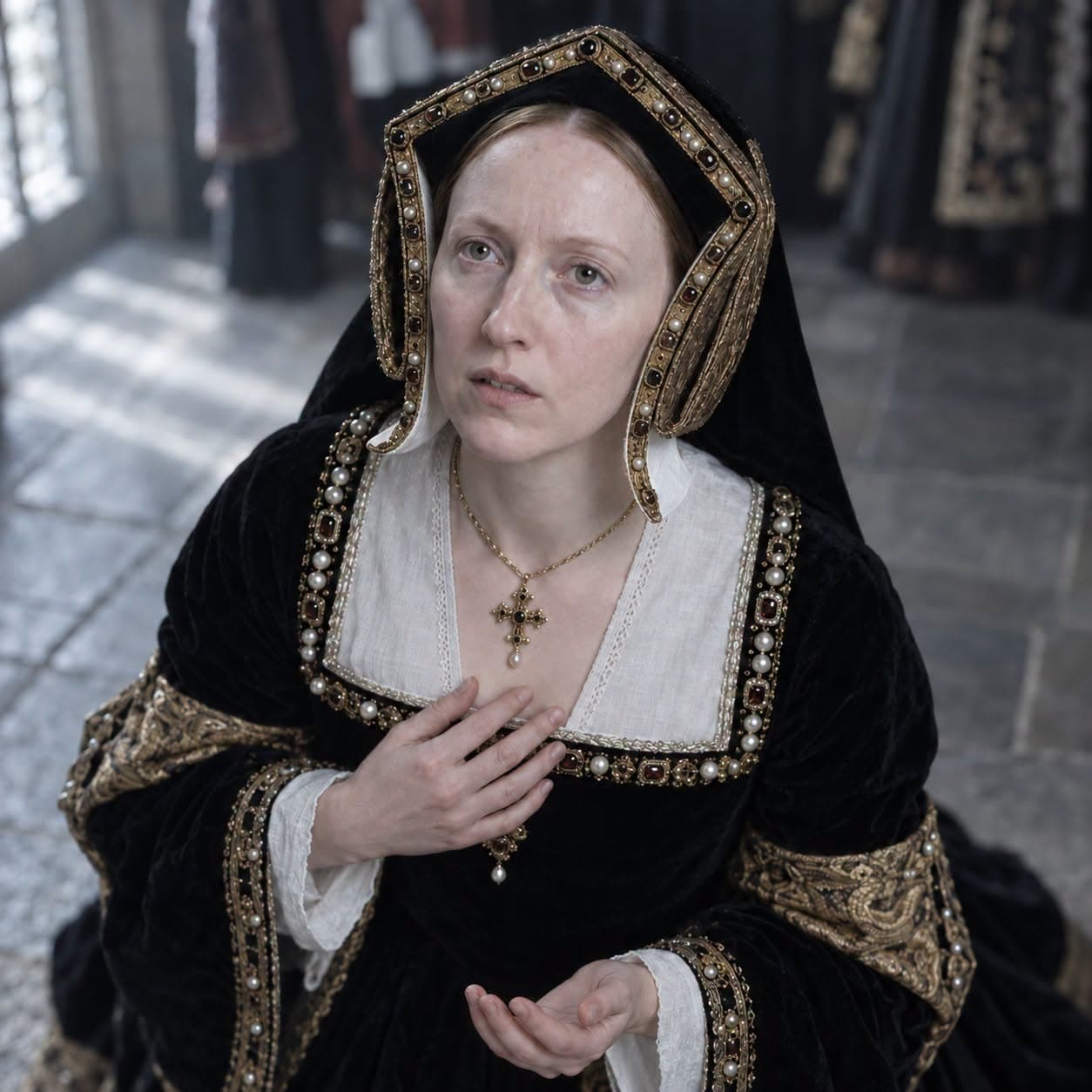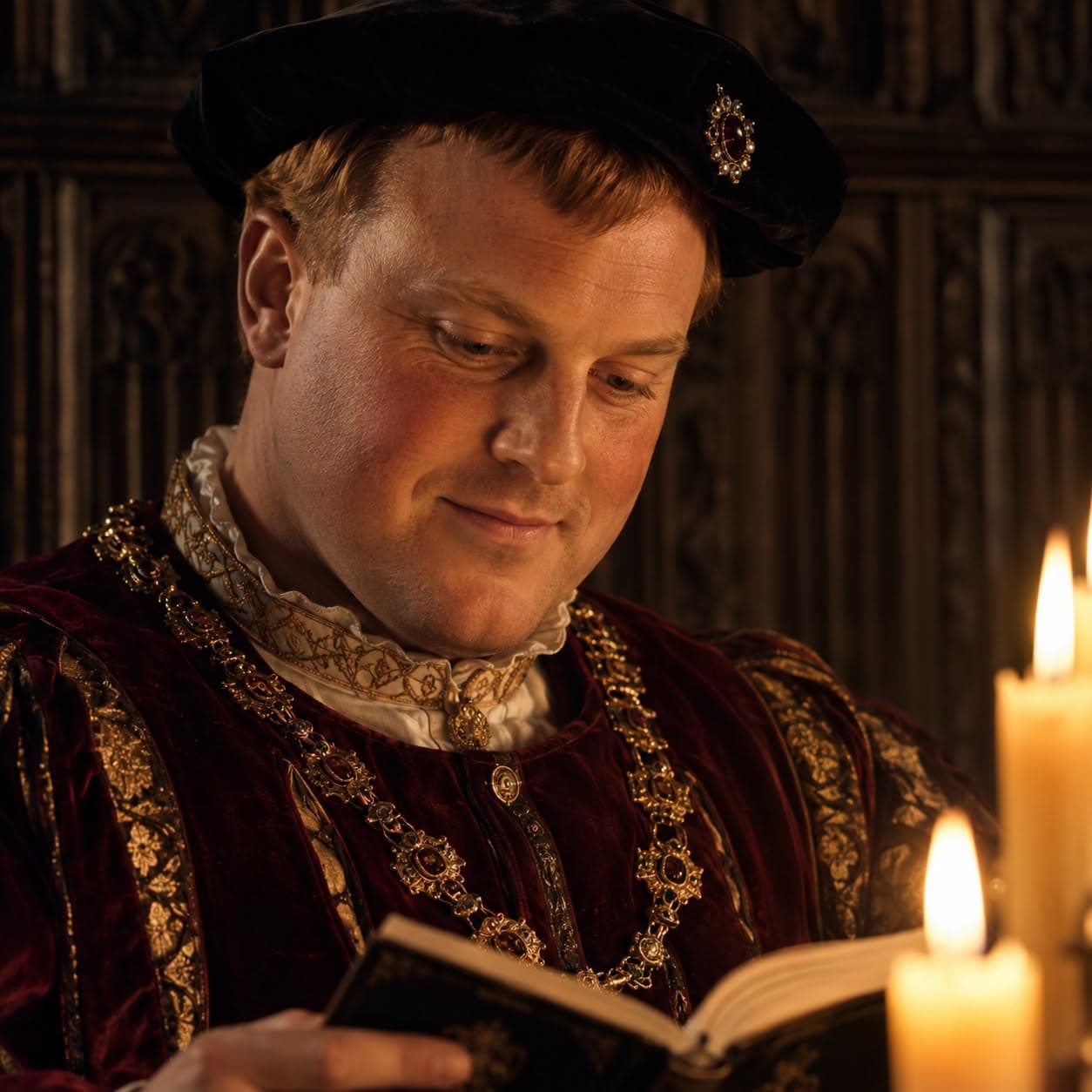
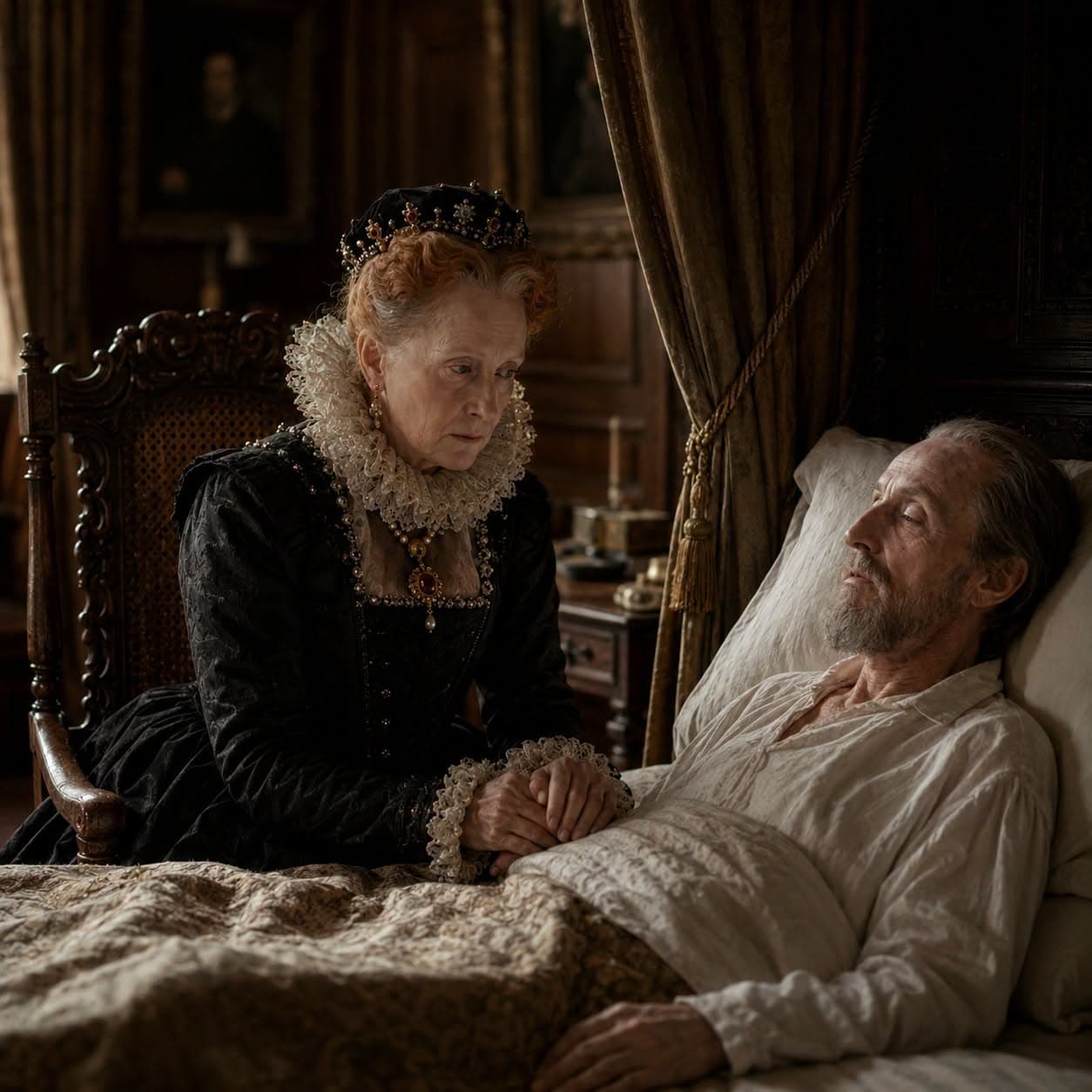
Queen Elizabeth I was sat at his bedside when he died at Somerset House on 23 July 1596, two days after dictating his will aloud because there was no time left to write it down. He was seventy years old, and he had served her for every one of the thirty-eight years she had worn the crown.
He was her cousin, and possibly closer than that. The question of his exact parentage has been argued elsewhere, and it does not need arguing again here. What matters for this story is simpler: whatever the blood tie was, it put him inside the royal household from an early age, and it was service, not birth, that kept him there for the rest of his life.
He had been at court since his twenties, working as a carver in the privy chamber under Henry VIII and then under Mary I, one of many minor posts that put a young man in the room without putting him anywhere near power. In 1545 he was sent to serve under Viscount Lisle in the campaign around Portsmouth, part of the scramble to defend the coast against a French invasion fleet. A commander there, short of experienced officers, wrote that he knew of no one to fill the posts of two sick captains except young Mr. Carey and Mr. Constable. It is a small line in a muster document, but it is the first evidence of a pattern that would define his entire career.
Everything changed for him in November 1558, the month Elizabeth became queen. She knighted him almost immediately. Two months later, in January 1559, she created him Baron Hunsdon, granted him the manor of Hunsdon in Hertfordshire, and gave him four thousand pounds so that he could maintain a title he had not been born to. This was not a reward for blood alone. Elizabeth had cousins she never elevated and relatives she kept at arm's length. Carey was one of the few she pulled close from the very start, and she kept pulling him closer for the next thirty-seven years.
The offices came quickly after that. He was made Master of the Queen's Hawks in 1560 and a Knight of the Garter the following year, one of the highest honours the crown could bestow. In 1568 she sent him north to Berwick-upon-Tweed as its governor, putting him in charge of the fortress town that guarded the border with Scotland, a posting that mixed prestige with genuine danger. He had barely settled into the role when the Northern Rebellion broke out in 1569, a rising of Catholic earls that threatened to unseat Elizabeth's entire settlement in the north of England. Carey fought against the rebel forces directly, and his service in putting the rising down earned him the post of Warden of the East Marches in 1571, a role that made him personally responsible for the security of the border for years afterward.
He did not stay in the north forever. In 1574 Elizabeth made him Keeper of Somerset House, drawing him back toward the centre of her household, and in 1577 she brought him onto the Privy Council itself, the small body of men who advised her directly on matters of state. In 1583 he resumed his active role as Captain of the Gentlemen Pensioners. He had retained the title since 1564 but could not act as her personal bodyguard while deployed in the north; returning to the function placed him physically closer to the queen than almost anyone else at court.
The highest office came in July 1585, when she made him Lord Chamberlain of the Household. It was the most senior position a nobleman could hold within the royal court, responsible for the smooth running of every ceremonial and domestic aspect of the queen's life, and he held it without interruption until the day he died. It was in this role that he became patron of a company of actors who took his title as their name: the Lord Chamberlain's Men. William Shakespeare wrote for that company. The Lord Chamberlain who signed off on the players' licence to perform was the same man who had once been sent to plug a gap in the officer ranks at Portsmouth.
Contemporaries who wrote about him afterward did not describe a polished courtier. They described a soldier who had ended up at court by accident of birth and stayed there by the sheer force of his usefulness. He was rough in speech, quick to anger, and, by every account that survives, free of malice even when his temper got the better of him. He was not a man who charmed his way into favour. He was a man who was simply, repeatedly, put to work, and who never stopped being put to work until his body gave out.
He died in debt, and it had taken his entire life to get there. Forty years of garrisons, campaigns, and offices had cost more than the crown ever paid back, and it was not the debt of a careless man. It was the debt of someone who had spent four decades saying yes to whatever the queen asked of him, at Berwick, on the border, in the council chamber, at her own side as Lord Chamberlain, and had never once stopped to calculate what any of it cost him personally. Elizabeth covered his funeral herself, paying eight hundred pounds, and gave his widow a lump sum of four hundred pounds, a pension of two hundred pounds a year, and the keepership of Somerset House for the rest of her life. It was, in its way, the crown settling an account it could never fully close.
Years later, his widow and his eldest son George raised his monument in Westminster Abbey. It rises thirty-six feet in the chapel of St John the Baptist, still the tallest monument in the entire building, taller than the tombs of kings buried a few feet away. Carved into the stone is a Latin inscription listing his life the way his own family chose to have it remembered: Governor of Berwick, Warden of the Marches, Captain of the Gentlemen Pensioners, Knight of the Garter, Lord Chamberlain of the Household, and, at the end of the list, first cousin to the aforesaid Queen.
Everything this man had accomplished in his life, the postings, the offices, the decades of service, is condensed there into a few lines of stone. The blood tie he never made anything of placed last, almost as an afterthought, exactly where he seems to have kept it himself.