Her father sold her to the enemy to settle a political debt. The enemy's son was dead within a year. The man she married next may have been in the room when it happened.
Anne Neville was born on the eleventh of June 1456 at Warwick Castle, the younger daughter of Richard Neville, Earl of Warwick, and Anne Beauchamp, and she arrived into a family that was, at the moment of her birth, the most powerful non-royal house in England; her father was called the Kingmaker. He had placed Edward IV on the throne through the management of military force and political alliance, and he understood, with the clear-eyed pragmatism of a man who traded in power at the highest level, that daughters were instruments of policy. Anne was six years old when she first appeared in a formal context. She was not yet old enough to understand what that meant. She would not be given time to learn gradually.
Warwick's problem, through the late 1460s, was Edward IV himself. The king he had made had developed opinions of his own, had married Elizabeth Woodville without permission, had begun building a court that diminished the Nevilles rather than depending on them, and had made clear that the man who put him on the throne was not going to govern from behind it. Warwick did what men of his kind do when the arrangement stops serving them. He changed sides.
The price of the new alliance with Margaret of Anjou was Anne.
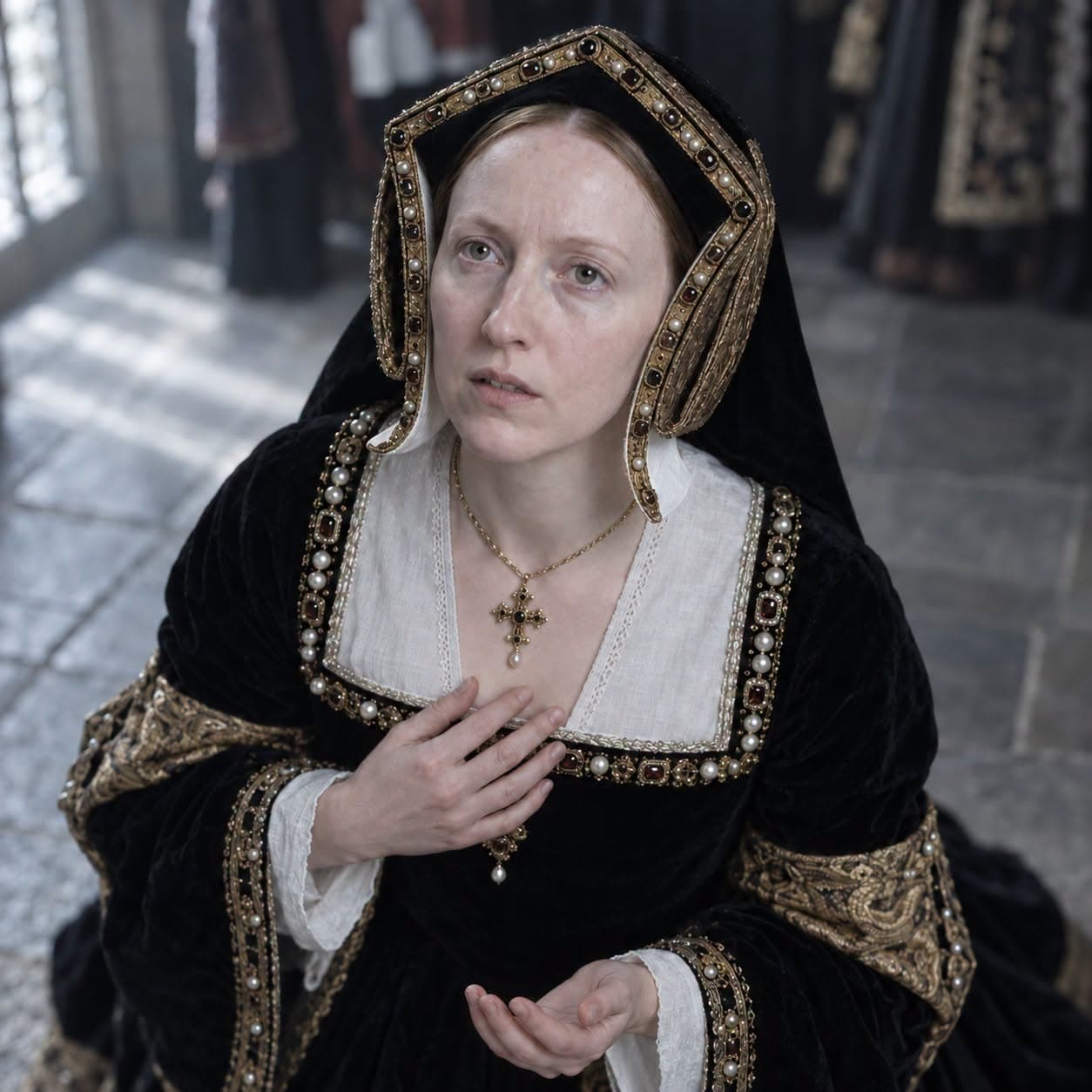
She was fourteen years old in 1470 when she was married at Amboise to Edward of Westminster, the Lancastrian Prince of Wales, as the formal seal of her father's switch of allegiance. Margaret of Anjou had spent nine years in exile fighting for a throne; she was not sentimental about the transaction, and neither was Warwick. Anne had no say. She had been a Yorkist girl in a Yorkist household her entire life and she was now the wife of the Lancastrian heir and about to march with a Lancastrian army into a Yorkist England, and the record contains nothing of what she thought about any of it.
Her father was killed at the Battle of Barnet on the fourteenth of April 1471. She was in France when it happened, or newly landed in England, and the man who had deployed her across the board without asking her opinion had been removed from the board himself, suddenly and permanently, and she was alone on the wrong side of a war with a husband she had known for months.
Edward of Westminster was killed at Tewkesbury on the fourth of May 1471. He was seventeen years old. The sources disagree on the manner of his death. One account has him cut down in the fighting or in flight. Another, preserved in the Croyland Chronicle and corroborated by later sources, has him captured after the battle, brought before Edward IV, and asked why he had dared invade. The prince answered that he had come to reclaim his father's kingdom. Edward IV struck him or thrust him away, and he was then killed by men standing nearby; the accounts name George Duke of Clarence, Richard Duke of Gloucester, and others. Whether he died on the field or in that room, and whose hand did the final damage, has not been resolved in five hundred years. Anne was fifteen, widowed, on the losing side of a finished war, and the man she would marry next had been standing somewhere in that story.
The men who wanted the Warwick inheritance moved quickly.
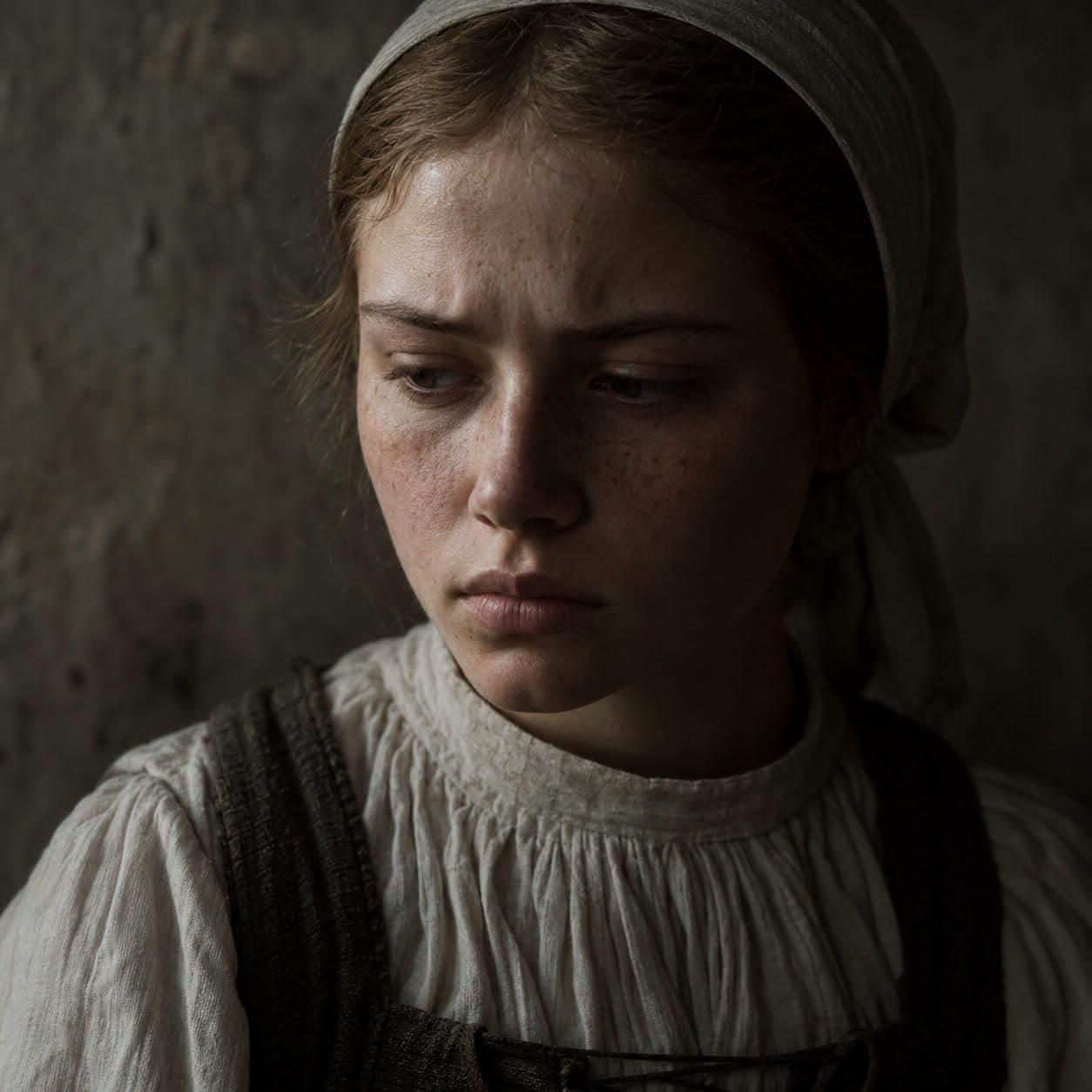
George, Duke of Clarence, had married Anne's older sister Isabel. He understood what the inheritance represented, the largest private fortune in England outside the crown, and he had no intention of sharing it with anyone, least of all with his younger brother Richard, who had fought at Tewkesbury and had his own views about Anne's future. What happened next sits in the historical record as one of its stranger passages: Anne Neville, daughter of the Kingmaker, widow of the Lancastrian Prince of Wales, was disguised as a kitchen maid and hidden in a cook's establishment in London to prevent Richard of Gloucester from finding her. The story may be embellished. The situation it describes, a fifteen-year-old girl being hidden like property to prevent one powerful man from acquiring her from another powerful man, is entirely consistent with everything else that happened to her.
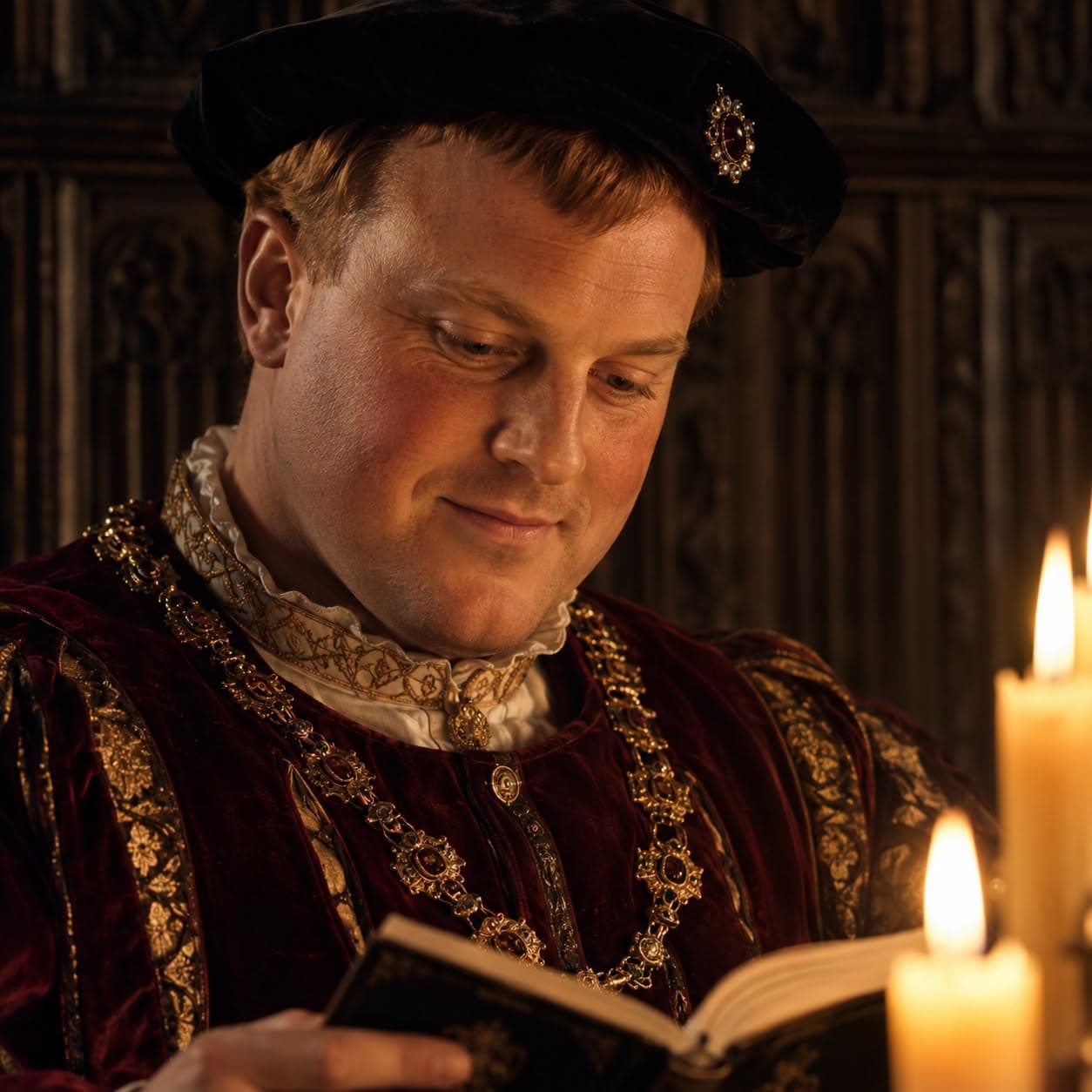
Richard found her. He had her moved to sanctuary at St Martin le Grand, and in 1472 he married her, and the Warwick inheritance was divided between the two brothers with the specific acrimony of men who considered the women attached to it secondary to the assets themselves. George never forgave it. Richard never acknowledged that there was anything to forgive. Anne Neville became the Duchess of Gloucester, and whether the marriage was desire or calculation or simply the recognition by a fifteen-year-old girl that a brother of the House of York was the only available protection against the other brothers of the House of York, she kept what she thought about it in the same silence she had kept everything else.
She went north with Richard. She bore him a son, Edward, in 1473. She managed his household at Middleham Castle in Yorkshire with the competence of a woman raised to run great establishments, which she was. She was present for the years of Richard's governance of the north, the years in which he built the reputation for capable administration that his supporters still cite. She was there. The record notes her presence and her household accounts and her charitable donations and almost nothing else.
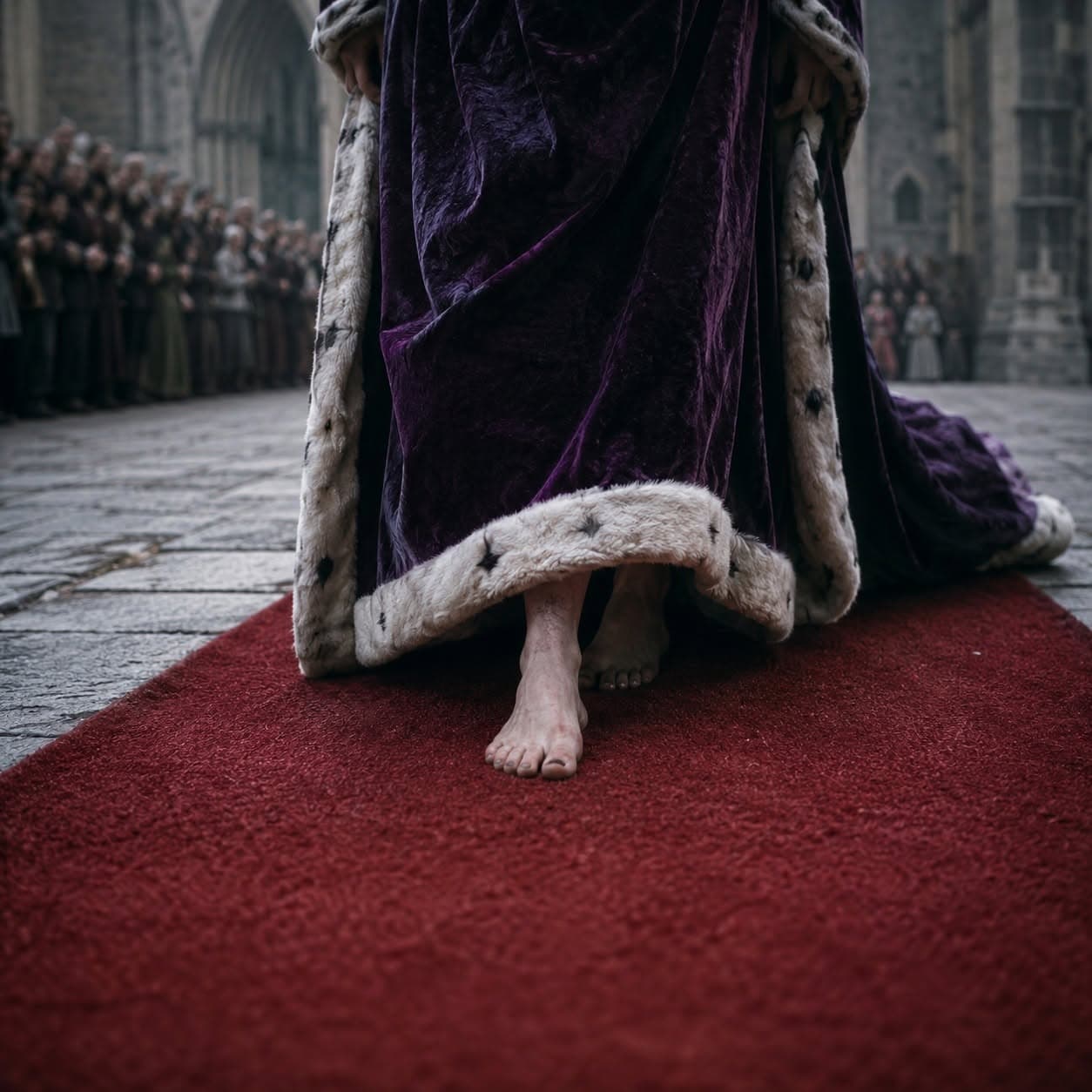
Richard was given the throne in June 1483. Anne was crowned beside him at Westminster Abbey on the sixth of July, in a ceremony of deliberate magnificence, wearing royal purple. She walked barefoot on a carpet of red cloth from Westminster Hall to the Abbey so that the crowds could see her clearly. It was the most visible she had ever been. She was twenty-six years old and she was Queen of England and her only son was created Prince of Wales.
Edward died at Middleham in April 1484. He was ten years old. The sources record that both parents were broken by the loss, which is one of the few moments in the record where Anne Neville appears as a person with inner experience rather than a position to be filled. The grief was genuine and visible and it had no political utility and it was noted precisely because it had none. She did not recover. Through the autumn and winter of 1484 she grew thinner and weaker, the specific progressive decline of tuberculosis, and the court watched her failing and calculated, because that is what courts do, what it meant.
It meant that Richard III would need another queen. The name that circulated, with a speed that was itself a comment on the situation, was Elizabeth of York, Edward IV's daughter and Richard's own niece. To marry her Richard would have needed to argue that the pre-contract between Edward IV and Eleanor Talbot, the same pre-contract he had used to take the throne, was false — which would have restored Elizabeth's legitimacy and simultaneously destroyed the legal foundation of his own reign. His councillors reportedly begged him not to pursue it. He denied that he intended to. The denial required making.
Anne Neville died on the sixteenth of March 1485. She was twenty-eight years old. On the day she died, the sun went out.
The solar eclipse of the sixteenth of March 1485 was visible across England and was recorded by contemporaries as an omen, which omens were, in the fifteenth century, the language available for events that exceeded ordinary explanation. Richard wept at her funeral. He also issued a formal public denial, delivered before the mayor and aldermen of London, that he had poisoned his wife. The denial was specific and unprompted and necessary because the rumour was sufficiently widespread and sufficiently believed to require it. He was never asked to explain why the rumour had started.
She had been the most valuable woman in England since the day her father understood what her face and her bloodline were worth, and she had been used as one, and she had outlived a father and a first husband and a son and she had never, in the entire record of her life, been asked what she wanted from any of it.
Richard III died at Bosworth on the twenty-second of August 1485, five months after her. He was the last English king to die in battle. The House of York died with him. The dynasty she had been married into twice, from both sides of the same war, closed around her memory and was gone.
The eclipse had lasted four minutes. It was the last thing that happened to Anne Neville that was not arranged by someone else.