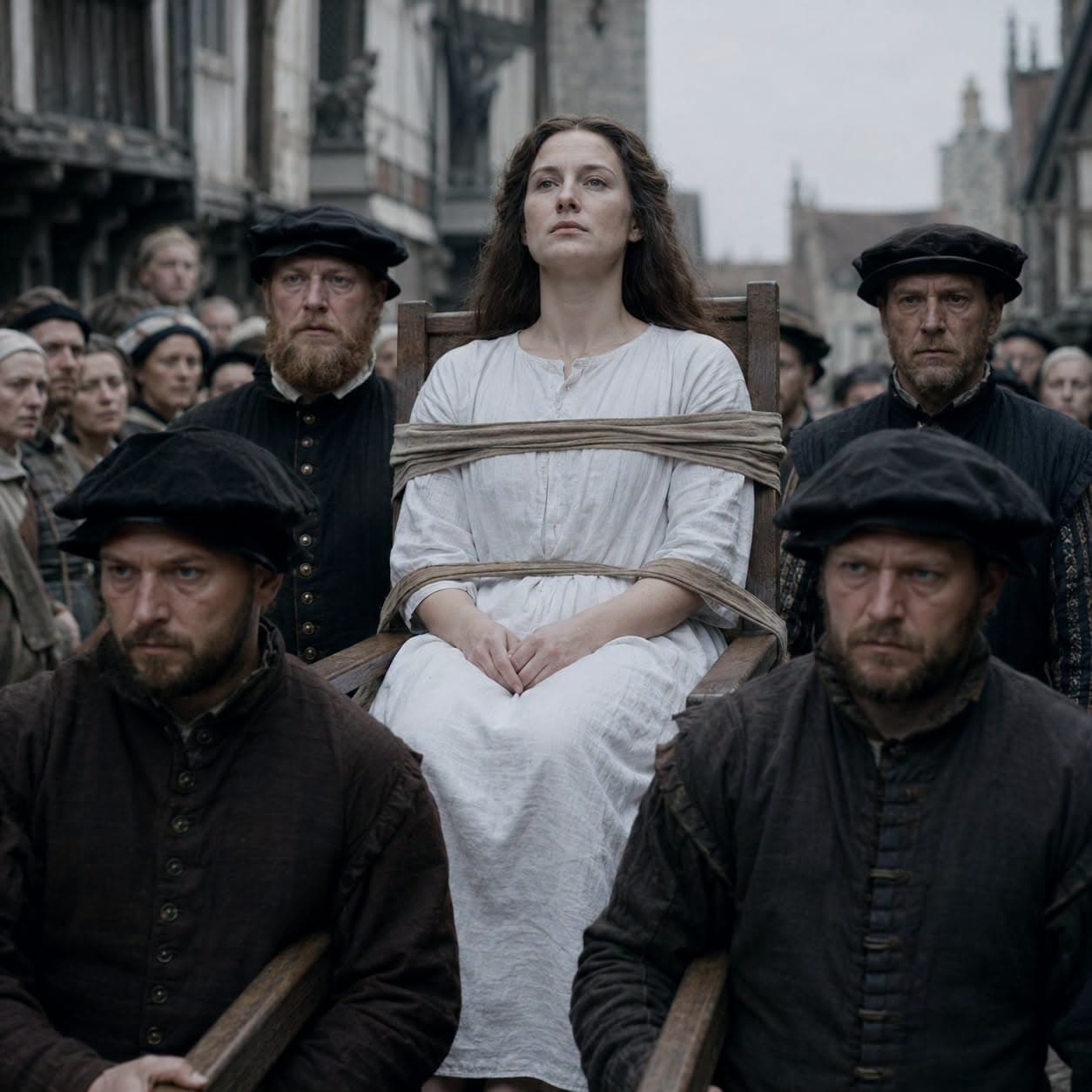
She could not stand by the time they burned her, so they carried her to Smithfield in a chair and tied her upright with a chain, because her own legs would not hold her anymore.
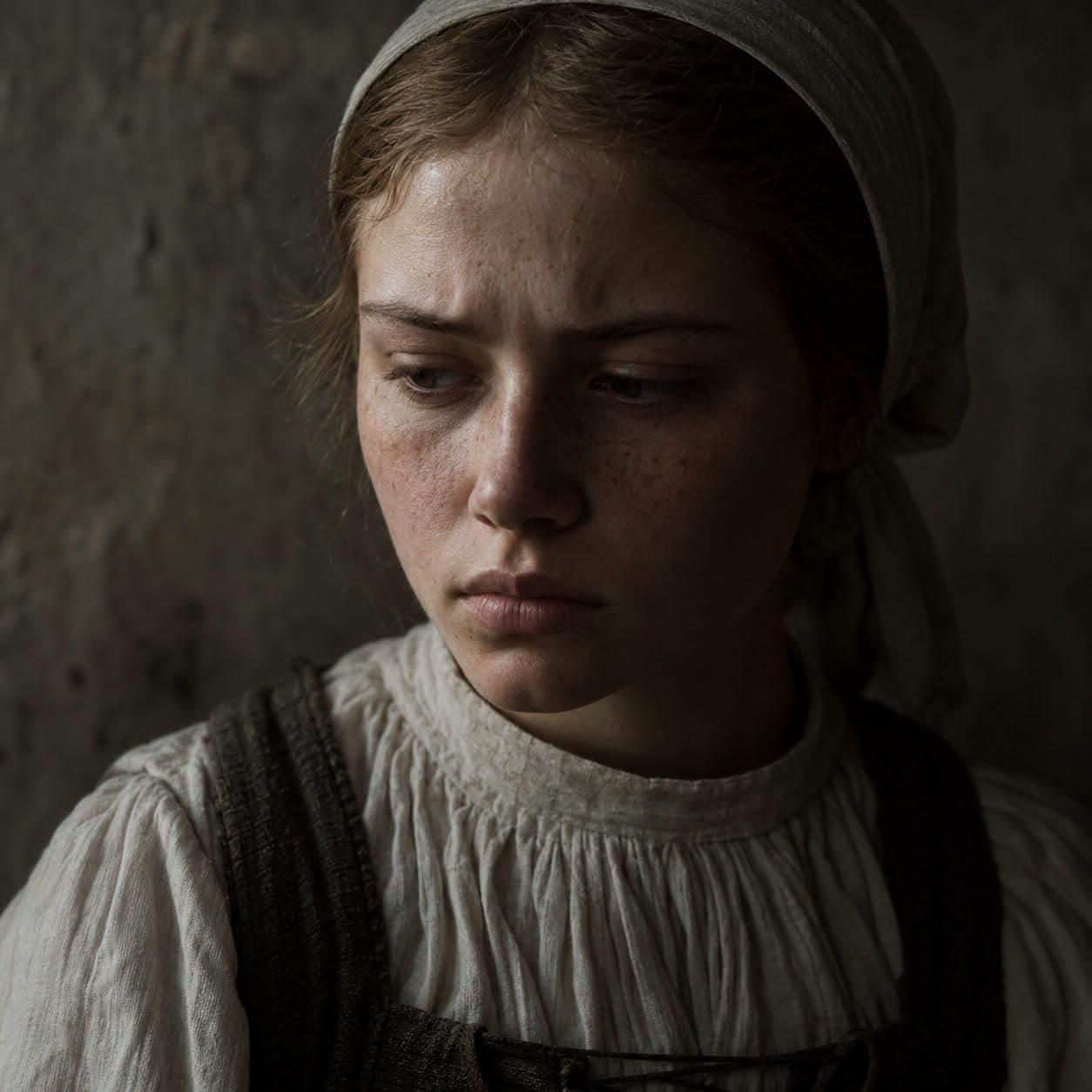
Anne Askew was twenty-five. Born into a knight's household in Lincolnshire, married off young to a man named Kyme, she left that marriage once her reading of scripture in English convinced her it had never been a real one. She went to London, read, argued, and refused to stay quiet about what she believed the bread and wine on an altar actually were. When Bishop Gardiner told her a woman had no more business handling scripture than a pig had wearing a saddle, she answered that a sow had as much business wearing a saddle as an ass did wearing a mitre. She had already made an enemy of a bishop before anyone laid a hand on her.
By June 1546 she had been examined twice and condemned to die. The law had nothing further to ask her. What happened next in the Tower did not happen to secure a conviction. It happened because two men wanted names.
Thomas Wriothesley, Lord Chancellor of England, and Richard Rich, a Privy Councillor, believed she could give them a way into Katherine Parr's household, where the queen and the women around her read forbidden books in private. They wanted those names on record, from her own mouth, and they took her to the rack to get them.
She wrote her own account afterward, and it survived. Asked to name the women, she said nothing, and stayed on the rack, in her own words, "a long time," without crying out. The Lieutenant of the Tower, whose task this was, refused to continue. So the Lord Chancellor of England and Richard Rich took the ropes themselves and turned the wheel by hand until she was, in her words, "nigh dead".
She gave them nothing.
When they finally released her, Wriothesley did not leave. He sat with her for two hours on the bare floor where she had just been racked, speaking now with what she called "many flattering words," trying to talk her into recanting. She told him she would "rather dye, than to breake my faythe." He had no better luck gentle than he'd had cruel.
She could not walk afterward, and later she could not walk to her own execution either, so on 16 July 1546 they carried her in a chair and bound her upright to the stake with a chain. Before the fire, Nicholas Shaxton preached over her, and from the chair she corrected him publicly when she judged he'd gotten the scripture wrong. Wriothesley sent a written pardon on condition she recant. She would not so much as look at it. She burned alongside three men, with gunpowder tied to their bodies to shorten their suffering.
In prison, before any of this, she had written a ballad, and it survived too. In it she asked God to spare her torturers His judgment: "Yet, Lord, I thee desire, for that they do to me, let them not taste the hire of their iniquity." She asked mercy for the two men who had held the ropes.
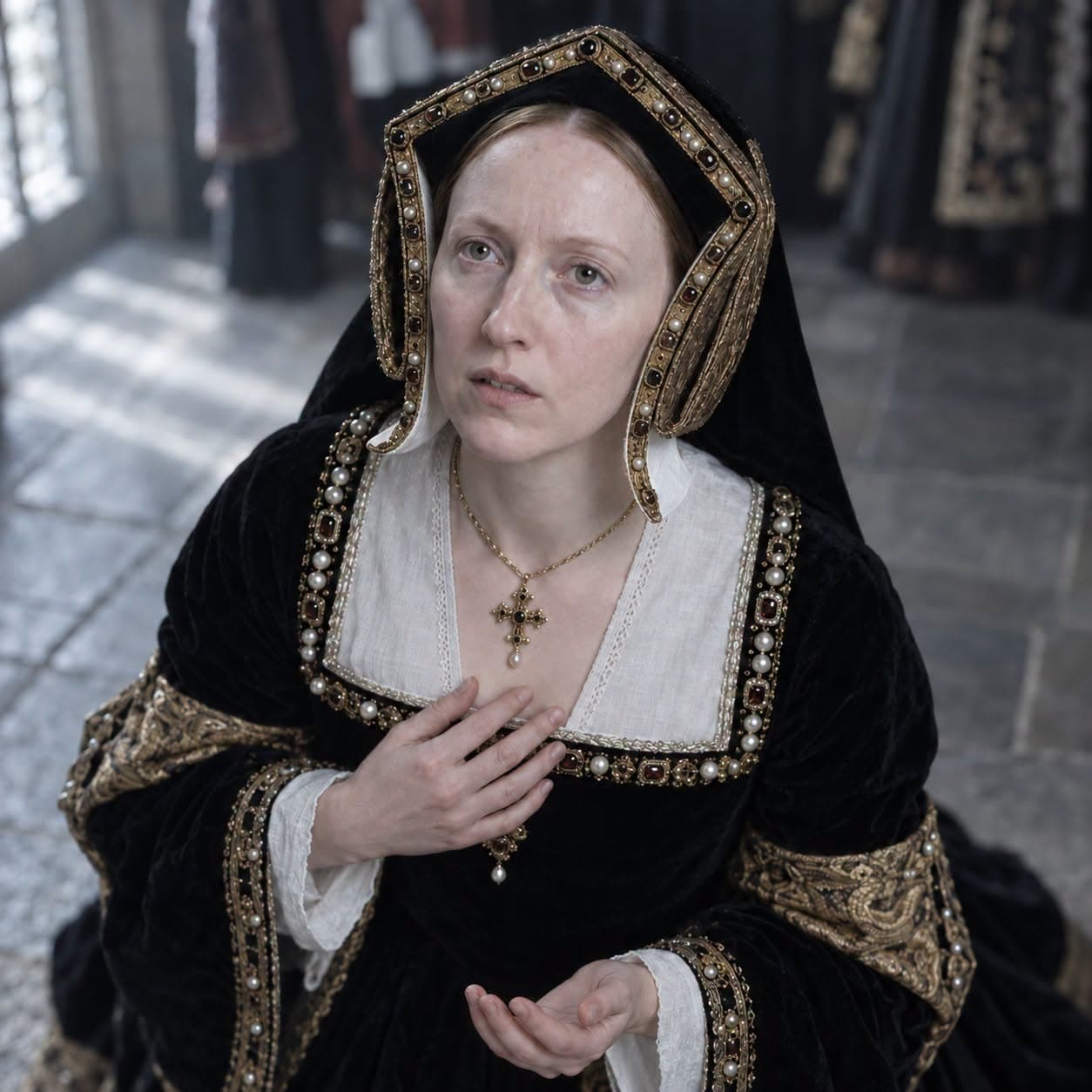
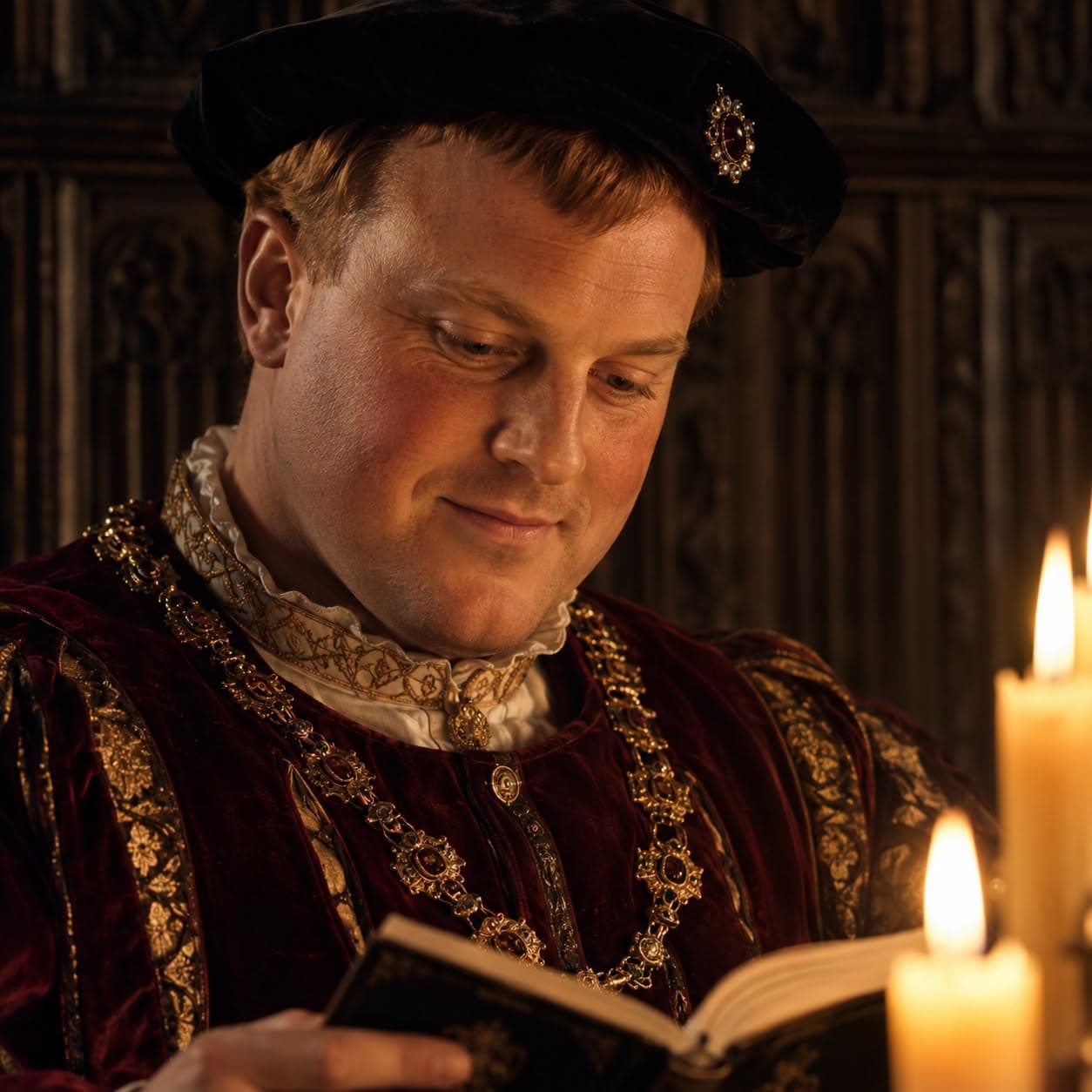
Katherine Parr was never named at the rack, but the men who racked Anne Askew came for the queen anyway a few weeks later, building their case from banned books found among her ladies instead. Henry signed the arrest warrant. A royal doctor saw it first and warned her. She took to her bed, and when the king came to her, she told him she argued theology only to distract him from the pain in his legs and to learn from his wisdom, that she submitted entirely to his judgment. He believed her, and tore up the warrant.
The plot Anne Askew's silence was built to stop nearly succeeded without her. It failed instead on a queen's ability to say the one thing that could save her, in a room with no rack in it at all.