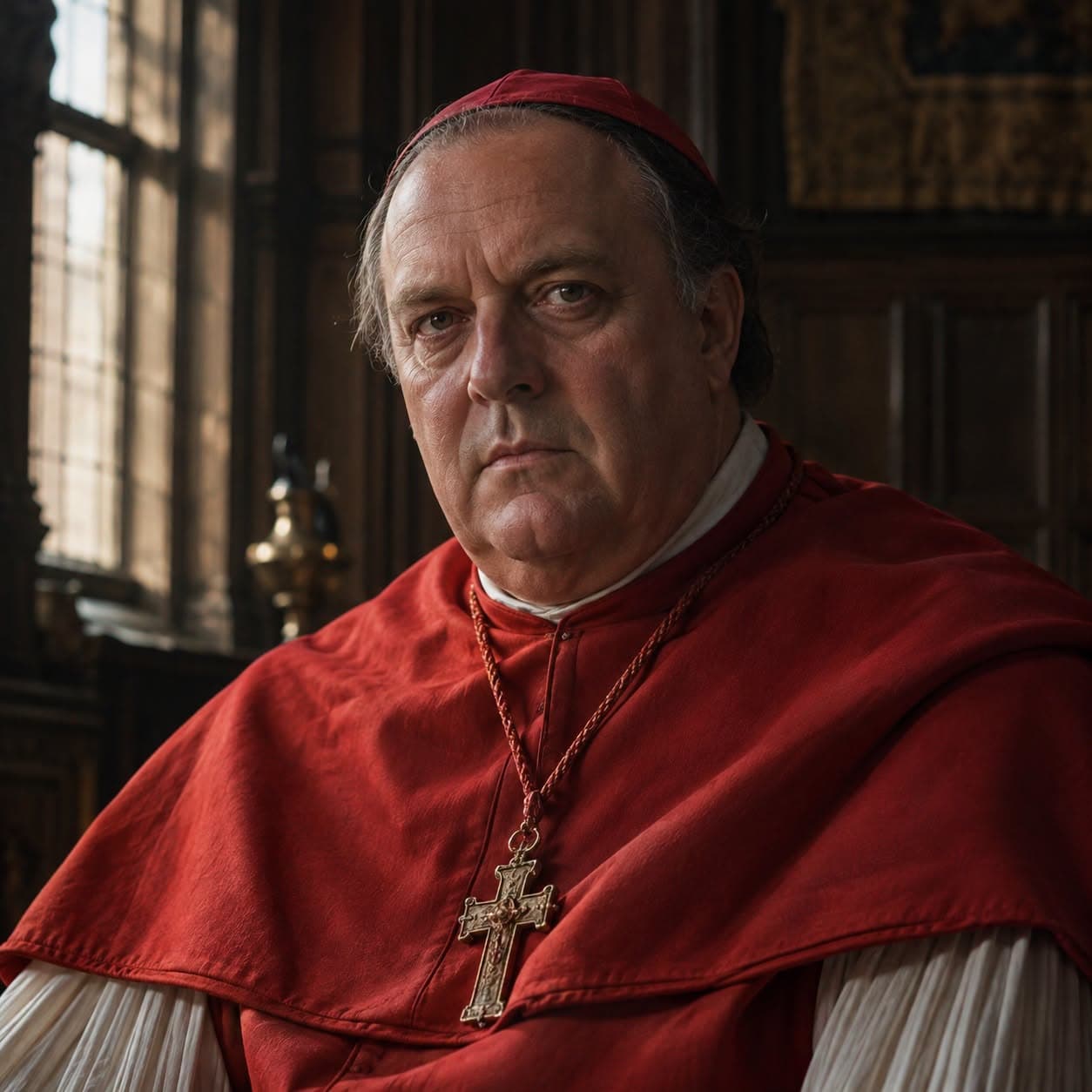
Thomas Wolsey made two dukes go back to the king before he would surrender the Great Seal. He could still require the proper authority for his removal. He could no longer prevent it.
At six in the evening on 17 October 1529, Cardinal Wolsey handed the seal to the Dukes of Norfolk and Suffolk in the gallery of his house at Westminster. For nearly fourteen years he had been Henry VIII's Lord Chancellor, responsible for the seal that authenticated royal grants and other instruments of government. Now the king had sent men to collect it. Eight days earlier he had been indicted in the King's Bench for praemunire, accused of exercising his authority as papal legate unlawfully in England.
On their earlier visit, the dukes had announced Henry's pleasure: Wolsey was to deliver the seal and withdraw to Esher. When he asked what authority they carried, they answered that the king had commanded them by word of mouth. Wolsey wanted more. Henry had personally entrusted the seal to him, and he had letters patent to show for his office. After a long exchange, the dukes left without it.
They returned with the king's letters. Wolsey read them and obeyed. There was still a procedure for taking away his power, and he had made them follow it.
He had come a considerable distance to reach that gallery. His father had traded as a butcher in Ipswich, outside the great families whose sons expected to govern England. Wolsey had reached Oxford, entered the priesthood and worked his way into royal service. He could organise, negotiate and attend to the business Henry entrusted to him, and Henry had rewarded him with more of it. As chief minister, cardinal and Archbishop of York, he had dealt with princes and ambassadors, presided over justice and maintained a household magnificent enough to receive them.
Then Henry had required something that all this authority could not obtain.
The king wanted his marriage to Catherine of Aragon annulled. After twenty years together, their only surviving child was their daughter Mary. Henry wanted a legitimate son, and he wanted to marry Anne Boleyn. Wolsey's task was to secure the decision that would allow him to do so.
Catherine would not agree that her marriage had been invalid. Accepting that judgment meant surrendering her position as Henry's wife and placing Mary's legitimacy in question. She appealed to Rome and sought the support of her nephew, the Emperor Charles V. Pope Clement VII had to reckon with Charles's power as well as Henry's demands. Wolsey could conduct negotiations. He could not remove the other people who had a say in them.
That summer, at Blackfriars in London, Wolsey and Cardinal Campeggio presided over a court established to hear the marriage case. Catherine knelt before Henry in open court, appealed to him as his true wife, and then walked out. When she was called back, she kept going, saying it was no impartial court for her. The minister who had spent years arranging Henry's affairs was now sitting in judgment on the woman Henry wished to put aside.
During the proceedings, the two cardinals went to see her at Bridewell. She came out to meet them with a skein of white thread about her neck, interrupted at work with her women. Wolsey proposed a private conversation and began speaking in Latin. Catherine asked for English. She understood Latin, but she wanted those around her to understand too. She also asked what English subject could advise her freely against the king's wishes.
He had come for her consent. She had told him, in front of her women, why she would not give it to men like him.
The court produced no annulment. Catherine remained queen. Anne remained unable to marry Henry. Wolsey had failed to provide the result on which the king had set his heart, and rivals who had long resented his position now had their opportunity. The order to surrender the seal was Henry's.
In those days of collapse, the French ambassador visited Wolsey and found him weeping. The man who had negotiated with foreign courts was asking for help from the King of France and his mother, Louise of Savoy. He was prepared to give up office, influence and everything he possessed, down to his shirt, and live in a hermitage, if only Henry would cease to hold him in disfavour.
He asked that Henry should not discover he had sought their intervention. Even the attempt to obtain help had to be concealed from the man whose anger he wanted softened. The ambassador tried to comfort him and could do little. A seal could be handed over on a written order. There was no written order that would return the king's favour.
At Westminster, his household was being put in order for the king. Lengths of velvet, satin and damask lay on tables in the gallery. In adjoining chambers, gold and silver plate had been set out, with baskets of old or broken pieces beneath the tables. Beside them were books recording the contents, weights and values. The servants who had been responsible for these possessions were charged with handing them over.
The care with which Wolsey had managed his household was now being used to account for its loss. He instructed his treasurer to ensure that everything was safely delivered to Henry, then left by barge on the journey to Esher. He remained Archbishop of York. He was out of office, not out of the Church. The work of government would proceed without him, and Thomas More was to take his place.
On 20 October, the seal reached Henry at Windsor. The king had it taken out and used on documents. On 25 October, at Greenwich, he delivered it to More. Eight days after Wolsey had made two dukes return with written authority to collect it, the seal had a new keeper.